Winter Beauty Apple Tree: Variety and Care Features
| Color | Reds |
|---|---|
| Ripening season | Autumn |
| Size of apples | Average |
| Taste | Sweet and sour |
| Crown type | Average tree height |
| Shelf life | Average shelf life |
| Application | Fresh , For recycling |
| Winter hardiness | High winter hardiness |
| Fruiting age | Up to 5 years |
 History of origin and regions of growth
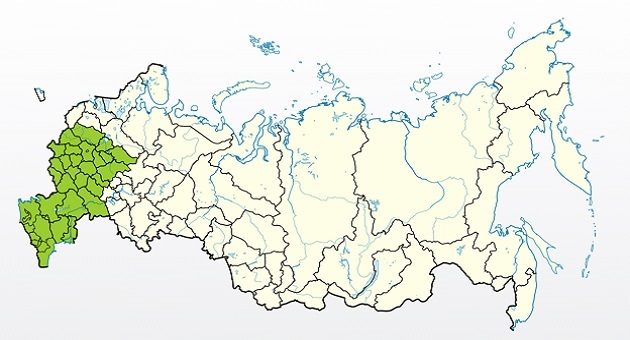
Growing regions
- Middle zone.
- North Caucasus.
- Moscow region.
- Leningrad region.
- Crimea.
- Northern regions (selective).
Origin
We owe the origin of this apple tree to amateur breeder Evgeny Mikhailovich Kamendrovsky, who, while working at the All-Russian Selection and Technological Institute of Horticulture and Nursery, submitted the variety for inclusion in the State Register. Two main varieties were used as parent varieties: Delicious Red and Antonovka Obyknovennaya.
The renowned scientist Vladimir Ivanovich Susov, in his "Encyclopedia of the Best Fruit Tree Varieties," devoted an entire chapter to the apple tree with the beautiful, poetic name "Winter Beauty." He conducted extensive variety trials in the village of Luginino, Solnechnogorsk District, Moscow Region, after which it was classified as an elite tree. The tree has been officially zoned for the Central and Northwestern regions. In fact, it has proven so frost-resistant that it can be grown even in harsher climates.
Content
Description of the Winter Beauty variety
 This early-fruiting variety immediately caught the attention of gardeners across the country. It has a beautiful, compact crown and above-average yields. The trees are easy to grow, requiring no special care, frequent watering, feeding, or fertilizing, and are resistant to low temperatures and sudden temperature fluctuations.
The apple trees are resistant to scab and other apple diseases, and the fruit has very high marketable quality. They ripen late but can be stored until the next harvest. Winter Beauty is recommended for cultivation in large, commercially intensive orchards and in small garden plots.
Apples: What do they look like?
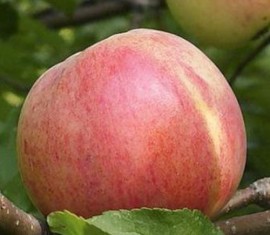
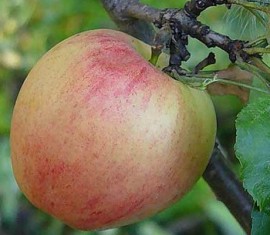
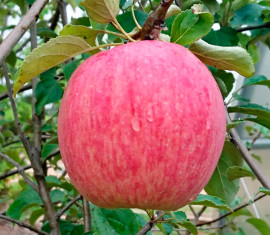
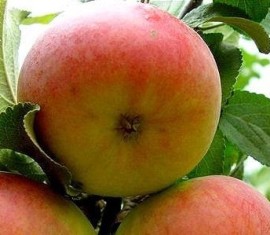
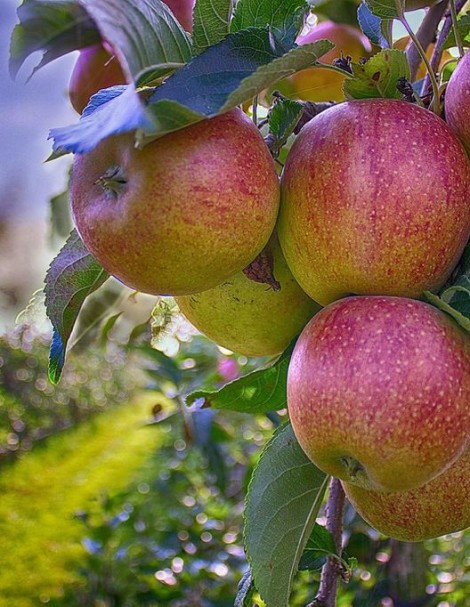
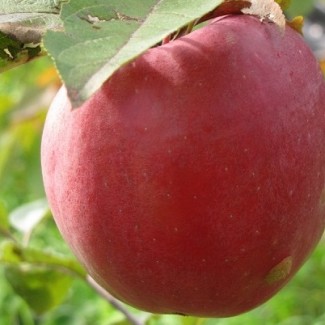
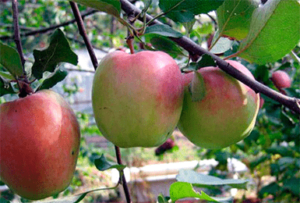 Most fruits are medium to large in size, weighing up to 160-180 grams, but can also reach 200-250 grams. The shape is symmetrical and round, slightly elongated, conical, and smooth, with virtually no ribbing even near the calyx and no lateral seam.
The skin is dense, smooth, glossy, green or greenish-yellow, and becomes covered with a light, bluish-white waxy coating at maturity. The blush is orange-purple, can be bright red or slightly pinkish-crimson, and is diffusely mottled and translucent, visible on the sunny side, covering approximately 45-60% of the surface. Subcutaneous punctures are numerous, but they are greenish in color and blend with the base color, making them virtually invisible on the surface. It is recommended to assess the chemical composition by examining the following indicators:
- P-active substances – 264 milligrams.
- Ascorbic acid (vitamin C) – 12.4 grams.
- Sugar (fructose) – 11.8%.
- Titratable acids – 0.48%.
- Pectins (fiber) – 9.9%.
The flesh is white or slightly creamy, dense, very juicy, and aromatic, with a distinctive aroma. It is very crisp, crunchy, and easily breaks off when bitten, with a prickle and tender texture. The flavor is considered dessert-like, leaning heavily toward sweetness but with a distinctive apple-like tartness. Tasting scores range from 4.3 to 4.4 out of 5.
Winter Beauty apple tree: characteristics
Crown and root system
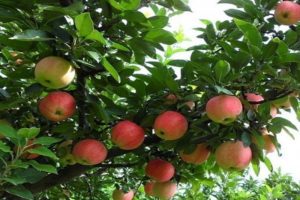 Trees are usually considered medium-sized; they can stretch without formative pruning up to 5-6.5 meters maximum.The height and density of the tree can be affected by external factors, such as drafts, light, and so on. The crown is most often rounded or rounded-conical, but can also be oval or pyramidal. If desired, it can even be shaped like a broom or cordon; it is very flexible and responds well to pruning. Branches are moderately dense, often extending from the trunk at an acute angle. They are smooth, medium thick, pubescent, and covered with brown or tawny-brown bark.
The leaves are medium-sized, elongated, rounded, or oval, dark green or rich green. They are leathery and dense, smooth, glossy, and shiny, and may have a light pubescence on the underside. The tip is long and pointed, twisting into a helix, the margins are wavy, serrate, and serrated, and the ribbing is rough. The root system is fibrous, very robust, and branched, but may sometimes have a central taproot, depending on the rootstock.
Productivity and pollination
The fertility rate can vary significantly throughout the tree's active life, but it is generally considered to be average or slightly above average.
A good grower can produce approximately 140-160 kilograms of apples per season from one mature Winter Beauty tree. In favorable years and with the highest quality care, this figure can increase to 180-200 kilograms..
The Beauty doesn't require pollination from other apple trees to set fruit; it's considered self-fertile, though conditionally. This means that with the presence of apple varieties suitable for flowering within 50-70 meters, the yield will increase significantly, but about 35-40% of the maximum possible fruit can be obtained without them.
Winter hardiness and disease resistance
Its resistance to low temperatures is very high. Trees can withstand temperatures as low as -39-42°C with virtually no damage. Therefore, this variety can be grown not only in the recommended regions, but also in more northern or eastern areas. With proper shelter and winter preparation, experienced gardeners have managed to grow Winter Beauty in the Urals, Siberia, and the Far East.
The tree is highly resistant to apple diseases. It is very rarely affected by any infections, including fungal ones. It is susceptible to powdery mildew. scab Cytosporosis is only seen in the most extreme cases, during years of severe epiphytotics. Insects can damage leaves, bark, and even wood, but this is also rare. To avoid any problems, it's important to carry out preventative treatments with insecticides and fungicides in a timely manner.
Rootstocks and subspecies
No subspecies of Winter Beauty have yet been discovered, but it can be grown on a wide variety of rootstocks. Depending on the rootstock's characteristics, the tree itself will acquire unusual properties. On vegetative rootstocks, they grow the most winter-hardy, but the trees grow large and are difficult to care for and protect.
On semi-dwarf or dwarf rootstocks, they are much more compact and produce larger apples, but their frost resistance is reduced. If desired, you can even train creeping varieties on such rootstocks so that they can be completely covered with spruce branches, straw, or soil for the winter.
Features of growing Winter Beauty
 Landing
 Landing
Basic conditions
- The soil for the Beauty should be moisture-retentive but airy; for example, loam, floodplain soils, podzolic soils, or polished black soil are well suited.
- The location must be sunny; in the shade, the tree grows weak, spindly, and may die. Even if it survives, it sometimes refuses to bloom or bear fruit, and does not tolerate transplanting well in old age.
- Winter Beauty trees should not be planted in areas where water accumulates, such as in a lowland, in a floodplain meadow, directly next to a river, pond, or lake, or where the groundwater table is very high (2-2.5 meters). If options are limited, you can create special embankments, ensure proper drainage, and only then plant the apple trees.
- It is not necessary to prepare the holes in advance, although you can use those dug 6-8 months in advance.
- They dig holes 70-80 centimeters deep, up to 1 meter in diameter, and put humus on the bottom, urea, horse humus and ammonium nitrate in small quantities, cover with a layer of soil or drainage, pour 30-45 liters of water, let stand for at least 3-5 days.
- Leave a distance of 3.5-4 meters between holes, and 4-5 meters between rows (for vegetative rootstocks). For dwarf trees, you can reduce this distance to 2.5-3 meters; there's enough space. When creating creeping trees, keep in mind that the branches will have to be bent and positioned horizontally, which will make the tree take up more space.
- Root collar To preserve the rootstock's properties, the tree should be planted at least 7-9 centimeters above the surface to prevent it from growing roots higher. Otherwise, the Beauty rootstock will lose all its properties.
- It's a good idea to drive stakes or planks into the hole right away for support. Don't remove them until 2-3 years after fruiting begins. Placing them on the north side will also provide additional frost protection during cold weather.
- Place the seedling on the drainage, straighten the roots, sprinkle with earth and tamp, water with plenty of water, pour a small mound of earth around the perimeter, inside mulch sawdust or any other available material.
The first pruning of Winter Beauty is done in the year of planting, just before placing it outdoors. This involves shortening the trunk by one-third, and removing all but two or three branches, which will serve as skeletal branches. These branches should be spaced at different heights, widely separated, and 5-8 centimeters shorter than the central core. Trimming the root system is not recommended; it can only be gently straightened.
Landing dates
The best time to plant this variety is considered to be spring, before the buds have begun to open. Choose a warm, dry day in late March, but early or mid-April is also suitable, depending on the weather and climate conditions in the growing region. In southern regions, planting can be postponed until fall, around late September or early October, when the leaves have already fallen but frost is still at least a few weeks away.
Tree care
 Tree care
Protection from frost and pests
No matter how resilient a tree may seem, it's important to remember the rules of preparing for winter and covering it, otherwise you could lose it in particularly extreme cold years. Watering Plants should be kept as usual until August, and then gradually reduce watering during the last month of summer, reducing it to zero by September. Trees can be covered with tent-like coverings, trunks wrapped in burlap, and the root zone filled with straw bales, hay mats, or soil.
To protect trees from insects, which often hide in cracks and crevices in the bark, trees are whitewashed with lime in the spring and fall. To prevent rodents from damaging the bark and young, succulent shoots in the winter, the trunks are coated with melted animal fat, fuel oil, or grease.
Loosening the soil, watering: proper agricultural technology
It's essential to loosen the soil; the Beauty tree prefers good oxygen access to its roots, and for the soil around its rhizome not to be packed to the point of granite. Dig the area around the tree trunk twice a year, in spring and fall, and hoe the rest of the year. It's also important to remove all weeds, shoots, and root suckers. In the 6th to 9th year, you can sow herbs like parsley, mint, and other herbs under the tree to ensure natural soil aeration.
Only young trees typically require significant watering. They need regular watering; about once every 10-12 days is sufficient. As they grow, this active watering can be reduced to 6-8 times per season, timing them to coincide with the driest and hottest periods, as well as flowering, formation of ovaries and ripening of fruits.
Pruning: simple crown shaping
The best form for the Winter Beauty is a sparse, tiered growth pattern, with few branches spaced far apart at varying heights. This should be established in the first year, just before planting in open ground. When forming a creeping tree, the central conductor is cut back to 2-3 buds, and all skeletal branches are bent to the ground and tied to stakes driven into the soil.
Sanitary pruning, which involves removing all damaged, dry, or diseased shoots, is performed in the spring and fall. Avoiding this practice is crucial, as it can lead to poor fruit production and overly dense crowns, preventing air circulation and preventing sunlight from reaching the fruit.
Pollinator varieties
- Zhigulevskoe.
- Delicious Red.
- Mac.
- Priam.
- Grushovka.
- Antonovka.
- Gala.
- Korobovka.
- Borovinka.
Reproduction
- Rooting.
- Kidney grafting.
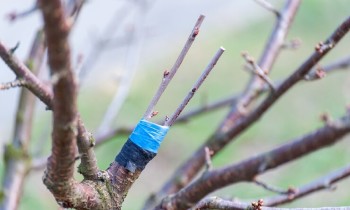
- Cuttings.
Ripening and fruiting of Winter Beauty
The beginning of fruiting
 The beginning of fruiting
The first flowers on the tree can be seen approximately 3-4 years after planting, but most often these are barren flowers that will not produce fruit. Therefore, it is recommended to pluck them immediately to prevent them from draining the tree's energy, allowing it to quickly develop green mass. The first harvests are best no earlier than 4-5 years, when you can harvest up to 5-8 kilograms of beautiful and delicious apples.
Flowering time
Like all autumn apple trees, the Beauty begins blooming mid-May, around mid-May. By the beginning of the month, buds can be seen on its eyelids, which by the 15th or 20th of May open into beautiful, fairly large flowers with delicate, pale pink or snow-white petals. By the end of May, these flowers have usually completely fallen off, and small apples have formed. To increase the size of the fruit, the ovaries can be thinned out, removing one of the two or three.
Fruiting and growth
Trees grow quite quickly, especially before they begin to bear fruit. They can reach up to 55-70 centimeters in a season. However, the rate of growth slows slightly over time, although not significantly. Apple trees gradually increase their yield, yielding 50-80 kilograms by the 9th to 12th year, and a full 150 kilograms or more by the 15th to 16th year.
Apples begin to ripen fairly early in warm climates. By mid-September, they are fully ready for picking and storage. However, if the climate is cold or the weather is unfavorable, this can be delayed until early or even mid-October. Fruits can be stored in a special refrigerator for approximately 180-200 days, and in a cellar, even less. Without special storage conditions, it's best to process the fruit before January, otherwise they may become limp, soft, sour, and crumbly.
Top dressing
- Peat.
- Compost.
- Ammonium nitrate.
- Humus.
- Chicken manure.
- Superphosphate.
- Manure.
- Mineral complexes.
What to do if it doesn't bloom or bear fruit
- Check for pests or diseases.
- Transplant into the sun.
- Water.
- Fertilize.
Why do apples fall?
- Wind, hail, hurricane, rain.
- Pest damage.
- Diseases.
- Overripe.
Please leave your feedback on the Winter Beauty variety so that other gardeners can learn from your experience and draw conclusions from it.