Bolotovskoye apple tree: characteristics of the variety and care
| Color | Reds |
|---|---|
| Ripening season | Autumn |
| Size of apples | Average , Large |
| Taste | Sweet and sour |
| Crown type | Average tree height |
| Shelf life | Average shelf life |
| Application | Fresh , For recycling |
| Winter hardiness | High winter hardiness |
| Fruiting age | Up to 5 years |
 History of origin and regions of growth
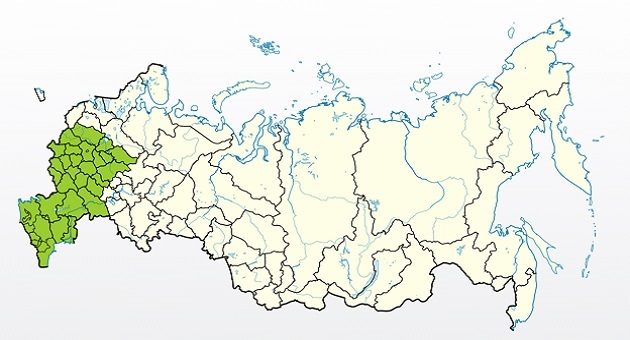
Growing regions
- Crimea.
- North Caucasus.
- Middle zone.
- Some northern regions.
Origin
This relatively new variety has been attracting the attention of gardeners in our country and neighboring countries for several years. The hybrid was developed in the village of Zhilina in the Oryol region at the experimental station of the All-Russian Research Institute of Fruit Crop Breeding in 1977. The cultivars are Yuri Ivanovich Khabarov, Evgeny Nikolaevich Sedov, Zoya Mikhailovna Serova, and Vladilen Vasilyevich Zhdanov.
The first seedling was obtained using the Skrizhapel variety and hybrid No. 1924 (a fourth-generation descendant of a prolific flowering apple tree). A distinctive feature of Bolotovsky's seedlings is the integrated Vf gene, which provides complete immunity to all five races of scab..
In 1993, the new variety was classified as elite and officially accepted for testing. The apple tree passed all tests with flying colors and was included in the State Register of Breeding Achievements in 2001, and two years later, it was zoned for the Central and Central Black Earth regions. It is especially recommended for the Moscow and Leningrad regions, but in reality, it is widespread throughout the central part of the country, in the southern regions, and further north.
Content
Description of the Bolotovskoye apple variety
 Despite the tree's large size, it has become well established in domestic and international orchards. Its main advantages include its winter hardiness, very high yields, and complete resistance to most apple tree fungal infections, thanks to a specific gene.
Moreover, the fruits have excellent consumer and commercial qualities; they are beautiful and delicious, making excellent juices, preserves, and jams, and they also have a fairly good shelf life. This variety is recommended for growing in small garden plots as well as in large, intensive commercial orchards.
Apples: What they look like
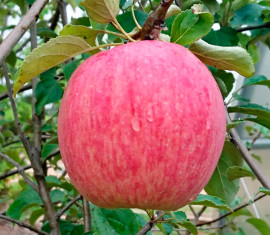
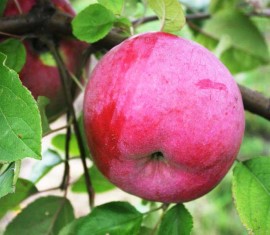
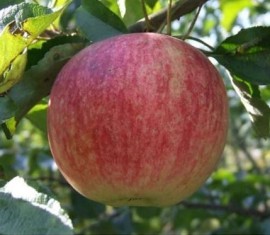
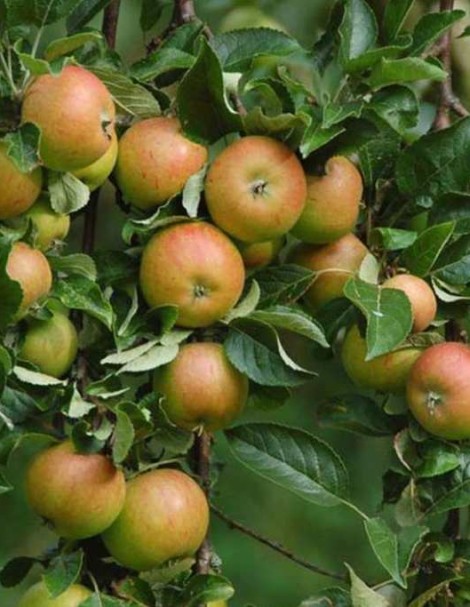
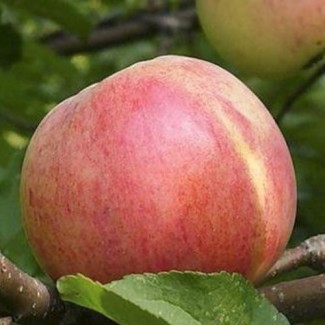
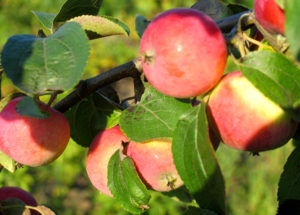 Bolotovsky's fruits are considered medium-sized. They weigh a maximum of 135-175 grams, but in some cases can exceed 200. They are round, sometimes slightly uneven, flattened along the central axis, with wide, barely noticeable ribs. They may have a connecting seam on the side.
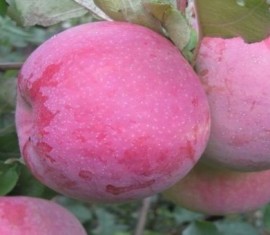
The skin is dense, elastic, and strong, making it much easier to transport apples. It is slightly glossy, not shiny, smooth, and has no oily or waxy coating. It has a green or greenish-yellow hue. The blush is bright red or red-orange, and can be translucent, blurred, spotted, or mottled or striped. Numerous light-colored subcutaneous dots are barely visible on the variegated striped surface. The chemical composition is assessed by the following factors:
- Ascorbic acid (vitamin C) – 14.3 milligrams.
- Pectins (fiber) – 16.9%.
- Total sugars (fructose) – 10.8%.
- Titratable acids – 0.32%.
- P-active substances (catechins) – 451 milligrams.
The flesh is very dense but not hard, crisp, slightly prickly, and has a pleasant texture. It has a slightly greenish or lemony hue, but can also be creamy. It's sweet and sour, with a characteristic apple tartness, balanced, aromatic, and quite juicy. The flavor is considered a dessert-like, harmonious one. Experts have given it a 4.4 for appearance and a 4.3 for unique flavor.
Bolotovskoye apple tree: characteristics
Crown and root system
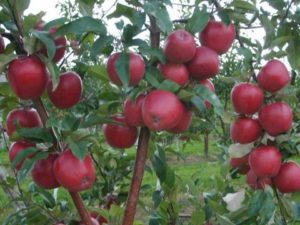 The trees are predominantly medium-sized, barely reaching 4.5-5 meters, but in some cases can grow up to 6-8. They have a sparse crown with sparse, straight, thick, and vigorous shoots covered in smooth, glossy bark of brown, reddish-brown, or brown. They are faceted in cross-section and slightly pubescent. The crown is spherical or broadly oval, and may become weeping with age. Fruiting is concentrated on the fruiting twigs and rings.
The leaves are dark green, matte, and leathery, with a pubescent underside. They are large, oval-shaped, and short-pointed. The leaf tip often curls into a spiral, the margins are serrated and dentate, and the ribbing is rough. The root system is highly branched, deep, and tenaciously clings to the soil, adapted to seeking moisture even at considerable depths.
Productivity and pollination
The variety is so productive that it can easily give odds to even the notorious Antonovka ordinary.
One tree in the prime of fruiting can produce at least 280-300 kilograms of fragrant, large and beautiful apples per season..
This variety is considered conditionally self-sterile, so it requires pollinators to ensure a good harvest. Within 40-60 meters, plant apple trees with suitable flowering times; a list of these is provided below in the information tables. Experienced gardeners recommend spraying the trees with sugar or honey syrup during bud break to attract pollinating insects.
Winter hardiness and disease resistance
The Bolotovsky apple tree is quite resistant to low temperatures, but it won't tolerate extreme frosts. Temperatures down to -32-34°C are tolerable, but only if cold spells don't last more than 2-3 weeks. Otherwise, not only the bark, young shoots, and buds, but also the wood itself can freeze.
Apple trees have a genetic immunity to scab and many other fungal infections. Therefore, the tree owner will not have to worry about treating them with special fungicides. However, some other diseases (cytosporosis, powdery mildew, pit bitterness, bacterial burn), as well as insect pests, can make life quite difficult for a gardener. Therefore, prevention in general should not be neglected. It's best to spray trees with insecticides in a timely manner, clear the tree trunks, weed, and collect fallen fruit and leaves.
Rootstocks and subspecies
No Bolotovsky subspecies have yet been developed, but the variety can be grown on various rootstocks. Standards grown on vegetative seedstock are the most winter-hardy. Dwarf and semi-dwarf rootstocks produce much more compact trees, only reaching 2-3 meters in height, but significantly less resistant to low temperatures. There are no columnar subspecies of this variety; if you're offered one, it's a sure sign they're trying to deceive you.
Features of growing Bolotovsky
 Landing
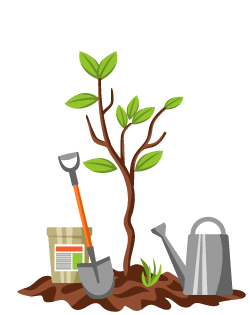 Landing
Basic conditions
- The variety loves wide, open spaces, good lighting and ventilation.
- It's best to choose slightly acidic soils, and if these aren't available, you can "quench" them with lime. Bolotovskoye grows well in loam, black soil, and sandy loam, and also thrives in rocky, low-fertility soils, but requires additional fertilizing.
- Groundwater can spell doom for a young tree. If the water table is too high, less than 2.5-3 meters from the surface, the tree's roots will inevitably reach it. These roots, in turn, will begin to rot, leading to the death of the trunk. Therefore, it's best to choose elevated locations and avoid planting in lowlands, marshy areas, floodplain meadows, or directly near springs, lakes, and rivers.
- Pits for Bolotovsky should be prepared in advance, at least 3-6 weeks in advance, and even better, a season in advance. They are dug up to 1 meter in diameter and 80-95 centimeters deep. Half a bucket of topsoil mixed with a small amount of fertilizer (organic and mineral) is poured into the pits. This is then lined with stones for drainage and filled with 35-50 liters of water.
- At least 5-6 meters should be left between trees so that they do not conflict with roots or shoots when they become adults.
- Stake stakes are driven into the holes to support the young seedlings. They should preferably be positioned on the north side.
- Place the tree in a hole with drainage, spread the rhizome out with your hands so it's loose, cover with soil, and compact it by hand. Water the entire area with 25-45 liters of water and mulch with compost, chopped grass, and sawdust.
Landing dates
There is absolutely no difference whether you plant the Bolotovskoye variety in early spring or late fall; it has no effect on survival. Trees purchased with closed root system, in bags, containers, or pots that don't require additional disposal, can be planted even in midsummer. If the weather is extremely hot, it's best to shade the young seedlings for the first few days.
Protection from frost and rodents
In Crimea, the Caucasus, and almost throughout the central part of the country, trees require virtually no frost protection. Trunks can be wrapped in burlap; this will be quite sufficient. In harsher regions, it's better to also lay mats of straw or hay over the root zone, and to wrap young, small trees in a tent-like manner.
Tree care
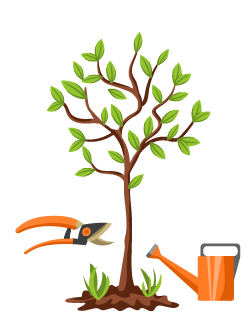 Tree care
Loosening the soil, watering: proper agricultural technology
You can dig the area around the tree's trunk once a year, in the fall or spring, and you can time this process to trim dead branches. Hoeing the soil surface can be done 6-8 times per season as the apple tree grows. If you don't weed and loosen the soil so frequently, it won't have much of an impact; the main thing is to promptly remove rotting fruit or leaves from under the tree.
The tree doesn't require much regular watering, but when it's young, it's a good idea to water it about once every two weeks after planting. About 25-40 liters will be enough for normal growth, but only if there's no rain. If there is rain, wait 10-14 days before watering.
Pruning: simple crown shaping
Bolotovskoye itself is not prone to overgrowth or thickening, so pruning won't require much effort. All pruning should be done during the dormant period, that is, in early spring or late fall. All vertical branches growing inward, obviously unnecessary, and spoiling the shape of the crown, should be pruned.
Sanitary pruning is most often done in the fall, after fruiting, when all damaged and dry shoots are cut off. However, it can be done as needed, even in the spring. All wounds should be immediately sealed with garden pitch, paint, or drying oil.
Pollinator varieties
- Strifel.
- Antonovka.
- Welsey.
- Korobovka.
- Borovinka.
- Cinnamon striped.
- A gift to Count.
- Saffron pepin.
- Anise.
Reproduction
- Rooting.
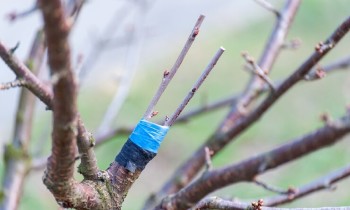
- Grafting of buds and cuttings.
- Layers (clones).
Diseases and pests
- Black crayfish.
- Powdery mildew.
- Cytosporosis.
- Rust.
- Green aphid.
- Codling moth.
- Hawthorn.
- Scale insect.
Ripening and fruiting of Bolotovsky
The beginning of fruiting
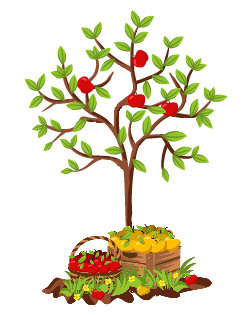 The beginning of fruiting
This variety is considered early-bearing, although the first fruits will take at least 4-5 years to appear. A few single flowers may bloom earlier, but it's best to pick them to allow the trees to develop branches and roots before devoting their energy to fruiting. Varieties grown on semi-dwarf and dwarf trees will begin bearing fruit as early as 2-3 years, yielding 5-10 kilograms of beautiful and delicious fruit.
Flowering time
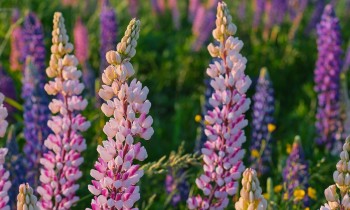
Flowering begins around the first half or mid-May in warm climates and the second half in colder regions. The tree opens its buds for 12-16 days, after which fruit sets quickly and forms small apples. The flowers are large, saucer-shaped, and clustered in inflorescences of 5-8. The buds are a distinct pink, and when they open, they become almost white. They have a powerful aroma that can be smelled from afar.
Fruiting and growth
The time from the beginning of fruiting to its peak is relatively short, as the tree grows quite rapidly. It can produce up to 45-60 centimeters of green mass per year. Therefore, harvests become substantial by the sixth to eighth year, and by the 10th to 12th year, they reach full production. Harvesting 200-250 kilograms is just around this time. The average lifespan of the Bolotovsky is 55-65 years, but exceptions are possible.
The fruits begin to ripen in mid- to late September, depending on weather conditions. They ripen uniformly, so it's important to harvest them quickly. Otherwise, all the apples will simply fall to the ground, which is considered the variety's main drawback. Consumer maturity occurs approximately 2-3 weeks after harvesting; the fruits become sweeter, have a more pleasant texture, and appear to be filled with juice. Apples have an average shelf life; in suitable cellar conditions, they can be stored for 3-4.5 months with virtually no loss of consumer or marketable qualities.
Top dressing
- Ammonium nitrate.
- Mineral complexes.
- Chicken manure.
- Manure.
- Humus.
- Superphosphate.
- Compost.
What to do if it doesn't bloom or bear fruit
- Provide or stop watering.
- Check for pests or diseases.
- Transplant into the sun.
- Feed and fertilize.
Why do apples fall?
- Overripe.
- Natural factors (hail, hurricane, rain).
- Pest damage.
- Diseases.
Please leave your feedback on the Bolotovskoye variety so that other gardeners can learn something similar from it to enhance their experience.