
Rossoshanskoye Striped Apple Tree: Variety Features and Care
| Color | Reds , Striped |
|---|---|
| Ripening season | Autumn |
| Size of apples | Large , Average |
| Taste | Sweet and sour |
| Crown type | Average tree height |
| Shelf life | Average shelf life |
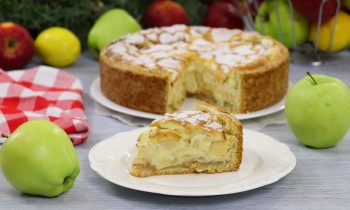
| Application | Fresh , For recycling |
| Winter hardiness | High winter hardiness |
| Fruiting age | Up to 5 years |


 History of origin and regions of growth
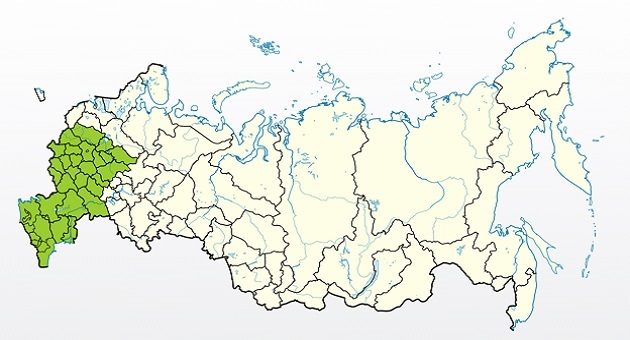
Growing regions
- Middle zone.
- Leningrad region.
- Middle Volga region.
- North Caucasus.
- Crimea.
- Some northern regions.
- Moscow region.
Origin
Developed by Soviet breeders in the early twentieth century, the Rossoshanskoye Polosatoye variety was obtained by open pollination of the Kronselsky Transparent variety, presumably with pollen from the Red Aport. The author is believed to be Mikhail Mikhailovich Ulyanishchev, who worked at the Rossoshansky Zonal Fruit and Berry Experimental Station. The first seedlings were bred in 1926, and it took more than two decades for the apple trees to gain recognition.
An application for admission to variety testing was submitted only after the end of WWII and was approved in 1947. The variety subsequently passed the tests successfully, and in 1959, it was added to the State Register of Breeding Achievements. It is officially zoned for the Central Black Earth and Lower Volga regions. It is successfully cultivated in much larger areas.
Content
Description of the Rossoshanskoe striped variety
 Winter apple varieties are particularly prized by gardeners in our country due to the consistently harsh climate in much of the region. Rossoshanskoye apple tree has high environmental tolerance and can thrive in challenging conditions, including smoke, air and soil pollution, and excessive smoke in large cities, near large industrial plants, factories, and plants. It can cleanse soil of toxic substances. It tolerates severe frosts well, requires little special care, and doesn't require frequent watering or fertilizing. Its crown is compact, and fruiting is regular.
The fruits of this variety are impressively large. They are very beautiful, tasty, and aromatic, suitable for processing or fresh consumption. Despite their somewhat low resistance to fungi, the trees are recommended for intensive commercial plantings, as well as for private cultivation on private plots.
Apples: What do they look like?
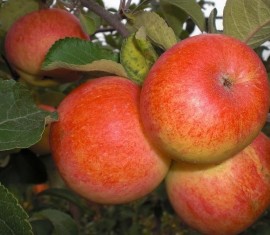
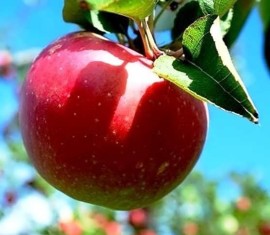
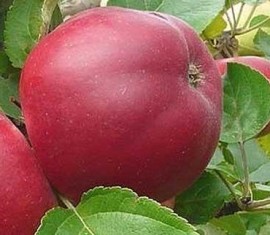
 The fruits are usually round, smooth, with barely noticeable ribs, spherical or slightly flattened, and less commonly turnip-shaped. They are generally uniform and symmetrical, but sometimes they are slanted to one side. The average weight of apples is 170-190 grams, but in good years they can easily reach 290-340.
Rossoshansky's skin is smooth, dense, strong, and elastic, but not thick. It has a medium shine, a slightly matte finish, and can sometimes be covered with a waxy, bluish bloom. Its base color is green or greenish-yellow, rarely lemon-yellow or honey-colored. The blush is mottled and striped, deep, red or reddish-brown, sometimes burgundy or carmine, multi-layered, spotted, and diffuse, and can cover 45-90% of the entire surface. Subcutaneous punctures are moderately visible; they are light green or whitish, numerous, and medium in size. Professionals are advised to evaluate the chemical composition by examining a few parameters:
- P-active substances (catechins) – 193.9 milligrams.
- Ascorbic acid (vitamin C) – 18.9 milligrams.
- Fructose (total sugars) – 12.1%.
- Pectins – 0.99%.
- Titratable acids – 0.57%.
The apples have a pleasant texture, very juicy, fine-grained flesh. It's tender, crisp, but not prickly, and light green, creamy green, or slightly lemon-colored. The Rossoshansky Striped apple has a sweet and sour flavor, leaning toward tartness but with a distinct sweet undertone. On a professional tasting scale of 5, the fruit scores 4.7-4.8 points for taste and appearance.
Rossoshanskoe striped apple tree: characteristics
Crown and root system
 Trees of this variety are classified as medium-sized, because Without shaping they can grow 4-5 meters, with rare exceptions, slightly larger. When young, they are often oval or even slightly pyramidal in shape, but with age they become increasingly spreading, sometimes weeping, with drooping, long, drooping branches. The shoots are set at right angles to the main trunk, usually straight, but sometimes slightly curved, covered in green-brown or brownish-gray bark, sparsely pubescent. Fruiting is concentrated on the wood of three- or four-year-old growths, and is mixed.
The leaves of this variety are fairly large, matte, and wrinkled, with coarse nervation and a rounded, slightly elongated, short-pointed shape. The edges are serrated, strongly serrated, and crenate, and can be slightly wavy. They are green, rich green, or emerald, fading to yellow-green in autumn. The root system is medium-deep, fibrous, and may have a central taproot on wild plants. It is moderately adaptable to moisture, requires regular watering, and prefers airy soils.
Productivity and pollination
Due to the average height of the tree, as well as the compactness of its crown, its yield can be called high.
A fully mature tree can produce approximately 140-180 kilograms of apples in a single season. Fruitfulness may vary slightly depending on the regional climate, growing conditions, care, the weather in a given year, and other factors, but not significantly..
Rossoshanskoe is self-sterile and cannot pollinate itself. Therefore, to produce fruit and subsequently ripen the apples, it requires external pollinators. For this reason, it is commonly interplanted with apple trees that bloom at the same time.
Winter hardiness and disease resistance
Apple trees have a high frost resistance, but they may not withstand frequent temperature fluctuations. They especially dislike late spring frosts, which can destroy fruit buds and/or flowers. With proper shelter and wrapping, they tolerate temperatures down to -25-29°C in winter without damaging the buds. However, proper winter preparation is essential.
Trees are quite successful in fighting most apple diseases, both parasitic and fungal or bacterial. However, scab Rossoshansky is dangerous; it attacks trees due to high humidity, lack of preventative measures, or poor care. It affects not only the leaves but also the fruit. The entire harvest ultimately has to be discarded.
Rootstocks and subspecies
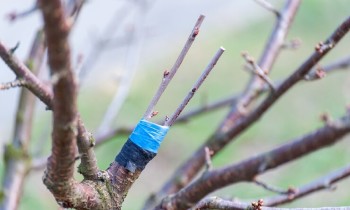
The variety is grown on a wide variety of rootstocks, imparting certain properties and qualities distinct from those of the parent variety. This has minimal effect on the fruit, but the trees themselves may be taller or shorter, more or less winter-hardy. Furthermore, there are many subspecies, some of which are worth briefly discussing.
| Subspecies | Description |
| Delicious (amazing) | A scab-resistant subvariety with oblong, elongated fruits possessing exceptional sugar content. It ripens late in autumn and has reduced frost resistance, making it recommended for growing in warmer climates, as it may not ripen fully. Fruits are medium to smaller than average, weighing 110-140 grams. |
| Crimson | The Renet Simirenko variety, as well as the Welsi cultivar, were used in the breeding process. As the name suggests, the fruits have a rich, crimson blush, dense and uniform across the entire surface. Late fruiting (6-8 years) is considered the subspecies' main drawback. The average fruit weight is 170-240 grams, and they ripen in early winter (late September-October). |
| August | A frost-resistant hybrid of Rossoshansky and the famous Chinese Bellefleur, it has been in the State Register since 1986. The medium-sized (120-150 grams) round fruits have a poor shelf life but are very juicy and have an amazing flavor. They are well suited for making juices, jams, preserves, and marmalades. |
| Spring | This subspecies was developed by crossing Mackintosh and Simirenko. It's a winter-hardy variety, blooming early and producing fruit in early autumn, and sometimes even in late summer. Despite its light fruit weight, only 120-140 grams, it has a pleasant bite and excellent shelf life. It can be stored until the next harvest without losing its flavor or marketability, not only in a special refrigerator but also in a regular cellar. |
Features of growing Rossoshansky striped
 Landing
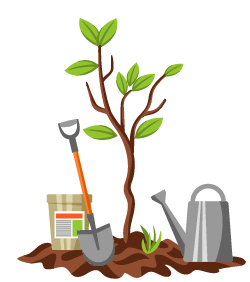 Landing
Basic conditions
- Trees don't tolerate shade; it can weaken them and even kill them. Therefore, it's best to choose locations that receive full sun for most of the day.
- It's advisable to choose soils with natural aeration, or to provide it yourself by adding, for example, a little sand or loam to heavy, rich black soil or clay. However, Rossoshanskoye will grow in any soil except highly acidic or saline.
- Regulating the groundwater level isn't always possible, but it's best to plant where it doesn't rise excessively (2.2-2 meters). If such a spot isn't available, it's best to create an artificial mound during planting.
- Blowing north winds can cause buds to freeze, so they need to be protected from drafts. However, stagnant air should also be avoided. Proper crown ventilation is essential.
- Digging holes in advance is possible, but not necessary. Allow the soil and fertilizer to settle for 2-4 weeks. Ideally, the holes should be 60-70 centimeters deep and up to 90-100 centimeters in diameter. Add soil with minerals and organic matter to the bottom, cover with a 10-15 centimeter layer of drainage, and add 25-50 liters of water.
- You need to immediately dig poles into the holes to which the young apple trees will be tied to prevent them from being damaged by the wind.
- Leave up to 3-4.5 meters between trees, and up to 4-6 meters between rows to simplify maintenance and fruit harvesting in the future, when the tree grows and becomes spreading.
- It is better to leave the root collar, that is, the place of grafting to the rootstock, above the surface so as not to lose its properties.
- Place the seedling on a mound of drainage material in the center of the hole, spread the roots, cover with soil, and water with 25-35 liters. To prevent rapid evaporation, the surface can be mulched, for example, with sawdust or manure.
Landing dates
Rossoshanskoe is such a hardy variety that it will thrive in virtually any conditions. Therefore, it can be planted in both early spring and late fall. Choose a nice, warm, clear day in March-April or October-November to plant. Since the root system is closed, it is permissible to transplant the trees into the ground at any time, even in the height of the summer heat.
Tree care
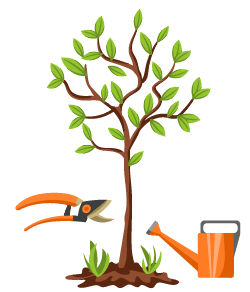 Tree care
Protection from frost and pests
Like all apple trees, this variety needs to be properly prepared for winter to avoid risks. To achieve this, watering, feeding, and fertilizing are completely stopped before the start of autumn, in late August. This will allow the trees to properly prepare for the cold weather and stop the flow of sap in the trunks in time. Spruce branches, straw, or hay are spread over the roots, soil is raked, and the trunks are wrapped in burlap or old tights. Young trees can be wrapped like a tent.
Apple tree trunks are whitewashed once or twice a year, in spring and fall, after first scrubbing them with a stiff brush. This will help get rid of pesky insects that nest in cracks and chipped bark. Coating the trunks with lard, fuel oil, or grease will help get rid of rodents, or at least repel them.
Loosening the soil, watering: proper agricultural technology
You can dig around the trunk area once or twice a year. Hoe and weed more often, removing weeds, debris, fallen fruit, and leaves. It must be kept clean, otherwise disease is inevitable. At the same time, cut back any root shoots, of which Rossoshansky has quite a lot.
Water as needed, when the soil is very dry and there's no precipitation. About 5-8 times per season is more than necessary. In hot weather, it's a good idea to loosen the soil the next day after watering, otherwise it can compact into a solid lump, like asphalt. After 9-12 years, many gardeners prefer to provide natural aeration for the roots by seeding the area around the trunk with herbs or lawn grasses and adding attractive stones.
Pruning: simple crown shaping
In the spring of the first year, it's advisable to shape the tree by removing all but two or three shoots, which will become skeletal. These should be planted at different heights, widely spaced, to create any desired shape: cordon, broom, sparse, or sparsely tiered.
Autumn is the time for a sanitary inspection and pruning. Then, remove shoots that have grown inward or upward vertically, broken, diseased, or dried out. These will be unnecessary and will thicken the crown, but will be of no use, as they won't produce any apples.
Pollinator varieties
- Ola.
- Antonovka.
- Chinawoman Kerr.
- Sinap northern.
- Sinap Orlovsky.
- Welsey.
- Fuji.
- Spartacus.
Diseases and pests
- Cytosporosis.
- Scab.
- Moniliosis.
- Powdery mildew.
- Hawthorn.
- Green aphid.
- Leaf roller.
- Scale insect.
Ripening and fruiting of Rossoshansky striped
The beginning of fruiting
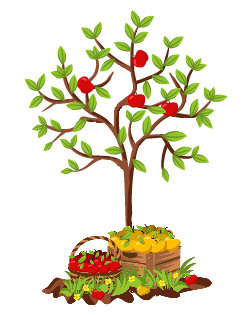 The beginning of fruiting
Depending on growing conditions, climate, care, and subspecies, apple trees begin bearing fruit at slightly different times. Buds may begin to bloom as early as the second or third year, but it's best to remove them. These are likely barren flowers that will only waste energy. The first fruit harvest can only begin in the third or fourth year, when they should have ripened to 3-7 kilograms.
Flowering time
Flowering usually begins fairly early, around the beginning of May, and is fully completed by mid-May. However, timing can vary greatly depending on weather and growing conditions. The process lasts approximately 12-17 days, and it's important to ensure Rossoshanskoye has enough pollinators and honey-producing insects to last this period.
The flowers are gathered in individual clusters, large and snow-white or tinged with pink. The petals are individual and open. They sit tightly on the branches and have a strong, pleasant scent.
Fruiting and growth
The variety grows very quickly, reaching 45-60 centimeters per year, regardless of when it begins bearing fruit. Therefore, it will take no more than 8-10 years for them to reach their full size and begin bearing fruit. By then, you'll be able to harvest at least a hundred kilograms of fragrant, delicious apples.
The fruits begin to ripen in late September, but it's best to delay harvesting until early or even mid-October. They are picked from the branches when a waxy, silvery coating appears on the surface and stored immediately. It's best to start eating them after 2-4 weeks, when the sugars in the fruit have fully caramelized and they reach their peak flavor. Apples have a medium shelf life, lasting until mid- to late winter, sometimes until early spring.
Top dressing
- Dolomite flour.
- Eggshells (calcium-containing complexes).
- Humus.
- Manure.
- Compost.
- Superphosphate.
- Mineral and nitrogenous complexes.
- Chicken or pigeon droppings.
- Ammonium nitrate.
What to do if it doesn't bloom or bear fruit
- Wrap up.
- Limit or increase watering.
- Remove insects.
- Cure diseases.
Why do apples fall?
- Weather troubles.
- Early frosts.
- Pests or diseases.
- Overripening.
Leave a review based on your own experience with the Rossoshanskoye Polosatoye apple tree variety, so that even novice gardeners have no questions about tree cultivation.

Comments
Could you please tell me if Bely Naliv can be a pollinator for Rossoshansky Striped? I only want to plant these two varieties…