Beautiful Perennials for the Garden: The Best for Your Plot
A summer house or garden will always attract more attention if it features beautiful, well-maintained flowerbeds and striking borders. While this may seem difficult and time-consuming, you can choose long-blooming perennials for your garden that will delight you for seasons to come. Not only are they easy to care for, but they also create beautiful flowerbeds.
Content
Benefits of Perennial Plants for the Garden
In country house landscape design, perennial, low-maintenance garden plants are most often used because they offer a host of advantages:
- the revival of flowers from year to year, floral arrangements will delight you with their beauty for a long time;
- the plants go well together;
- availability, can be purchased at any gardening store;
- they do not require constant replanting;
- Most varieties do not need to be dug up for the winter; thanks to their strong roots, they easily tolerate cold;
- ease of care;
- ease of reproduction;
- a wide variety of zoned varieties;
- long-term preservation of attractiveness.
How to choose perennials for your garden
Perennials are considered a living foundation for a garden, delighting gardeners with lush greenery from early spring. To bring your vision to life and create a beautiful garden landscape, it's essential to choose the right plants. This task is easy if you consider the following important details:
- Analyze the natural conditions. Perennial flowers should be planted only under favorable conditions; this will ensure dense buds and lush foliage. Organize your garden according to light, choosing sun-loving peonies or asters for open areas, and perennial ferns or lilies of the valley for shady spots in the garden.
- Flowers according to soil type. The soil you use in your garden will determine whether your plants thrive. For fertile, fertile beds, choose lupines, mallows, or bellflowers. Yarrow and asters are suitable for moist soil, while goldenrod, phlox, cosmos, and carnations are suitable for dry areas.
- Determine what purpose the flowers in the garden should serve. The choice of perennials should be justified by both aesthetics and functionality, so for decoration, use lush flowers such as poppies, cornflowers, climbing roses, or clematis. For a fragrant backdrop, use lavender and sage, and for cut flowers, choose garden favorites such as roses, delicate gypsophila, carnations, or gerberas.
- Consider favorable neighborhoods in flower beds. For example, daffodils and tulips are incompatible and require considerable care. Positive companions include roses and strawberries, heuchera and lavender, and eremurus and ornamental onions.
- Size. Consider in advance the height of the plants needed to create a beautiful panorama. When calculating, be sure to consider the appropriate distance between seedlings and seeds.
- Color combinations. The choice of color scheme for plants will depend on your preferences, depending on whether you want to play on brightness or contrast.
- Flowering calendar. Remember that each perennial plant begins to bloom at a certain time, so select compositions in accordance with the flowering calendar.
Once you've selected plants for your garden, ensure they're planted correctly, meeting all requirements. Their longevity depends on this. Loosen the soil in the fall, and plant them in favorable weather, in mid-April or early May.
The most unpretentious perennial spring flowers for the garden
In early spring, garden beds illuminate their owners with a rainbow of colors. Arrangements of low-maintenance perennials will decorate your property all summer long. Below are varieties of vibrant and unusual plants that are easy to care for.
Crocuses
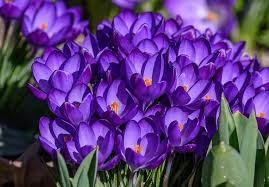
The first crocus buds emerge practically from under the snow. The small plants, up to 15 centimeters tall, begin blooming actively from March to May. After wilting, the flowers go dormant and return the following season. Traditional planting of bulbs is recommended at the end of August- early September. The best planting location is partial shade. These striking crocuses will make a great addition to flowerbed arrangements.
Muscari
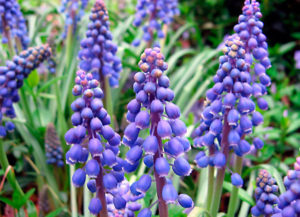
From April to May, low, bell-shaped stems up to 20 centimeters tall emerge, topped with small blue buds. The mouse hyacinth has become a modest plant, easily included among the low-maintenance ones. If hyacinth is sown under the canopy of trees, beautiful blooms can be enjoyed for many years. Planting is done in the first months of summer or early fall.
Keep in mind that during flowering, muscarias will require abundant moisture, so plant them in warm, dry soil where the flowers can accumulate energy.
Pushkinia
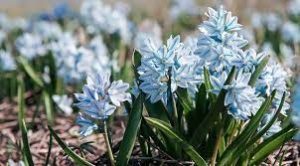
Fresh green clumps will sprout white, light blue, and blue-green blossoms from April to May. The plant thrives in full sun, so gardeners recommend planting it in light partial shade. Pushkinia makes an excellent perennial for mass planting, especially when paired with small daffodils or primroses.
Tulips
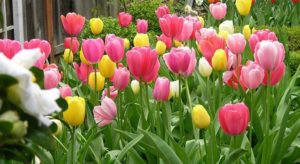
Tulips are considered not only the most common garden plant but also the most low-maintenance. Thousands of varieties are now available in stores, varying both in appearance and flowering time. For the garden, it's recommended to select flowers between 10 and 50 centimeters tall. Early tulip varieties will begin blooming in early March, while late varieties will delight with their beauty as early as late May.
It is recommended to plant tulip bulbs in the autumn, while they are still soil warmed and loose.
During growth, tulips require regular glaze, even when the bulbs are resting.
Daffodils
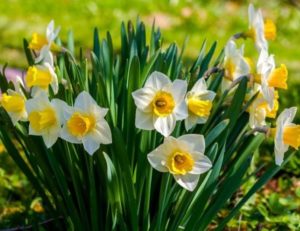
Along with tulips, gardeners also plant daffodils, which bloom from April to May. The flowers not only offer unique hues but also a rich fragrance. Depending on the variety chosen, the plants can reach a height of up to 60 centimeters.
Perennial daffodils are popular in mixed plantings with tulips, bergenia, or ferns. The flowers thrive for several years and grow to form dense clumps.
Periwinkle
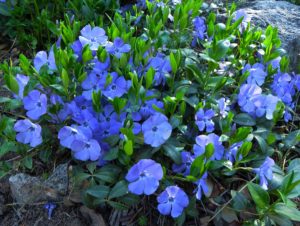
Selecting plants for sunny areas is easy, but for shady areas the task is more challenging. A striking example of shade-tolerant plants is periwinkle, which creates spectacular clumps alongside greenery. It easily takes root upon first contact with the soil, grows as small shrubs, and blooms throughout the spring.
Dicentra
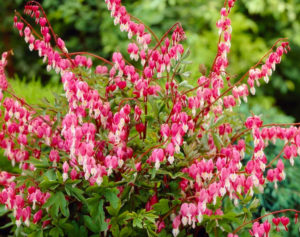
There is more than one story associated with this romantic plant. legendCommonly known as the "broken heart" flower, the dicentra easily tolerates cold temperatures thanks to its robust root system and delights with its striking white and pink, heart-shaped blooms. The blooms are short-lived, lasting only until May, but their beauty is worth admiring for at least a month.
Lily of the valley
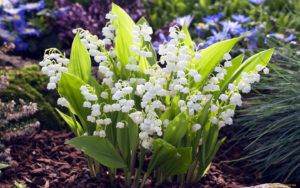
A classic spring flowerbed plant with a creeping rhizome, lilies of the valley produce flower stalks up to 30 cm tall with unfurled rosettes. Their fragrance will permeate the garden and delight with their blooms until midsummer. These flowers are perfect for both shade and sun.
Solomon's seal
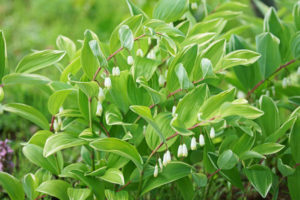
Solomon's seal (Kupena) can be an excellent choice for shady areas. These shrubs can reach heights of 30 to 80 cm, with drooping white or greenish bell-shaped flowers. Blooming from May to June, they will delight with vibrant colors.
Brunner
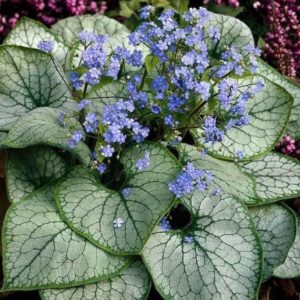
These soft blue, low-maintenance garden flowers can brighten up even the shadiest corners. Their attractive, variegated foliage ensures they retain their decorative appeal for a long time.
In favorable conditions, Brunnera grows well and is propagated by dividing the bush.
Perennials that bloom in summer and autumn
Summer is the most favorable environment for perennial flowering plants. Gardeners can choose beautiful and easy-to-grow plants that will delight with their blooms all summer long.
Asters
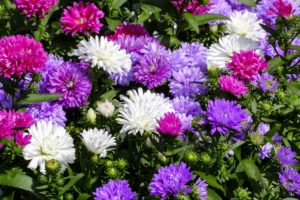
Perennial asters are often forgotten, although they deserve just as much attention as their annual cousins. From early August until late fall, these 20- and half-meter-long flowers illuminate gardens with splashes of blue, white, pink, and purple. During the summer, they easily tolerate light and dry conditions, and in the fall, they transform the garden with unforgettable beauty.
Dahlias
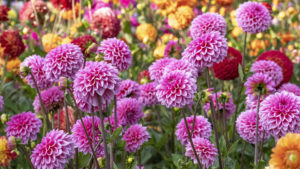
Dahlias are perennial plants of the Asteraceae family with complex flowering. Top dressing carried out no earlier than 6-7 days after planting in early June. Abundant watering Flowers should be watered at 10-day intervals. Dahlias grow in any soil, but gardeners recommend choosing rich soil. humus garden loams.
Gladioli
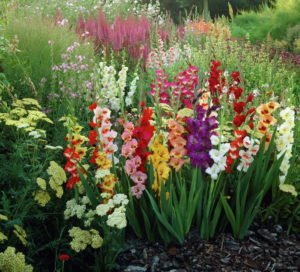
These bulbous perennials can grow up to one and a half meters tall and form a beautiful spike-shaped inflorescence. Up to twenty flowers are located on the upper half of a single stem, making them a stunning addition to garden flower arrangements. Gladioli begin blooming in mid-June, while later varieties will delight with vibrant buds in September and October.
Phloxes
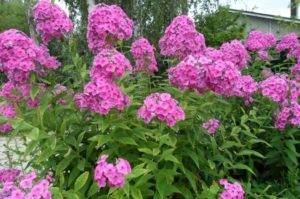
Phlox are considered the brightest star of the summer flowerbed. These plants survive winter well in most regions of the country and begin forming green clumps in the spring. They bloom from midsummer until October, maintaining an incredible variety of colors and lush buds.
Depending on the variety chosen, phlox will look great in alpine gardens and traditional flower beds.
Goldenrod
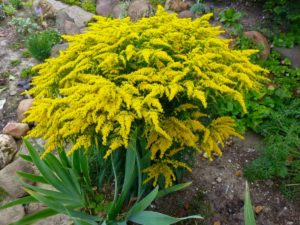
Goldenrods can grow in your garden for 10–12 years without replanting. The plant will thrive in any soil, in full sun or, conversely, in partial shade.
In sunny areas, goldenrod will begin to bloom much earlier due to the accumulation of solar energy.
Goldenrod is a fairly aggressive plant, capable of crowding out weaker perennials. Care must be taken to ensure it doesn't self-seed.
Coreopsis
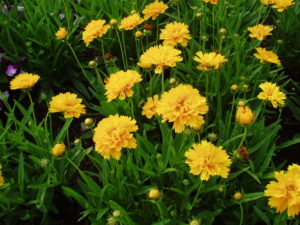
Coreopsis is widely used in garden landscape design, so with careful placement, it can become the focal point of any composition. Its characteristics make it easy to plant and propagate. The typical height ranges from 40 to 120 centimeters. Different species offer a wide range of colors, making it a wonderful addition to your garden in the fall.
Chrysanthemum
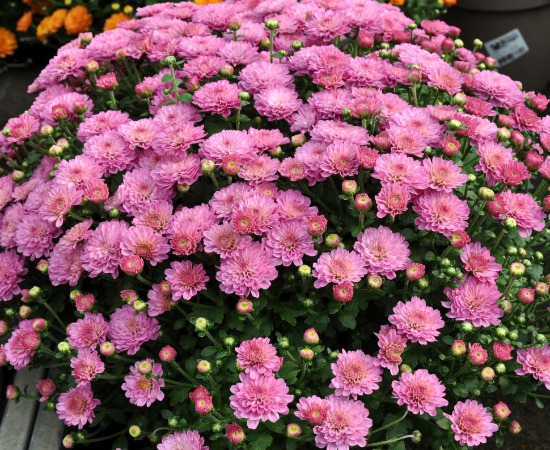
This herbaceous ornamental plant can reach a height of up to 1.5 meters, depending on the variety. Flowers vary in size, from small to large, flower heads, bud shades, and care requirements. Perennial varieties, such as Florida or Goldball, will delight gardeners throughout the fall. While these plants may seem like they require special care, these cold-hardy flowers are resilient to temperature fluctuations.
Chamomile
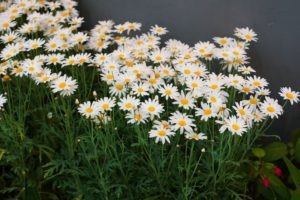
Chamomile, along with cornflowers, is a symbol of the Russian open spaces. Open and sunny, chamomile flowers reach for the scorching rays of the sun. Poppies, lupines, and ornamental grasses make the best companions for this most undemanding perennial for the garden. The white flowers will look stunning against the lush greenery.
Uses of perennial flowers
Perennial flowers are a wonderful addition to any garden. Their variety of colors, heights, and accents allow for a wide variety of landscape compositions.
Tall garden perennials
Tall plants are often placed in the very center of the flowerbed, reaching heights of up to 1.5 meters. For smaller gardens, a mixed border is best, ensuring continuous blooms throughout the season. These plants make excellent frames for larger garden features. Among perennials, tall garden plants include:
- astilbe;
- delphinium;
- hollyhock;
- lobelia;
- Echinacea;
- hydrangea and others.
Medium-sized perennials
The medium-sized perennials catalog features flowers ranging from 30 to 80 centimeters in height. They are most often planted in individual groups or formed into a second tier in flowerbeds. The most popular are gerberas, salvias, geraniums, and cornflowers.
Low-growing flowers
Low-growing flowers are most often used to create unique landscape designs. These plants are planted in rockeries and alpine gardens, and they can be used to decorate borders, carpeted flowerbeds, and flower beds.