Planting and caring for apple trees in autumn: the best time, technology, and important recommendations
This fact may seem strange to novice gardeners, but autumn is considered the optimal time to plant a young apple tree in the garden. This is because it is during the autumn months that soil It's sufficiently moist, which is crucial for successful root development. Before the cold weather sets in, the tree has time to firmly establish roots and grow, and before the growing season begins, it also has time to strengthen.
Content
Planting dates
The timing of autumn planting of apple trees is determined by the climate of a particular area. For example, in the southern regions of Russia, the most favorable period is from late September to early October. In the north of the Russian Federation, Urals, V Siberia Autumn planting must be completed in September.
The main indicator for the beginning of autumn planting of apple trees in the garden is the fall of leaves.
Choosing a location
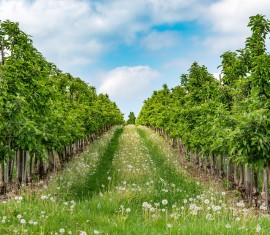
When planning your fall apple tree planting, you should select a suitable location well in advance, in the spring. A vacant plot of land not previously planted with fruit trees is ideal. It should also be protected from northerly winds. If space permits, plant the trees in small groups in several locations. If space is limited, plant the seedlings in a single row along one of the property lines (except the southern one), remembering to leave 3-4 meters between them and the neighboring property line.
Preparing the planting hole
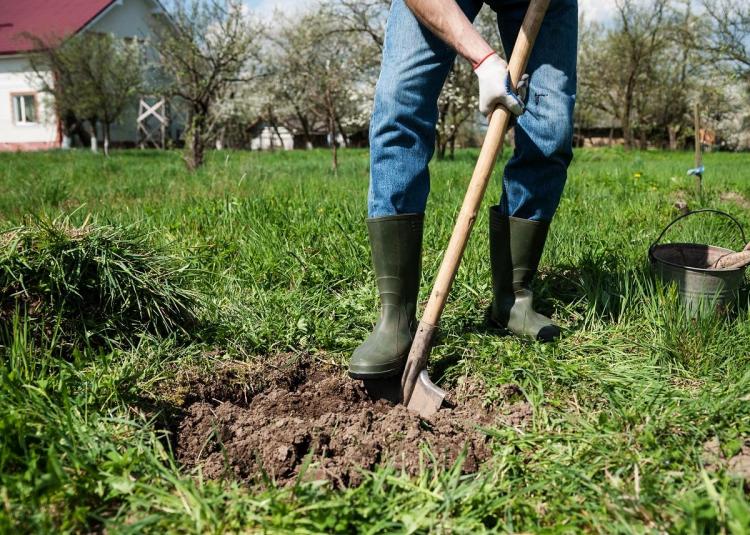
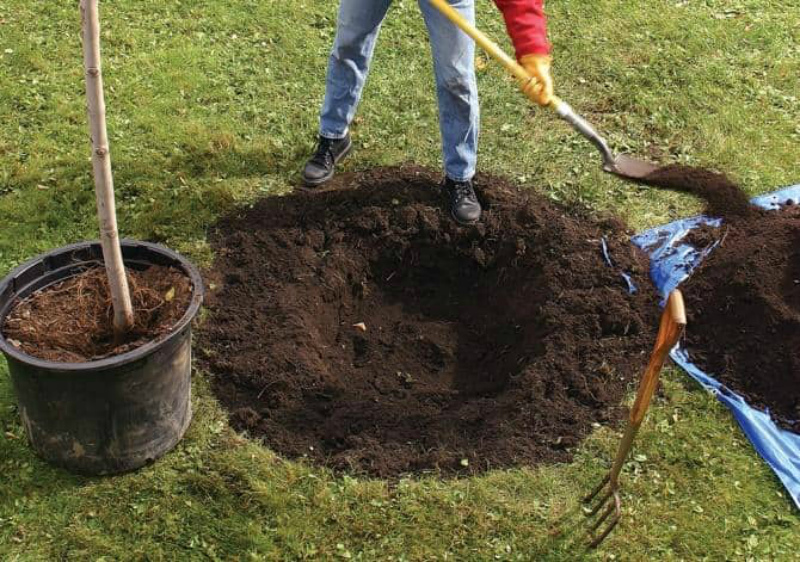
Planting hole For an apple tree seedling, dig a hole no wider than a meter and up to 50 cm deep. Work begins two months before the planned planting.
The planting hole is formed as follows:
- Carefully remove the turf and topsoil and place them in separate piles.
- Select another 30 cm of soil.
- The soil in the hole is dug up and leveled.
- Place a layer of turf on the bottom of the hole with the grass facing down (to increase soil fertility).
- Fill the hole with prepared substrate.
- The planting site is well compacted and marked with a mark for quick orientation.
In clay soil
Since clay soil is quite heavy and tree roots cannot penetrate downwards, the planting hole depth in this type of soil should not exceed 40 cm. At the same time, the width should be sufficient to allow the roots to freely grow outward from the tree trunk, at 1–1.5 meters.
How to fill the planting hole
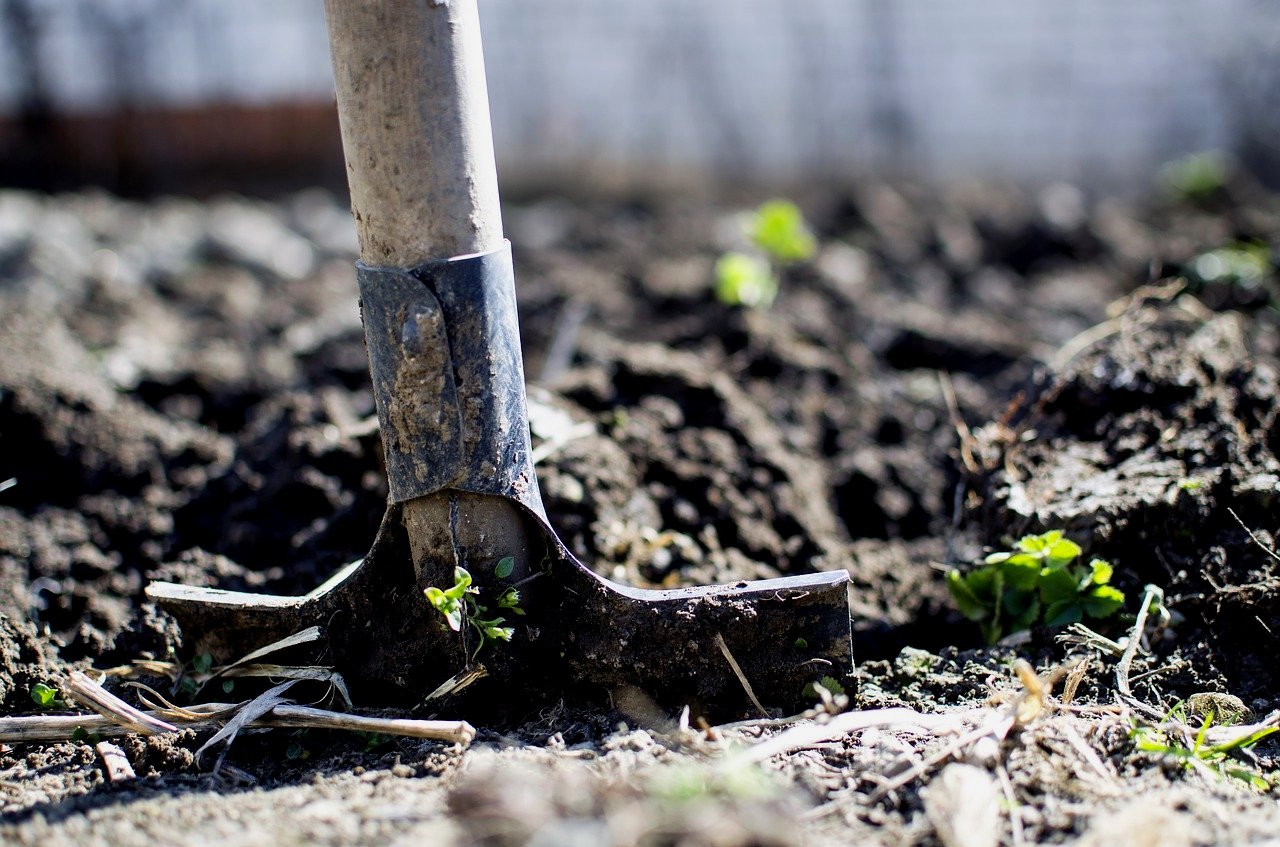
In the case of ordinary garden soil, the hole for planting an apple tree is filled with a substrate prepared from a mixture of leaf compost, wood ash and rotted horse or cow manure. manureWhen filling the hole with the nutrient mixture, stir it constantly to increase the looseness of the mass and its water and air permeability. In the case of clay soil, fill the hole with a soil mixture of sand and humus.
Additionally, it is recommended to place drainage material made of broken brick, crushed stone, or pebbles at the bottom of the hole to protect the plant's root system from stagnant water and root rot.
At what distance should I plant?
To ensure young seedlings have the conditions they need to thrive, it's recommended to plant them at a certain distance. For example, if the trees are planted in a row, the distance between them should be 4 meters. If planted in groups, the planting pattern should be 4x4 meters.
For low-growing specimens, the distance can be reduced to 3 meters.
Selecting a seedling
According to gardeners' recommendations, young seedlings aged one or two years have the best survival rate. They establish themselves more quickly and are more resistant to adverse environmental factors, temperature fluctuations, and diseases.
 Before heading to a specialty store or nursery, it's worth finding out which varieties perform well in your climate zone. Ask the salesperson how resistant a particular variety is to pests and diseases.
When choosing a seedling, you need to pay attention to:
- roots;
- bark;
- crown of the plant.
A healthy root system is characterized by an abundant number of moist roots that do not show signs of frostbite, mechanical damage, rot, or fungal infection.
The smooth bark surface and its natural dark brown color signal the correct choice. And a well-formed crown consisting of 4-5 branches gives reason to hope that the apple tree will establish successfully.
A graft should be made on the seedling at a distance of 5–8 cm from the root.
Selecting a variety
When choosing an apple tree variety, you should be guided not only by personal preferences, but also by:
- the level of apple tree winter hardiness;
- resistance to fungal diseases, in particular scab.
Winter hardiness refers to a tree's ability to withstand adverse weather changes during the off-season, as well as frosts that occur after a winter thaw. This is why experts recommend choosing regionalized varieties adapted to specific climatic conditions. Such winter-hardy, scab-resistant varieties include Antonovka, Legenda, Nastenka, Orlovsky Pioner, and others.
How to plant: step-by-step instructions
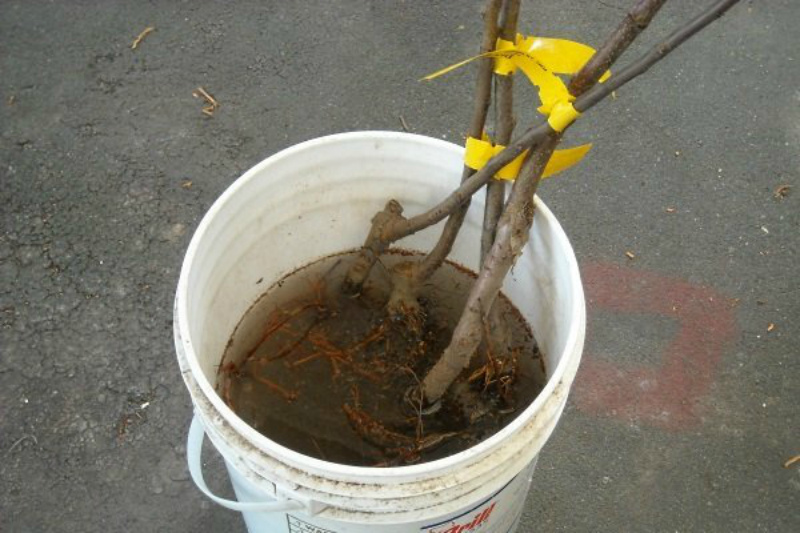
Before planting, the plant should be moistened. To do this, soak the bare-root seedling in water for 24 hours until the stem and roots straighten.
Step-by-step planting instructions:
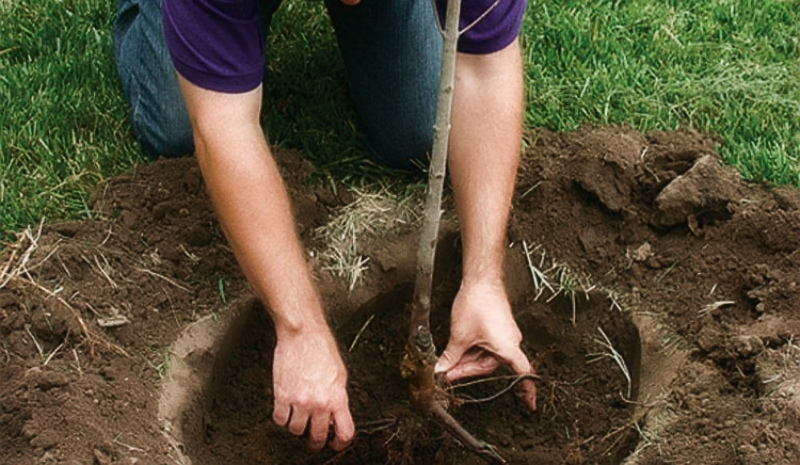
- Carefully examine the root. Determine how deep the tree was before transplanting.

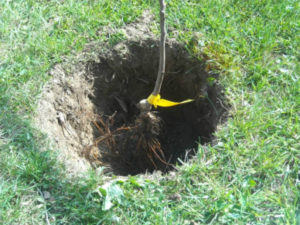
- Make a small depression in the prepared planting hole.
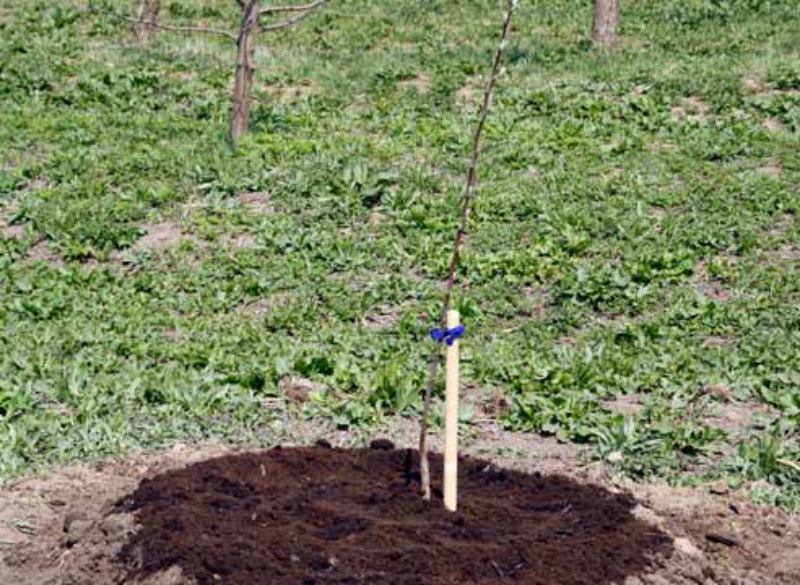
- Place the roots of the seedling into the hole so that root collar was at the same level as the soil surface, and the grafting site was raised 5 cm from the ground.
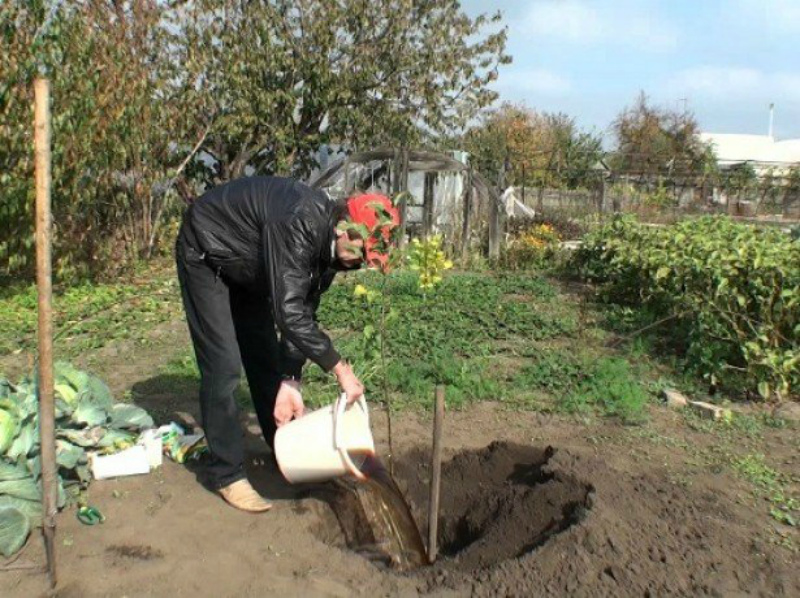
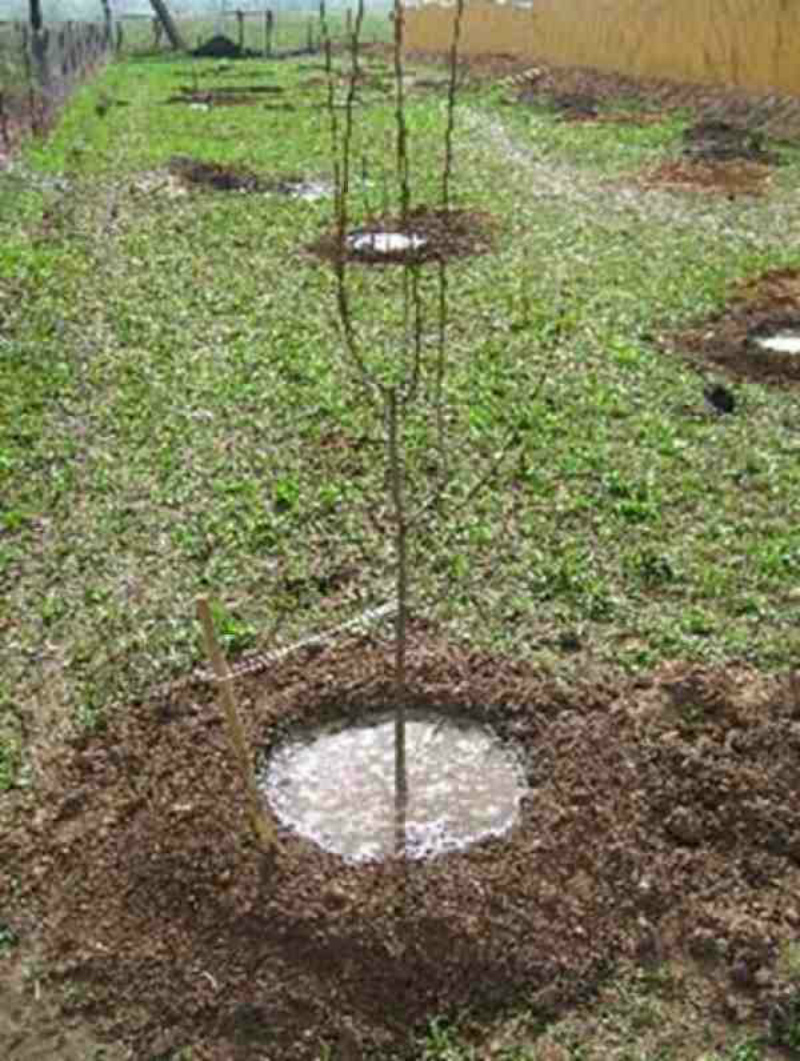
- Sprinkle the root with soil, watering generously as you add it.
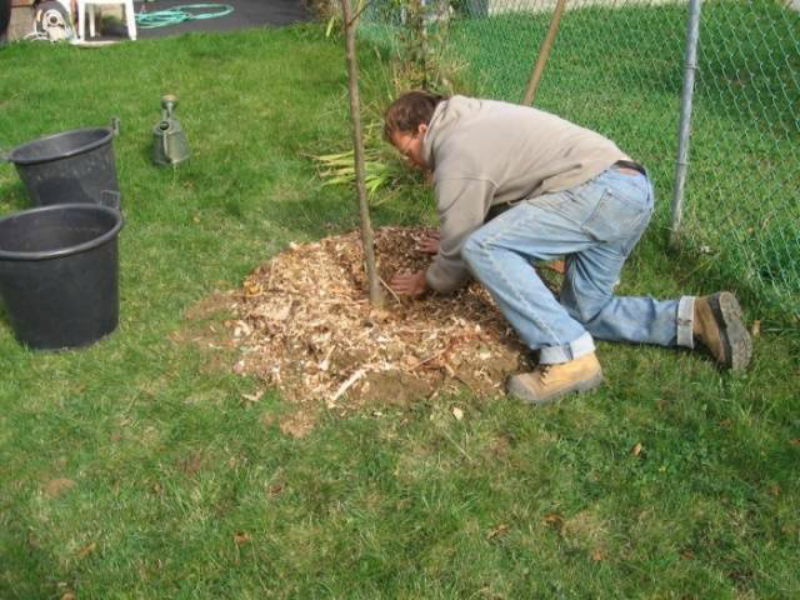
- Tie the seedling to the pegs using soft fabric or twine to increase its resistance to gusts of wind.
- Water tree after planting.
The nuances of planting seedlings with a closed root system
If you purchased a seedling with closed root system (in a container), it's important to know that the planting sequence is slightly different from traditional methods. First, remove the plant from its container. To do this, turn the container upside down and carefully remove it, holding the seedling and its root ball in place. To make this easier, it's recommended to water the soil in the pot beforehand to minimize the risk of damaging the roots.
A hole the size of the container is made in the prepared planting hole. The seedling is placed in it, along with a lump of soil, so that the soil level from the pot is level with or slightly above the overall soil level. The remaining space is filled with soil, the plant is watered thoroughly, and lightly compacted. The tree is tied to a stake.
The soil around the seedling is compacted very carefully so as not to damage the roots.
A video tutorial on autumn apple tree planting for beginners
Landing features
In addition to the standard landing procedure, there are nuances that highlight some of its features depending on the prevailing circumstances or conditions.
In freezing weather
If the deadlines for planting apple tree seedlings have passed, don't take any risks. It's best to preserve the purchased young tree until warmer weather arrives. To do this, place its roots in a container filled with peat or sawdust and store the plant in a cool room where the temperature doesn't drop below freezing. To maintain the required humidity, water the seedling every seven days until it can be planted in its permanent location in spring.
In different regions
The climate of a particular region determines not only the choice of variety and planting timing, but also the cultivation techniques. For example, in the Urals and Siberia, apple tree planting should be completed by mid-September to allow them time to adapt before winter sets in. In central Russia, frosts begin as early as November, so the best time for fall planting is considered to be from mid-September to the first two weeks of October. In the Leningrad Region, the planting period shifts back by a week, but in the southern regions, the favorable planting period can extend even into November.
Care
 Caring for apple tree seedlings involves timely watering and fertilizing, loosening the soil, controlling pests and weeds, and formative pruning. Formative pruning is practiced starting in the second year after planting. In early spring, before the buds swell, the crown is pruned to promote lateral branch growth and increase the tree's yield. Dead and damaged branches are also removed at this time.
The soil around the tree trunks is loosened after each glaze, preventing it from drying out and becoming overgrown with weeds. In the fall, the trunks of young trees are hilled or covered with spruce branches to protect the bark from rodents and haresFor the first three years after planting, the trunks of young apple trees are whitewashed with chalk. Once a week, the branches and leaves are carefully inspected to detect pests and their larvae.
Watering and fertilizing
Immediately after planting, apple tree seedlings are watered generously to ensure sufficient moisture for the roots. Overwatering should be avoided. For example, during the first year after planting, seedlings should be watered four times during the summer, at a rate of 3-4 buckets of water per tree. To prevent crusting, it is recommended to loosen the soil after each watering.
For watering, use a watering can with a spray nozzle. A continuous stream of water is dangerous for a fragile seedling.
- The first feeding of a young plant occurs at the same time as planting. The bottom of the planting hole is filled with a mixture of rotted horse or cow manure, compost, sand, and stove ash. The fertilizer layer is separated from the roots by a layer of soil. This amount of nutrients will be enough for the tree to survive the winter.
- With the onset of spring, young plants require additional nitrogen, phosphorus, and potassium fertilizers. By the end of July, it's recommended to apply at least five liquid nitrogen fertilizer applications to promote foliage growth. For bud formation and full flowering, phosphorus and potassium are needed, delivered to the tree's root system through the application of complex fertilizers.
Compared to spring planting, autumn planting of apple trees is considered more beneficial. However, the choice of varieties depends on the region's climate. Proper planting and proper care of the seedlings are the key to a healthy apple orchard and a bountiful harvest.