Apple tree transplant: timing, rules, and care features
The apple tree is an easy-to-grow fruit tree that doesn't require much care. It's very particular about its planting site, so it's rarely replanted, even when the need arises.
Content
The best time to transplant an apple tree
The ideal time to carry out this work is spring. During the growing season, the tree will have time to adapt to the new conditions, develop fibrous roots, and prepare for frost.
 Spring replanting is practiced in poor loamy soils and regions with harsh winters. At this time, it is recommended to plant seedlings of frost-sensitive varieties and trees up to two years old.
Transplanting to a permanent location is done in early spring, before active sap flow begins and buds open. After transplanting, the soil should be mulched. This will help retain the necessary moisture. Straw or humus.
Mature trees and seedlings over two years old are replanted in the fall. In this case, they must be frost-resistant.
The work is carried out in mid-October, when the leaves have fallen from the trees and the air temperature does not rise above 5 degrees Celsius. At this time, the root system is still developing, and the plants will have time to strengthen before the onset of frost. In the spring, these trees will quickly begin to draw nutrients from the soil and begin to grow.
Maximum age for changing place and risks
Replanting an apple tree isn't recommended at any age. It's important for the root system to be in the developmental stage. The older the tree, the less likely it is to survive.
- The first year of life is the ideal time for repotting. At this time, the tree tolerates the procedure easily.
- Young plants 2–3 years old are sold in nurseries. They are typically used for planting gardens. They easily tolerate changes in environment and transportation, and quickly establish themselves in a new location.
- Apple trees 4–6 years old are mature trees with well-developed root systems and long scaffold branches. Some plants may have growth problems caused by improper care or disease. Apple trees of this age require special care when replanting.
- Relocating a 7-15 year old tree to a new location is a rather labor-intensive process. Crown The volume of such specimens is two to three times greater than the root mass, and digging such a tree is extremely difficult. Replanting is carried out when redesigning the garden. This must be done very carefully to avoid damaging the long taproots.
Replanting trees older than 15 years is not recommended. The root system of such trees is so developed that it is impossible to completely remove it from the ground. Even if the plant is successfully relocated, the apple tree will soon focus all its energy on root restoration and adaptation, rather than fruiting.
Transfer rules
Apple trees are unpretentious trees, but in order for them to grow strong and bear fruit, it is necessary to follow the rules of transplantation.
Saplings
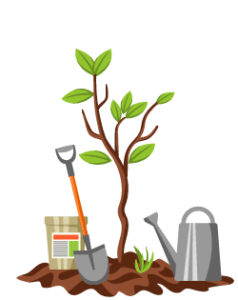 Young plants are purchased from nurseries or garden centers. When purchasing, it's important to confirm the variety and care requirements. Both one- and two-year-old seedlings are suitable for transplanting. One-year-olds take root easily, while two-year-old trees have a more developed root system and begin bearing fruit a year earlier.
Each seedling should have a root system with three branches at least 30 cm long and fibrous rootlets that absorb moisture and nutrients from the soil. The roots should be moist and white when cut.
Young trees should be given a well-lit place. Soil Any soil is suitable, except for marshy and rocky areas. It is important that the groundwater level is below 1.5–2 meters above ground level.
- Planting holes are placed in rows spaced 3 meters apart. The distance between rows should be 6 meters. This will ensure access to sunlight and air, allowing the plants to develop properly.
The planting hole is a circular depression with vertical walls, one meter in diameter and 70 cm deep. During preparation, the top layer of soil is carefully removed and piled to one side.
- Drainage must be placed at the bottom. Use stones or scraps of wood for this. Add a little clay to sandy soil and compact it lightly.
- A 1.5-meter-high wooden stake is driven into the center of the hole. The fertile soil removed from the hole is mixed with compost, peat, and humusA little sand can be added to clay soil. The soil mixture is poured into the hole, creating a shallow mound. The bottom layer is placed around the edges to form a border. Transplanting into the prepared hole can be done after 25–30 days or in spring.
- For transport, the seedling's root system is wrapped in a damp cloth. If the roots have dried out, soak them in a container of water for 24 hours. Seedlings growing in the garden should be watered thoroughly before transplanting, carefully dug around, and removed from the soil. It is advisable to transplant the young plant with its root ball. After this, place the seedling on burlap or plastic film and transport it to its new location.
- The plant is placed in the hole so that the root collar is 5 cm above the soil surface. If the tree is planted too high, its growth may slow down and fruiting may occur later.
- The root system should be spread out, covered with soil, and gently compacted to prevent voids from forming between the soil and the roots. This will help prevent the root system from drying out.
- After planting, the trunk is tied to a peg with a cord or twine.
- The transplanted tree is watered with two to three buckets of warm water. Water in small amounts to ensure the water is fully absorbed into the soil. The soil is then mulched with sawdust, leaves, or pine branches.
- To ensure the crown is formed correctly, the upper branches of a one-year-old seedling are trimmed to a height of 70 cm; the lateral branches of a two-year-old shoot are additionally shortened.
Young apple tree
 Apple trees are very shade-tolerant, so they shouldn't be transplanted next to tall deciduous trees. Their best neighbors are seeded fruit trees.
Tall varieties are planted 5 meters apart. The distance between trees of short and dwarf varieties should be at least 2–3 meters.
Soddy, podzolic, or chernozem soils are suitable for replanting. Trees grow well in loamy and sandy loam soils.
The optimal time for transplanting young apple trees is spring. During warmer weather, the plant has time to adapt to the new conditions and develop a root system. It enters winter relatively strong.
Work is carried out starting from the second half of April – beginning of May, when the soil has thawed and warmed up sufficiently.
- Twenty days before replanting, prepare a planting hole 80 cm deep and 60 cm in diameter. You can add humus, compost, and nitrogen and potassium fertilizers to the soil to provide nutrition during the first few years of life.
- Young apple trees are transplanted with the root ball intact. This procedure is very difficult to accomplish alone, as the tree has a well-developed crown and a root system exceeding one meter in diameter.
- The plant is dug up, keeping in mind that the volume of the roots is approximately equal to the above-ground portion. The soil should be dug gradually, following the taproot.
- The root system of the dug-up tree is covered with burlap. The apple tree is placed on a cart and transported to the planting site.
- A low mound is made in the planting hole, onto which the tree is placed. A stake is then driven in, the plant is tied, and the roots are spread out. The tree is watered with a bucket of water and covered with soil. The soil around the trunk is lightly compacted and mulched with sawdust or peat.
The plant can be replanted in the fall, but the work must be done as quickly as possible. It should be done in early October. The tree needs time to adapt and grow new roots before the first frost.
Mature apple tree
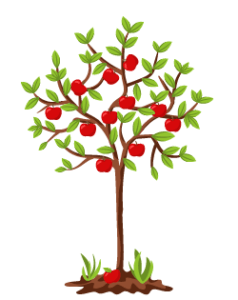 A mature tree is replanted only in cases of extreme necessity. This is often due to lack of space, flooding, or disease.
It's important to repot correctly, taking into account the plant's age. The tree can be repotted with the root ball intact or with the root system exposed.
Bare-root transplantation is used when moving an apple tree from one location to another within the same plot. If transporting the tree is necessary, it is advisable to preserve the soil around the roots.
- To stabilize the tree, skeletal branches are tied with rope before planting, then a trench one meter deep and 30–40 cm wide is dug at a distance of 1.5–2 meters. This must be done very carefully to avoid damaging the roots. The more roots are preserved, the greater the chance the tree will survive in its new location.
- Once the root system is fully exposed, the tree is carefully pulled out using a winch. Any roots that extend beyond the root ball are trimmed with pruning shears or a sharp knife. The cut areas are treated with garden pitch or sprinkled with wood ash.
- The apple tree is planted in a pre-dug hole. Its diameter should be 30–40 cm larger than the root system. A nutrient mixture of wood ash and peat should be added to the bottom. humus.
When replanting with a root ball, place several wooden stakes in the hole, and secure the trunk to them with rope. The hole is then filled with soil and watered. A layer of mulch made from sawdust or pine branches is placed around the trunk.
With the arrival of spring, mandatory formative pruning is carried out, during which shoots are shortened by half. In the first year after transplanting, ovaries are removed.
Features of transplantation of individual species
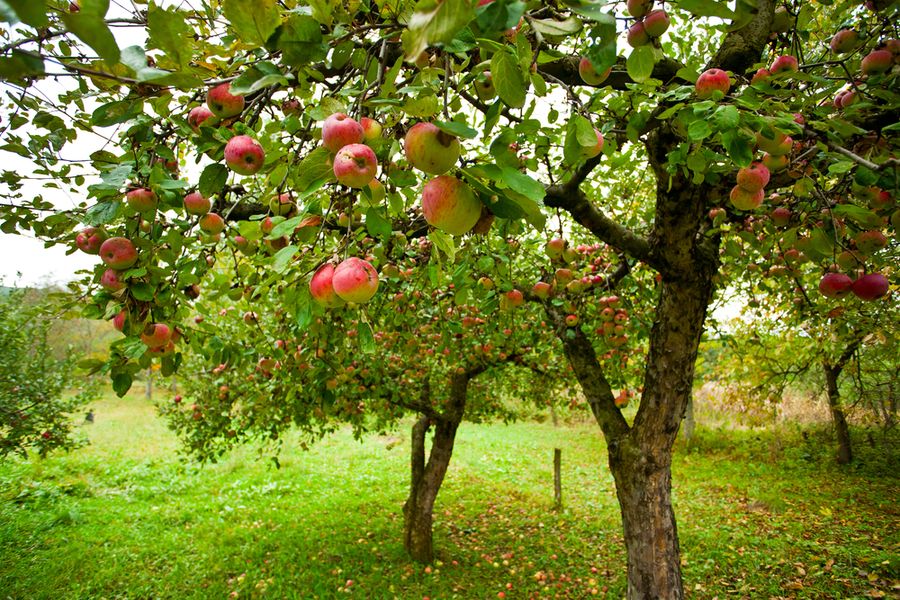
Certain apple tree varieties have unique planting considerations. These considerations must be taken into account to ensure proper plant development and fruit production.
Columnar
This species is different abundant fruiting and the ability to grow for a long time in pots and containers.
- The variety reacts sharply to excess moisture in the soil, so trees should be planted in elevated areas.
- One-year-old seedlings are suitable for replanting. They should have smooth, undamaged bark and well-developed, non-dried roots.
- It is advisable to plant plants in groups, taking into account the ripening time and strictly adhering to the planting pattern.
- Trees require a sunny location protected from drafts and cold winds. Columnar apple trees benefit from a location along a fence or near buildings.
- Planting holes are prepared 20–30 days before planting. The distance between holes should be 50–60 cm, and the distance between rows should be at least 1 meter.
- A drainage layer must be placed at the bottom to prevent moisture stagnation, and a nutrient mixture of humus, ash, and phosphate and potassium fertilizers.
Dwarf
This variety is known for its rapid fruiting. The trees require a lot of space, so it's not recommended to plant other trees or shrubs within a three-meter radius.
Trees should not be transplanted in areas with a shallow groundwater table. A lack of moisture is detrimental to dwarf apple trees. Plants are spaced three meters apart in planting holes 50 cm deep and 70 cm in diameter. The holes are filled with the removed topsoil.
The work is carried out in the second half of September, when the tree begins its dormant period. Otherwise, the transplant is no different from transplanting a regular apple tree.
Creeping
Spring is a favorable time for work. For transplanting, use one-year-old seedlings that have not yet budded. They take root more quickly in their new location. Plants are planted vertically or at a 40° angle.
When the first frost sets in, the tree is bent down and secured to the ground with hooks. The upward-growing shoots are covered with burlap, spruce branches, or dry branches.
Possible problems and their solutions
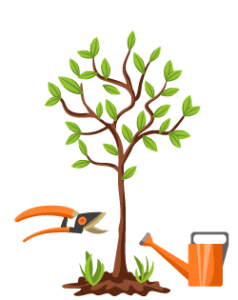 Apple trees transplanted to a new location often fail to establish themselves and fail to bear fruit for a long time. This may be due to the following reasons:
- The replanting timing was incorrect. The timing depends on the season and regional climate. Autumn replanting is typically performed in temperate and southern regions with mild climates.
- Transplanting into a freshly dug hole. The plant grows slowly, barely develops, and may die. Preparing the planting hole is not necessary if the groundwater table is close, or on loamy or peaty soils. The hole should be prepared at least 10-15 days before planting.
- Poor planting practices. Gardeners often try to squeeze too many fruit trees into a small space. As a result, the plantings become too dense. The plants don't receive enough sunlight, and air circulation between the shoots and branches is poor. Tall trees obscure the seedlings, which lack moisture and nutrients. This leads to disease, wilting, and reduced yields.
- Unsuitable soil for transplanting. Poor or overfertilized soil is unsuitable for apple trees, so it needs to be prepared in advance. To do this, add compost, humus, peat, and sod to the planting hole. Coarse sand can be added to loamy soil.
- Improper watering regime. Some gardeners, after repotting young plants, begin to water them frequently and heavily, using cold water from a well. In hot weather, this can lead to the formation of a crust on the soil surface, which deprives the roots of air and leads to disease.
- Incorrect placement of the stake. After replanting, special attention should be paid to the position of the stake, which serves as support and ensures the rootstock's survival in its new location. If it's not positioned securely, it could fall over time and damage the seedling.
Helpful tips
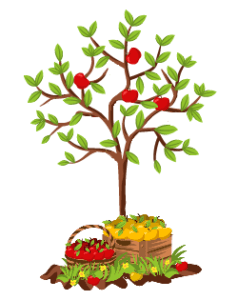 To ensure a transplanted tree takes root and bears fruit abundantly, consider the tree's age and transplanting technique, as well as follow the recommendations of experienced gardeners:
- After transplanting, remove most of the leaves from seedlings and young apple trees.
- In the first month after spring replanting, water the apple tree generously once a week, using 1–2 buckets of warm water.
- In hot weather, spray the crown every evening.
- Regularly loosen the soil around the trunk. It's advisable to mulch the soil around the tree with humus, sawdust, or peat. This will help retain the necessary moisture in the soil.
- If necessary, remove dry and overgrown branches at the bottom of the trunk.
- In the second year, remove the flowers. These are barren flowers that will not produce fruit.
- In the first season to conduct top dressing mineral or organic fertilizers.
- After autumn replanting, young trees need to be protected from frost and small rodents. To do this, wrap the trunks in burlap or agrofibre, cover the top with fine mesh, and secure with twine or rope. Wrap the fabric so that the bottom of the fabric remains on the ground to prevent rodents from penetrating under the insulation.
Transplanting an apple tree is a complex process. If done correctly, the trees will grow quickly and begin bearing fruit in a few years. It's important to remember that transplanted trees require constant care and attention.