Why apples become transparent and how to combat glassiness
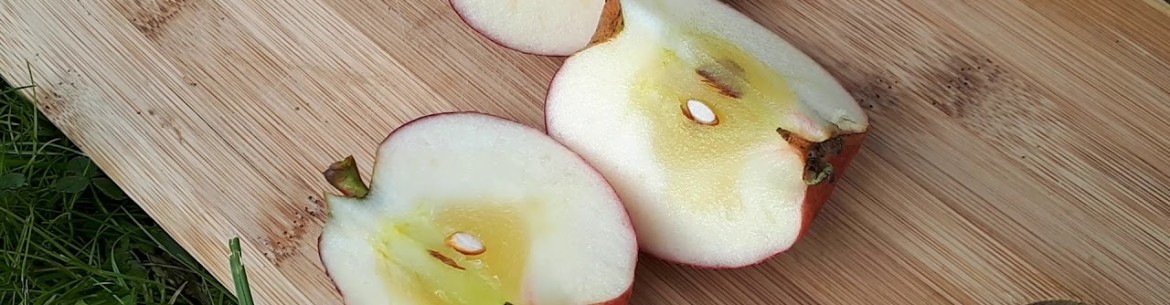
Sometimes it seems as if ripe apples are made of glass, as they glow almost all the way to the seed chamber. In fact, this isn't a varietal characteristic, but a disease of the crop, which suffers from a significant calcium deficiency.
Content
Why do apples become transparent?
The fruits of pome fruit ripening on the branches may acquire an unusual transparency, which indicates their development a physiological disease called vitreousnessThis unpleasant phenomenon is characterized by the presence of light, seemingly thinned areas of pulp in apples containing a large amount of water.
The intercellular spaces of the fruits are filled to capacity with cell sap.
 Unlike other diseases of this fruit crop, apples with glassy disease become transparent while still on the tree, during ripening, rather than during storage. In mildly affected fruits, small transparent areas begin to appear in the area of the vascular bundles and in the seed chamber. In some varieties, these glassy areas are often located just a few millimeters beneath the skin. During storage, the excess cell sap is almost completely reabsorbed, and no signs of disease remain.
However, researchers disagree on the possible reasons why apples become translucent. Some scientists believe that the glassiness begins in the fruit at the moment when the first light autumn frosts set in, the apples freeze right on the branchesOthers believe that the disease affects overripe fruits mainly in warm autumnIn fact, each opinion is correct in its own way; the first point of view is simply applicable to winter (late) varieties, whose fruits have not yet reached peak ripening, and the second to autumn varieties.
It is also believed that glassiness of apples is the result of a lack of calcium.
But one way or another, it is those large fruits that are best exposed to sunlight that are most often susceptible to developing the disease.
Causes of vitreousness
The factors that cause the development of apple vitreousness are largely similar to those that cause bitter pit. Factors that trigger excessive shoot growth can trigger the disease:
- excessive garden imagery;
- insufficient fruit load.
An uneven ratio of leaves and fruits in favor of green mass enhances the growth of the latter and increases their susceptibility to physiological diseases.
This occurs because the leaf blades essentially compete with the fruits for calcium, and in exchange, supply them with excess sorbitol. It is this imbalance between these two chemical elements and nitrogen that is often the main cause of the development of glassy fruit. And the development of this imbalance Strong light on apples and hot seasonal weather contribute greatly to this.
The development of vitreousness can also be explained by extreme fluctuations in air temperature. In certain areas of the fruit's flesh, starch is rapidly converted to sugar, which in turn leads to an increase in osmotic pressure. This leads to increased water absorption and a significant increase in cell volume. As a result, the cells become completely filled with juice, swell, and become tightly pressed against each other, filling all the intercellular spaces. It is these areas of apple flesh that acquire a visual vitreousness and transparency.
Less common factors that contribute to the development of the disease include:
- Harvesting at the stage of full maturity in cool weather during the pre-harvest period.
- Low storage temperatures.
- High air humidity and insufficient air circulation in areas where fruits are stored after harvest.
Vitreousness also occurs due to problems in the conductive tissue of the tree between the bark and the wood due to non-compliance with agricultural standards when planting young plants and in their subsequent care.
Apple varieties prone to glassiness
Some apple varieties are more prone to developing glassiness than others. These include:
Transparent apple flesh: is it edible?
Transparent apple flesh is a small cell space that fills with a watery fluid where spots form. Rod-shaped bacteria are typically found in this fluid. Previously, it was erroneously believed that these bacteria were the causative agents that caused the development of glassiness in fruit.
Fruits affected by this disease become significantly harder and heavier than healthy ones, and their flavor is significantly impaired. When you bite into such an apple, you'll feel not juice and softness, but hardness, dryness, and a blandness of the tissue. Therefore, it is recommended to eat only the unaffected parts and to consume them first, without storing them for long periods.
Apples turn transparent when ripe: description of the disease
When apple trees are affected by vitreous disease, large green or brown translucent spots begin to gradually form on the fruit. cut They will look glassy or watery. This is due to the apples' inability to recycle Sorbitol, supplied to them from the leaves via phloem sap, is converted into carbohydrates. The fruit cells "unload" the resulting solution from its vascular system. This solution, in turn, fills the intercellular spaces of the pulp, giving it its characteristic watery appearance.
Most glassy apples are formed in the upper part of the crown, as well as on the southwest side of the tree.
In healthy fruits, the air space accounts for approximately 20–35% of the total volume. In tissues affected by vitreousness, this air space is significantly reduced, leading to low oxygen concentrations and high carbon dioxide levels in the intercellular spaces. Ethanol and acetaldehyde also accumulate, triggering tissue fermentation and the development of storage disorders.
Treatment methods and disease prevention
The best treatment for apple glassiness is, of course, prevention, which involves proper agricultural practices. The basic rules for garden care are as follows:
- Avoid overwatering and dense crowns.
- If you find affected fruits, remove them from the trees immediately.
- The cuts that are formed after the planned processing must be processed without fail. garden pitch.
- The scale of possible damage can be reduced by spraying with a solution of calcium salts.
- Provide apple trees with adequate calcium top dressing.
- In the fall, don’t forget to apply organic and mineral fertilizers.
- Lime the soil.
In orchards with damaged glassiness of apples, the harvest is collected a little earlier, and then it is kept at a temperature of 15–20 °C in a dark place until fully ripened.