Papirovka apple tree: characteristics of the variety and care
| Color | Whites |
|---|---|
| Ripening season | Summer |
| Size of apples | Large |
| Taste | Sweet and sour |
| Crown type | Tall tree |
| Shelf life | Low shelf life |
| Application | Fresh , For recycling |
| Winter hardiness | High winter hardiness |
| Fruiting age | Up to 5 years |
 History of origin and regions of growth
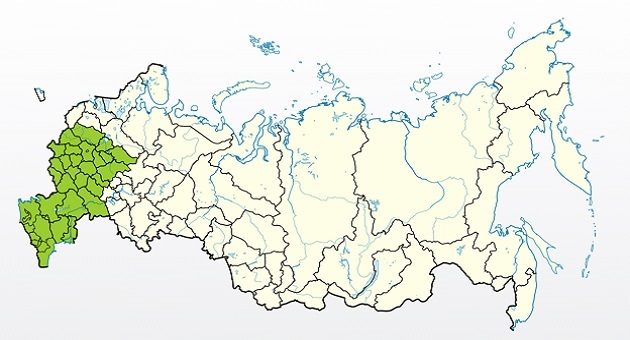
Growing regions
- Middle zone.
- North Caucasus.
- Crimea.
- Some northern regions.
Origin
Gardeners in our country hold those fruit trees commonly referred to as folk selections in high regard. The leader among apple trees in this regard is the Papirovka, familiar to everyone from early childhood. It is believed that this variety came to our country from the Baltics, where it arose spontaneously, presumably through open pollination. Around the mid-twentieth century, the apple tree was already well known there, as well as in Poland, Germany, Russia, Belarus, and Ukraine.
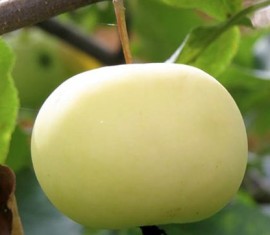
The variety's name, Papirovka, is believed to be directly related to the Ukrainian word for "papier" and the Polish word for "papierówka." Both mean "paper" and "papery." This likely refers to the apples' light green hue, which appears completely white when ripe. Other less commonly used but still well-known names for the variety refer primarily to the fruit's color: Alabaster, Papirka, Paper, and Baltic..
Content
Description of the Papirovka apple variety
 Early summer apples are widely popular, offering delicious, fresh, and juicy fruit in the height of summer. This variety fits this description perfectly. The trees are easy to grow, fairly resistant to low temperatures, tolerant of moderate watering and poor soil, and require little attention.
Papirovka's fruits are large, beautiful, tasty, and very aromatic. Despite their extremely poor shelf life and the impossibility of transportation, these trees remain a popular choice in our country's gardens. They are recommended for growing in home gardens or exclusively for juice production.
Apples: What they look like
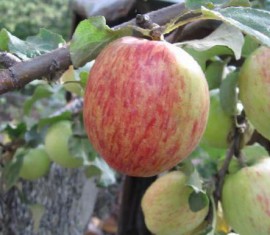
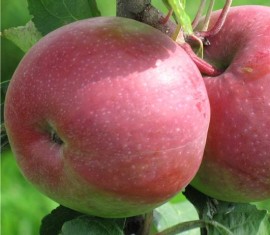
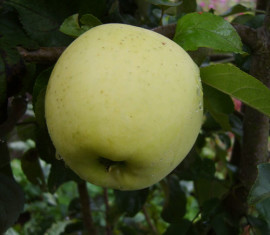
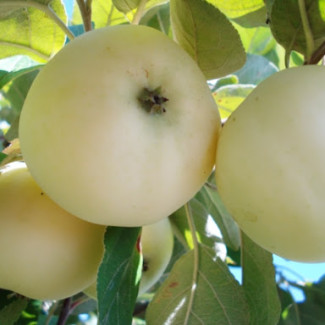
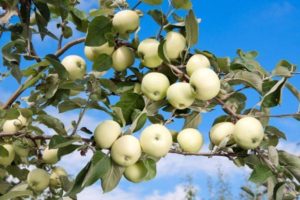 The apples are generally medium to above-medium in size, but young trees typically produce larger fruits. Fruit weight can range from 150 to 220 grams. They are round or round-conical, can be slightly turnip-shaped or flattened, symmetrical or lopsided, and nonuniform. The ribbing is clearly visible; sometimes the apples even appear angular or triangular due to the large ribs.
The skin is very thin and easily damaged. It is smooth, glossy, and shiny, with a thin waxy coating during ripening. It has a green tint, but as it ripens, it becomes increasingly whitish, paler, and even translucent, with a light green tint. Papirovka has no blush at all. Subcutaneous spots are light gray, white, gray, or slightly greenish, numerous, and clearly visible on the surface. The chemical composition can be assessed by the following indicators:
- P-active substances (catechins) – 209 milligrams.
- Ascorbic acid (vitamin C) – 21.1 milligrams.
- Total sugars (fructose) – 9.4%.
- Pectins (fiber) – 10.2%.
- Titratable acids – 0.98%.
The fruit's flesh is medium-dense, moderately loose, coarse-grained, and crisp, yet very tender and not prickly. The flavor is sweet and sour, with the acidity taking center stage. It's considered a table fruit, harmonious, and the aroma is medium, characteristically apple-like. When overripe, it can become cottony, crumbly, and tasteless. Professional tasting scores remain quite low: 3.9-4.1 points on a 5-point scale.
Papirovka apple tree: characteristics
Crown and root system
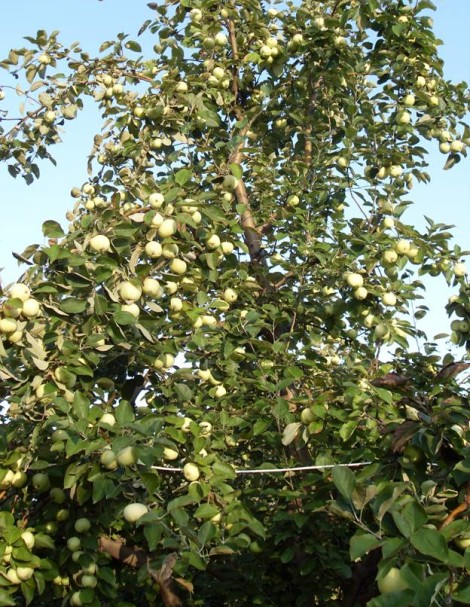
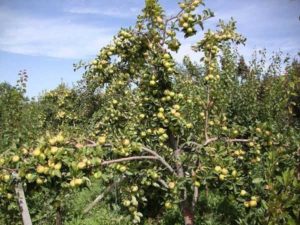 The variety is classified as a medium-sized tree, because They can reach a maximum height of 4.5-5 meters without formative pruning.However, it can be used to create more compact varieties to make harvesting and maintaining the trunks as easy as possible. In some cases, on black soil, the tree can even stretch up to 7-8 meters, which is best avoided.
The crown can be pyramidal, oval, or broadly pyramidal when young, expanding with age, becoming increasingly spherical, rounded, or spreading. The shoots are long, medium-thick, and straight, covered with gray or greenish-gray bark, lightly or heavily pubescent. Papirovka bears fruit on rings. Its leaves are green, matte, sometimes appearing steel-gray or gray-green due to pubescence. They are dense, leathery, and have coarse ribs. The root system is deep, branched, and well adapted to seeking water.
Productivity and pollination
The tree is not considered a precocious fruiting tree, although it grows quite quickly. Moreover, it is not a high-yielding tree.
One mature Papirovka tree can yield approximately 65-80 kilograms of juicy fruit per season, which should be processed immediately. The highest recorded yield was 189 kilograms of apples, set in the Oryol region in 1997..
Papirovka is considered self-sufficient and self-fertile; wind and bees are sufficient for fruit formation. However, many experienced gardeners say it's best to plant other early-blooming apple trees within 45-80 meters to maximize the harvest. It's best to have an apiary near your garden, but mobile apiaries are also an option.
Winter hardiness and disease resistance
The variety is highly resistant to low temperatures. They can easily survive winters with temperatures dropping to -22-27°C and even lower. Frost damage at -40°C (-40°F) was observed on only 11-12% of the trees. Within just one year, the trees fully recover and begin bearing fruit normally. Despite this, all apple trees, especially young ones, should be covered for the winter with agrofibre, burlap, or old tights.
Papirovka's resistance to scab, as well as other apple fungal infections, is average. It's not often affected by diseases, but during years of severe epidemics, it can become infected quickly and severely. Therefore, it's important to continue preventative fungicide treatments and, at the same time, spray the apple trees with insecticides, as insects also readily attack the trunks.
Rootstocks and subspecies
When purchasing a seedling, make sure the names are spelled and pronounced as specified in the State Register's variety table. For example, there is no such subspecies as Papirovka zimostoykaya, as it is already frost-resistant and doesn't require such clarification. There are also no Papirovka medovaya, kolonnovidnaya, Altaiskaya, Uralskaya, Pribaltiyskaya, or Baltiyskaya, or Ambernaya varieties. These are all other varieties, passed off by unscrupulous sellers as what the buyer is looking for..
The tree can be grown on various rootstocks: vegetative standard, dwarf, and semi-dwarf. The basic characteristics of the fruit remain the same as those of the parent variety, only the compactness and height of the crown change, and frost resistance decreases slightly.
Features of growing Papirovka
 Landing
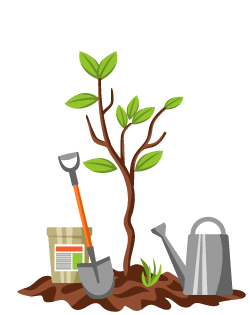 Landing
Basic conditions
- The variety grows well in virtually any soil, including black soil, sand, or clay. Overly fertile soils are usually "diluted" with river sand, while poorer soils require periodic fertilization.
- Sunny, well-ventilated sites are ideal for this variety. However, Papirovka can also produce substantial yields in the shade.
- A permanent location for a one- or two-year-old seedling should be chosen immediately. If transplanted later, it may not survive, or it may have to be moved with a large lump of soil containing small roots.
- The groundwater level on the site should be no more than 2.5-3 meters, otherwise the variety will reach it and begin to rot.
- The spacing between trees within a row and between rows will directly depend on the chosen rootstock. Vegetative varieties should be spaced 4.5-5 meters apart, while dwarf or semi-dwarf varieties can be planted closer, as little as 2.5-3 meters apart.
- The holes are prepared in advance by digging 70-85 centimeters in diameter and the same depth. Fertilizer is placed at the bottom, followed by a drainage layer of gravel or broken brick, and then the entire thing is filled with 20-35 liters of water.
- Special supports are immediately driven or dug into the tree. The stakes can be wooden, plastic, or metal, and they should not be removed until 4-5 years after planting.
- The seedling is placed upright and covered with soil, shaking it to remove unwanted air pockets. Compact the soil by hand, and create an earthen bank around the perimeter, adding 25-35 ml of water. The surface is mulched with available materials (cut grass, sawdust, compost, or humus).
Landing dates
Young trees can be planted in open ground in either spring or fall; there's little difference between the two. The key is to ensure that the risk of frost has completely passed. This means it's best to choose a warm, sunny day in late March or early April, when the risk of frost has passed, or in late September or early October, when the first frosts are still at least 2-3 weeks away. Seedlings with a closed root system, meaning they're planted in special bags or pots that don't require disposal, can be planted throughout the growing season.
Protection from frost and rodents
In southern regions with mild weather, Papirovka requires virtually no winter cover, except when very young. In harsher climates, it's best to cover the root zone with straw bales, dry grass mats, or rags, and wrap the trunks in burlap, old women's nylon tights, agrofibre, roofing felt, or roofing felt. Dwarf varieties benefit from a tent-like shelter.
To prevent insects from settling in bark crevices and around the rhizomes, tree trunks are usually whitewashed with lime to a height of approximately 1-1.4 meters. To repel hungry rodents, such as mice or hamsters, trees can be coated with melted animal fat, grease, machine oil, or other industrial products.
Tree care
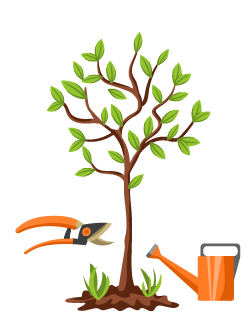 Tree care
Loosening the soil, watering: proper agricultural technology
Papirovka prefers loose, airy, oxygen-rich soil, so the area around the trunk should be dug twice a year, and hoeing even more frequently. You can hoe 5-6 times per season, while also removing weeds, shoots from other plants, and root suckers.
Watering trees isn't necessary, especially if precipitation is normal. It's a good idea to follow the 10-day rule if the weather is extremely hot and dry. That is, water the seedlings once every ten days, and if it rains during that period, count the time until watering from there. Fertilizer should also be added to the soil, as it's absorbed much better by the trees when water is added.
Pruning: simple crown shaping
The crown should be trained from the first year after planting. The central core is shortened by approximately 30%, and only 2-3 skeletal branches are left. These should be at different heights, widely spaced. These also need to be shortened, giving the tree the desired shape. In the future, all that remains is to maintain it, simultaneously trimming any branches that protrude upward or inward.
In the fall and spring, before the buds open or after the leaves have fallen, the crown is also pruned. This involves removing not only diseased or damaged shoots, but also dead ones. Rejuvenation begins in the 13th to 15th year, removing 1-3 mature branches.
Pollinator varieties
- Cinnamon Striped.
- Bellefleur the Chinese.
- Robin.
- Victory.
- Striped anise.
- Borovinka.
- Grushovka.
Reproduction
- Rooting cuttings.
- Grafting by buds or cuttings.
- Growing from seeds.
- Clones (layering).
Diseases and pests
- Powdery mildew.
- Scab.
- Cytosporosis.
- Green aphid.
- Hawthorn.
- Codling moth.
Ripening and fruiting of Papirovka
The beginning of fruiting
 The beginning of fruiting
The variety is called early-bearing because the first apples can be picked from the branches as early as the third or fourth year, which is quite fast. On seed rootstock, apple trees may begin bearing fruit somewhat later, but still no later than the fourth or fifth year. Harvests in the first few years are unlikely to be full-fledged, but a taste test (5-15 kilograms) is certainly enough.
Flowering time
In warm climates, Papirovka is one of the first apple trees in the garden to bloom. Around the first days of May, it produces large, numerous buds with fleshy, snow-white or light green petals, beautiful and fragrant. By the 5th or 10th, they begin to open, and by the 20th or 30th, they fall. However, in harsher conditions, this can be delayed until the very end of May or even early June (rarely).
Fruiting and growth
Trees of this variety are considered fast-growing, as they can grow 45-70 centimeters per season. Therefore, they can reach their maximum height very quickly. Gardeners will need to ensure that the trees do not grow excessively tall, by pruning and shaping the trunks. The yields also grow quite rapidly, reaching full maturity by the 9th to 12th year, providing the owner with a good supply of raw material for eating fresh or making juices, jams, and preserves.
These summer apples are usually picked early, which is why they are considered early. They are ready to eat by the first half of August. However, they have a drawback: the apple trees only bear fruit annually during the first few years, then begin to rest after a year or two. Furthermore, the apples have a short shelf life, lasting only 1-2 weeks, and their thin skin and tender flesh make them difficult to transport.
Top dressing
- Mineral complexes.
- Wood ash.
- Ammonium nitrate.
- Manure.
What to do if it doesn't bloom or bear fruit
- Provide moisture.
- Check for pests and diseases.
- Transplant to a sunnier location.
- Fertilize.
Why do apples fall?
- Natural factors.
- Overripe.
- Lack of magnesium, potassium, sulfur, nitrogen.
- Pests.
- Diseases.
Please leave your feedback on the Papirovka variety so that other gardeners can learn about your experiences growing these trees.