Arkad Sugar Apple Tree: Variety Features and Care
| Color | Greens |
|---|---|
| Ripening season | Summer |
| Size of apples | Average |
| Taste | Sweet |
| Crown type | Average tree height |
| Shelf life | Low shelf life |
| Application | Fresh , For recycling |
| Winter hardiness | High winter hardiness |
| Fruiting age | From 5 years old |
 History of origin and regions of growth
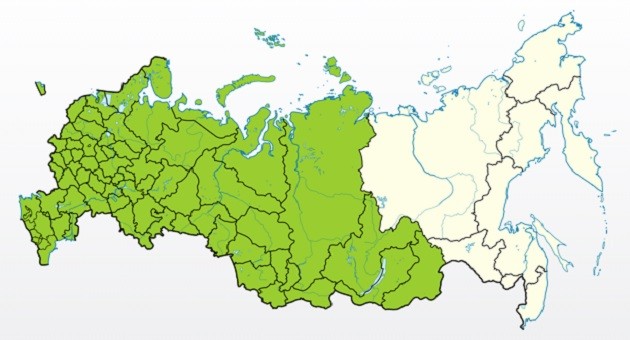
Growing regions
- Crimea.
- Ural.
- Middle zone.
- Siberia.
- Leningrad region.
- North Caucasus.
- Bashkiria.
- Moscow region.
Origin
This is an old folk variety bred by the people, known for over two hundred years. The apple tree was mentioned by the famous writer Leo Tolstoy. Such trees are known to have grown in the garden of the Yasnaya Polyana estate. The renowned pomologist V. M. Rytov was the first to describe the main variety and its known subspecies.
The variety "Arkad Sakharny" is not listed in the State Register of Breeding Achievements. It has no official zoning in our country. However, in practice, one can find apple trees grown throughout virtually the entire central part of the country, as well as further south, north, and east. The variety is so winter-hardy that it can easily be cultivated even in Siberia and the Urals.
Content
Description of the Arkad Sugar variety
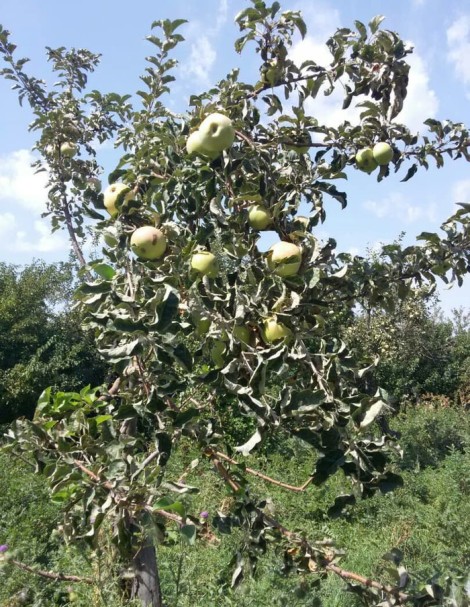
 This variety is considered early-ripening, boasting enviable winter hardiness. It is renowned for its regular fruiting, with rare periods of rest. The tree itself is very strong, resilient, and vigorous. It is tolerant of soil, moisture, and care, easily withstanding adverse weather conditions and environmental pollution.
Fruit variety Arkad Sugar apples are beautiful and quite large. They have a sweet taste and a pleasant, distinctive aroma. While they can be transported over fairly long distances, they are unlikely to be preserved for long periods. Therefore, this apple tree is recommended for growing on small private farms.
Apples: What do they look like?
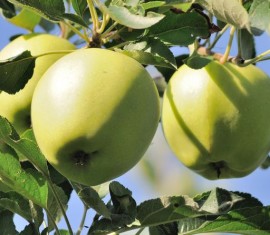
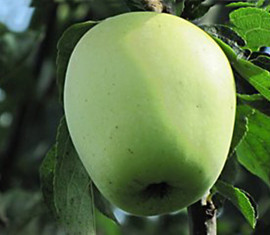
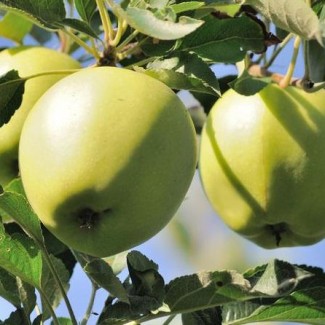
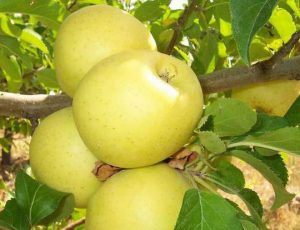 The fruits are considered medium to medium-large. They can weigh up to 150-190 grams, sometimes slightly more or less. The apples are elongated, turnip-shaped, cone-truncated, and slightly barrel-shaped. They are smooth, even, generally symmetrical, and uniform in size.
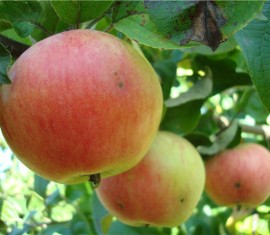
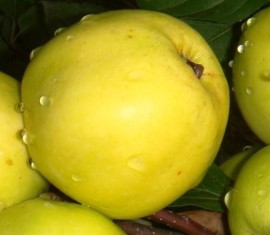
The skin is firm, slightly thick, but not excessively so. It is shiny, glossy, smooth, pleasantly dry to the touch; a waxy or slightly oily coating may appear only at full ripeness. The apple's base color is light green or light green. Most varieties lack a blush, but occasionally, faint, translucent, and diffuse salmon-coral spots may appear on the sunny side. Subcutaneous spots are small and numerous, but the light green spots are not very visible on the green surface. Experts recommend familiarizing yourself with the following chemical composition indicators:
- P-active substances (catechins) – 225 milligrams.
- Ascorbic acid (vitamin C) – 9.2 milligrams.
- Total sugars (fructose) – 15.6%.
- Pectins (fiber) – 9.2%.
- Titratable acids – 0.47%.
The Arkad Sakharny apple has a very pleasant, fine-grained flesh that's juicy, tender, and breaks easily, sometimes with a slight prickle. It's usually snow-white, but can sometimes have a slight yellowish-lemon or creamy tint. The fruit has a slightly spicy aroma, sometimes a bit wine-like. The flavor is considered overly sweet, inharmonious, and unbalanced, almost dessert-like. According to unofficial tasters, the apples earn 4.3 out of 5 points.
Apple tree Arkad sugar: characteristics
Crown and root system
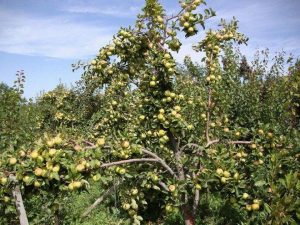 Trees of this variety can be called very viable. They grow to a maximum of 5-6 meters without shaping.They are robust, typically oval or spindle-shaped, but can also be round, with a sturdy trunk and substantial branches, rounded in cross-section, extending from the trunk at a generally acute angle. The branches are covered with greenish-brown or greenish-brown bark without pubescence. Fruiting is concentrated on the fruiting shoots, rings, and spears (mixed type).
Sakharny's foliage is beautiful, glossy, dark green or emerald, smooth, and dense. The leaves are large, oval-elongated, and pointed, with a thin, curled tip. The margins are serrated, jagged, and crenate, and may be slightly wavy, though this is rare; more often, the blade folds into a boat shape. The underside is usually pubescent. The root system is deeply embedded, so the tree's water table is critical. It is highly branched and occupies a fairly large area, usually greater than the crown projection. It is often fibrous, but may have a central taproot on some rootstocks.
Productivity and pollination
Compared to many other apple varieties, and even to Arkad's own varieties, this one has truly remarkable fertility rates.
Under favorable growing conditions, regular and proper care, in climate zones that are pleasant for the tree, one fully mature trunk of the Sugar Arcade can produce approximately 180-210 kilograms of unusually sweet fruits..
The variety is conditionally self-fertile, meaning it doesn't require external pollinators with suitable flowering times to produce fruit. However, experienced gardeners say this method yields no more than 35-40% of the harvest. Therefore, it's much more productive to plant apple trees interspersed, as long as they bloom simultaneously.
Winter hardiness and disease resistance
These apple trees are considered frost-resistant, withstanding temperatures down to -30-35°C. Therefore, in temperate climates, and especially in warm southern regions, they require virtually no shelter. In northern regions, the trunks can be wrapped with roofing felt, old tights, or burlap, and the roots can be raked with soil, spruce branches, or bales of hay or straw. In some cases, tent-like covering is acceptable for young seedlings.
The variety has absolutely no immunity to diseases. Therefore, it is recommended to carry out preventative treatments with insecticides and fungicides, as well as other suitable substances, in a timely manner. It is susceptible to scab, cytosporosis, powdery mildew, fire blight and many other unpleasant apple tree diseases.
Rootstocks and subspecies
Sakharny is itself a subspecies of the main Arkad variety. It has no varieties, and no breeding efforts are underway. However, it can be grown on virtually any rootstock. This can impart some unique characteristics to the tree. For example, on dwarf rootstocks, one may notice earlier fruiting and a noticeably compact crown.
Features of growing Arkada sugar
 Landing
 Landing
Basic conditions
- A well-ventilated, open, and well-lit location is the best choice for planting the sugar arborvitae. The trees should receive at least half the day's sunlight, and the rest of the day can be shaded. The crowns should also be well-ventilated, but drafts are absolutely unacceptable. Strong winds can cause trees to become diseased and die.
- Soil plays a secondary role for this variety. The main requirements are air and water permeability, looseness, and fertility. The apple tree grows well in sandy loam and clay loam, black soil, and even on the rocky slopes of the Caucasus.
- Prepare the holes in advance, approximately 6-8 months before transplanting the seedlings into the open ground. However, even if you don't have time, you can dig them 3-4 weeks in advance.
- It is optimal to make the hole 80-90 centimeters deep, up to 1 meter in diameter, put fertile soil on the bottom, fill it with a drainage layer (15-20 centimeters), fill it with water and leave it to stand.
- Leave at least 4-5 meters between trees, as well as between rows. This will make future maintenance and fruit harvesting much easier.
- Before planting, you need to inspect the seedlings, cut off all dry or broken shoots, and place their rhizomes in warm water for 5-6 hours.
- The root collar (grafting point) of the tree should always be left approximately 10-12 centimeters above the ground. After planting, the soil usually subsides, and the apple tree should not be allowed to root higher than this, as this will destroy all the qualities of the rootstock.
- Trellis or stakes are driven directly into the holes for the seedlings, and the trees are tied to them with twine or rope in the shape of a figure eight or infinity sign. This will prevent the bark on the stakes from being damaged by wind friction.
- A drainage pile is raked into the center of the hole, the Arkad plant is placed on it, and the rhizome is spread out. The soil is then filled in, compacted gently, watered with 35-40 liters of water, and the surface is mulched.
Landing dates
Sugar arborvitae thrives when planted in both spring and fall. In the former case, it's best to wait until the soil warms up after the winter frosts, while in the latter case, choose a day at least 21-30 days before the first frost.
Tree care
 Tree care
Protection from frost and pests
Arcade is generally winter-hardy, so the trees won't require any special shelter. The main thing is to completely stop applying water, fertilizer, and fertilizer in a timely manner, around the beginning of September. In the coldest areas, young trees can be covered using a tent-like method: wrap the trunks with burlap, tarpaulin, or roofing felt, pile spruce branches on the root zone, and pile up the soil.
Whitewashing tree trunks is no accident—it helps repel insects that have taken to nesting in the bark chips. It also improves the garden's aesthetics. Rodents can be deterred from eating young branches and tree bark by coating them with lard, grease, or fuel oil.
Loosening the soil, watering: proper agricultural technology
The apple tree is easy to cultivate, including the variety we're talking about. Therefore, you can dig around the tree once a year, and then continue hoeing and loosening the soil throughout the growing season, approximately 4-6 times. It's best to do this the day after watering, so the soil around the tree doesn't compact into a tight ball that's tight.
Fertilizer is commonly added to fruit trees along with water. Fertilizing should be started no earlier than 3-4 years after planting; before then, the nutrients initially added will be sufficient. Overdoing it can cause the tree to become diseased or even die.
Pruning: simple crown shaping
Trunks are very flexible and can be shaped into many different forms. However, the trees are best suited to a tiered or sparsely tiered form. Pruning should begin in the first year, cutting back the central conductor by one-third, leaving 2-4 skeletal branches and shortening them so that they do not protrude above the trunk, but gradually become shorter.
Sanitary pruning is done in the fall, after the harvest has been gathered, the leaves have fallen, and the sap flow in the trunks has ceased. I remove any excess growth that thickens the crown, and dry or damaged shoots are also removed. Don't forget to treat wounds. garden pitch or paint.
Reproduction
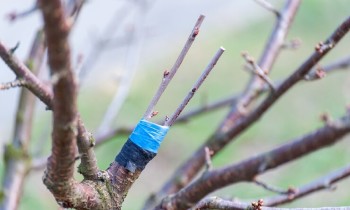
- Budding.
- Kidney grafting.
- Cloning.
- Cuttings.
Pollinator varieties
- Alva.
- Spartan.
- Auxis.
- Red Connell.
- Liberty.
- Champion.
- Ligol.
- Antey.
- Belarusian raspberry.
- Gloucester.
Diseases and pests
- Cytosporosis.
- Powdery mildew.
- Scab.
- Rust.
- Scale insect.
- Glass-box.
- Leafhopper.
- Hawthorn.
Ripening and fruiting of Arkada sugar
The beginning of fruiting
 The beginning of fruiting
This variety can't be called early-bearing; it requires a fair amount of patience. It only bears its first fruit 8-9 years after planting. However, its active lifespan exceeds 50-75 years, so there's still plenty of time to enjoy the sweet fruit. The first harvests aren't particularly abundant, but you can still get a few dozen apples.
Flowering time
The sugar arborvitae begins to open its large, snow-white buds quite early, around early to mid-May. As early as April, unopened inflorescences appear, appearing slightly pinkish. The petals are beautiful, oval, elongated, fleshy, yet delicate. The petals themselves are gathered in inflorescences of 4-7, are very fragrant, and bloom for about 10-14 days.
Fruiting and growth
Trees don't grow very quickly, but in just one year before they begin bearing fruit, they can reach at least 45-60 centimeters. Once the fruit begins to ripen on the branches, the rate of growth slows significantly. Fertility gradually increases, with each year the apple tree produces more fruit until it reaches its peak in the 10th to 14th year. From then on, it will produce approximately the same amount of fruit each year.
Apples begin to ripen in early July, sometimes even until mid-July or even the end of the month. Everything depends on the weather, the previous winter, and climate conditions. The key is to catch the moment, so overripe fruit doesn't fall to the ground. It's best to finish harvesting by early August. They can be transported quite well in boxes, sprinkled with sawdust, but they'll likely be stored for more than 2-4 weeks.
Top dressing
- Eggshell.
- Humus.
- Bor.
- Manure.
- Compost.
- Superphosphate.
- Copper.
- Mineral and nitrogenous complexes.
- Ammonium nitrate.
What to do if it doesn't bloom or bear fruit
- Wrap up for the winter.
- Limit or activate watering.
- Eliminate insect infestation.
- Cure diseases.
Why do apples fall?
- Strong wind, hail, rain.
- Overripe.
- Pests or diseases.
- Freezing.
Share your own experience with the Arkad Sakharny apple tree variety, so even novice gardeners have no questions about cultivating these trees.