Arkad Pink Apple Tree: Variety Features and Care
| Color | Reds |
|---|---|
| Ripening season | Summer |
| Size of apples | Average |
| Taste | Sweet |
| Crown type | Average tree height |
| Shelf life | Low shelf life |
| Application | Fresh , For recycling |
| Winter hardiness | High winter hardiness |
| Fruiting age | From 5 years old |
 History of origin and regions of growth
Growing regions
- Crimea.
- Siberia.
- Middle zone.
- Leningrad region.
- North Caucasus.
- Ural.
- Moscow region.
Origin
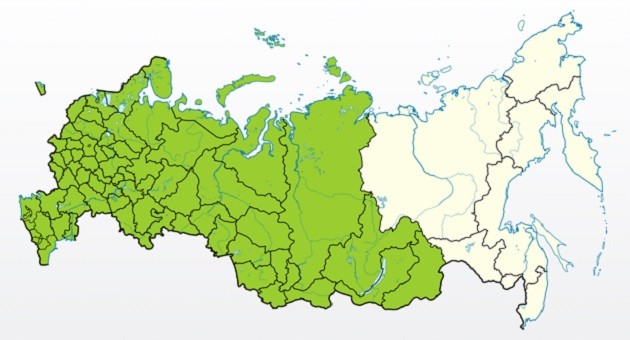
A variety of the ancient Arkad cultivar, created through open pollination of the parent cultivar. This apple tree is not listed in the State Register of Breeding Achievements, nor is it officially zoned. However, it can be grown throughout virtually the entire country, with the exception of the Far North and the Far East.
Description of the Arkad pink variety
 This early-season variety has long been a staple in gardens across Russia and beyond. This beautiful tree, resilient to low temperatures and other weather conditions, requires little care, frequent fertilizing, or watering. It thrives in a wide variety of soils and is resistant to pollution and air pollution.
The fruits are medium-sized, attractive, tasty, aromatic, and sweet. They transport fairly well, but do not keep well for long periods. Another drawback is the tendency for the fruit to fall off when overripe. The trees are recommended for private cultivation in home gardens; they are considered unsuitable for intensive orchards.
Apples: What do they look like?
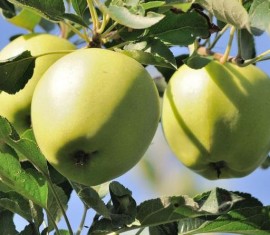
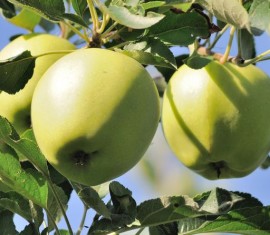
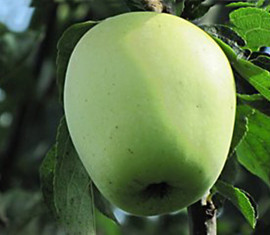
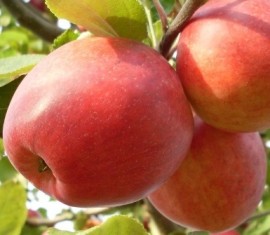
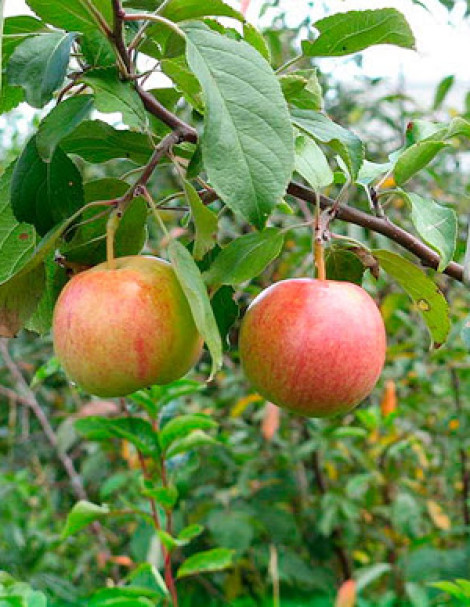
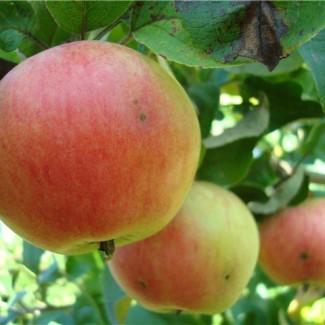
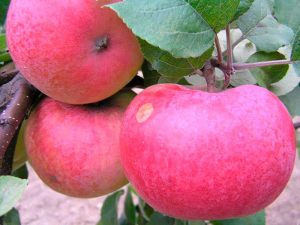 The fruits are generally medium or even smaller than average in size. They can reach 60-85 grams in weight, but only in good years. The fruits are round, slightly flattened along the central axis. The ribbing is clearly visible near the calyx, but smoothed over the rest of the surface; the lateral seam is barely visible.
The skin is moderately dense, not very elastic, thin, brittle, and easily cracked. It has a characteristic greenish-yellow hue when ripe, which is almost completely hidden by a raspberry-pink, striped blush. At full maturity, this blush can merge into solid spots, hence the original name. Subcutaneous punctures are numerous, not very large, light-colored, and clearly visible on the surface. The original chemical composition is very similar to that of the parent variety:
- P-active substances (catechins) – 225 milligrams.
- Ascorbic acid (vitamin C) – 8.7 milligrams.
- Total sugars (fructose) – 15.3%.
- Pectins (fiber) – 11.9%.
- Titratable acids – 0.39%.
Arkad Pink has a dense to medium-dense, fine-grained flesh. It has a distinctive creamy lemon hue and a persistent, powerful apple aroma. The flavor is considered inharmonious, due to its excessive sweetness without the characteristic acidity in the aftertaste. Unofficial tasters rate it 4.5-4.6 out of 5.
Arkad Pink Apple Tree: Characteristics
Crown and root system
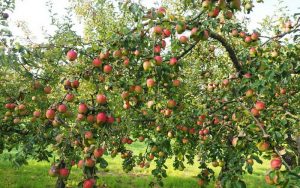 Trees are considered compact because grow only up to 3.5-4 meters, making them a natural semi-dwarf. These apple trees are ideal for those with limited garden space. The Arkada's crown is elliptical or oval, becoming slightly wider and spreading over the years, but typically does not exceed 2 meters in diameter. Branches are not densely dense, shoots are straight or slightly curved, thin, and covered with greenish-brown or brown bark. Fruiting is concentrated primarily on the ringed branches.
The leaves are medium to small, flattened, smooth, moderately glossy, and glossy. They are green or dark green, with a felt-like pubescence on the underside. The tips are short and pointed, and the margins are serrated, jagged, crenate, and may be slightly wavy. The root system is fairly deep, adapted to the search for water and nutrients. In most varieties, it is branched and fibrous, but may also have a central conductor on wild plants.
Productivity and pollination
The yield of Arkad Pink can't be called outstanding. It's average at best, and often low.
In a favorable year and with proper and regular care, one can harvest approximately 50-65 kilograms of apples per year from one adult tree.
The variety is considered conditionally self-fertile, meaning it will produce apples even if there's no other apple tree within 150-250 meters. However, with the presence of pollinators that bloom at the right time, the yield can be increased by 35-50%, which is quite significant. If there's an apiary nearby and the trees themselves are sprayed with sugar or honey syrup, the chances are even higher.
Winter hardiness and disease resistance
Pink Arkad is one of those varieties that can be grown even in the harshest conditions. It easily tolerates frosts down to -27-30°C, when they last no more than 2-3 weeks at a time. They also tolerate sudden temperature fluctuations and unexpected thaws after prolonged, bitter frosts. However, they will require timely shelter and proper winter preparation.
Arkad doesn't usually show any particular resistance to apple tree diseases. It is easily affected. scab, cytosporosis or powdery mildew, more abundantly and quickly, both the leaves and the fruits themselves suffer. Therefore, it is necessary to carefully monitor the garden, avoiding stagnant air or excessive humidity, and regularly spraying with suitable commercially available products.
Rootstocks and subspecies
Arkad pink can be grown on various rootstocks. This allows it to acquire some of its unique properties. For example, on dwarf rootstocks, trees grow to only 2-2.5 meters tall, begin bearing fruit earlier, and produce slightly larger apples. However, winter hardiness decreases significantly, making these varieties best grown in temperate or warm climates.
Growing Arcade Pink
 Landing
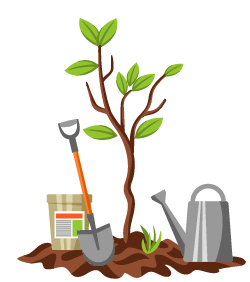 Landing
Basic conditions
- Apple trees grow best in full sun, so choose an open location where the crowns are exposed to ultraviolet light for most of the day. In the shade, the Arkad tree grows very stunted, weak, and may even die.
- Groundwater levels must be carefully managed, otherwise the tree will reach the moisture through its roots and rot. Therefore, groundwater should be no higher than two meters. If a suitable site is unavailable, an artificial embankment can be created and trees planted within it. Another way to create a water divider is to bury a sheet of slate or several layers of roofing felt or tar paper at a depth of 1.5-1.7 meters. This will redirect the roots and prevent them from rotting from excess moisture.
- The soil can be any, but the best option would be loam and sandy loam, well-permeable to moisture and air, fertile.
- All holes for apple tree plantings are prepared in advance, perhaps several weeks in advance, but preferably a season in advance. Dig a hole 70-80 centimeters deep and up to a meter in diameter, add fertilizer mixed with the topsoil to the bottom, then add drainage, and fill with water.
- When planting, the root collar is always left 10-12 centimeters above the surface to prevent the roots from growing higher, which would then lose the qualities of the rootstock.
- You need to leave a distance between trees in the garden; for Arkad pink, 2-2.5 meters is enough, both from the same apple trees and from other plants.
- Before planting, the seedling is inspected, dry shoots and branches are cut off, and it is soaked in water for 5-7 hours.
- Place the tree in the hole, spread the rhizome over a mound of drainage material collected in the center of the hole, and cover with soil. Compact the soil lightly; just use your hands. Water with 25-40 liters of water, and mulch the surface with grass, sawdust, and compost.
Landing dates
Arkad rose can be transplanted into open ground in early spring and late fall, when the sap has either already begun to flow or has not yet begun to flow. Good times include early to mid-April, as well as September and October. In warmer regions, the autumn version is a good choice, while in colder regions, the opposite is true. The planting day should be dry and sunny, and work is best done in the first half of the day.
Tree care
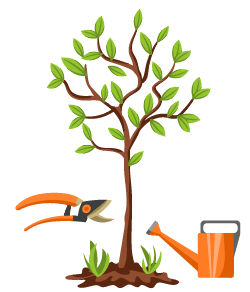 Tree care
Protection from frost and pests
To protect young seedlings, it's best to wrap them like a tent, from root to crown. Burlap, agrofibre, or tarpaulin can be used. For older trees, wrapping the lower part of the trunk with old tights, roofing felt, or tar paper is sufficient, and covering the roots with spruce branches, hay, or straw mats.
To repel insect pests that often nest in bark crevices, whitewash the trunks with a thick lime solution. Whitewashing trunks in spring and fall also adds an attractive aesthetic appeal to the garden. Coating the trunks with pungent-smelling substances, such as lard, fuel oil, old drying oil, or grease, will also help repel rodents.
Loosening the soil, watering: proper agricultural technology
To ensure the tree receives sufficient oxygen and nutrients, the root zone needs to be dug regularly. Twice a year, in spring and fall, is sufficient; some even limit themselves to just one. At the same time, weeds, debris, shoots from other plants, and root suckers should be removed from under the tree. During the growing season, the soil can be lightly hoeed, for example, the day after watering, to prevent it from compacting into a hard lump.
Arkad Pink is watered once every two weeks, or more frequently during drought. However, if the soil's specific moisture level is sufficient, watering can be omitted altogether, with the exception of 3-4 times, timing these waterings to coincide with flower development, ovary set, and fruit ripening. Fertilizers and fertilizers are also conveniently added along with water.
Pruning: simple crown shaping
This variety's crown is not dense, so pruning is unlikely to be a problem. When planting, if the shape wasn't determined at the nursery, prune the main stem by a third, shorten the branches, and leave just 2-3. Subsequently, simply maintain their natural branching, and after 15-20 years, gradually prune back older branches to rejuvenate the trunks.
Every fall, the tree should be inspected and given a sanitary cleaning. All dead, diseased, or damaged shoots should be pruned. At the same time, any branches that are of no use should be removed, including suckers, branches protruding into the crown, or branches growing parallel or crisscrossed. Always seal the cuts, avoiding open wounds, as this can cause severe stress to the tree.
Pollinator varieties
- Idared.
- Spartacus.
- Gala.
- Liberty.
- Champion.
- Borovinka.
- Antey.
- Ligol.
- Belarusian sweet.
- Gloucester.
- Silver hoof.
Diseases and pests
- Cytosporosis.
- Rust.
- Pit rot.
- Powdery mildew.
- Black crayfish.
- Scab.
- Rust.
- Scale insect.
- Leafhopper.
- Green aphid.
- Hawthorn.
Ripening and fruiting of Arkada pink
The beginning of fruiting
 The beginning of fruiting
All Arkada trees begin to bear fruit only after 5-6 years, not earlier on standard rootstocks. However, on dwarf rootstocks, the first fruiting can be achieved as early as 3-4 years. Initially, the tree won't produce much fruit, producing only a few, but over the years, the number of apples will steadily increase.
Flowering time
The tree begins to open its buds in early to mid-May, when a large number of other varieties are in bloom. This makes it easy to select pollinators. The flowers are medium-sized, with five distinct petals, very light and delicate, and a beautiful, slightly pinkish hue. They densely cover all the branches, giving the tree a very elegant and attractive, even decorative, appearance during this period. The process lasts approximately 12-16 days.
Fruiting and growth
Pink arcades grow at a moderate rate, gaining only 20-35 centimeters per year. However, due to their small height, they reach their peak height quite quickly. Fertility increases with age, but the highest yields will take some time to reach. Full harvests will be possible no earlier than 10-13 years, when the tree reaches its full potential.
The fruit usually ripens earlier than any other variety in the garden, as early as mid-July, and sometimes even at the beginning of the month. Such early varieties are rare, which is why Arkad Pink is especially prized by gardeners. The variety's main drawback is its tendency to shed its fruit. As soon as they become slightly overripe, they immediately fall from the branches and become unsuitable for storage. If harvested in time, they can be stored in a cellar or a special container. refrigerator They won't last longer than 4-8 weeks, as they'll lose their flavor and become unpleasantly creamy. They don't transport well, but they're excellent for processing. These apples make wonderful dried fruit, preserves, jams, and compotes.
Top dressing
- Humus.
- Peat.
- Bor.
- Calcium.
- Manure.
- Compost.
- Superphosphate.
- Ammonium nitrate.
What to do if it doesn't bloom or bear fruit
- Limit or increase watering.
- Eliminate insects.
- Cure diseases.
Why do apples fall?
- Wind, rain, hail.
- Overripe.
- Pests or diseases.
- Freezing.
Leave a review of the Arkad Pink apple tree variety so that even a novice gardener can receive useful information firsthand.