Arkad Yellow Apple Tree: Variety and Care Features
| Color | Yellow |
|---|---|
| Ripening season | Summer |
| Size of apples | Average |
| Taste | Sweet |
| Crown type | Tall tree |
| Shelf life | Low shelf life |
| Application | Fresh , For recycling |
| Winter hardiness | High winter hardiness |
| Fruiting age | From 5 years old |
 History of origin and regions of growth
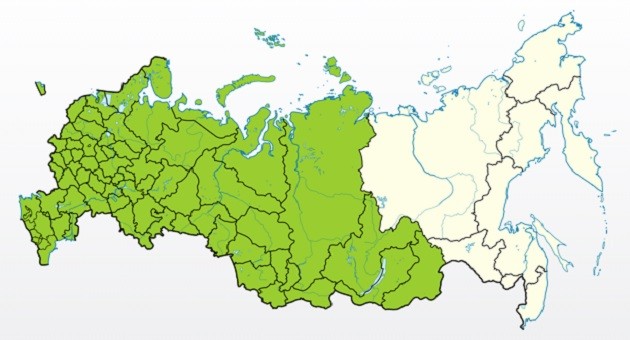
Growing regions
- Crimea.
- Ural.
- Middle zone.
- Siberia.
- Leningrad region.
- North Caucasus.
- Bashkiria.
- Moscow region.
Origin
The variety is considered an early summer variety due to the ripening time of its fruits, and is also considered a natural or folk selection. It has been known for several centuries, but there is no reliable data on its origins. It is believed that the variety was first cultivated in gardens in the territory of modern-day Bashkiria, from where it spread throughout the world. The variety is mentioned by pomologist V. M. Rytov and by the writer Leo Tolstoy.
The State Register of Breeding Achievements of our country contains absolutely no information about the Arkad Yellow (Summer) variety or any of its other varieties. It also has no official zoning. This is due to the vast diversity of more promising, advanced varieties. It can be grown practically throughout our country, with the exception of regions with the harshest climates.
Content
Description of the Arkad yellow variety
 Trees of this variety are widely planted in gardens across our country, despite being considered obsolete. This variety boasts many positive qualities that have earned it widespread popularity and recognition. It is undemanding regarding soil and care, easily overcomes the challenges of growing in challenging conditions, is truly winter-hardy, produces fruit regularly, and quickly reaches its peak fruiting season.
Arkada apples are very attractive in appearance, but they are also delicious, juicy, and aromatic. These apples are the first to ripen in the garden, but they do have some significant drawbacks. Firstly, they produce average to low yields, and secondly, they are completely unsuitable for transportation. This variety is recommended exclusively for small gardens in private households; it is completely unsuitable for commercial purposes.
Apples: What do they look like?
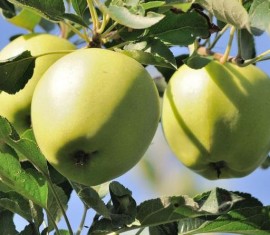
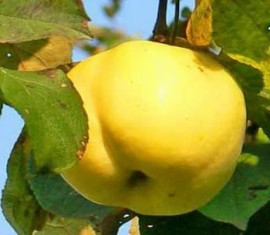
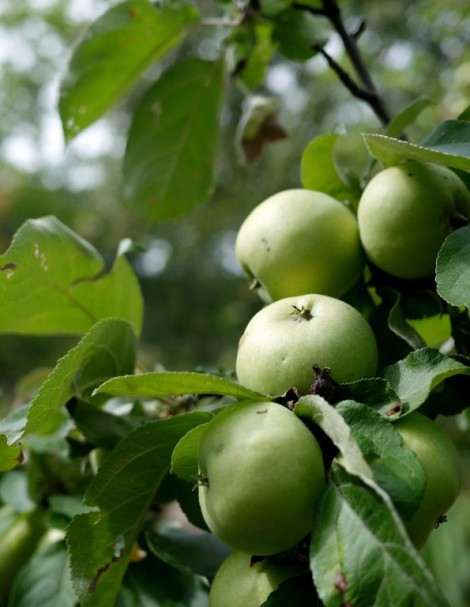
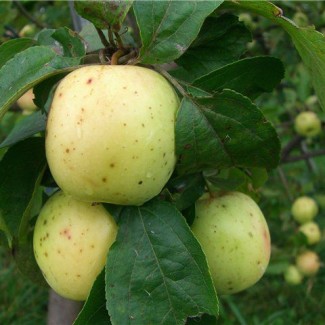
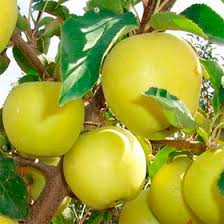 The fruits are considered medium-sized, as they rarely grow larger than 80-100 grams, and even then, only with good care and favorable conditions. Their shape is round, but more of a rounded-conical, almost cylindrical, smooth, conical shape. The ribbing is clearly visible at the calyx, and the lateral seam is barely visible.
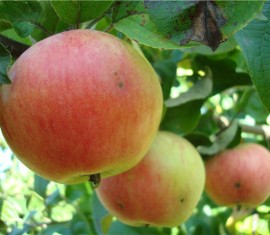
The fruit's skin is very thin, delicate, and fragile, easily damaged with even the slightest force. It is slightly elastic and has a beautiful greenish-yellow hue, turning golden yellow when fully ripe. There is no blush. Arkad It doesn't have any, but it can become covered with translucent, fuzzy coral spots on the sunny side. There are numerous, light, light green, barely noticeable subcutaneous dots; they are small and without rustiness. When overripe, the dots can become dark, almost black. The chemical composition can be most easily assessed by comparing the following data:
- P-active substances (catechins) – 234 milligrams.
- Ascorbic acid (vitamin C) – 8.6 milligrams.
- Total sugars (fructose) – 14.8%.
- Pectins (fiber) – 11.2%.
- Titratable acids – 0.37%.
The flesh of this variety is generally soft, crumbly, very tender, yet juicy. The flavor is considered neither harmonious nor balanced; it's dessert-like, sweet, lacking the characteristic apple tartness, and can be somewhat tart when unripe. According to an unofficial tasting score, it scores approximately 4.1 out of 5, based on both taste and appearance.
Apple tree Arkad yellow: characteristics
Crown and root system
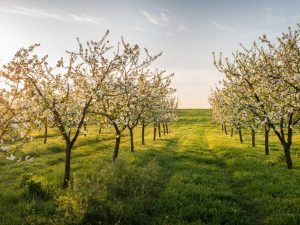 The crown of this apple tree variety is special. It grows to a height of 6-8 meters., and sometimes even more without formative pruning. The tree's shape is rounded but elongated upward, naturally spindly, with shoots arranged at an acute angle to the central conductor and directed straight upward. They are long, sparse, mostly straight, covered in olive or greenish-red bark with a light pubescence. Fruiting is mixed.
Arkada's leaves are ovate or oval-elongated, medium-sized. They are dense, leathery, smooth, and shiny, and may have a felt-like pubescence on the underside. The tip is short and pointed, and the margins are serrated, serrated, crenate, and wavy, and may form a boat-shaped or curl downward. The root system is highly branched, deeply rooted, and well adapted to seeking nutrients and water from the soil.
Productivity and pollination
The fertility rates of the Yellow Arcade are considered average, as is the tree's ability to grow.
One adult tree of this variety can produce approximately 65-85 kilograms of fruit per year..
The variety is conditionally self-fertile, but without pollinators, the yield will likely be meager—only a few dozen apples, even on a large, mature tree. Therefore, it should be interplanted with other varieties, preferably summer varieties, to ensure their budding times coincide.
Winter hardiness and disease resistance
The apple tree is so resilient to low temperatures that many even cultivate it in Siberia and the Far East. It easily tolerates thaws down to -33-36°C, even without special preparation. However, it is still advisable to cover the tree and carry out preparatory work to prevent buds from freezing and reduce the yield next season.
The variety is prone to diseases, so you will have to make a serious effort to protect your garden from damage. scab, cytosporosis, powdery mildew and other apple diseases. It's recommended not to spray trees with the same products every year, as some fungi easily adapt and develop immunity to them. Folk remedies are usually ineffective; timely application of mineral supplements can help.
Rootstocks and subspecies
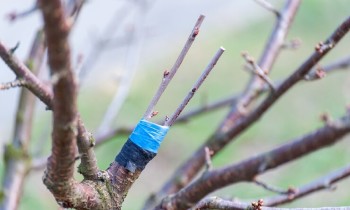
The variety has several main subspecies, such as the Sugar Arkad, which are best covered in a separate article. It can be grown on various rootstocks, imparting certain distinctive characteristics to the trees. Standard trees exhibit the most outstanding winter hardiness, while dwarf trees begin to bear fruit earlier and grow more compactly.
Growing Features of Yellow Arcade
 Landing
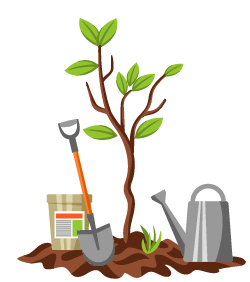 Landing
Basic conditions
- This variety is so "impenetrable" that it can be planted even in shaded areas, but it's important to ensure the branches receive some UV light during the day. It can even grow in the shade and produce good fruit, although the fruit may be smaller and less sweet.
- It's best to choose a well-ventilated location, but avoid drafts. However, you won't need to worry too much about this, as a tall tree naturally raises its crown over the years, making it difficult for other plants to block its view.
- Almost any soil is suitable, the main thing is that it is permeable, airy, loose, fertile, and moist. Suitable soils include loam, sandy loam, black soil, podzolic soils, and rocky slopes.
- The holes should be prepared at least a week before planting, but the most advanced gardeners do this the previous season. They are dug to a depth of 75-95 centimeters and up to 1 meter in diameter. Fertile soil and fertilizer are added to the bottom, mixed with washed river sand if needed, then filled with drainage material and water. These holes are not covered with anything; they should be left to mature outdoors.
- At least 5-6 meters should be left between trees so that they do not interfere with each other with their crowns and roots; the same amount should be left between rows or other plants.
- Under any circumstances, the apple tree grafting site should remain above ground level. Therefore, it's advisable to allow for possible subsidence and initially plant the tree with the root collar 7-10 centimeters higher.
- The seedlings are soaked in warm water in the evening before planting in the morning, and at the same time, broken branches and shoots that look dry or diseased are cut off.
- The tree is placed on a pile of collected drainage material, all small root shoots are straightened, covered with soil, compacted, and watered. The surface can be mulched with available materials if additional moisture retention is needed.
Experienced gardeners recommend carefully selecting a site for planting Arkada. It's best to avoid fruit trees (especially apple trees) or vegetable crops growing in the area for a long period of time. This will ensure the fruit will be much larger than it would otherwise be..
Landing dates
The best time to plant yellow Arkada is early or mid-April, when the soil has warmed up completely but the buds have not yet begun to develop. However, the trees can also be planted in the fall; they also thrive well that way. The first option is suitable in any climate, while the second is only suitable for warmer regions.
Tree care
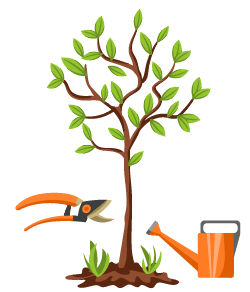 Tree care
Protection from frost and pests
Trees don't require any special protection; they can easily withstand cold weather on their own. However, in the northernmost and harshest regions, it's best to implement all standard sheltering measures. For example, stop watering at the end of summer, wrap the trunks in burlap, and cover the roots with hay or straw. In the coldest regions, you can pile a 15-20 centimeter layer of soil onto the root circle, but remove this no later than mid-March.
Rodents, who enjoy feasting on young shoots and bark, can be repelled by applying ordinary rendered lard to the lower parts of the trunks. Solid oil, fuel oil, and other aromatic substances with an unpleasant odor will also work. Whitewashing the trunks helps get rid of insects hiding in the crevices of the bark and also makes the garden more aesthetically pleasing.
Loosening the soil, watering: proper agricultural technology
Young tree trunks are dug twice a year, removing weeds, debris, root suckers, and other plants. You can also loosen the soil with a hoe 5-8 times per season, especially the day after watering. Older trees don't need this, so the area around the trunk can be covered with sod or seeded with lawn or herbs, making tree care as easy as possible.
Watering It's also common to only use young trees. However, during periods of severe drought, adding moisture is certainly helpful. Additionally, various fertilizers and fertilizers can be diluted in water, which will be beneficial starting 3-4 years after planting to promote larger fruit and accelerate tree growth.
Pruning: simple crown shaping
A drawback of this variety is its tendency to develop a single crown shape—tall, pyramidal, or spindle-shaped, with sparse, upward-sloping branches. This is difficult to combat; it's easier to maintain this shape with additional pruning, slightly adjusting the height of the trunk. Pruning should begin in the first year if a specific result is desired.
Sanitary tree pruning is carried out in the fall, when it's clear which branches are broken, dried out, or diseased. At the same time, all unnecessary shoots that don't bear fruit and merely drain the tree's sap are removed.
Reproduction
- Budding.
- Kidney grafting.
- Cloning.
- Cuttings.
Pollinator varieties
- Alva.
- Spartan.
- Auxis.
- Red Connell.
- Liberty.
- Champion.
- Ligol.
- Antey.
- Belarusian raspberry.
- Gloucester.
Diseases and pests
- Cytosporosis.
- Powdery mildew.
- Scab.
- Rust.
- Scale insect.
- Glass-box.
- Leafhopper.
- Hawthorn.
Ripening and fruiting of Arkada yellow
The beginning of fruiting
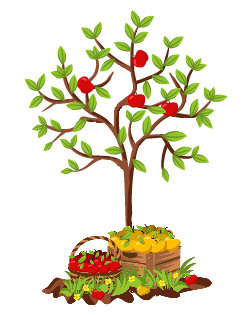 The beginning of fruiting
Although this variety is considered early-bearing, it only begins bearing fruit 5-6 years after planting. Although flowers may appear earlier in some cases, they are likely to be barren, so it's customary to pick them off at the bud stage. The yield will be quite abundant from the very first year.
Flowering time
This variety is very early-growing, so it begins to bloom quite early in the spring. By early May, the trees are already covered in beautiful, small, fragrant flowers with delicate, airy petals. They densely cover the branches, but not all of them usually produce fruit.
Fruiting and growth
Plants of this variety grow very quickly, gaining 25-55 centimeters per year. The rate is much faster before the fruit begins to ripen, but then it slows down slightly. Fruitfulness increases gradually, but reaches full fruit production in just a few years. By the 8th to 10th year, you can harvest those 80 kilograms of aromatic apples, which are best eaten immediately upon ripening.
Apples are ready for consumption by mid-July, sometimes closer to the end of the month in the harshest regions. They can easily fall from the branches, so the harvest must be completed immediately. The fruit is completely unsuitable for transportation and should be eaten immediately or processed on site. This variety is therefore of no commercial value; large quantities are difficult to process properly without creating significant waste.
Top dressing
- Eggshell.
- Humus.
- Bor.
- Manure.
- Compost.
- Superphosphate.
- Copper.
- Mineral and nitrogenous complexes.
- Ammonium nitrate.
What to do if it doesn't bloom or bear fruit
- Wrap up for the winter.
- Limit or activate watering.
- Eliminate insect infestation.
- Cure diseases.
Why do apples fall?
- Strong wind, hail, rain.
- Overripe.
- Pests or diseases.
- Freezing.
Leave a review based on your own experience with the Arkad Yellow apple tree variety, so that even novice gardeners have no questions about cultivating these trees.