Apple tree Dream: characteristics of the variety and care
| Color | Reds |
|---|---|
| Ripening season | Summer |
| Size of apples | Average , Large |
| Taste | Sweet and sour |
| Crown type | Average tree height |
| Shelf life | Low shelf life |
| Application | For recycling , Fresh |
| Winter hardiness | High winter hardiness |
| Fruiting age | Up to 5 years |
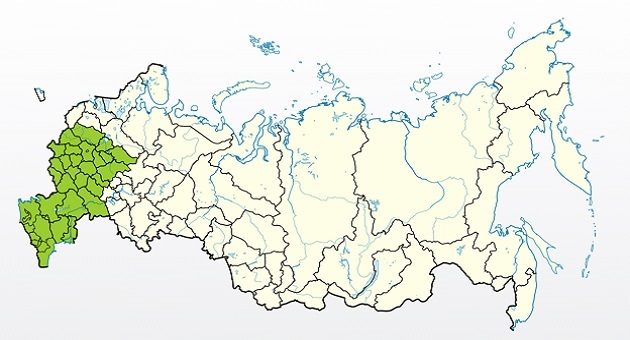 History of origin and regions of growth
Growing regions
- Middle zone.
- Some northern regions.
- North Caucasus.
Origin
This summer apple variety was bred for cultivation in the temperate climate of the central part of Russia, so the primary goal was to produce high-quality fruit and high yields. Its development was carried out at the breeding station of the I.V. Michurin All-Union Scientific Research Institute of Horticulture in Tambov. The parent varieties used were Papirovka Zimnyaya and Pepin Saffronny, both native to this region.
Content
Description of the apple tree variety Dream
 The variety's positive qualities far outweigh its negatives. It is resistant to low temperatures, produces high yields, and the apples themselves have excellent consumer and marketable qualities. The variety is virtually immune to scab and other fungal infections, is easy to grow and maintain, and begins fruiting fairly quickly. Despite its acute susceptibility to drought, as well as its tendency to deform and spoil quickly, it is recommended for cultivation in commercial intensive orchards and private gardens.
Apples: What they look like
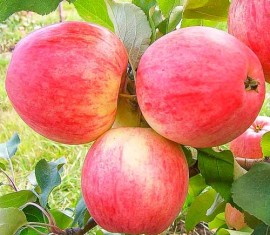
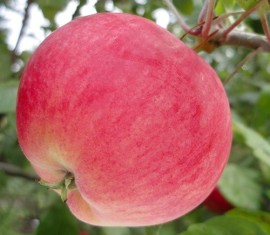
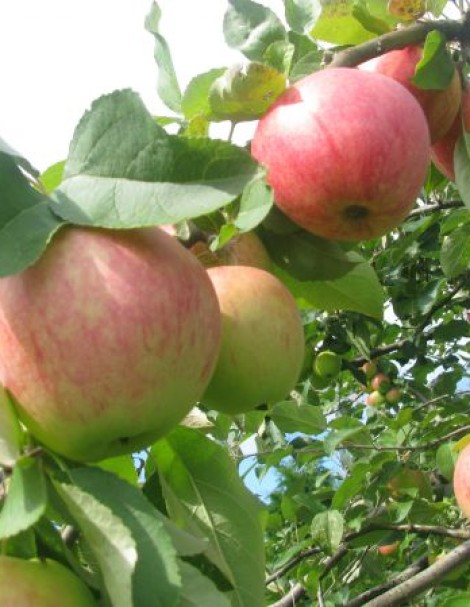
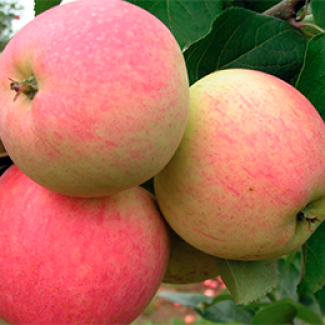
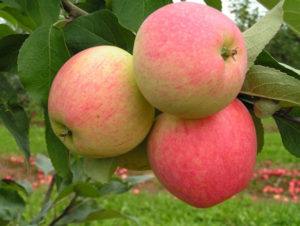 The fruits of this variety are generally uniform, perfectly rounded, but can be slightly tapered. They are medium-sized, growing to approximately 130-150 grams, but with good care and favorable conditions, they can reach 190-250 grams. Ribbing is subtle, almost invisible.
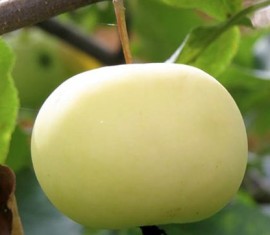
The skin is dense, smooth, and elastic, greenish-yellow or light green. As it ripens, it becomes almost white. The blush is slight, occupying no more than 30-45% of the fruit's surface. It is a delicate, pale pink or light crimson color, streaked or dotted. The subcutaneous dots are light gray, making them almost invisible against the yellowish-white surface. The chemical composition is characterized by the following indicators per 100 grams:
- P-active substances (catechins) – 231 milligrams.
- Ascorbic acid (vitamin C) – 8.7 milligrams.
- Total sugars (fructose) – 9.2%.
- Pectins (fiber) – 10.8%.
- Titratable acids – 0.76%.
The apple flesh is fairly dense, medium-grained, and can be slightly crumbly. It has a pleasant sweet and sour flavor, considered dessert-like, balanced, and harmonious, as well as a light, distinctive aroma. A professional taster scores 4.6-4.5 points on a 5-point scale for appearance and flavor, respectively.
Apple tree Dream: characteristics
Crown and root system
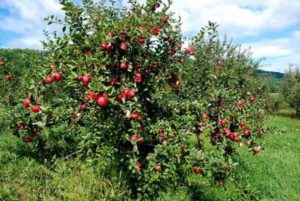 The variety is considered medium-sized, because The tree can grow to a maximum height of 3.5-4 meters during its lifetime.Its crown is moderately dense, compact oval or pyramidal when young. Over time, it becomes rounded, broadly oval, or spreading. The branches are long, geniculate, and may arch. The bark on young shoots is greenish-brown, turning silvery-gray with age and may crumble and crack.
The leaves are large, leathery, matte, light green or green. They are rounded, slightly elongated, with a wavy, finely serrated crown and a short, pointed tip. They have coarse ribbing and a well-pubescent back. The tree's root system is extensive, moderately deep, and active, focused on water-seeking.
Productivity and pollination
The fruits of this variety are usually medium-sized, but can also be large. On seedling rootstocks, they are usually smaller, while on dwarf and semi-dwarf rootstocks, they are larger.
A single mature tree can yield approximately 115-150 kilograms of delicious, aromatic fruit in a single season. However, some gardeners say even 160-180 kilograms is far from the limit under favorable conditions and with proper, timely care..
The Dream apple tree is considered self-sterile. This means it won't produce any fruit, even if it blooms profusely, but there aren't any other apple trees nearby that bloom at the right time. Ideally, it should be interspersed with other varieties, spaced no more than 50-100 meters apart; otherwise, pollinating insects may fail. Experienced gardeners set up a mobile apiary during the blooming period to help the bees do their job.
Winter hardiness and disease resistance
The main focus during the variety's selection was winter hardiness, which goes far beyond simply low-temperature tolerance. Mechta tolerates temperatures below -35-37°C, as well as sudden fluctuations from severe frosts and snowstorms to thaws with temperatures above zero. The trees tolerate harsh conditions in the temperate zone well, even in Moscow region and the Leningrad region with its changeable weather feel good.
Mechta lacks genetic immunity to fungal infections. However, it demonstrates very good resistance even without this immunity. The variety is rarely affected by the most common apple tree diseases, and pests only rarely attack the crown, branches, bark, and wood. With timely preventative measures, the risk of such problems is reduced to negligible levels.
Rootstocks and subspecies
Dream is most often grown on standard seedling rootstock, as the trees produced on this type are more resilient to all natural elements. They are less susceptible to diseases and are resistant to frost, drafts, and pests. However, dwarf and semi-dwarf varieties are also available. These varieties result in more compact trees, easier maintenance and harvesting, and larger fruit, but at a cost to other characteristics.
Features of growing Dreams
 Landing
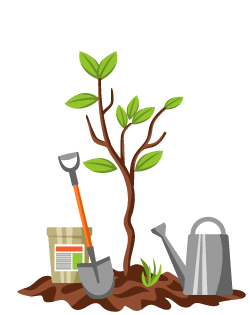 Landing
Key Features
- Good light is the key to growing this variety. Only in full sun will it produce a substantial harvest of large fruits. In the shade, the trees grow more slowly, bear fruit sluggishly, and the fruit grows very small.
- Sandy loam and loamy soil are good soil options for apple trees, but they will also grow well in black soil. The main criterion that should be checked is acidity. If it is too high, the apple trees may die.
- Groundwater should not be close to the planting sites, otherwise the Dream will inevitably reach the groundwater with its roots and begin to rot. Planting trees near rivers, lakes, ponds, and even wells is also not recommended. Marshy areas or lowlands that are flooded by meltwater in the spring are also far from the best choice for the tree.
- The holes are prepared in the fall, but this isn't necessary. It's important to dig the area the season before planting and fertilize it well, and that will be sufficient. If you decide to do everything correctly, then dig holes 80 centimeters deep and the same in diameter, mix the topsoil with fertilizer and fill it in the bottom, and lay drainage (gravel, stones, broken brick) on top. All that's left to do is fill the holes with 30-40 liters of water and leave them outdoors until you plant the apple trees.
- The distance between apple trees in a row should be approximately 2-3 meters, and the same distance between rows. This will ensure that the trees do not clash with each other, either through their crowns or roots.
- Root collar It always remains 7-12 centimeters above ground level—that's the rule. If the seedling roots higher, all the original properties of the rootstock will be completely negated.
- The rhizome is inspected, and any rotten, dry, or diseased shoots are trimmed with pruning shears. These shoots are then soaked in warm water for 6-8 hours.
- Place the seedling vertically in the hole, directly on top of the drainage mound, supporting it by the trunk. Fill with soil, compacting it by hand to avoid overcrowding the root ball. Water with 30-40 liters of water, and mulch the surface with humus, compost, chopped grass, or manure.
Landing dates
Dream can be planted in open ground either in spring or fall, once the leaves have completely fallen and the sap flow in the trunks has ceased. However, experienced gardeners still recommend the former option, as the survival rate is much higher when planted in late March or early April. The only thing to consider is that recurrent frosts should not damage the trees, so it's best to wait a bit and not rush. Trees with closed root systems can be planted at any point during the growing season.
Protection from frost and rodents
A tree's high winter hardiness doesn't mean you can abandon it to its fate. In southern regions, such as the North Caucasus and Crimea, apple trees don't require any covering, but elsewhere, it's best to wrap the trunks with roofing felt, tar paper, or agrofibre, and cover the root area with straw mats.
To repel rodents, trees are coated with lard, grease, or commercially available products up to a height of approximately 1.2-1.5 meters. To protect tree trunks from insects, they are whitewashed twice a year—in spring and fall—to the same height.
Tree care
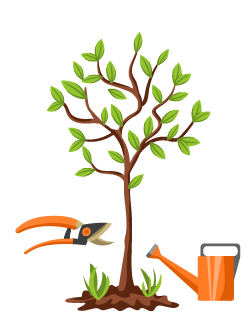 Tree care
Loosening the soil, watering: proper agricultural technology
Digging up the area around the trunk of this apple tree is not necessary. However, for ease of maintenance, it's a good idea to do this twice a year. At the same time, you can remove root suckers, shoots from other plants, and weeds. Hoeing the soil to increase oxygen levels is even possible once a month; if you have time, this will only benefit the tree. The main thing is to do this carefully so as not to damage the roots located just below the surface.
Trees need to be watered regularly during dry and hot weather, but not over-watered. Avoid overwatering and allowing moisture to stagnate around the rhizomes, otherwise decomposition will occur. Four to six waterings per season, with normal rainfall, will be sufficient to ensure normal fruiting. Fertilizers can be added at this time.
Pruning: simple crown shaping
Forming a proper crown should begin in the first year after planting. Then, shorten the central conductor by one-third, leaving only 2-3 skeletal branches spaced widely apart in tiers. These should be 5-9 centimeters shorter than the main stem. This same shape should be maintained annually, ideally in the spring, before sap flow begins.
Sanitary pruning, which involves removing all dry, damaged, and diseased shoots, can be done either in the spring or in the fall after harvest. It's a good idea to perform rejuvenation pruning starting around the 15th to 18th year. This involves removing two to three mature branches to allow new growth to develop.
Pollinator varieties
- Cinnamon Striped.
- Melba.
- Idared.
- Champion.
- Borovinka.
- Saffron pepin.
- Folder.
Reproduction
- Clones (layering).
- Rooting cuttings.
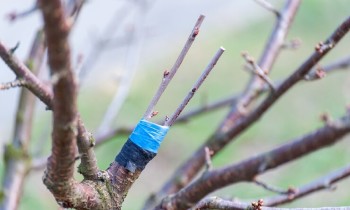
- Grafting.
Ripening and fruiting of the Dream
The beginning of fruiting
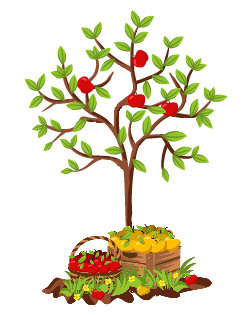 The beginning of fruiting
The fruiting of these trees depends largely on the climate and weather conditions of the growing region. In southern regions, they begin to bloom in nurseries in the first to third year. However, it is customary to pluck all buds immediately to allow the tree to develop rhizomes and foliage. In any case, the Mechta can be considered an early-bearing tree, as the first 5-8 kilograms can be harvested as late as the third or fourth year after planting in the open ground.
Flowering time
Like most other fruit trees of this species, the apple tree blooms in May. However, in mild climates, it may begin producing buds as early as late April and finish blooming by mid-April. In more northern climates, blooming continues until the end of May. The Mechta apple tree's blossoms are very large and beautiful, pure white, with no pink or light green undertones. Their fragrance is moderately concentrated, so a nearby apiary is required so bees can locate the trees.
Fruiting and growth
Apple trees grow tall and produce green foliage quite quickly. Approximately 20-35 centimeters during the growing season is normal. Therefore, by around the 8th or 10th year, they reach their absolute maximum. Fruiting begins with just a few apples, but by the 8th or 9th year, harvests of 80-110 kilograms can be harvested. Maximum fruit production can be expected around the 15th or 16th year, after which the tree will produce fruit regularly. Under poor conditions and an unfavorable climate, the tree may begin to rest and bear fruit in a year, or even two, or even three.
The fruit can be harvested as early as the end of July, and sometimes as late as mid-August. This timing must be carefully monitored, otherwise all the apples will simply fall to the ground and need to be urgently processed into juices, compotes, preserves, or jams. Even under the best conditions, fruit can be stored for no more than 1.5-2 months, and in a typical cellar, this period is reduced to 30-40 days. After this time, the fruit loses its flavor and becomes loose and bitter.
Top dressing
- Superphosphate.
- Mineral complexes.
- Compost.
- Manure.
What to do if it doesn't bloom or bear fruit
- Check for pests and diseases.
- Transplant.
- Limit or increase watering.
Why do apples fall?
- Overripe.
- Natural factors.
- Pests.
- Diseases.
Leave your feedback on the winter-hardy Mechta variety to share your experience and knowledge with others.