Petrov's Dessert Apple Tree: Variety Features and Care
| Color | Reds |
|---|---|
| Ripening season | Summer |
| Size of apples | Large |
| Taste | Sweet and sour |
| Crown type | Tall tree |
| Shelf life | Low shelf life |
| Application | For recycling , Fresh |
| Winter hardiness | High winter hardiness |
| Fruiting age | Up to 5 years |
 History of origin and regions of growth
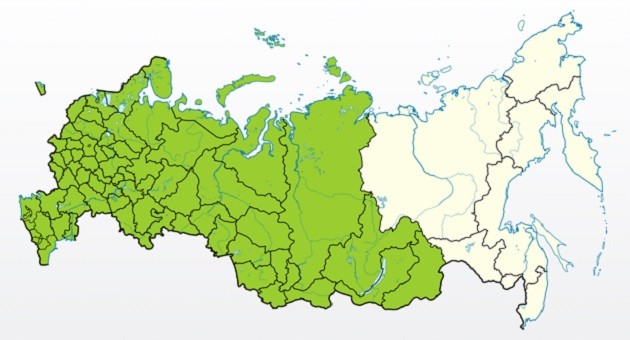
Growing regions
- Crimea.
- Middle zone.
- Leningrad region.
- North Caucasus.
- Siberia.
- Moscow region.
Origin
Work on developing new, high-yielding apple trees at the Moscow Fruit and Berry Experimental Station of the All-Russian Selection and Technological Institute of Horticulture and Nursery has been very active since the early twentieth century. In 1932, after crossing the Calville Snowy and the old Cinnamon Striped variety, seedlings of the new variety were bred. Obtained by renowned Russian pomologist A.V. Petrov, the seedlings were sent for testing, which they passed with flying colors.
Testing was interrupted by the outbreak of WWII, suspended, and research frozen. It was only in 1956 that Petrov's Dessert apple tree finally received recognition, was added to the State Register of Breeding Achievements, and zoned for the Central Region. The variety was later removed from the official list, supplanted by newer, more progressive, and promising apple trees.
Content
Description of the Dessert Petrov variety
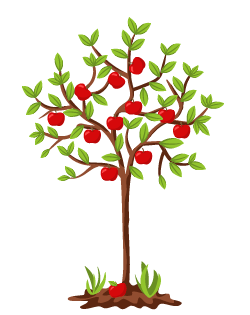 This easy-to-grow, late-summer variety offers a host of advantages and benefits. The trees are low-maintenance, can grow in virtually any soil, and are environmentally sustainable. They produce abundant fruit, although the appearance and taste of the fruit directly depend on the weather conditions of the given year.
Under favorable conditions, the fruits are large, attractive, rosy, and fragrant. They have high commercial quality and transport well. Their drawbacks include fruit shedding and poor shelf life. This variety is recommended for growing in private gardens or for industrial cultivation for processing.
Apples: What do they look like?
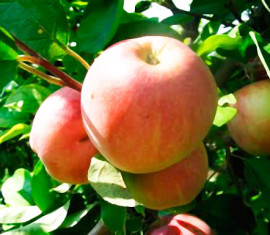
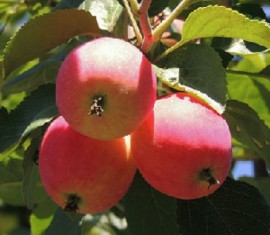
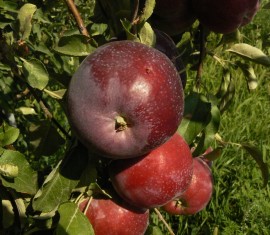
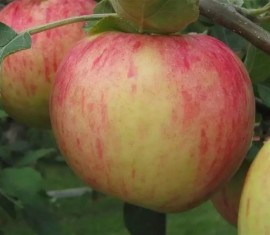
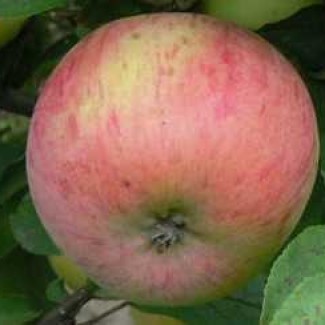
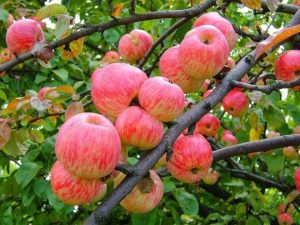 Most fruits are large, round, and broadly ribbed, with five distinct ribs, making them instantly recognizable. They are large, weighing up to 180-220 grams, sometimes even slightly more. The lateral seam on the fruit is invisible.
The fruit skin is thin, moderately strong and elastic, smooth, shiny, and even. It is thin and covered with a light oily coating during ripening. The base color is light green, greenish-yellow, or light yellow. The blush is mottled, striped, and spotted, a rich red-burgundy or red, appearing only in sunny years. The fruit has numerous subcutaneous spots, but they are small, darkish, and may not be visible on the variegated surface. Experts recommend assessing the chemical composition based on the following criteria:
- P-active substances (catechins) – 243 milligrams.
- Ascorbic acid (vitamin C) – 20.6 milligrams.
- Total sugars (fructose) – 12.3%.
- Pectins (fiber) – 9.2%.
- Titratable acids – 0.52%.
The Dessert Petrov apple has a tender, moderately juicy, but slightly dry, fine-grained flesh with a creamy or slightly yellowish hue. The flavor is considered dessert-like, sweet and sour. In sunny weather, it leans more toward sweetness, and in conditions of low UV light, it can become sour. The aroma is rich, dense, spicy, characteristic, and easily recognizable. Professionals give the apple a tasting score of 4.6 on a 5-point scale.
Petrov's Dessert Apple Tree: Characteristics
Crown and root system
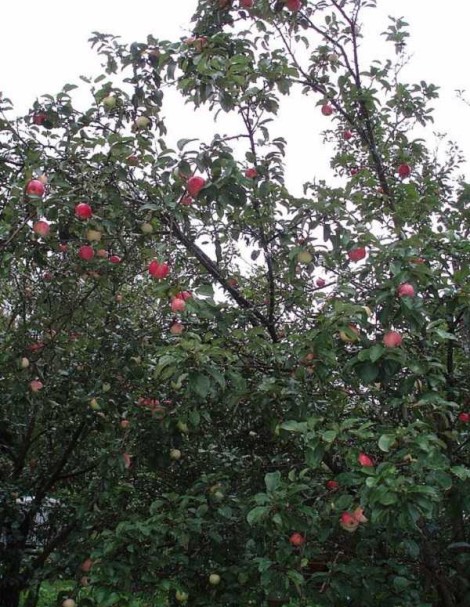
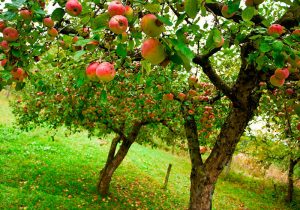 These are very tall trees that can easily reach a height of 12-15 meters.Therefore, they need to be pruned correctly and wisely to make care and harvesting easier. Without this, the Dessert tree will become the largest in the garden. The crown is generally pyramidal, but over the years it can become somewhat spreading, though not weeping. The shoots are long, straight, thin to medium-thick, and covered in dark brown, brown, or reddish-brown bark.
The leaves are oval, slightly elongated, dense, leathery, and coarsely ribbed. They are light green, green, or deep green, matte, with a slight sheen and a felt-like pubescence on the underside. The root system is well developed, typically occupying an area equal to or slightly smaller than the crown perimeter. It is deep, provides excellent support for the tree in the soil, and is adapted to seeking moisture and/or nutrients.
Productivity and pollination
Petrov's dessert grape is considered a high-yielding variety, bearing fruit regularly without rest periods.
At maturity, a single 'Petrov' Dessertnoye' tree can yield at least 180-220 kilograms of fragrant, tasty, and beautiful fruit. This yield increases slightly in sunny years and decreases in cloudy and rainy years, but not significantly..
The tree needs pollinators to bear fruit; it is completely sterile to itself. Therefore, it is recommended to plant trees interspersed, keeping a distance of no more than 45-80 meters between different varieties.
Winter hardiness and disease resistance
The trees are remarkably resilient to various weather conditions, easily surviving temperatures as low as -27-32°C if they don't last too long. In more severe cold spells, or if they last for more than 2-3 weeks, the buds may freeze slightly. Standard sheltering measures will certainly not harm these trunks.
In the most epiphytotic years, trees can be affected scab and other fungal infections of apple trees, although they are quite resistant. Other diseases and parasites also pose a threat to the variety. However, with timely and regular preventative treatments, all risks can be minimized.
Rootstocks and subspecies
Petrov's dessert grape doesn't have its own subspecies, but it can be grown on a wide variety of rootstocks, from low-growing dwarfs to vegetative standard trees. This can impart unique characteristics to the trees, with almost no effect on the fruit. There are no creeping or columnar varieties.
Peculiarities of Growing Dessert Petrov
 Landing
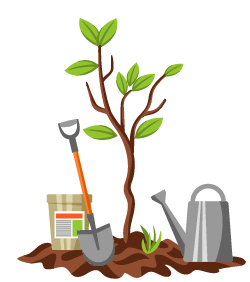 Landing
Basic conditions
- Before planting, carefully select a location for the variety. It must be sunny, otherwise the tree will die while still young. Even if it grows, the fruit in the shade will usually be small, sour, lose all its appeal, and even the spicy aroma will be less intense.
- The groundwater table should be at least average (2-2.2 meters) in the area. Otherwise, trees may rot, leading to their death. Planting trees on the banks of rivers or lakes is unproductive, as their roots can also reach the water.
- Any soil can be used. Dessert grows well in sandy loam and clay loam, rich, fertile black soil, and even on rocky mountain slopes, provided it is fertilized and fed regularly, ensuring proper aeration.
- Dig the holes in advance, at least 3-4 weeks before planting, or even better, the previous season. They should be approximately 80-90 centimeters deep and up to 1 meter in diameter. Fill the bottom with soil, thoroughly mixed with mineral or organic fertilizer, then add drainage, and then fill with 35-50 liters of water. There's no need to cover the holes.
- Planks, trellises, or stakes should be driven into the holes immediately, to which the young seedlings will be tied. If they are placed on the north side, they will provide protection from cold winter winds.
- The root collar of the apple tree should remain 6-8 centimeters above the surface horizon.
- Before planting, inspect the trees and immediately cut off any shoots that have dried out, look sick, or are broken.
- The drainage material is raked into a pile, the seedling is placed on it, roots spread out, and covered with topsoil (fertile soil). Water is added and mulched to slow down evaporation.
Landing dates
Young Dessert Petrov seedlings are not very susceptible to recurrent frosts, so they can be planted in early spring, as soon as the soil warms up but sap flow in the trunks has not yet begun. In the fall, apple trees are planted in late September or October, after the leaves have fallen. Ideally, 3-5 weeks should remain before the first frost.
Tree care
 Tree care
Protection from frost and pests
This variety is winter-hardy, so it doesn't suffer much from winter cold in the central, northern, and eastern regions. However, young one- or two-year-old saplings should be covered with a tent-like covering if harsh winters prevail in the region. Mature trees should be wrapped at the base of their trunks with burlap, spongebond, agrofibre, or old tights. The root zone can be covered with mats of hay, straw bales, or spruce branches.
Industrially produced products, as well as whitewashing with regular lime in spring and fall, can help repel insects that nest in bark crevices. To prevent rodents from eating the bark and shoots, you can coat the trees with grease, old lard, lard, fuel oil, rancid vegetable oil, or drying oil.
Loosening the soil, watering: proper agricultural technology
Experienced gardeners dig the tree trunk circle once or twice a year; this is sufficient for aeration. In the summer, the soil can be hoeed 4-8 times, depending on need, for example, on the second day after glazeTo prevent the soil from compacting to the consistency of asphalt. Over the years, you can sow grass there, both for lawns and herbs (mint, basil, cilantro, parsley, marjoram, etc.).
When young, trees should be watered so that the soil around the trunk never becomes completely dry. However, excessive moisture can also damage the tree and increase the risk of fungal growth. Therefore, it's best to monitor the situation or follow the 10-day rule, where water is applied once every ten days if there's no rain. Mature trees will benefit from 4-5 waterings per season, during which flowering, fruit set, and fruit ripening occur.
Pruning: simple crown shaping
The tree's crown formation is complete in the second year after planting in the garden. Therefore, pruning should be timed to coincide with this time. The best options for this variety are pyramidal, sparse, or sparsely layered. Branches should be positioned so that the ripening fruits are exposed to ultraviolet rays, not hidden by foliage.
Sanitary pruning is especially important when the sap is not flowing in the trunks. All broken, dry, or damaged branches should be trimmed. Also removed are branches that protrude upward or inward, or that cross or parallel.
Pollinator varieties
- Snowy Calville.
- Cinnamon striped.
- Glory to the victors.
- Summer striped.
- Pepinka.
- White filling.
- Candy.
- Melba.
- Anise.
Diseases and pests
- Cytosporosis.
- Pit rot.
- Powdery mildew.
- Scab.
- Scale insect.
- Green aphid.
- Hawthorn.
Ripening and fruiting of Dessert Petrov
The beginning of fruiting
 The beginning of fruiting
Trees of this variety are considered early fruiting. They begin to bloom as early as the third or fourth year, but these are usually barren flowers, so it is recommended to pluck them completely. The first fruiting occurs in the fourth or fifth year, when the first few kilograms of apples can be harvested for sampling.
Flowering time
Deep pink buds appear on the tree as early as April, around the end of the month. They open in mid- to late May, becoming large, snow-white or slightly pinkish flowers with a powerful, pleasant, spicy scent. The process lasts at least 12-14 days, so bees usually have time to complete the pollination process.
Fruiting and growth
The tree grows quickly, but due to its great height, it doesn't reach its full height for a long time. It can produce approximately 50-70 centimeters per year. The variety prefers to gradually increase its fruiting, and a full harvest will take approximately 10-12, or even 15 years. Then, the fruit will reach its peak, where it will remain until the very end of the tree's active life, which is approximately 40-60 years.
Petrov's Dessert apples are ripening at the end August In most regions. Ripe fruits can be identified by their rich red stripes and spots, as well as an oily coating on the surface, giving them a greasy appearance. The fruits ripen together, so they can be picked at the same time, especially since they can fall off. They are transported well, in one or two layers in boxes, but they can be stored for no more than 20-30 days in a regular cellar and 30-45 days in a special cellar. refrigerator.
Top dressing
- Peat.
- Superphosphate.
- Humus.
- Bor.
- Calcium.
- Manure.
- Compost.
- Ammonium nitrate.
What to do if it doesn't bloom or bear fruit
- Limit or strengthen watering.
- Eliminate insects.
- Cure diseases.
- Feed.
- Transplant to a sunny place.
Why do apples fall?
- Wind, frost, rain, hail.
- Overripe.
- Pests or diseases.
Leave a review of the Petrov's Dessert apple tree variety so that even a novice gardener can receive useful information firsthand.