Williams Pride apple tree: characteristics of the variety and care
| Color | Reds |
|---|---|
| Ripening season | Summer |
| Size of apples | Average , Large |
| Taste | Sweet and sour |
| Crown type | Tall tree |
| Shelf life | Low shelf life |
| Application | Fresh , For recycling |
| Winter hardiness | Average winter hardiness , High winter hardiness |
| Fruiting age | Up to 5 years |
 History of origin and regions of growth
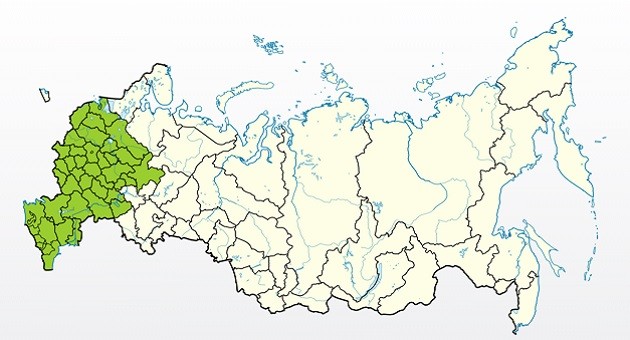
Growing regions
- Crimea.
- Samara region.
- Tatarstan.
- Volga-Vyatka region.
- Middle zone.
- Tver region.
- Leningrad region.
- Mordovia.
- North Caucasus.
- Ulyanovsk region.
- Moscow region.
Origin
This American-bred variety was created in the mid-1980s through a very complex selection process. The list of varieties involved is quite extensive:
- Jonathan.
- Melba.
- Rum beauty.
- Julired.
- Delicious Molis.
- Starr.
- Welsey.
- Red rum.
- Julired.
The crossbreeding of the varieties took place in five stages. Only after this was a new apple tree, named Williams Pride, added to the elite ranks. Around the mid- to late-1990s, the tree first arrived in Russia, where it successfully spread thanks to its outstanding characteristics. There is no information about the variety in the State Register of Breeding Achievements, nor is it officially zoned. It grows successfully throughout the central part of Russia, as well as to the north, south, and east.
Content
Description of the Williams Pride variety
 The new American apple tree has incorporated all the best qualities of its ancestors. It boasts high environmental sustainability, tolerates low temperatures well, produces high-quality fruit annually, and produces abundant fruit for a long period. It is undemanding of soil and watering, requiring little attention or frequent fertilization or feeding. Its main advantage is its high resistance to fungal infections and parasitic threats. However, it also has its drawbacks: the trees are tall, making them difficult to maintain, and the apples take a long time to ripen.
The fruits are very beautiful, an unusual purple-crimson hue, moderately large, aromatic, tasty, and juicy. They are suitable for long-distance transport, fresh eating, and processingHowever, they don't have a long shelf life, which is considered another drawback. This variety is suitable for both private cultivation and intensive commercial plantings.
Apples: What do they look like?
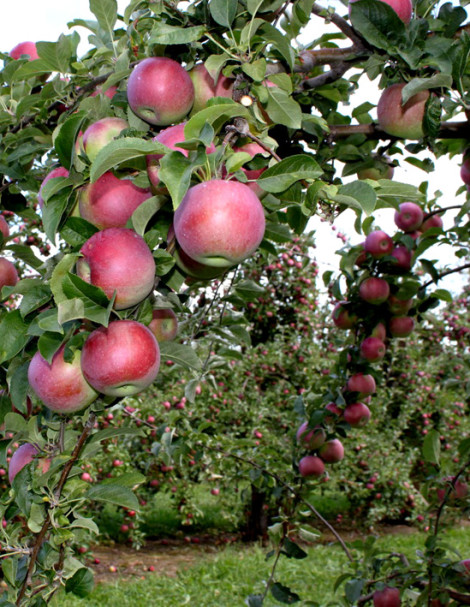
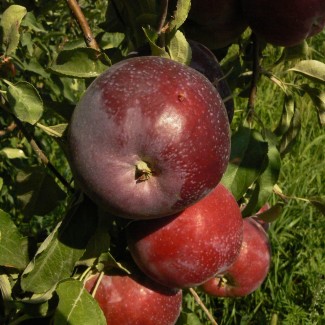
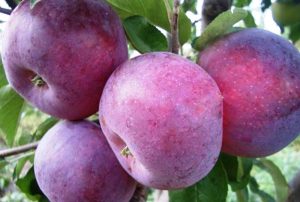 Williams Pride apples are generally considered medium or medium-large. They can reach a maximum weight of 150-180 grams, sometimes slightly larger in rare years, reaching 200-250 grams. The fruit is round or round-conical, smooth, and taper-shaped. The apples are often asymmetrical, slanted to one side, and are also moderately uniform in size.
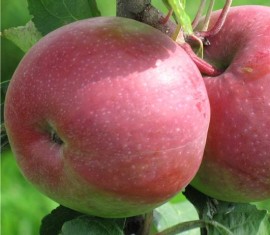
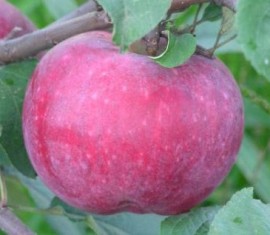
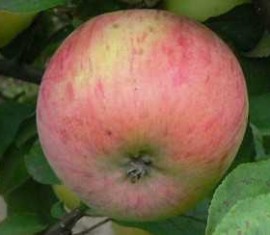
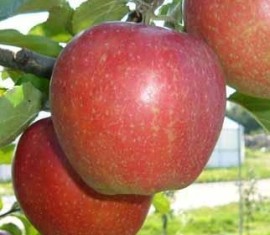
The fruit skin is smooth, highly glossy and shiny, firm, elastic, and of medium thickness. When fully ripe, the apples become covered with a very dense and dense silvery waxy coating. The underlying color is yellow, yellowish-green, or yellow-green, quite intense. The blush covers more than 70% of the surface; it is a rich, dark crimson with a violet tint, sometimes slightly purple or crimson, blurred and dense. Numerous small, grayish subcutaneous spots are clearly visible on the fruit. To assess the chemical composition, we recommend examining the following parameters:
- P-active substances (catechins) – 123 milligrams.
- Ascorbic acid (vitamin C) – 5.3 milligrams.
- Total sugars (fructose) – 12.1%.
- Pectins (fiber) – 9.7%.
- Titratable acids – 0.71%.
Williams Pride apples have firm, medium- to fine-grained flesh that's juicy, pleasantly textured, and prone to cracking when bitten into. It's very aromatic and distinctive. It's usually lightly creamy yellow, sometimes with a slight pink tint to the skin, giving the apples a unique character. Professional tasters describe the apples as sweet and sour, with a distinct wine-spicy flavor, balanced, and harmonious. On the official 5-point scale, the fruit earns 4.5 points.
Williams Pride apple tree: characteristics
Crown and root system
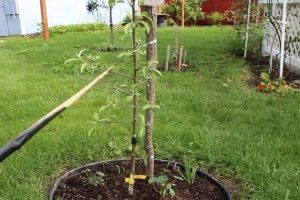 Trees are generally considered to be of medium height, but if left unchecked they can reach 7-9 meters.However, most gardeners, using dwarf rootstock and timely and proper pruning, achieve trunk heights of only 4-5 meters. The shape is oval, round, or broadly oval, and in old age can become spreading and even weeping, with medium to high density. The trunk is thick and strong, with shoots extending from it at an angle close to right angles. They are of medium length and thickness, rounded in cross-section, and covered with reddish-brown, cherry-brown, or brown bark. Fruiting is mixed (spears, rings, and fruiting twigs).
The leaves are small to medium-sized, rounded, short-pointed, dense, leathery, shiny, glossy, ovate or oval-elongated. They are often asymmetrical, with wavy, bluntly serrated edges, sometimes crenate, doubly serrated, slightly raised, and sometimes folded into a boat-like shape. The root system is medium-deep, fibrous, branched, and has numerous small branches. It is moderately or moderately poorly adapted to the search for nutrients and water.
Productivity and pollination
Williams Pride is considered a medium- or high-yielding variety, although it cannot quite match the performance of some of the "luminaries".
From one mature tree aged 9-11 years, in years with favorable weather and climate conditions, good owners can harvest approximately 100-120 kilograms of fragrant, tasty and beautiful fruits..
The variety is relatively self-sterile, meaning some fruit can be produced even if there are no suitable apple trees nearby for cross-pollination. However, this will only represent 12-15% of the potential yield. Therefore, it's important to select and plant apple trees with similar bloom times, interspersed, to ensure high-quality cross-pollination.
Winter hardiness and disease resistance
Domestic experts rate their resistance to low temperatures as moderate to high, as apple trees actually tolerate even severe cold quite well. They survive frosts down to -25-31°C without significant damage, and even if they do freeze, they recover very quickly, leaving no traces within a year. However, this doesn't mean you should forget about proper winter preparation and covering the trunks for the winter.
Williams Pride apple trees have good resistance to various types of cancer, scab, powdery mildew, cytosporosisThey are also not susceptible to other parasitic and fungal threats if properly cared for and preventative measures are taken promptly.
Rootstocks and subspecies
The variety doesn't yet have any varieties, or none are known, but it can be grown on a wide variety of rootstocks. Dwarf varieties are considered the most popular, as they result in much more compact trees. However, this comes at a slight cost to winter hardiness, which isn't always acceptable. There are no trailing or columnar varieties, and if you're offered such, it's definitely a scam.
Features of growing Williams Pride
 Landing
 Landing
Basic conditions
- All apple trees prefer open, sunny locations, but this variety requires special attention. In the shade, the trunks become weak, wither, thin out, and eventually die.
- It's advisable to check the groundwater level in the planting area; it should be at least 2 meters below the surface. Otherwise, the tree will reach the water with its roots and rot. For the same reasons, it's not recommended to plant apple trees near ponds and lakes, rivers and streams, marshy areas, or floodplains. If the groundwater level is close, drain the area or simply dig a sheet of slate or a layer of roofing felt into the ground at a depth of 1.8-2 meters to redirect the root system.
- Blowing winds and drafts can damage trees, so the planting site should be quiet and protected from drafts if possible.
- It's advisable to prepare planting holes in advance, at least 3-5 weeks before transplanting the seedlings into the garden. To do this, dig holes 70-80 centimeters deep and 90-100 centimeters in diameter. Add fertilizer to the bottom, then stones, broken brick, or vermiculite. Cover the entire hole with 45-60 liters of water and leave it outdoors.
- The root collar (the grafting site of the seedling) should remain above the surface by approximately 9-12 centimeters, so that when the soil settles, as usually happens, it can be easily added to the area around the trunk.
- Special trellises or stakes are immediately driven into the holes to support the young seedlings. If placed on the north side of the trunk, they will provide additional protection during cold weather.
- Rake the stones into a pile, place the tree upright on them, hold it by the trunk, cover with soil, and compact it with your hands or feet. Water generously, at least 40-50 liters per trunk, and mulch the surface, being careful not to let the mulch come into contact with the tree's bark.
Landing dates
Williams Pride can be planted outdoors at any time, whether in spring or fall. The key is to plant when the soil is warm but the sap has stopped flowing. For example, in spring, this is in late March or early April, and in fall, in September or October. It's also perfectly acceptable to bury the trees at a 45° angle until spring.
Tree care
 Tree care
Protection from frost and pests
Despite its enviable winter hardiness, proper preparation and shelter should not be neglected. Watering should be stopped in mid- to late August to allow the tree time to prepare. Fertilizers should also be avoided after these dates. Spruce branches, straw, hay, and well-dried leaves are good materials to cover the roots, and in the coldest areas, the soil should be raked. Trunks are wrapped with agrofibre, burlap, or roofing felt, and young seedlings can be covered with a tent-like covering.
To protect an orchard from insect pests, each trunk is whitewashed with a thick lime solution in the fall and spring, or regularly sprayed with commercially available products. Strong-smelling substances such as fuel oil, grease, and lard help repel rodents.
Loosening the soil, watering: proper agricultural technology
The tree prefers loose, moisture- and air-permeable soil, so it will need to be regularly loosened. Digging is only necessary twice a year, in early spring and late fall, but hoeing can be done 6-8 times per season. The second day after applying water, especially in hot, dry weather, be sure to turn the soil. Over the years, you can seed the root zone with herbs or create a lawn; these plants will provide natural aeration.
Water Williams Pride as needed, that is, whenever the soil becomes dry. Don't let it dry out completely; ideally, use drip irrigation or misting. Typically, 25-30 liters of water is applied under each tree, along the perimeter of the crown. Fertilizer and plant food can be mixed in with the water.
Pruning: simple crown shaping
The best form for this variety is considered to be a sparse or sparsely layered one, especially since the trees are not prone to excessive crowding. Pruning is relatively straightforward; simply remove upward-growing shoots, inward-growing shoots, and overlapping and duplicate shoots. By maintaining natural branching and pruning in the spring, you don't have to worry about proper shaping; the tree will naturally assume its desired shape.
Sanitary cleaning involves cutting off all broken, damaged, dry, and diseased branches. They will not provide any benefit, and will drain the tree's sap in vain. The cut areas must be coated with paint or garden pitch, in extreme cases, even just rub it with earth.
Pollinator varieties
- Folder.
- Borovinka.
- Melba.
- Jonared.
- Julia.
- Delicious Mills.
- Kate.
Diseases and pests
- Scab.
- Cytosporosis.
- Fruit rot.
- Powdery mildew.
- Scale insect.
- Leafhopper.
- Fruit hyacinth.
- Hawthorn.
- Green aphid.
- Leaf roller.
Ripening and fruiting of Williams Pride
The beginning of fruiting
 The beginning of fruiting
You won't have to wait long for the first fruits to appear on the trees, as they are early-bearing. As early as the third or fourth year, you'll be able to enjoy delicious, aromatic apples. While you shouldn't expect a particularly large harvest in the first few years, you'll definitely get a few dozen apples to try.
Flowering time
Williams Pride apple trees bloom quite early; by early May, pink buds open, transforming into beautiful, slightly pinkish, large flowers. This can be quite dangerous in regions prone to late, recurring frosts, so think twice before planting this variety there. The bloom period lasts approximately 11-14 days, so bees and wind usually have time to do their work.
Fruiting and growth
Apple trees grow very quickly, reaching 55-70 centimeters in height per year, so they reach their final height within a couple of years. Fruitfulness also increases quite rapidly. By around 9-11 years, harvests will be full-fledged, exceeding 100-110 kilograms, and will soon reach their peak.
The fruits begin to ripen quite early, as early as late July or early August in the coldest regions. Therefore, you can enjoy them before other varieties ripen. They ripen evenly, so you can pick them all at once. They transport fairly well in boxes, but they can be stored in a regular cellar for no more than 30-45 days, after which they become loose, slightly sour, and begin to rot. Therefore, by then they will all have to be eaten or recycle.
Top dressing
- Superphosphate.
- Humus.
- Peat.
- Calcium.
- Manure.
- Compost.
- Nitrogen complexes (not in the first 4 years).
What to do if it doesn't bloom or bear fruit
- Increase watering.
- Remove insects.
- Cure diseases.
- Fertilize.
- Move to a sunny place.
Why do apples fall?
- Wind, rain, hail, snow.
- Pests or diseases.
- They are very overripe.
Leave a review of the Williams Pride apple tree variety so that even a novice gardener can receive useful information firsthand.