Apple tree "Yablochny Spas": characteristics of the variety and care
| Color | Reds , Striped |
|---|---|
| Ripening season | Autumn |
| Size of apples | Large |
| Taste | Sweet and sour |
| Crown type | Tall tree |
| Shelf life | Low shelf life |
| Application | Fresh , For recycling |
| Winter hardiness | High winter hardiness |
| Fruiting age | Up to 5 years |
 History of origin and regions of growth
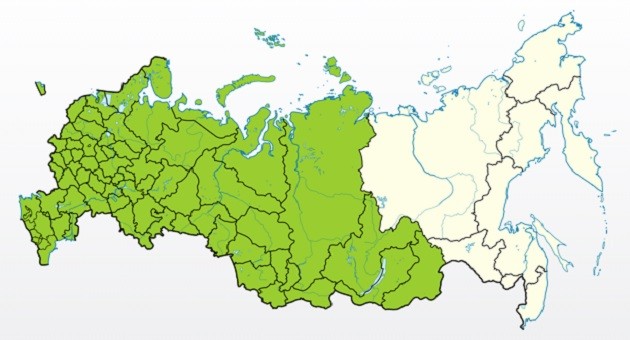
Growing regions
- Middle zone.
- Some northern regions.
- Ural.
- North Caucasus.
Origin
This variety, given the festive and beautiful name of "Apple Spas," can be considered a true achievement in modern breeding. Experiments with apple genetic material have been conducted by specialists at the All-Russian Research Institute of Fruit Crop Breeding in Oryol since the end of the last century. Typical crossbred apple trees carry two sets of chromosomes from the parent plants. Through breeding, scientists have succeeded in creating plants with three and even four such sets, which gives the trees unique properties.
Triploid varieties, as they are called, produce good annual yields of fruit with higher consumer and commercial qualities. They adapt well to any soil and almost any climate. Most importantly, they possess genetic resistance to scab (the Vf gene). The following breeders developed this variety: L. I. Dutova, Z. M. Serova, V. V. Zhdanov, E. N. Sedov, G. A. Sedysheva, and T. V. Ragulina.
In 2004, apple trees resulting from a cross between Redfree and the tetraploid Papirovka hybrid were accepted for testing and were soon classified as elite. In 2019, the variety was accepted for state testing, and research on it continues.
Content
Description of the Apple Savior apple tree variety
 Achieving high yields with minimal effort and expense is the primary goal of professional gardeners. Apple Spas meets these simple criteria quite well. Its fruits are large, tasty, have excellent marketability and high consumer quality, and the trees themselves are suitable for cultivation in many regions with challenging weather and climate conditions. Add to this a long lifespan and genetic resistance to scab, and it's safe to say that this variety is suitable for both small garden plots and intensive commercial orchards.
Apples: the appearance of the fruit
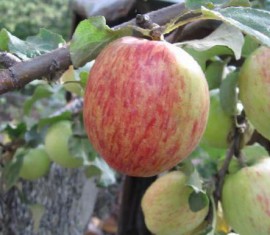
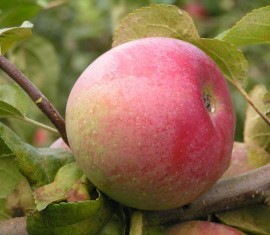
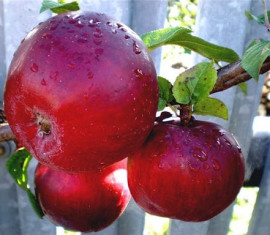
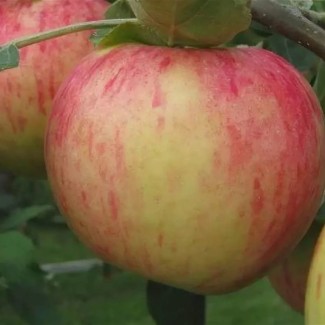
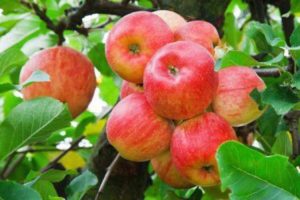 The fruits of this variety are generally large, sometimes even taller than large, with an average weight of 200-230 grams. They are medium-sized, round-conical in shape, sometimes slightly elongated or flattened, often lopsided, and with visible ribbing.
The skin is smooth and even, but not shiny, rather dull, with a light oily coating on the surface. It is initially green, but may turn greenish-yellow as it ripens. Approximately 40-60% of the apple's surface is covered with a streaked and diffuse blush of red or crimson hue, giving the fruit a striped appearance. Numerous, light green, and clearly visible subcutaneous punctures are present. The chemical composition can be characterized by the following indicators per 100 grams:
- P-active substances (catechins) – 281 milligrams.
- Ascorbic acid (vitamin C) – 16.5 milligrams.
- Total sugars (fructose) – 10.3%.
- Pectins (fiber) – 11%.
- Titratable acids – 0.77%.
The fruit's flesh is fine-grained, fairly dense, tender, and juicy, with a slight greenish or yellowish tint. It breaks easily and has a crisp, crisp texture. The apples' flavor is rated as harmonious, dessert-like, balanced, and sweet and sour. The tasting score is 4.3 for appearance and 4.4 for taste out of a possible 5.
Apple tree "Apple Savior": characteristics
Crown and root system
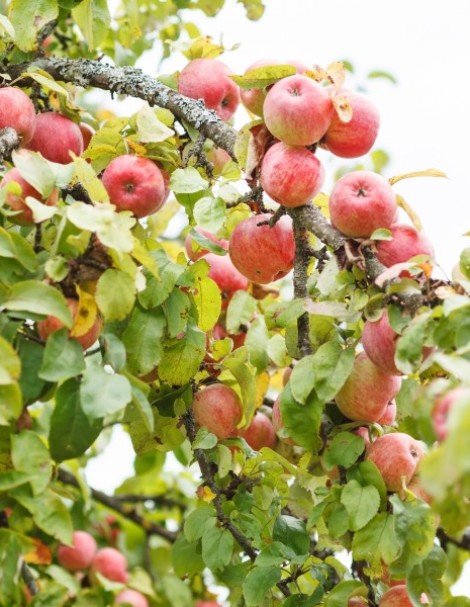
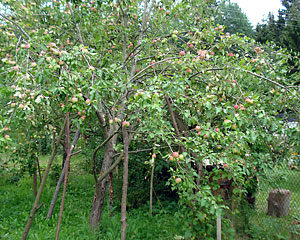 Trees are considered tall because they can easily reach 10 meters or more in height when growing freely. Therefore, pruning will have to be done correctly and on time, otherwise caring for the apple trees and harvesting will be very difficult. Crown The tree is predominantly of medium density, initially oval or even pyramidal in shape, becoming rounded over the years, and less commonly spreading. The branches are crooked and thick, and are positioned at an angle close to right angles to the trunk. The bark of the shoots is gray or gray-brown, smooth, and may crack over the years.
The leaves of the Apple Savior are quite large, elongated, with a pointed tip and a crenate-serrate edge. They often curl inward, have a rich green hue, are leathery, matte, and covered with a network of wrinkles. The underside of the leaf surface is lightly pubescent. The root system is robust and branched, often extending deep into the ground and over considerable distances.
Productivity and pollination
The variety is considered to be very early-bearing and productive, which is why it is highly valued by most gardeners. The apple trees don't begin bearing immediately, but gradually build up their production. On average, a single mature tree can yield at least 60-90 kilograms of delicious apples, which is quite impressive for a summer or early autumn variety.
Spas can be considered a self-fertile variety, but it is definitely not self-pollinating. To obtain a good harvest, it will need to be planted near diploid apple trees to ensure cross-pollination. It's a good idea to set up an apiary in the garden or use portable apiaries during the flowering period.
Winter hardiness and disease resistance
The variety tolerates harsh weather conditions well, with temperatures as low as -22-25°C completely unaffected. The trees don't even require any winter cover, making it recommended for planting not only in temperate climates but also in Urals and even in SiberiaHowever, you need to be careful, because a tall tree can simply die in the frost, and wrapping it up will hardly be possible.
As we've already established, Spas has its own immunity to scab, powdery mildew, and other fungal infections. But this doesn't mean you can neglect care and regular preventative measures. It's best to monitor humidity, promptly clear the area around the trunk of fallen leaves or fruit, and treat it with insecticides to control pests.
Rootstocks and subspecies
| Rootstocks | Peculiarities |
| Semi-dwarf | Growing on this rootstock produces shorter trees, only 3.5-4 meters tall. However, fruiting is unusually delayed for apple trees. The first apples from such a tree can only be picked in the fifth or sixth year, and they will be smaller in size. |
| Dwarf | On this rootstock, trees reach a maximum height of only 2.5 meters, significantly simplifying care and harvesting. Fruiting begins as early as 2-3 years after planting in open ground. All other properties of the parent variety are retained. |
Peculiarities of growing Apple Savior
 Landing
 Landing
Basic conditions
- For planting this variety, select only well-lit, open spaces with good ventilation. However, be careful to avoid drafts, as the trees don't like these and may become ill or even fail to bear fruit.
- Spas isn't picky about soil, growing equally well in sandy loam, loam, or black soil. Just keep an eye on the acidity; like all apple trees, this one prefers slightly acidic soils.
- Avoid planting trees in swampy areas, in close proximity to open water bodies, or where water constantly stagnates, as this can lead to the development of diseases and root rot.
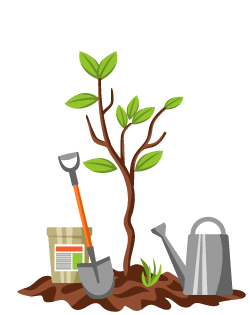
- Planting holes should be prepared 4-6 weeks in advance, but preferably as early as fall. To do this, dig holes 1 meter deep and 1 meter in diameter. Mix the top layer with fertilizer, fill it back in, add 40-50 liters of water, and leave it outdoors. It's best to leave at least 5-6 meters between trees in a row, and 4-5 meters between rows (this distance can be reduced for dwarf and semi-dwarf rootstocks).
- Place a drainage layer of gravel, vermiculite, or broken brick at the bottom of the hole. A layer of 10-15 centimeters is sufficient. A stake is driven in immediately to support the tree, which can only be removed after 4-5 years.
- The tree is placed vertically, with the roots spread out, covered with soil, compacted tightly by hand, watered with 40-50 liters of water, and the surface is mulched with a suitable material (manure, chopped grass, compost).
Landing dates
You can plant Apple Savior in the spring, almost immediately after the snow melts, as soon as soil warms up to the root level, as well as in the fall, when the leaves have fallen and the sap flow in the trunks has ceased. Experienced gardeners advise choosing fall plantings, as the survival rate of trees is much higher then. Seedlings with closed root system (in special bags or pots that do not require disposal) can be planted throughout the entire growing season.
Protection from frost and rodents
In mild continental climates, simply covering the trunk area is sufficient to protect trees from frost. Cover it with spruce branches, straw, or hay bales, and wrap the trunks with roofing felt, roofing felt, burlap, or agrofibre. In the first few years, seedlings on seedling rootstocks or dwarf trees can be covered using a tent-like method until they are four or five years old.
To prevent hungry rodents from feasting on the young, tender bark in winter, coat it with grease or rendered lard in the fall. Insects that overwinter at the tree's roots can pose a threat. Therefore, it's worth whitewashing the trunks to repel them and prevent future damage to the foliage, fruit, and wood.
Tree care
 Tree care
Loosening the soil, watering: proper agricultural technology
Regular soil loosening is only necessary for the tree's first few years, until it fully establishes roots and grows. However, it won't hurt to dig around the trunk area later on. At the same time, remove root suckers, weeds, grass, and shoots from other trees and shrubs.
Trees of this variety don't require watering, especially when mature. Young trees can be watered approximately twice a month during dry and hot weather. 20-30 liters per apple tree, divided into two waterings (morning and evening), is sufficient. Mature trees will require less frequent but greater amounts of water. Up to 50-60 liters will be needed, 4-5 times per season. Watering can be timed to coincide with fruit set, flowering, and ripening.
Pruning: simple crown shaping
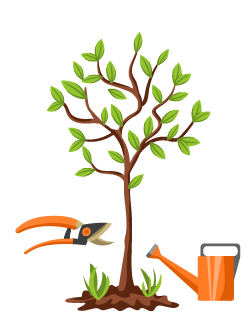
The most suitable crown shape for this tree is a rounded, sparsely layered one, so it's best to shape it this way. In the first year after planting, shorten the central basal shoot by a third, and trim any lateral shoots shorter than it in tiers. This process will need to be repeated annually, and it's important to be on time, as the tree is actively gaining height.
Sanitary pruning is essential for the Apple Savior. All damaged, dead, or diseased branches must be immediately removed. Regular rejuvenation after 15-20 years is also recommended. To do this, prune off 2-3 mature shoots per year; this will allow the young shoots to develop and begin bearing fruit.
Pollinator varieties
- Quinti.
- Julired.
- Delicious golden.
- Delkorff.
- Idared.
- Gala.
Reproduction
- Clones (layering).
- Grafting by cuttings or buds.
- Rooting cuttings.
- Growing from seeds.
Diseases and pests
- Bacterial burn.
- Black crayfish.
- Green aphid.
- Codling moth.
- Leaf roller.
- Flower beetle.
Ripening and fruiting
The beginning of fruiting
 The beginning of fruiting
For a tall apple tree, the Yablochny Spas begins bearing fruit quite early. By the third or fourth year, the first flowers appear, and several tasty and aromatic apples ripen. However, the variety officially begins bearing fruit in the fifth or sixth year, when the harvest has already reached at least 5-10 kilograms.
Flowering time
Depending on the growing region and the prevailing climate and weather conditions, apple trees can bloom from early to late May. If spring is prolonged and includes late frosts, the trees may not begin to bloom until mid-May or closer to mid-May. This process lasts approximately 8-10 days. The flowers themselves are medium-sized, fragrant, and a very delicate pale pink.
Fruiting and growth
The trees grow quite quickly and can reach 50-70 centimeters in a year, so they gain height right before your eyes. From the fifth year onward, the yield also increases. Around the 10th to 12th year, a tree can already produce 40-50 kilograms of apples. A full harvest will take a few more years, but Spas gains momentum quite quickly.
The variety gets its name from the church holiday of the same name, celebrated on August 19th. By then, the fruits are fully ripe, making them perfect for harvesting. The fruits are intended for quick use, processing, or fresh eating. They can be stored, like summer varieties, for quite a long time, but no more than 4-6 weeks. By then, all the fruits should either be processed or eaten, as even if they don't spoil, they will become wilted, soft, and lacking in juiciness.
Top dressing
- Peat.
- Compost.
- Mineral complexes.
- Bird droppings.
- Ammonium sulfate.
- Urea.
- Humus.
- Manure
- Superphosphate.
What to do if it doesn't bloom or bear fruit
- Check for pests and diseases.
- Feed.
- Transplant to a sunnier area.
- Provide regular watering.
Why do apples fall?
- Natural factors.
- Pests.
- Diseases.
Leave your own reviews of the Apple Spas variety and share your experiences with other gardeners.