Apple tree Kitayka Kerr: characteristics of the variety and care
| Color | Reds |
|---|---|
| Ripening season | Autumn |
| Size of apples | Small ones |
| Taste | Sweet and sour |
| Crown type | Average tree height |
| Shelf life | Average shelf life |
| Application | Fresh , For recycling |
| Winter hardiness | High winter hardiness |
| Fruiting age | Up to 5 years |
 History of origin and regions of growth
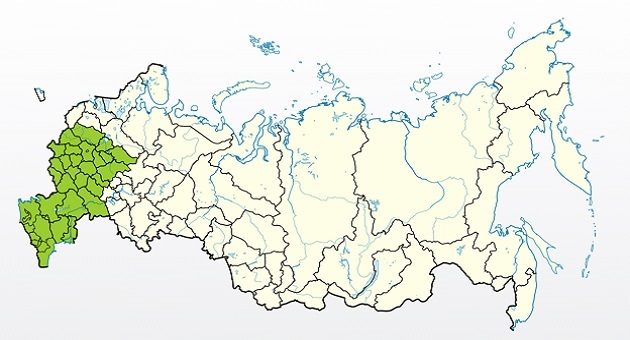
Growing regions
- Central Black Earth Region.
- Middle zone.
- Moscow region.
- North Caucasus.
- Crimea.
- Volga region.
Origin
This unusual apple tree originated in distant, cold, but fertile Canada. In 1952, renowned Canadian pomologist, botanist, and breeder William Leslie Kerr crossed the Haralson Red and Dolgo varieties. The resulting hybrid immediately caught the attention of not only its creator but also other gardeners.
The variety only began to spread worldwide in the 1970s. The Kitayka Kerr apple tree first arrived in the Soviet Union in 1984-1986. It is widely grown due to the tree's unique qualities. There is no information about it in the State Register of Breeding Achievements, and the apple tree has no official zoning in our country. It can be grown in quite extensive areas, from the mild climate of the Caucasus to the harsh conditions of the Urals and Western Siberia.
Content
Description of the Kitayka Kerr variety
 This small, compact tree boasts enviable frost resistance. It withstands all the harsh weather conditions associated with the late spring or early fall. Besides its decorative beauty, the apple tree is undemanding of soil, fertilizer, and watering, requiring little attention.
It regularly produces good yields of beautiful, very attractive, and delicious apples. They are small, but there are plenty of them on the branches. The tree is recommended for growing on private farms; it's suitable for transportation, juice and jam production, and has a good shelf life.
Apples: What do they look like?
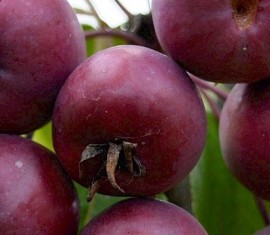
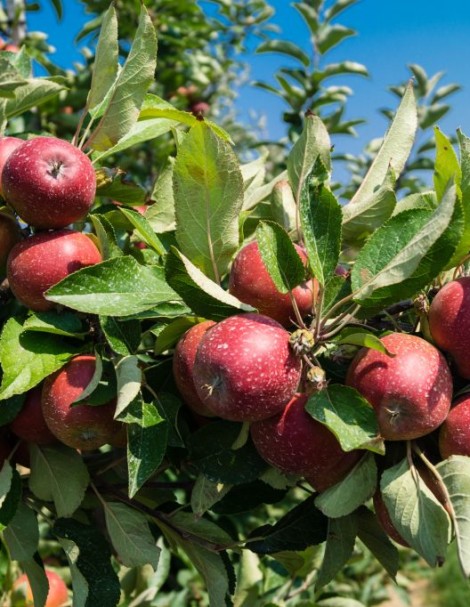
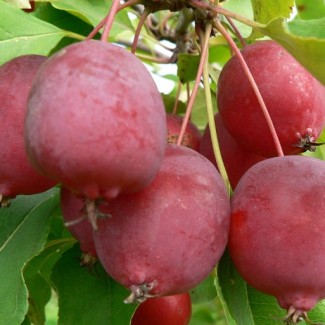
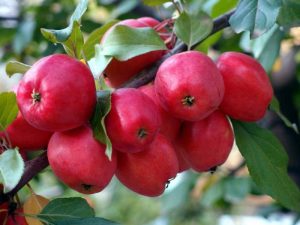 Kerr apples are small, with a diameter of just 10-16 millimeters. They are typically round or slightly elongated, almost cylindrical. The weight of a single apple can range from 25-35 grams, reaching 40-50 grams in favorable years with proper care. Ribbing is barely noticeable near the calyx and smoothed out throughout the rest of the fruit.
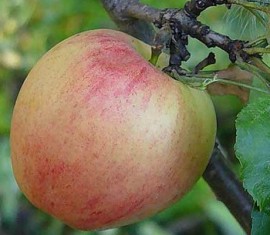
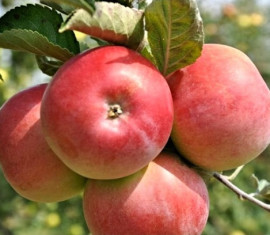
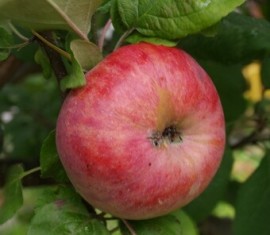
The skin is dense, strong, elastic, smooth, and shiny, with a very glossy finish. Its base color ranges from green to slightly greenish-yellow or whitish. When fully ripe, it becomes covered with a dense waxy coating, giving the fruit a silvery-gray hue. The blush can cover from 40-45% to 80-90% of the surface. It can be bright red, beetroot red, burgundy, carmine red, or red-orange, often darker than light, with a blurred, mottled appearance. Subcutaneous punctures are numerous; they are small, grayish, and not particularly visible. Experts recommend familiarizing yourself with the chemical composition based on simple information:
- P-active substances (catechins) – 224 milligrams.
- Ascorbic acid (vitamin C) – 18.7 milligrams.
- Fructose (total sugars) – 10.2%.
- Pectins – 18.4%.
- Titratable acids – 0.47%.
The fruit has a dense, crisp, prickly, yet delicate, fine-grained flesh with a pleasant texture. It has a pleasant sweet-and-tart flavor, is quite juicy, and has a slightly spicy and tart acidity. According to professional tasters, it scores at least 4.5 out of 5 for both taste and appearance.
Apple tree Kitayka Kerr: characteristics
Crown and root system
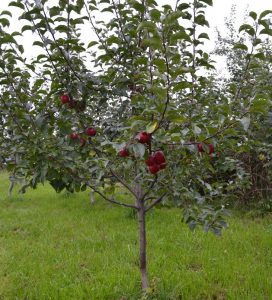 Trees of this variety are not distinguished by their tall growth. Kerr reaches a maximum height of 2.5-4 meters.The crown shape is usually compact, rounded, or rounded-conical, and can be slightly spreading, sometimes weeping, with medium to low density. The shoots are straight or slightly curved, covered with grayish-green or gray-brown bark, smooth, and pubescent. They grow from the trunk primarily at an angle close to a right angle, so they are not prone to splitting. Fruiting is mixed, occurring on rings, fruiting twigs, and spears.
The leaves are small, rounded-oval, glossy, leathery, and very smooth, with a strong sheen. They have serrated, serrate-crenate edges, sometimes slightly wavy, and can be short-pointed and folded into a boat-like shape. The root system is robust and branched, often fibrous, but can be taprooted on wild specimens. It is extremely well adapted to seeking water, so the tree is drought-tolerant.
Productivity and pollination
The variety is considered high-yielding and early-bearing according to official Canadian sources.
There is no reliable information on exact fertility rates or average yield per hectare. However, private gardeners report that a single tree can yield up to 35-60 kilograms of fruit per season, and sometimes, in favorable years, even slightly more.
Kerr apple is self-fertile; even without nearby apple trees that bloom at the right time, it still produces fruit, and quite abundantly. Furthermore, it can serve as a highly desirable pollinator for all mid-season blooming varieties. It is believed that the presence of non-target pollinators increases yield by 15-35%.
Winter hardiness and disease resistance
Surprisingly, the apple tree turned out to be very resilient to various weather conditions. This has been a real boon for gardeners in our country. It can withstand frosts down to -28-32°C. As long as these temperatures don't last more than 1-3 weeks, the trees suffer no damage. They are unaffected by sudden temperature fluctuations or high humidity, and they survive moderate droughts, even without supplemental watering.
Bacterial and fungal infections don't have a significant impact on the variety; it's quite resistant to them. However, in years of severe epiphytotics, it can be affected. scab and other diseases. The leaves are primarily affected, but the fruits remain suitable for processing or even eating fresh.
Rootstocks and subspecies
Several subspecies of Chinese Kerr are known, but they haven't yet become widespread in our country. It's grown on a variety of rootstocks: on vegetative rootstocks, it grows taller, while on dwarf or semi-dwarf rootstocks, it grows more compact. The rootstock has absolutely no effect on fruit quality.
Features of growing Chinese Kerr
 Landing
 Landing
Basic conditions
- The tree can be planted in any location, as long as it receives good sunlight. It will grow in the shade, but it may be weak and spindly, and may not bloom or bear fruit abundantly.
- It's best to protect the trunks from drafts whenever possible. Strong, gusty winds can make trees more susceptible to disease. However, like all apple trees, they also don't tolerate stagnant air.
- Groundwater depth is only relevant when it's very close to the surface. Otherwise, this factor can be overlooked. Kerr sage should not be planted on the banks of ponds, streams, rivers, or near shallow wells; it grows poorly in lowlands or swamps.
- It's not necessary to prepare the holes in advance; you can dig them 2-4 weeks before planting. They should be 70-90 centimeters in diameter and the same depth. Add various fertilizers to the bottom, then cover with soil again, preferably with drainage, and then water with 45-50 liters of water. The holes should be left outdoors, uncovered.
- There should be at least 3.5-4 meters between trunks, and slightly more space between rows. Other plants are spaced at least 3-4 meters apart, but with the right arrangement, for example, with low-growing shrubs, Chinese jasmine can grow very close, at a distance of 1.5-2 meters.
- Stake stakes are driven into the holes immediately for tying. They should be fairly strong and durable; wood, metal, or plastic can be used. In winter, placing these stakes on the north side will also provide protection from the cold.
- If there is a need to preserve the qualities of the rootstock, the grafting site (root collar) should always remain 5-8 centimeters above the surface.
- The seedling is placed directly on a pile of soil or drainage material in the center of the hole, covered with soil, compacted, and watered. The surface is mulched with sawdust or other materials to further retain water. manure, compost or even regular sand.
Landing dates
Trees with closed root systems are usually planted in open ground at any time, even in the height of summer. However, regular seedlings without a root ball are best planted in spring or fall. In warmer regions, the first option is unimportant, but in colder regions, the first option is preferable. In March-April, when the soil warms up and the threat of frost has passed, but the buds have not yet begun to open, this is the perfect time for any region.
Tree care
 Tree care
Protection from frost and pests
Trees are usually covered for the winter. Smaller, shorter trees can be covered using a tent-like method, wrapping them in burlap from the ground to the crown. However, this won't work with larger trees, so it's recommended to simply wrap the trunks with suitable materials: burlap, roofing felt, roofing felt, agrofibre, tarpaulin, or old tights.
To repel insect pests, tree trunks are whitewashed with lime after being cleaned with a stiff brush. Rodents are usually repelled by smearing trees with lard, fuel oil, or grease. Regular parasite prevention is carried out, with trees sprayed with commercially available pesticides, readily available at your local gardening store or specialty retailer.
Loosening the soil, watering: proper agricultural technology
The Chinese Kerr variety is most often planted for ornamental purposes, so regular digging around the trunk is essential to give the area a well-groomed appearance. Weeds and root suckers are removed, and debris is cleared. The soil can be hoeed after each watering, or the following day, to prevent it from becoming compacted. Over the years, the most advanced growers sow herbs or lawn grasses around the trunk, layering them with attractive pebbles, granite fragments, and even marble shards.
Watering This can be done during the driest periods, when the trees are older. While they're still small, it's best to water regularly, when there's no precipitation, following the ten-day rule. That is, count 10 days from watering to the next watering, regardless of whether you watered the garden yourself or it rained. Mature trees will need four to five waterings throughout the growing season.
Pruning: simple crown shaping
If fruiting is the goal, then it's best to give the Kerr a sparse, tiered form. But when it comes to ornamental qualities, almost any shape is possible. Experienced growers literally weave ropes out of this apple tree; it adapts to any kind of pruning. It can be used to create cordons, hedges, bowls, brooms, espaliers, and even Japanese bonsai-like structures.
It's best to prune dead, broken, or diseased branches in the fall, but spring is also possible. Don't forget to remove any branches that stick out vertically and spoil the tree's shape, as well as any inward-growing branches that can also interfere with proper pruning.
Reproduction
- Growing from seeds.
- Budding.
- Kidney grafting.
- Clones.
- Grafting by cuttings.
Pollinator varieties
- Antonovka.
- Logo.
- Gloucester.
- Idared.
- Delicious golden.
- Gold Crimea.
- James Grieve.
Diseases and pests
- Powdery mildew.
- Bacterial burn.
- Scab.
- Moniliosis.
- Cyosporosis.
- Black crayfish.
- Hawthorn.
- Aphid.
- Scale insect.
- Leaf roller.
Ripening and fruiting of Chinese Kerr
The beginning of fruiting
 The beginning of fruiting
Apple trees are very early fruiting. Already in the third or fourth year after planting, they produce several kilograms of beautiful, fragrant fruit. A harvest of 2-5 kilograms is quite impressive. However, they may bloom somewhat earlier, even in the first year after planting. It's best to pick the blossoms, as they likely won't produce apples.
Flowering time
The Chinese apple tree opens its buds mid-season, making it an excellent pollinator for a wide variety of apple tree varieties growing in your garden, provided it's no more than 50-60 meters away. This occurs around mid-May, but can be a little earlier or later. Its buds are red or even burgundy, but they open into snow-white or slightly pinkish flowers with red or pink veins.
Fruiting and growth
Apple trees gain height quite quickly, especially before they begin bearing fruit. They can reach their maximum height in just 6-8 years, after which they virtually stop growing, especially on dwarf or semi-dwarf varieties (rootstocks). Their fertility increases exponentially, producing more and more fruit each year. By the 6th to 9th year, the harvest is fully fruitful, and the tree's active lifespan is quite long—over 50-75 years.
The fruit should be picked from the branches as early as September, around mid-September. However, there's no need to rush the harvest, as the fruit clings tightly to the branches. They can remain hanging there even after the first serious frost, and they survive frosts without harm. The fruit can be transported over any distance. Their shelf life is average; if stored in a cellar, they should be completely eaten by New Year's. In a dedicated refrigerator, they can last until the end of February.
What to do if it doesn't bloom or bear fruit
- Transplant into the sun.
- Protect from drafts.
- Limit or activate watering.
- Eliminate pests.
- To stop diseases.
Why do apples fall?
- Weather phenomena.
- Early frosts.
- Pests or diseases.
Top dressing
- Manure.
- Compost.
- Humus.
- Superphosphate.
- Chicken manure.
- Mineral and nitrogenous complexes.
- Ammonium nitrate.
Share your own experience with the Kitayka Kerr apple tree variety so that even novice gardeners have no questions about cultivating these trees.