Apple tree Ola: characteristics of the variety and care
| Color | Reds |
|---|---|
| Ripening season | Autumn |
| Size of apples | Small ones |
| Taste | Sweet and sour |
| Crown type | Average tree height |
| Shelf life | Average shelf life |
| Application | Ornamental tree , For recycling , Fresh |
| Winter hardiness | High winter hardiness |
| Fruiting age | Up to 5 years |


 History of origin and regions of growth
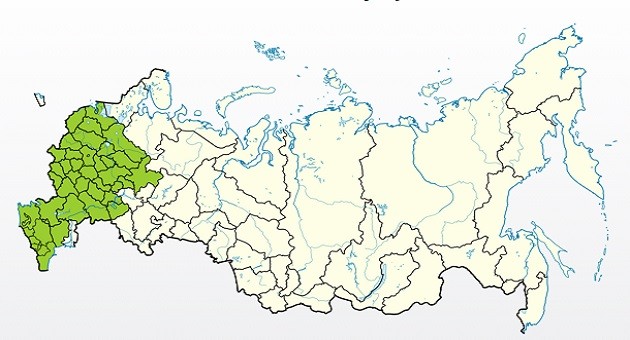
Growing regions
- Middle zone.
- Moscow region.
- Leningrad region.
- North Caucasus.
- Central Black Earth Region.
- Crimea.
- Volga region.
Origin
This apple tree was developed by Polish pomologists back in 1970. Hybridization was accomplished by open-pollinating the Arthur Turner variety with several other apple trees. By the late 1990s, this beautiful tree, possessing a number of unique qualities, was widely cultivated not only in Polish orchards but also far beyond its borders. At the dawn of the new century, the Ola also reached Russia, adorning many garden plots and forested parks.
There are several independent theories regarding the origin of the apple tree's name. There is no official information on this matter. However, the most likely is that the name comes from the Spanish word Ola, meaning "wave." It likely derives from the wave-like blossoms of the apple tree, which give it a beautiful appearance, resembling a blooming avalanche..
Currently, there are no entries for this variety in the State Register of Breeding Achievements. It also has no official zoning. However, it can be successfully grown not only throughout the European part of the country, but also much further south, north, and east.
Description of the Ola variety
 This fast-growing, early-fruiting tree is sure to attract the attention of gardeners, and not only. Landscape designers also highly value this "material" for decorating any space, be it a patio, a large garden, a park, or a public garden. Ola is undemanding, resistant not only to low temperatures but also to sudden fluctuations, and is not afraid of prolonged dry periods. It is virtually immune to various apple tree diseases and is easy to shape and trim.
This variety is characterized by abundant fruiting, a feat not found in all apple trees of this type. The small but very attractive fruits, densely covering the branches, are quite edible and even tasty if picked in time. They don't transport well and don't keep well, but jams, compotes, and preserves made from them produce very unique and delicious fruit. In commercial plantings, it can be used as a pollinator and is recommended for private gardens and decorative elements.
Apples: What do they look like?
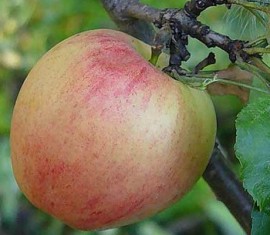
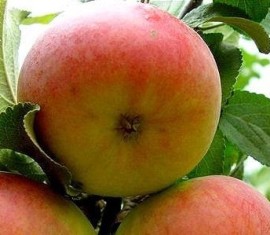
 Ola produces very small fruits, barely 2-3 centimeters in diameter and weighing 10-25 grams. They are round or round-elongated, smooth, and can be turnip-shaped, uniform, symmetrical, or slanted to one side. The ribbing is barely visible even at the calyx itself; the stems are long and thin, like those of cherries, with a reddish or burgundy hue.
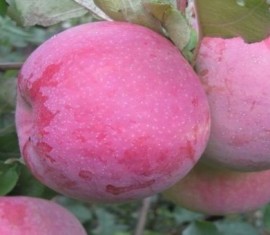
The apple skin is dense, even very hard, but not thick. It is elastic, smooth to the touch, and highly shiny and glossy. During ripening, it may develop a colorless, oily coating; the waxy, bluish-gray color is not visible on the surface. The underlying color is greenish-yellow or golden, but this is hidden by a blush. It is dense, rich, and red-orange, red-carmine, or bright red, and may have lighter or darker, burgundy or dark red, beetroot-like areas, streaks, and spots. Subcutaneous dots are small, few in number, and almost invisible. Assessing the chemical composition is easy, based on the following parameters:
- P-active substances (catechins) – 108 milligrams.
- Ascorbic acid (vitamin C) – 19.1 milligrams.
- Fructose (total sugars) – 5.2%.
- Pectins – 17.4%.
- Titratable acids – 1.4%.
This variety has firm, crisp flesh when ripe. After frost, the apples become spreadable and soft, but they remain on the branches until spring without falling. They have a distinct astringent flavor, making them not everyone's cup of tea. Otherwise, they are sweet and sour, pleasant, and undeserved of professional tasting.
Apple tree Ola: characteristics
Crown and root system
 Ola may be considered tall for an ornamental apple tree, but among all varieties, it's considered medium-sized. The tree's maximum height without pruning is approximately 4-5 meters. The crown is rounded, delicate, and seemingly carved, with moderate density and foliage, and good branching. Branches extend from the trunk at a nearly 90-degree angle and are covered with smooth bark ranging from reddish-brown, brownish-brown, or grayish-brown.
The leaves are medium-sized or small, glossy, dense, and shiny, with a leathery texture. The tips are short, pointed, and slightly elongated; the margins are serrated and crenate, and can form a boat-like shape. The leaves can change color throughout the growing season, making them particularly prized by designers. Initially, they are a light, brownish-chocolate color, then turn greenish, crimson, and by midsummer, they acquire a dark green, deep emerald hue with a reddish undertone. The root system is medium-deep, fibrous, branched, and quite robust, adapted to seeking moisture.
Productivity and pollination
These figures are not recorded anywhere because apple trees are grown primarily for ornamental purposes. However, gardeners often share information informally.
One tree produces approximately 45-60 kilograms of small, but very attractive fruits per season. In favorable years, this figure can be slightly increased, but not significantly..
The variety is completely self-fertile and will produce fruit even when there isn't a single suitable apple tree within sight. Ola itself serves as an excellent pollinator for many combs, due to its long flowering period and high pollen production.
Winter hardiness and disease resistance
Ola is tolerant of various weather conditions. It can easily withstand summer heat lasting for weeks without precipitation, as well as winter frosts down to -28-32°C, as long as they last no more than 20-25 days in a row. Therefore, it can be grown in almost any region of our country, with the exception of the Far North and the Far East, especially with proper winter preparation and reliable shelter.
Ola is highly resistant to powdery mildew, moniliosis, and other apple diseases. It is only affected during years of the most severe epiphytotics, but the risk remains, especially when the growing region has very high humidity. Therefore, regular spraying and preventative treatments with fungicides and insecticides are required.
Rootstocks and subspecies
This variety is grown on a variety of rootstocks to impart unique qualities to the tree, not found in the base variety. There are several subspecies that deserve further discussion.
| Subspecies | Description |
| Hybrid | This subspecies is most often used for landscape design in urban and industrial areas due to its high environmental sustainability. The tree easily tolerates high levels of air pollution and contaminated soils. It responds well to close proximity to other plants and easily adapts to almost any formative pruning. The flowers, leaves, fruits, and even the branches of the tree have a beautiful bright purple hue. |
| Red-leaved | The most common subspecies in our country, it produces larger, quite edible, and even tasty fruits. They make delicious preserves, compotes, and jams with a light, slightly astringent flavor. The tree itself has thicker, more curved branches, a dense crown, and a high foliage density. This gives it a curly appearance and produces more abundant flowers and fruit. Its leaves are burgundy, beetroot, or bright red. |
Features of growing Ola
 Landing
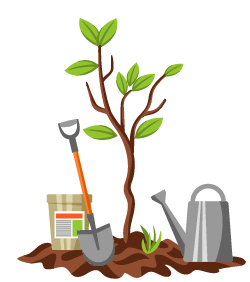 Landing
Basic conditions
- Ornamental apple trees prefer open, sunny spaces, but will tolerate partial shade if necessary.
- The apple tree's root system doesn't extend deep into the soil, so groundwater levels are usually unimportant unless they're close to the surface. Avoid planting Ola trees near a river, pond, lake, swamp, or even a shallow well. They don't grow well in lowlands or floodplains.
- Trees should be planted in fertile soil or properly fertilized before planting. In pure sand or clay, the tree may become stunted, spindly, and even die.
- Before planting, inspect the seedlings and trim off any dry shoots (branches and roots). The top can be trimmed back to a third of the height. Soak the rhizomes in warm water for 3-5 hours.
- The standard distance between trees in rows is at least 4-5 meters, but this isn't an absolute rule. If your site design calls for shorter shrubs nearby, feel free to plant them; Ola easily coexists with its neighbors.
- Planting holes should be dug in advance, especially if the soil is poor. The ideal depth is 60-70 centimeters, with a diameter of 70-80 centimeters. Add soil mixed with fertilizer to the bottom, a drainage layer (rocks, gravel, broken brick, or vermiculite) on top, and then fill with water (55-60 liters). Leave the holes outdoors for at least 3-4 weeks to allow the fertilizer to disperse.
- Stakes or planks for tying up the apple trees are immediately driven into the ground. They should be positioned on the north side of the tree trunk, so they will not only provide support but also additional protection from cold weather.
- If it is essential to preserve the properties of the rootstock, then the root collar should be left 4-6 centimeters above the soil surface.
- Place the tree on a mound of drainage material arranged in the center of the hole, spread the roots out so they don't bend, and cover with soil. It's best to avoid leaving air pockets, otherwise the rhizome may begin to rot. Water with 30-45 liters of water, and mulch the surface to further retain moisture.
Landing dates
Trees are very easy to plant, so they can be planted in open ground in both spring and fall. The key is to plant them at a time when the sap hasn't yet started to flow. In spring, it's best to choose a warm, sunny, and dry day in late March or early April, and in fall, choose a warm, sunny, and dry day in September or October, when the first frosts are still at least 3-5 weeks away.
Tree care
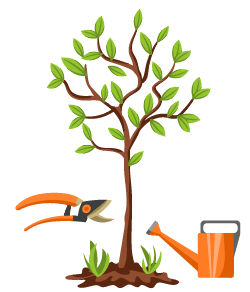 Tree care
Protection from frost and pests
Young trees, both first- and second-year trees, are best carefully protected from frost. They can be covered with a tent-like covering, wrapped in burlap, film, or agrofibre, from the tree's crown to the ground. This is done in the coldest regions, where winter frosts fall below the tolerance limit for Ola. In other cases, the trunks can be wrapped in burlap or other material, and the root area can be covered with spruce branches, hay mats, or straw bales.
Insects rarely nest in bark crevices, but they can do so. Therefore, in the fall, trunks are cleaned with a stiff brush and then whitewashed with a thick lime solution. To repel rodents (hares, mice, and hamsters), who enjoy feasting on young bark and tender shoots in winter, apply grease, fuel oil, or lard liberally to the lower parts of the trunk. The latter option is the most harmless; it has absolutely no impact on either the tree itself or the surrounding environment.
Loosening the soil, watering: proper agricultural technology
During the first few years, digging around the trunk should be done twice, once in spring and once in fall, to loosen the soil. At the same time, remove weeds, debris, shoots of various plants, and root suckers. During the growing season, you can hoe the soil, loosening it carefully to avoid disturbing the roots that run close to the surface. Over time, for decorative purposes, you can fill the area around the trunk with gravel or pebbles, sow lawn or other grasses, or plant shrubs.
Watering Young trees will need to be watered frequently, at least once every 10-13 days. Water as needed if there's no rain. Fertilizer can be added at this time; dissolved in water, it's better absorbed by the tree. Pour this nutrient mixture around the perimeter of the crown. After watering, the next day, it's best to immediately loosen the soil slightly to prevent it from compacting into a solid lump.
Pruning: simple crown shaping
Formative pruning of ornamental apple trees is a matter of taste, the main thing is that the branches are not too dense. You can create any desired shape; the tree tolerates them quite well. Also, remove any diseased, dead, or broken shoots that spoil the tree's appearance. All pruning is done in early spring or late fall, when the sap in the trunks is at rest.
Reproduction
- Growing from seeds.
- Budding.
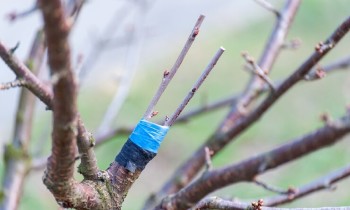
- Grafting by cuttings or buds.
- Clones.
Diseases and pests
- Powdery mildew.
- Scab.
- Moniliosis.
- Black crayfish.
- Hawthorn.
- Aphid.
- Leaf roller.
Pollinator varieties
- Antonovka.
- Chinawoman Kerr.
- Ranetka.
- Nadzivetsky.
- Gala.
- Borovinka.
- Titovka.
Ripening and fruiting of Ola
The beginning of fruiting
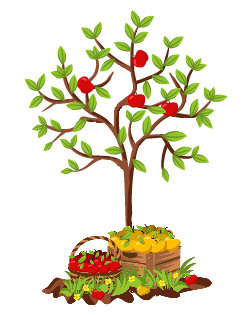 The beginning of fruiting
Apple trees usually begin to bloom in the first year after planting outdoors. However, the fruit won't be ready to harvest until 2-4 years later. At that point, there will be only a few dozen, but in subsequent years, the yield will increase rapidly.
Flowering period
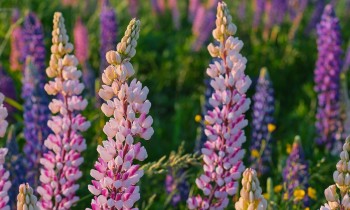
This apple tree blooms for a very long time, in a cascade of bursts. Its flowers are large, gathered in clusters that densely cover the branches. They are fragrant and beautiful, with delicate, reddish-pink, and sometimes even burgundy or beetroot-colored petals. The process lasts for more than 2-3 weeks, but even at other times, the tree looks very picturesque.
Fruiting and growth
Ola grows very quickly, gaining 25-40 centimeters per year. Therefore, it can quickly reach its maximum height. At the same time, it also increases its fruit production. The apples are beautiful, hanging from the branches in picturesque clusters. They can remain on the branches until spring. Before they begin to develop in the spring, they will still need to be removed, otherwise they will negatively impact subsequent flowering.
Apples ripen as early as September or early October. Then they can be picked and processed. They don't keep well, lasting only a few weeks, and they're also not very easy to transport.
Why do apples fall?
- Weather phenomena.
- Early frosts.
- Pests or diseases.
What to do if it doesn't bloom or bear fruit
- Transplant into the sun.
- Protect from drafts.
- Restrict or activate watering.
- Eliminate pests.
- To stop diseases.
Top dressing
- Manure.
- Compost.
- Humus.
- Superphosphate.
- Chicken manure.
- Mineral and nitrogenous complexes.
- Ammonium nitrate.
Share your own experience with the Ola apple tree variety, so even novice gardeners have no questions about cultivating these trees.