Apple tree Korey: characteristics of the variety and care
| Color | Greens |
|---|---|
| Ripening season | Winter |
| Size of apples | Average , Large |
| Taste | Sweet |
| Crown type | Average tree height |
| Shelf life | High shelf life |
| Application | Universal variety |
| Winter hardiness | Average winter hardiness |
| Fruiting age | Up to 5 years |
 History of origin and regions of growth
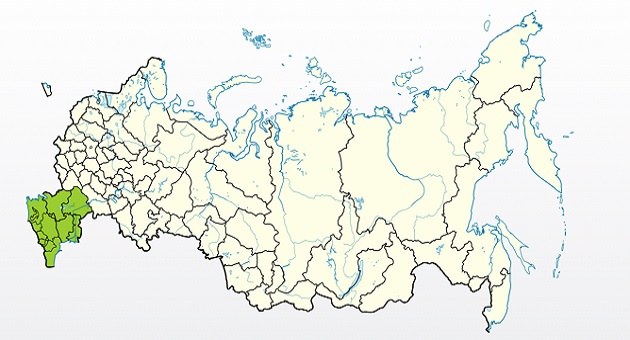
Growing regions
- Adygea.
- Rostov region.
- Chechnya.
- Karachay-Cherkessia.
- North Ossetia.
- Dagestan.
- Stavropol Krai.
- Kabardino-Balkaria.
- Crimea.
- Ingushetia.
- Krasnodar Krai.
Origin
The apple tree originated in Japan, specifically at the Aomori Experimental Station, back in the 1940s. Breeders developed the variety by pollinating the well-known Delicious Golden with Indo pollen. The tree retained all the best qualities of its parents in an improved form, and so it quickly spread throughout the world.
In the early 1960s, the Korey variety successfully reached the Soviet Union. In 1967, an application was submitted for inclusion in the State Register of Breeding Achievements. It was only approved after extensive variety trials in the winter of 1986. At the same time, it was zoned for the North Caucasus region. The North Caucasus Federal Scientific Center for Horticulture, Viticulture, and Winemaking is considered the originator.
Description of the variety Korea
 This apple tree is considered one of the most popular late-winter varieties, boasting a wide range of advantages. It has moderate frost resistance, begins bearing fruit early, and produces a truly impressive harvest every year and regularly. The Korei is undemanding in terms of growing conditions, easily adapts to virtually any soil, and requires little additional watering or frequent fertilizing.
The fruit produces large, attractive, and delicious fruits, and most importantly, they have excellent shelf life and are suitable for long-distance transport. However, if the plants are overloaded with fruit, they may become smaller, which should be monitored from the time of flowering. Another drawback is susceptibility to fungal infections, particularly scab. This variety is recommended for both home gardening and intensive commercial cultivation.
Apples: What do they look like?
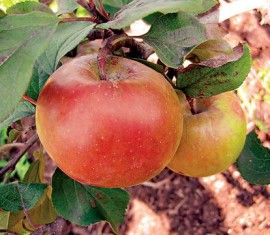
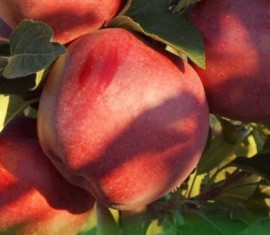
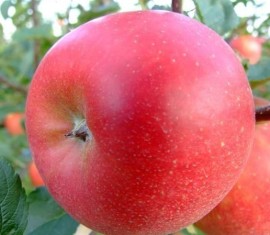
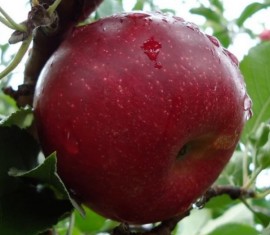
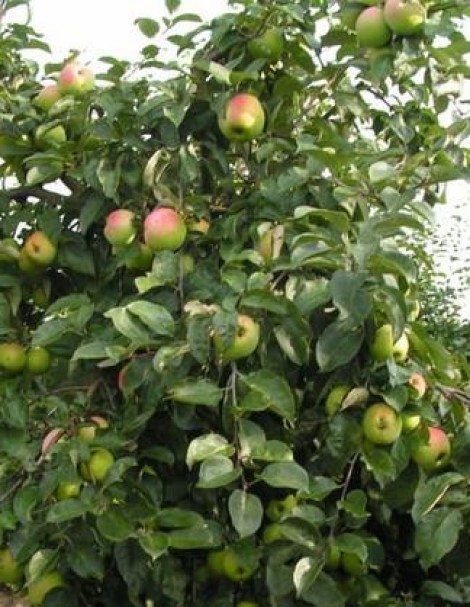
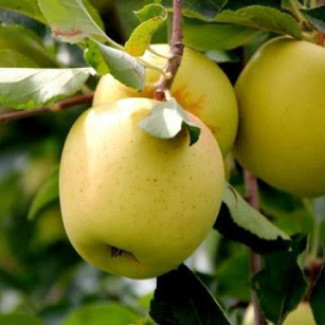
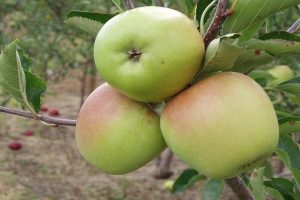 The fruits are usually medium-sized, but can be larger than average, sometimes even large. They weigh 150-180 grams on average, but are occasionally larger. They are round or slightly conical, cylindrically elongated, pot-bellied, with a noticeably widened base. The calyx has five slightly flattened ribs, and a lateral suture may be clearly visible.
The skin is very dense, even hard; it's smooth, elastic, and thick. It's glossy, but has a slight sheen and may have a slight, barely visible waxy coating. The base color is green or light green, with a slight yellowish tint, but not too noticeable. The blush isn't always visible; it's barely noticeable, translucent, orange-brick-colored, and insignificant, occupying no more than 15-25% of the surface on the sun-exposed side. Subcutaneous dots are dark, numerous, whitish-gray, medium-sized, and easily visible. To assess the chemical composition, you can examine the following components:
- P-active substances (catechins) – 180 milligrams.
- Ascorbic acid (vitamin C) – 5.7 milligrams.
- Fructose (total sugars) – 10.9%.
- Pectins – 13.8%.
- Titratable acids – 0.38%.
The flesh is intensely greenish or creamy green, dense, even firm, and difficult to bite into, fine-grained and juicy. At harvest (technical) maturity, it has a slightly sweet, grassy flavor. After the sugars are fully caramelized, it becomes sweet with a bright, apple-like tartness in the aftertaste, with an aroma reminiscent of melon or banana. The flavor is considered harmonious, balanced, and dessert-like, scoring 4.6-4.7 points out of 5 on the standard tasting scale.
Apple tree Korey: characteristics
Crown and root system
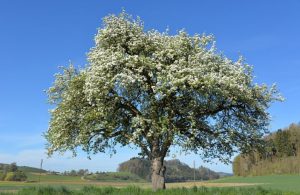 Trees are considered medium-sized. They can reach heights of 3.5-5 meters, but gardeners often limit their height to a lower limit for ease of fruit picking and maintenance. When young, the crown of the Koreya can be oval or rounded, even pyramidal, but with age it becomes more spreading, weeping, and drooping. Branches are straight or slightly genuflexed, long, and directed upward, but in maturity they can droop to the ground, covered with grayish-brown or dark gray, asphalt-colored bark. Fruiting occurs on ringlets, fruiting shoots, and spurs.
The leaves can be broadly oval or elongated, depending largely on the region where the rootstock is grown. They are green, dark green, or emerald green, wrinkled, leathery, glossy, and slightly shiny, with a felt-like pubescence on the back. The tip is long and pointed, sometimes curling like a propeller, and the margins are serrate-crenate and wavy. The root system is deeply buried, predominantly fibrous, with numerous small branches, adapted to searching for water in the soil.
Productivity and pollination
This variety boasts enviable yields. It can easily outperform even Antonovka if cared for properly and in a timely manner.
Under standard conditions, a single tree of the Korei variety can yield approximately 250-300 kilograms of juicy, uniquely flavored apples per season. With controlled flowering, proper care, and regular fertilizing, this figure can be increased to 350-400 kilograms. At normal planting density on dwarf rootstocks, yields can reach 550-600 centners per hectare..
Apple trees are self-sterile, and it's unlikely that they'll produce a harvest without the presence of pollinators. It's recommended to plant trees that bloom at the appropriate time, 50-100 meters apart. The most advanced specialists bring mobile apiaries to the orchard and treat the trees themselves with sugar or honey syrup diluted with water.
Winter hardiness and disease resistance
The variety's resistance to low temperatures is considered good. Harsh conditions, like the Moscow regionIt can withstand extreme cold, but as long as winter temperatures don't drop below -20-22°C for long periods, there's nothing to worry about. That's why these trees are considered suitable for regions with milder weather during the cold season.
The variety is quite tolerant of fungal infections, especially scab, so preventative spraying and treatments are hardly possible. However, the apple tree is more resistant to powdery mildew, rarely being affected by it, and only in mild forms. Parasites can seriously damage plants; insecticides are used to combat them.
Rootstocks and subspecies
Korei is often grown on different rootstocks, which allows it to acquire some unique qualities without altering its core characteristics. For example, dwarf varieties produce larger fruits, with higher yields per hectare. However, the trees grow much smaller in height and crown diameter, losing any remaining winter hardiness. Such standard trees will need to be carefully protected during the winter.
Growing Features in Korea
 Landing
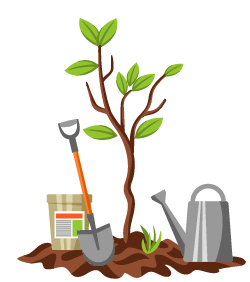 Landing
Basic conditions
- The key to growing this variety is choosing a sunny site where the tree's crown will be well-lit by ultraviolet rays for most of the day. In the shade, the tree will likely die within the first year.
- Korean rhododendrons absolutely do not tolerate drafts. The planting site must be well protected from prevailing winds. However, proper ventilation of the crowns is essential; stagnant air will not lead to anything good.
- Groundwater should not be closer than 2 meters to the surface, otherwise the tree will grow roots and eventually rot. Avoid planting this variety near rivers, ponds, lakes, swamps, or floodplains.
- For the tallest varieties (on vegetative rootstock), it's customary to leave 3.5 meters between trunks and up to 4.5-5 meters between rows. Dwarf and semi-dwarf varieties can tolerate much smaller distances, as little as 2.5 and 3.5 meters.
- For spring plantings, holes are prepared in the fall, but for autumn plantings, 1-2 months is sufficient. Dig holes 60-75 centimeters deep and up to 1 meter in diameter. Place a mixture of fertilizer and soil at the bottom, cover with a drainage layer, and add plenty of water.
- The root collars (grafting sites) should be left at least 5-9 centimeters above the soil surface to ensure that they don't sink below the surface even after the soil settles around the trunk. If the tree roots above this level, all the properties of the rootstock will be lost.
- Place the seedling on the drainage, straighten the roots so that they are not bent or crushed anywhere, sprinkle with soil, tamp, water from above with 45-50 liters of water and mulch humus, sawdust, manure, compost or other suitable material.
Fresh, not overripe manure, nitrogen, and nitrogen-containing complexes are not added to the holes before planting. These substances significantly reduce the survival rate of young trees..
Landing dates
You can plant the Korei variety in the spring months (MarchIt can be planted both in spring and autumn (September-October). In a warm, moderate climate, it thrives equally well in both conditions. If the weather is more prone to cold, it's better to choose early spring plantings so the tree has time to adapt to the new environment over the summer, acclimate, and develop foliage and rhizomes before frost sets in.
Tree care
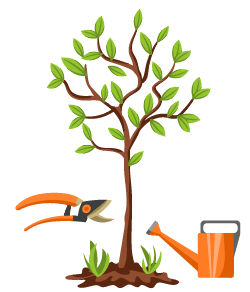 Tree care
Protection from frost and pests
The tree tolerates short, mild frosts well, but in severe winters, it will be necessary to properly cover the trees to prevent them from freezing. Spruce branches, straw bales, mats of hay, or dry leaves are placed over the roots. In extreme cases, the roots can be covered with 15-25 centimeters of soil, which should be removed in early spring. The trunks are wrapped in various materials, from agrofibre to old nylon tights. Smaller trees can be conveniently covered using a tent-like method.
Whitewashing tree trunks with lime in spring and fall helps get rid of insects that readily nest in bark crevices. Lubricating the tree with grease, lard, or fuel oil helps repel rodents. Commercially available products from garden supply stores are also available; modern options are safe and easy to use.
Loosening the soil, watering: proper agricultural technology
The soil around the trunks needs to be turned to allow oxygen to reach the rhizomes. Dig approximately twice a year, in March and October, when the sap in the trunks is still stagnant, but more frequently is possible if desired. It's acceptable to hoe the soil throughout the summer, removing weeds, the day after glaze.
Even young trees don't require frequent watering; 1-2 times a month is sufficient. Mature trees, under normal weather conditions, with timely and frequent natural precipitation, don't require any watering at all, but 3-4 times a season is acceptable during severe drought. Trees are resilient to prolonged summer heat without rain, but this may negatively impact yield.
Pruning: simple crown shaping
Pruning begins in the first year to ensure the crown grows properly and does not become excessively dense. A one-year-old sapling is pruned to a height of 80-90 centimeters, and all lateral shoots are removed except for 2-3, which will become skeletal shoots. These are shortened so that they are 10-15 centimeters below the central conductor. The skeletal branches should be placed in tiers, spaced well apart. Further shaping is continued until the fourth or fifth year.
Sanitary pruning should be performed annually, preferably in the fall, when the leaves have completely fallen. Then, the crown is inspected, and any diseased, broken, or dry shoots, or those protruding inward or vertically, are removed. These will suck the tree's sap but provide no benefit.
Pollinator varieties
- Melba.
- Idared.
- Kuban spur.
- Korobovka.
- Star Crimson.
- Simirenko.
- Delicious golden.
- Indo.
Reproduction
- Layers.
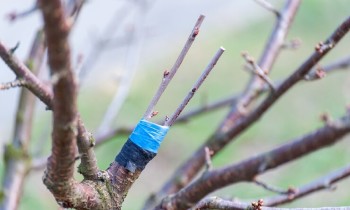
- Grafting cuttings.
- Clones.
- Growing from seeds.
Diseases and pests
- Scab.
- Cytosporosis.
- Powdery mildew.
- Pit bitterness.
- Fleas.
- Green aphid.
- Flower beetle.
- Scale insect.
- Codling moth.
- Hawthorn.
Ripening and fruiting Korea
The beginning of fruiting
 The beginning of fruiting
The apple tree is considered an early-bearing tree. It will bear fruit as early as four or five years after planting in the garden, sometimes producing dozens at a time. A full harvest will be expected, but not for very long. On dwarf rootstocks, as well as on semi-dwarf varieties, the Korei tree begins to bear fruit as early as two or three years.
Flowering time
The tree has a mid-season flowering period, like all late-winter varieties. It blooms in May. More precise dates can only be determined through experimentation, as much depends on the growing region, its climate, and the weather in a given year. In warmer regions, it can bloom as late as late April.
The flowers are large, very beautiful, and densely cover the branches. They are snow-white, intensely fragrant, with fleshy petals and saucer-shaped. It is recommended to control flowering by removing 35% to 50% of the buds before they develop into ovaries; this will result in larger apples.
Fruiting and growth
The tree grows quickly, but not instantly. It can reach 35-45 centimeters in a year before bearing fruit, after which it slows down to 15-25 centimeters. It gradually increases its fruitfulness, producing a full harvest by the 8th to 10th year, and by the 11th to 12th year, you can definitely expect the maximum fruit production.
The time to harvest the fruit comes at the end of September, when technical maturity sets in, which has little to do with consumer maturity. During this period, they can be stored; they will keep better, gradually developing aroma and flavor. They reach their most pleasant state, with a spicy melon aroma, crispness, and juiciness, only after 3-5 weeks of storage. The fruit has a very good shelf life; they can easily be stored in the cellar until the next harvest, without losing any of their flavor, texture, or aroma.
Top dressing
- Ammonium nitrate.
- Urea.
- Humus.
- Liquid manure.
- Minerals.
- Superphosphate and potassium sulfate.
- Chicken or pigeon droppings.
What to do if it doesn't bloom or bear fruit
- Check for the presence of pests or diseases.
- Activate watering.
- Feed.
- Transplant.
Why do apples fall?
- Natural weather conditions (wind, rain, hurricane, hail, frost).
- Pests.
- Diseases.
Share your own experience with the Korei apple variety so that any gardener can learn about it before planting and achieve maximum results.