
Jonathan Apple Tree: Variety and Care Features
| Color | Reds |
|---|---|
| Ripening season | Winter |
| Size of apples | Average |
| Taste | Sweet |
| Crown type | Average tree height |
| Shelf life | High shelf life |
| Application | Universal variety |
| Winter hardiness | Low winter hardiness |
| Fruiting age | Up to 5 years |
 History of origin and regions of growth
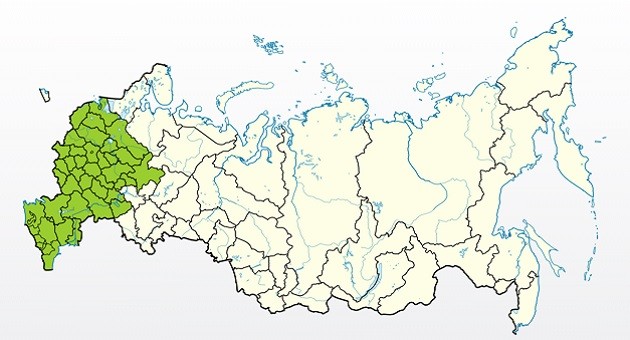
Growing regions
- North Caucasus.
- Crimea.
- Middle lane (with a stretch).
- Ukraine (southern regions).
Origin
This apple tree is an old variety, having been bred in the early or mid-nineteenth century, meaning its history spans over two hundred years. It is believed that the breeding work was conducted on the farm of a certain Philip Rick, who grew fruit crops in New York State (USA). Natural seedlings of another old variety, Esopus Spitzenburg, were used for the crossbreeding.
Many say that pomologist Rachel Higley named the variety after her beloved husband, Jonathan. Whether this is true is uncertain, but it's a theory. In our country, there are several common names for this particular apple tree: Khoroshavka, Zimnee Krasnoe, and Oslamovskoe. In Japan, the Land of the Rising Sun, the apple tree is called Kougyoku, meaning "corundum."
By 1862, this apple tree was already common on some farms in New York State and gradually began to gain more and more fans, first nationally and then internationally. The apple variety only arrived in the Soviet Union in the mid-twentieth century and was released into the Ukrainian Republic in 1954.
For the Russian climate, the tree is considered too delicate and frost-sensitive. Therefore, it is grown only in the North Caucasus, Crimea, and a few southern regions. Today, the variety is considered unpopular and endangered, having been supplanted by new, more advanced hybrids.
Content
Description of the Jonathan apple variety
 Not long ago, every self-respecting gardener dreamed of having at least one apple tree of this variety. It enters the fruiting phase fairly quickly, produces good yields, bears fruit with a subtle, distinctive flavor, easily distinguishable from others, and stores beautifully in suitable conditions practically until the next harvest.
However, the tree itself is ill-suited to Russia's harsh climate, and the apples require special conditions to maintain their nutritional value. Therefore, Jonathan is increasingly being replaced by new varieties, but its flavor remains unique, and many people love its uniqueness, richness, and aroma.
Apples: What they look like
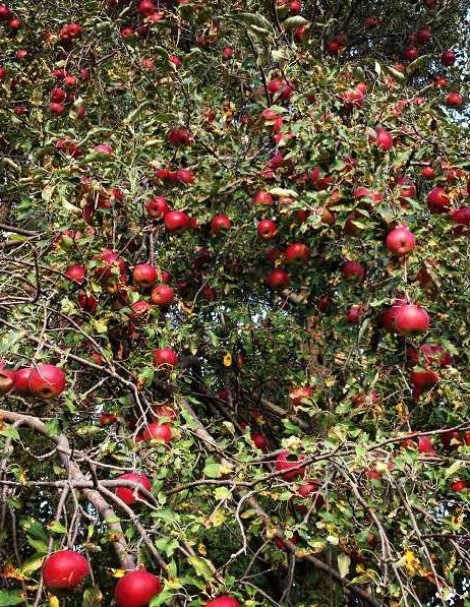
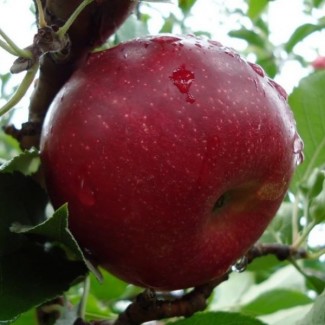
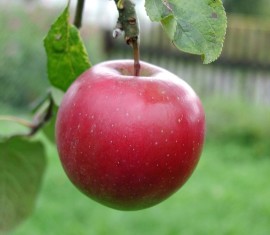
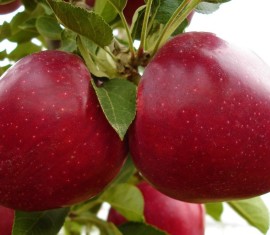
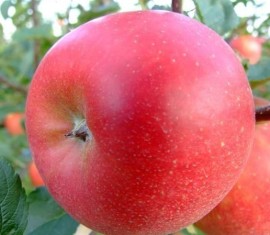
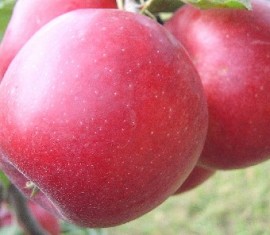
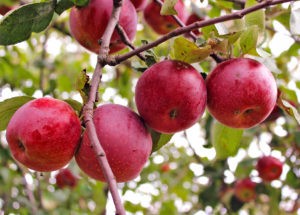 The fruits of this variety are usually medium-sized, but can be large. They are round, slightly flattened, and conical, with subtle ribbing. The skin is very dense, strong, and glossy, with a green or dark green base color.
As it ripens, it becomes covered with a bright red or even burgundy blush, covering over 90% of the entire surface. Subcutaneous dots are light-colored, numerous, but pale, making them barely noticeable. Apples may have a so-called rustiness—a rough mesh pattern on the reddish-brown surface. The composition is characterized by the following chemical parameters per 100 grams of product:
- P-active substances (catechins) – 110 milligrams.
- Ascorbic acid (vitamin C) – 6.7 milligrams.
- Total sugars (fructose) – 11.4%.
- Pectins (fiber) – 13.6%.
- Titratable acids – 0.65%.
The unripe flesh is white with a slight greenish tint, becoming creamy, juicy, and fine-grained with age. The flavor is dessert-like, harmonious, and balanced, sweeter than sour, but still retaining a distinctive tartness. The tasting score is 4.7 out of 5. Moreover, the further south the apple is grown, the sweeter it is.
Jonathan apple tree: characteristics
Crown and root system
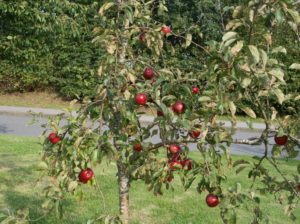 The tree is considered medium-sized and can easily reach 4-5 meters in height in free growth. The crown is spherical in youth and remains so until old age. It may be slightly irregular in shape, lopsided due to the different lengths of the scaffold branches. With age, it becomes spreading, but not weeping. Fruit grows on spurs, spears, and even fruiting twigs. Shoots can be short or long, straight or geniculate, and their bark is greenish-brown. In older trees, the bark may crack and crumble.
The leaves are medium to small, oval, slightly elongated, and often curled downward. They have a leathery texture but are not glossy. They are dense and can be well-pubescent, giving them a slightly glaucous appearance. This silvery bloom on the foliage is easily considered the cultivar's signature feature. The root system is extensive and superficial, with or without a central taproot, depending on the rootstock.
Productivity and pollination
The variety is considered early-bearing, as it's possible to harvest a good crop of aromatic and delicious apples as early as four or five years later. The most remarkable record registered in our country is 450 kilograms from a single tree. However, it's important to understand that record-breaking yields can only be achieved with careful care and favorable weather and climate conditions.
On average, one tree produces about 200-250 kilograms of apples per year, which is quite enough for both a small garden plot and an intensive commercial orchard.
There's also a downside: the larger the harvest, the smaller the apples—for Jonathan, this is an absolute axiom. So, if there are only a few apples, they might be large, but if there are a lot, you'll end up with nothing but small apples.
Apple trees are considered partially self-fertile, so you'll see some fruit—approximately 40% of the potential harvest—even if there are no other apple trees in the orchard. To increase yield, it's best to interplant Jonathan with other varieties to ensure cross-pollination.
Winter hardiness and disease resistance
The variety's extremely low frost resistance is considered its main drawback. It barely tolerates temperatures below -5 to -10°C. Moreover, not only the roots located just below the soil surface can freeze, but also the bark and mature wood. There have been cases of apple trees dying in Crimea due to short-term temperature drops to just -2 to -3°C accompanied by a damp, piercing wind.
Many gardeners say all the talk about Jonathan's low winter hardiness is a myth and a tale for inexperienced gardeners, a kind of "scarecrow" used to popularize new varieties. With proper care, pruning, timely harvesting, and proper winter protection, apple trees can supposedly easily withstand temperatures as low as -30°C.
Another problem that often “scares off” those who want to plant the variety is its susceptibility to powdery mildew, scab, fire blight, and black crayfishTrees do indeed often become infected with fungal infections, and they become severe and profuse, but only if preventative measures aren't taken in a timely manner. Therefore, in this regard, everything depends primarily on the gardener.
Rootstocks and subspecies
There are many different subspecies and subvarieties, all of which have the Jonathan apple tree as their parent. The domestic Pamyat Sergeevu and the American McPhee, the legendary Idared and French Prime, which has genetic immunity to scab, Highlander, Excel, Morens, Velmuta, and many others. It's impossible to study them all, so let's take a closer look at a few of the most closely related hybrids.
| Subspecies | Description |
| Jonared | This unexpected and spontaneous bud mutation was retained by breeders due to the subvariety's unusual qualities. The fruits have a more vibrant color and a larger blush area. The flavor is as harmonious and dessert-like as the parent variety, but has a more pronounced acidity. During storage, they can be affected by pit bitterness and fruit rust, so it is recommended to consume them before early to mid-March. |
| Jonagold | This subvariety was developed in 1943 by crossing Jonathan and Delicious Golden, hence the name. The result is a vigorous tree (over 5 meters) with a broadly oval or spreading crown. The fruits weigh approximately 140-170 grams, are green with a red blush on only 50-60% of the surface area, are fragrant, juicy, and store well until spring. |
Growing Features of Jonathan
 Landing
 Landing
Basic conditions
- This delicate tree requires a sunny, draft-free location. However, make sure it's well-ventilated and spacious; Jonathan loves open spaces.
- The best soil For this variety, sandy loam or loam soil is ideal. Trees can also be planted in black soil, but it's best to dilute it with river sand, clay, and other necessary components.
- Dampness is a 100% causative agent of the disease of apple trees, powdery mildew and scabTherefore, the tree's growing location must be dry. It's a good idea to pay attention to the groundwater level; it should be at least 2.5 meters below the surface. Don't plant Jonathan near open water, as this can often lead to the tree's death.
- Before planting, prepare holes in advance by mixing the topsoil with fertilizer and filling with water. Leave them outdoors for at least three weeks, or better yet, in the fall. A depth of 60-70 centimeters is sufficient, and a diameter of 1 meter is best.
- If necessary, immerse the seedlings in water to ensure the root system is hydrated. Damaged, diseased, or dry roots are best trimmed immediately with pruning shears.
- Stake staking is immediately placed in the hole to support the seedlings. They can be removed no earlier than 3-4 years.
- Place the seedling upright, cover the root system with soil, gently shaking the trunk to remove any air pockets. Firm the soil lightly, water with 30 liters of water, and mulch the surface with humus, compost, or simply chopped grass.
Landing dates
Like most apple trees, Jonathan is recommended to be planted in the fall, when the leaves have already fallen but there are still at least 3-5 weeks left before the onset of cold weather. This is how long the young tree will need to adapt to the new conditions.
However, in warm climates, you can also plant the variety in the spring before the sap begins to flow in the trunks, around April or early May. If you purchase seedlings with a closed root system (in special pots that don't require separate disposal), then you can plant the apple tree at any time during the growing season.
Protection from frost and rodents
If temperatures in your area drop below minus 10 degrees Celsius for more than a week, apple trees must be covered. Raise a 10-15 cm layer of soil around the roots of the trees, wrap the trunks with roofing felt, tar paper, spruce branches, straw, or mulch. If necessary, it's acceptable to cover young trees with a tent-like covering, as this won't work for mature, tall trees.
It's a good idea to whitewash the trunks and lower skeletal branches with lime in the fall to repel insects that plan to spend the winter in the root zone. To prevent hungry rodents from eating the bark and young shoots, coat the trunks with grease and lard.
Tree care
 Tree care
Loosening the soil, watering: proper agricultural technology
Regularly loosen the soil around the apple tree, removing root suckers and weeds. It's also a good idea to dig around the tree's trunk once or twice a year, but do so carefully to avoid damaging the roots.
Water the tree 2-5 times per season during particularly dry periods. Watering is necessary during flowering, fruit set, and ripening. Fertilizers and fertilizers can be added along with water. Don't neglect fungicides and insecticides; apple trees should be treated regularly to prevent infestations.
Pruning: simple crown shaping
All seedlings purchased from nurseries come pruned, with the first-tier skeletal branches already formed. It's best not to damage the trees for a year after planting them in open ground. Formative pruning is best left for later. Jonathan can be turned into anything you want:
- Palmetto.
- Cordon.
- Broom-shaped.
- Spindle-shaped.
- Tiered or sparsely tiered
- Cup-shaped (bush).
The tree's crown tends to become slightly dense, so regular sanitary pruning is necessary, which involves removing not only old, dry, and diseased branches, but also those growing inward.
Reproduction
- Clones (offshoots).
- Rooting by cuttings.
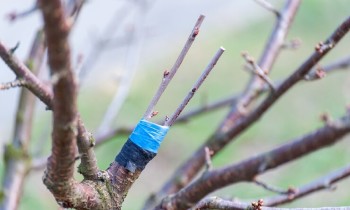
- Grafting by cuttings or buds.
- Growing from seeds.
Diseases and pests
- Powdery mildew.
- Scab.
- Black crayfish.
- Cytosporosis.
- Fruit rot.
- Hawthorn.
- Leaf roller.
- Green aphid.
- Scale insect.
- Flower beetle.
- Codling moth.
Ripening and fruiting of the Jonathan apple tree
The beginning of fruiting
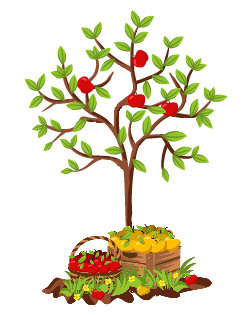 The beginning of fruiting
Depending on the rootstock, Jonathan begins bearing fruit either in the 2nd-3rd or 4th-5th year after planting. While large harvests won't be possible during this period, by the fifth year you can easily harvest 5-25 kilograms of aromatic and delicious fruit.
Flowering time
This variety blooms in mid- to late May. More precise dates will depend directly on the growing region, weather, and climate conditions. The flowers are very large, strongly fragrant, white or with a slight pink tint. The blooming period lasts 6-12 days, which is directly influenced by the weather during this period.
Fruiting and growth
This variety's tree quickly gains green mass. By the fifth to seventh year, it reaches 4-5 meters, its typical height. Full fruiting also occurs around this time. By this time, yields should reach over 70-80 kilograms.
The fruits ripen by the end of September or the beginning of October. However, this is only the technical maturity, at which point they are usually picked and stored. Consumer maturity, when the apples have acquired the desired flavor, occurs only 15-30 days later. They are stored until March-April, at a temperature no higher than 1-4°C in a well-ventilated cellar, in wooden boxes, sprinkled with sawdust.
Top dressing
- Superphosphate.
- Mineral complexes.
- Ammonium sulfate.
- Potash fertilizers.
- Peat.
- Compost.
- Manure.
- Humus.
- Urea.
What to do if it doesn't bloom or bear fruit
- Check for pests and diseases.
- Transplant.
- Limit watering.
- Feed.
- Thin out the crown.
Why do apples fall?
- Overripe.
- Natural factors.
- Pests.
- Diseases.
- Excess moisture.
Leave your own reviews of the Jonathan variety to share your experience and knowledge with other gardeners.

Comments
I live in the Krasnodar region, and our conditions are favorable for the Jonathan apple variety. My apple tree is over 15 years old. I planted it in a well-ventilated area. Our soil is loamy, so I added a little river sand when planting. It bears fruit well. One tree provides a family with delicious apples throughout the winter. The fruit keeps well; if stored properly, they will keep until spring.
Jonathan doesn't require any special care. I treat it for various diseases and pests in early spring. If the harvest is abundant, I try to remove half the green fruit to ensure the remaining ones are large.
Thanks to the author for the informative article; I read about the history of the variety with interest.