The Moscow Beauty apple tree: characteristics of the variety and care
| Color | Reds |
|---|---|
| Ripening season | Autumn |
| Size of apples | Large |
| Taste | Sweet and sour |
| Crown type | Average tree height |
| Shelf life | Average shelf life |
| Application | For recycling , Fresh |
| Winter hardiness | High winter hardiness |
| Fruiting age | From 5 years old |
 History of origin and regions of growth
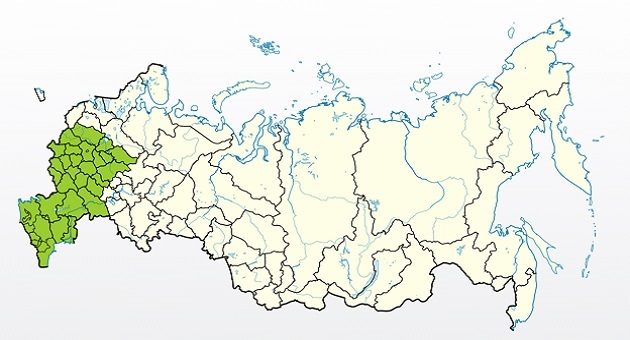
Growing regions
- Moscow and Moscow region.
- Middle zone.
- North Caucasus.
- Leningrad region.
- Crimea.
- Northern regions (selective).
Origin
The variety was invented by the Soviet amateur breeder Evgeny Mikhailovich Kamendrovsky. While there is no direct evidence, he developed the apple tree around the mid-1960s. In 1974, Moscow State University Press published his book, "Grafting and Re-Grafting Fruit Trees," which mentions a variety specifically for Moscow and the Moscow region.
The well-known Antonovka Common and American Welsh apple trees were used as parent trees. The new hybrid inherited their best qualities, from winter hardiness to the beautiful appearance of the block. There is no information about the variety in the State Register, and it has not undergone official zoning.
Content
Description of the Beauty of Moscow variety
 This medium-sized pyramidal tree is readily available from many nurseries in Moscow and the Moscow region, and even far beyond. It is in demand due to its many advantages. Firstly, it bears fruit very early; secondly, it has a compact crown; thirdly, it is undemanding of growing conditions and is resistant to low temperatures.
Furthermore, this variety is rarely attacked by insect pests and requires little watering, fertilizing, or fertilizer. The Krasavitsa Moskvy variety produces large, beautifully-looking fruits that last well, and most importantly, are delicious. It is recommended for growing in home gardens, but is not yet grown commercially.
Apples: What do they look like?
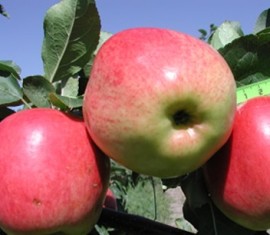
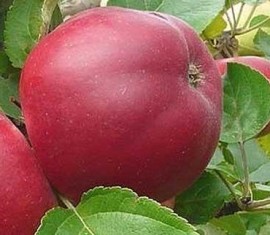
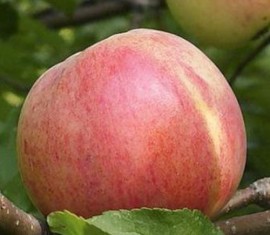
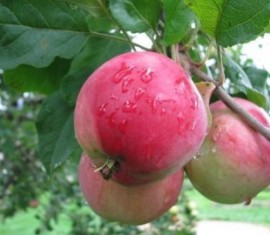
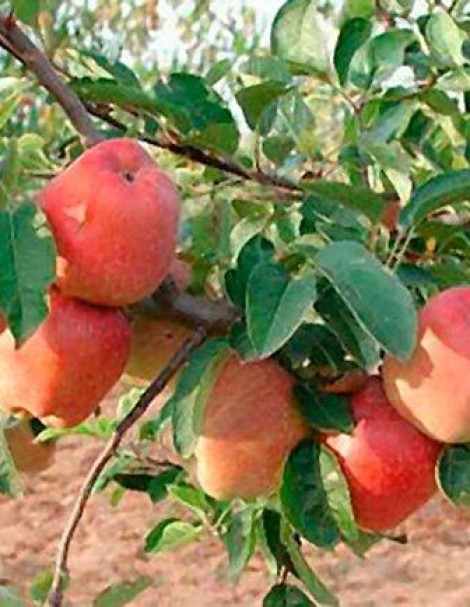
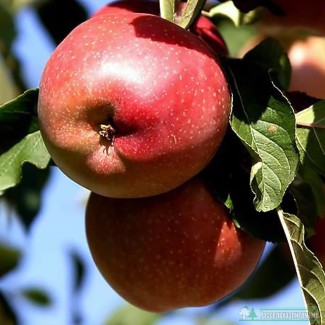
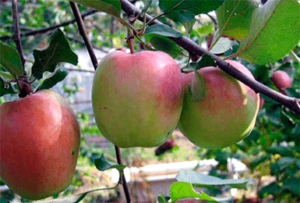 The apples are round, spherical, or slightly elongated, cylindrical. They are generally uniform in size, medium to larger than average. The fruits grow to 140-160 grams, but in favorable years and with timely, proper care and fruiting regulation, they can reach 200-220 grams. They are smooth, with wide ribbing visible only near the calyx.
The skin is smooth, shiny, and glossy, usually covered with a dense, bluish-gray waxy-oily coating during ripening. It is dense and elastic, yet thin and delicate, with a light green or soft green hue. The blush is dense, red or bright red, and can be beetroot, cherry, or dark red. It is diffusely spotted, speckled, and streaked, occupying most of the surface (up to 75-90%). Subcutaneous dots are light-colored, numerous, and clearly visible on the surface. The chemical composition is most easily assessed by the following indicators.
- P-active substances – 232 milligrams.
- Ascorbic acid (vitamin C) – 11.2 grams.
- Sugar (fructose) – 13.4%.
- Titratable acids – 0.38%.
- Pectins (fiber) – 12.6%.
The flesh is medium-dense and pleasantly firm. It is fine-grained, prickly, crisp, and easily broken apart, with a rich juiciness. The flavor is sweet and sour, with a pleasant spicy aftertaste, slightly lemony in color. The color is white or with a slight creamy undertone. A professional tasting score of 4.2-4.4 points is given for the fruit's appearance and flavor.
The Beauty of Moscow apple tree: characteristics
Crown and root system
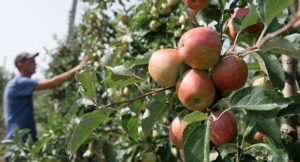 Trees of this variety are considered medium-sized, although they can be classified as natural semi-dwarfs. They can reach a maximum of 5-6 meters, but in most cases they are limited to 3.5-4When young, the crown is predominantly oval, but with age it becomes rounded-pyramidal, somewhat conical, and can be slightly spreading, occasionally broadly oval. Branches extend from the main stem at an acute angle; they are thin, long, and covered with gray or gray-brown bark. The fruiting pattern of the Beauty of Moscow is mixed.
The leaves are large, densely packed on the branches, leathery, dense, and range in shades from green to dark green, emerald, or rich green. They are rounded, slightly elongated, and short-pointed, with coarse ribbing and serrate margins, sometimes slightly wavy and serrated. The root system is medium-deep, branched, and most often fibrous, but may also be taproot, depending on the rootstock.
Productivity and pollination
Professionals say the tree's fruitfulness is average, so many people hesitate to use it for intensive commercial plantings. While there is some periodicity in fruiting, it's not very pronounced, meaning the number of fruits produced doesn't fluctuate much from year to year.
One mature Krasavitsa Moskvy tree can yield approximately 140-160 kilograms of delicious, sweet apples per season. With proper care and favorable weather and climate, this figure can be increased to 170-190 kilograms, but it's unlikely that you'll be able to squeeze more from the variety.
The variety is considered completely self-sterile, meaning it will not produce any apples unless there are other apple trees within 45-60 meters that bloom at the appropriate time. Therefore, it is recommended to plant the Beauty interspersed with suitable varieties. Experienced gardeners have come up with the idea of bringing mobile apiaries to the orchard during flowering and spraying the crowns of the trees with honey or sugar diluted in water to further attract bees.
Winter hardiness and disease resistance
The apple tree was developed specifically for growing in the Moscow region, so it can easily withstand fairly low temperatures. Down to -32-35°C, it doesn't require any special shelter; standard measures are sufficient for its continued growth.
Trees have moderate resistance to various fungal infections. They can be affected by powdery mildew, scab, and many other diseases, especially during years of severe epidemics. Therefore, all preventative treatments must be carried out promptly and regularly.
Rootstocks and subspecies
The variety doesn't yet have any subspecies, but it can be grown on a wide variety of rootstocks. This imparts specific qualities, such as frost resistance, which can be maximized on vegetative varieties. On dwarf and semi-dwarf varieties, the trees grow shorter, but fruit size can be increased to 300-350 grams.
Growing the Beauty of Moscow
 Landing
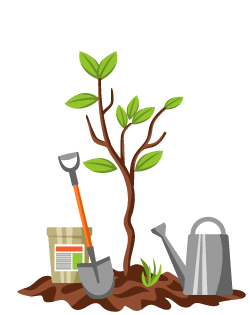 Landing
Basic conditions
- Like all fruit trees, this apple tree prefers open, sunny sites where its crown will be illuminated by sunlight for most of the day. The site should not be in the shade, otherwise it may grow very weak, with thin branches, and will refuse to bloom or bear fruit.
- Don't plant the Beauty in a drafty area, otherwise the young seedling may die in its first year. However, good ventilation for the crown is still necessary.
- The soil should be nutritious and airy. The variety prefers podzolic, sandy loam, and loamy soils; well-drained black soil is also suitable. The main criterion should be acidity; it should not exceed 6-6.5 pH.
- It's best to prepare the holes in advance, the season before planting. To do this, dig holes 80-90 centimeters deep and the same diameter. Fertilizer mixed with the topsoil is placed at the bottom, followed by drainage or another layer of soil, and then filled with plenty of water (up to 45-60 liters). The holes should remain outdoors for at least 4-6 weeks.
- It is customary to leave approximately 4-5 meters between holes in a row and the same amount between rows; this should be enough to ensure that the trees do not conflict with their crowns or roots.
- Stake stakes should be inserted (dug or driven) into the holes immediately, to which the young trees are tied. These supports should not be removed until at least the 2nd or 3rd fruiting season. If they don't interfere, it's best to leave them alone after that. Besides providing support, they also serve as a protective barrier, protecting the young tree from frost if placed on the north side.
- Always leave during planting root collar above the surface. If this is not done, the tree will take root above it, and then all the properties of the rootstock will be completely lost.
- Place the seedling on a mound of soil or drainage material, spread the rhizome so the shoots lie freely, cover with soil, and compact it to eliminate air pockets, but not too tightly. Create an earthen rampart around the perimeter of the resulting circle, and add 35-50 liters of water to the surface. mulch for additional moisture retention.
Landing dates
The optimal time to plant apple trees in temperate climates is in the fall, around late September or early October, when the leaves have already fallen but the first frosts are still at least 21-35 days away. However, the harsher and more variable the weather and climate, the more recommended is spring planting, in March-April, before the sap begins to flow in the trunks. Seedlings with closed root systems (in bags, containers, or pots) can be transplanted into the soil at any time during the growing season.
Tree care
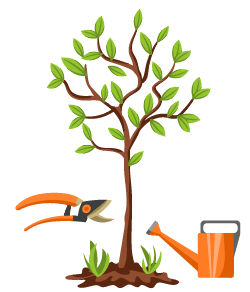 Tree care
Protection from frost and pests
Despite the Beauty's enviable frost resistance, it needs to be properly protected, otherwise the tree could be lost. Dry leaves are piled on the root zone, and straw bales or hay mats are laid, but everything must be completely dry, otherwise rotting can occur. If this happens, the trees will likely die. Trunks are wrapped with tarpaulin, burlap, agrofibre, or any other fabric. In some cases, tent-like covering is acceptable.
To prevent rodents from eating young tree trunks and branches in winter, coat apple tree trunks with lard, fuel oil, grease, or other unpleasant-smelling substances. This is effective against insects. whitewash lime to a height of 1.1-1.3 meters.
Loosening the soil, watering: proper agricultural technology
You should dig the soil around the trunk about twice a year, perhaps more frequently, but this isn't necessary. In between, you can hoe it, removing weeds, shoots from other plants, or root suckers. All this must be done carefully and cautiously, as some roots may be just beneath the surface. It's best not to damage them to prevent the tree from becoming diseased.
Watering The Moscow Beauty can be watered only 4-6 times a season when mature, but young seedlings can be watered more often. However, trees don't particularly need this unless the weather is extremely dry and hot. Various fertilizers and fertilizers are usually added along with the water, as they are absorbed much better and faster with water.
Pruning: simple crown shaping
The Beauty's crown can be shaped into almost any form, as the tree is very flexible. Some gardeners use pruning to create a chair-like or crown-like shape to decorate their gardens. However, the most popular form for those who prioritize fruiting is the sparsely tiered form, where the side branches are spaced at different heights and widely apart.
Sanitary pruning will also be necessary annually. Dead, diseased, and abnormally growing branches can be removed twice, if necessary. For example, those protruding inward or vertically upward should be trimmed.
Pollinator varieties
- Zhigulevskoe.
- Welsey.
- Titovka.
- Grushovka.
- Antonovka.
- Delicious.
- Korobovka.
- Buzovzovskoe.
Reproduction
- Rooting.
- Kidney grafting.
- Cuttings.
- Growing from seeds.
Diseases and pests
- Scab.
- Bacterial burn.
- Powdery mildew.
- Cytosporosis.
- Pit rot.
- Green aphid.
- Codling moth.
- Scale insect.
- Leaf roller.
- Hawthorn.
Ripening and fruiting of the Beauty of Moscow
The beginning of fruiting
 The beginning of fruiting
You'll have to wait a while for this tree to bear fruit. Some particularly diligent gardeners report that their Beauty trees bloom for the first time in the fourth or fifth year, but more often than not, the flowers are barren or only produce a couple of apples. The first proper harvest isn't until the fifth or sixth year, and sometimes even as late as the sixth or seventh. At that point, the variety can yield approximately 3-6 kilograms of fragrant apples, no more.
Flowering time
Considered a fall variety, they typically bloom mid-season, around May 15th-20th. Depending on the region's climate and growing conditions, the blooming dates may shift slightly. It's rare for the Beauty of Moscow to not fully bloom by early June.
Fruiting and growth
This variety is logically classified as having medium growth vigour. It can stretch approximately 25-40 centimeters in the season before fruiting begins. After this, active growth slows slightly, but not significantly, just a couple of centimeters. Fruitfulness increases in waves, and trees begin to bear more fruit as early as 9-11 years. The active lifespan is approximately 50 years or more, but some say the tree will produce apples for up to 75 years. However, there is no reliable data on this yet. Fruiting is uneven, but there are no complete rest periods, and it always produces some fruit.
Consumer maturity coincides with market maturity, meaning apples can be eaten straight from the tree; they're just as tasty as after cellaring. Ripeness can be determined by the thickness of the waxy coating; once the apples turn blue, they can be picked from the tree to prevent them from falling. Their shelf life is not great, with a maximum shelf life of approximately 65-80 days, so by New Year's, you'll either have to eat them or process them.
Top dressing
- Peat.
- Compost.
- Ammonium nitrate.
- Humus.
- Chicken manure.
- Superphosphate.
- Manure.
- Mineral complexes.
What to do if it doesn't bloom or bear fruit
- Check for pests or diseases.
- Transplant into the sun.
- Water.
- Fertilize.
Why do apples fall?
- Wind, hail, hurricane, rain.
- Pest damage.
- Diseases.
- Overripe.
Please leave your feedback on the Beauty of Moscow variety so that other gardeners can learn from your experience and draw conclusions from it.