The Venyaminovskoye apple tree: characteristics of the variety and care
| Color | Reds |
|---|---|
| Ripening season | Autumn |
| Size of apples | Average , Large |
| Taste | Sweet and sour |
| Crown type | Average tree height |
| Shelf life | Average shelf life |
| Application | For recycling , Fresh |
| Winter hardiness | High winter hardiness |
| Fruiting age | From 5 years old |
 History of origin and regions of growth
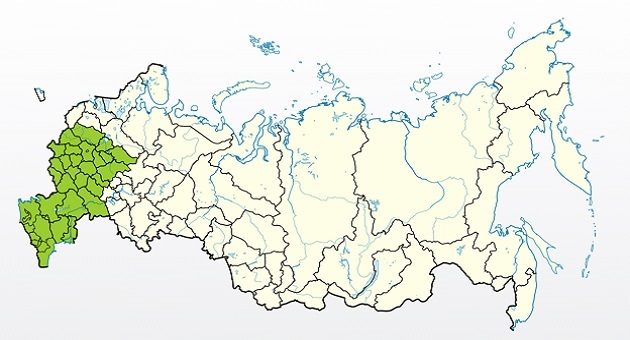
Growing regions
- Some northern regions.
- North Caucasus.
- Crimea.
- Volga region.
- Black Earth Region.
- European part of Russia.
Origin
In the mid-1970s, work was underway at the experimental station in the village of Zhilina in the Oryol region, which is part of the numerous farms of the Federal State Budgetary Scientific Institution "All-Russian Research Institute of Fruit Crop Selection," to develop scab-resistant winter apples. Hybrid No. 814, created through open pollination from the well-known Delicious Golden and the F2 form of Malus floribunda, was used as the parent variety. The variety was developed by a group of breeders: Vladilen Vasilyevich Zhdanov, Zoya Mikhailovna Serova, Evgeny Nikolaevich Sedov, and Evgeny Alekseevich Dolmanov.
The first seeds were selected from the 1981 crop. They were sown in greenhouses the following spring, and young trees soon emerged. By 1990, the apple trees bore fruit for the first time, and five years later, they were classified as elite. An application for the new Venyaminovskoye variety was submitted in 2001, after all testing had been completed, and approval was granted. At the same time, the apple trees were zoned for the Central, Central Black Earth, Northwestern, and North Caucasus regions.
Content
Description of the Venyaminovskoe apple variety
 Gardeners immediately appreciated the new variety, which quickly spread across the country. The trees proved to be undemanding, tolerant even to less favorable growing conditions and a fairly harsh climate, and, most importantly, immune to the main scourge of all apple trees: fungal disease. scab, which makes the apples unsuitable for consumption.
The fruits have high commercial and consumer qualities: they are attractive, tasty, have a pleasant and strong aroma, and can be transported even over fairly long distances. Although they have a significant drawback—a long, gradual ripening period—they are recommended for both small private gardens and industrial intensive orchards.
Apples: What they look like
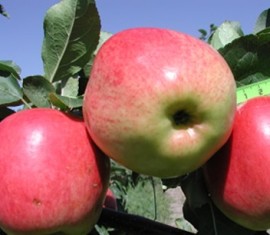
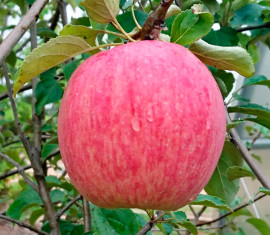
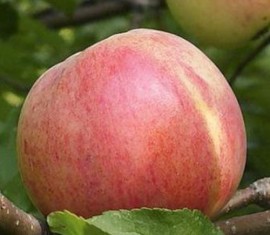
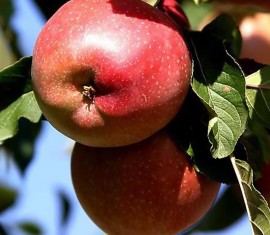
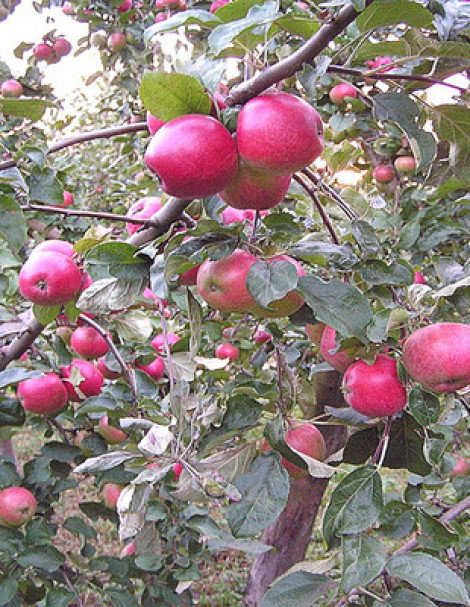
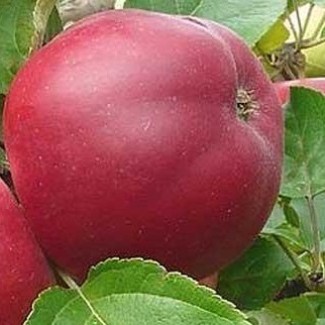
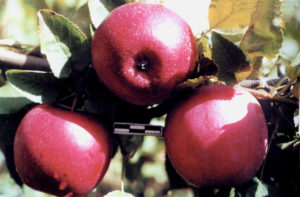 Even on a single tree, fruits can vary greatly in shape and are uneven, with an average weight of approximately 120-145 grams. However, in some cases (in favorable years), single fruits weighing up to 220-245 grams and even up to 300 grams can be found. They are round, slightly flattened, conical or turnip-shaped, slanted to one side, with wide, smooth ribs.
The skin is elastic, firm, but not hard, and thick. It has a green-yellow or lemon hue, often turning golden and sunny as it ripens. The blush is dense, spotted, and dense, with a mottled, streaky pattern visible along the edges of the stalk and sepals. It is raspberry-red or sometimes even beetroot-colored, occupying 55% to 95% of the surface, depending on the amount of sunlight reaching the fruit. Subcutaneous gray spots are numerous and clearly visible. The following indicators can be used to assess the chemical composition:
- Titratable acids – 0.72%.
- Sugars (fructose) – 8.9%.
- Pectins (fiber) – 7.3%.
- Ascorbic acid (vitamin C) – 5.9 milligrams.
- P-active substances (catechins) – 223 milligrams.
The Veniaminovsky apple's flesh is firm, coarse-grained, very juicy, and quite prickly and crisp. It's white or slightly light green, but may have a few reddish veins under the skin. The flavor is described as balanced and table-like; it's sweet and sour, harmonious, and pleasant. Various tasting scores range from 4.4 to 4.6 out of 5.
Apple tree Venyaminovskoye: characteristics
Crown and root system
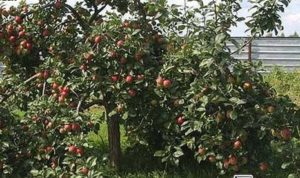 The trees are usually considered medium-sized, although they are quite large. On vegetative rootstock they grow to about 4.5-5 meters, However, with pruning, they can be kept to a more compact size. Some gardeners say apple trees can grow taller than 6.5-7 meters if not properly cared for, which significantly complicates harvesting. The crown is spherical or rounded, medium to low density, and not prone to excessive overgrowth. The shoots are thick, geniculate, long, and can be arched, most often directed upward, covered with smooth, glossy, steel-colored bark. Fruiting is concentrated on the rings.
The leaves are medium-sized, short-pointed, often twisted into a helix, ovate, dark or bright green. They are matte, pubescent on the underside and petioles, wrinkled, and coarsely ribbed. The root system is highly branched, vigorous, and moderately deep, adapted to seeking water in the soil.
Productivity and pollination
Venyaminovskoye is considered a high-yielding variety, although it cannot match the Antonovka or Simirenko varieties.
During the growing season, up to 200-235 kilograms of fruits with a delicate characteristic aroma are usually harvested from one mature tree trunk..
Apple trees are completely self-sterile, which is considered the variety's main drawback. To ensure fruit production, other varieties with suitable flowering times must be grown within 45-55 meters. To further attract bees, experienced gardeners spray the trees with sugar or honey syrup.
Winter hardiness and disease resistance
Endurance tests were conducted in special chambers where temperatures could be lower than outside. Venyaminovskoye demonstrated excellent frost tolerance down to -38-41°C, suffering frost damage of only 0.9 points at -43°C. After severe frost damage, trees recover within 2-4 years, and after minor frost damage, they bear fruit within normal limits the same year.
From all five races scabies The variety has genetic immunity (Vf), so the trees are never affected by these infections. The trunks are also highly resistant to other fungi. However, regular preventative maintenance and insect control should not be neglected.
Rootstocks and subspecies
There are no subspecies of Veniaminovsky yet, although work with this cultivar is still ongoing. Therefore, it's entirely possible that we will eventually develop many subspecies with different characteristics and unique qualities. For now, the tree can be grown on either seedling or dwarf rootstock. The latter will result in a much more compact tree, with larger fruits, but will suffer from reduced winter hardiness.
Features of growing Veniaminovsky
 Landing
 Landing
Basic conditions
- It is better to choose a place that is well lit by the sun, spacious and protected from cold blowing winds.
- It is better not to plant Venyaminovskoe in swampy areas, lowlands, and areas where groundwater rises above 3.2-3.5 meters, as well as immediately near rivers, streams, springs, and ponds.
- Any soil is acceptable, but previously fertile, fertile loam is best. The variety grows in both black soil and sand, but these will need to be "brought to maturity" by diluting and fertilizing.
- It's not necessary to prepare the holes in advance of the season, but they should be allowed to sit for at least a week or a week and a half. Dig holes 4-5 meters apart, measuring 60 x 90 centimeters. Add some fertile soil (topsoil) to the bottom, mixing it with mineral and organic fertilizers. Then, add drainage (vermiculite, crushed brick, or gravel) and add 22-25 liters of water.
- The root collar of the seedling should always protrude above the surface by at least 7-11 centimeters. Otherwise, the tree may root higher, and the rootstock's properties will be completely lost.
- A plank or stake is dug into the center of the hole to hold the tree upright even in strong gusts of wind.
- Place the seedling on a drainage mound, spread out its roots, and cover it with soil, ensuring there are no air pockets or voids. Tamp the soil down by hand, water with 25-35 liters of water, and mulch the surface.
Landing dates
In temperate climates and regions with mild, warm weather, it's best to plant trees in the fall, when the first frost is approximately 3-4 weeks away. However, the further north you plan to grow them, and the harsher the winters they experience, the more practical it is to postpone planting until spring, around late March or early April.
Protection from frost and rodents
In the temperate regions of our country, in the South and Southwest, Venyaminovskoe doesn't need any shelter at all; it easily withstands any weather conditions. Further north, for example, Moscow region In the Leningrad Region, it's best to take all the necessary measures to avoid losing the trunks. Trunks are wrapped in burlap, tarpaulin, or agrofibre, and the root zone is covered with dry leaves, straw, or hay. Sometimes, they are even covered with soil, which must be removed in the spring.
To repel insects from cracks or chipped bark, whitewash them with lime to a height of 1-1.35 meters. This can be done in spring and fall. To prevent rodents (hamsters, hares, mice) will help lubricate the lower part of the trunk with a thick layer of melted animal fat.
Tree care
 Tree care
Loosening the soil, watering: proper agricultural technology
Weeds, root suckers, and shoots from various plants can be removed from under the tree as needed. These can be easily assessed visually and removed by weeding, while also loosening the soil with a hoe. It's best to dig this area once or twice a year, and even then carefully, as some roots run shallowly beneath the surface.
Young, newly planted trees require significant watering. Approximately 45-80 liters of water per tree should be applied approximately once every 7-12 days if there is no natural precipitation. More mature trees require the same amount no more than 5-6 times throughout the season, timed for bud formation, flowering, and fruit ripening.
Pruning: simple crown shaping
Every year, before the sap begins to flow, formative or, later, corrective pruning of the trunk is required. This involves shortening the central shoot and all other branches by a third of their annual growth. This maintains the tree's consistent shape.
Sanitary pruning can be done both in the spring, along with shaping, and in the fall, once the leaves have completely fallen. All dead, diseased, and broken branches should be removed. Starting from the 15th to 18th year, you can gradually begin rejuvenating the tree, removing 2-3 mature shoots at a time.
Pollinator varieties
- Sugar myron (Vyaznikva, Mironchik).
- Arkad.
- Delicious golden.
- Gloucester.
- Florina.
- Sharopai.
- Moscow Winter.
- Glory to the winner.
- Dove.
Reproduction
- Clones.
- Rooting cuttings.
- Grafting of buds and cuttings.
- Layers.
Diseases and pests
- Rust.
- Powdery mildew.
- Green aphid.
- Codling moth.
- Hawthorn.
- Scale insect.
Ripening and fruiting of Veniaminovsky
The beginning of fruiting
 The beginning of fruiting
Although this variety is considered early-bearing, it won't produce its first fruit until 5-6 years after planting. It may bloom with single buds earlier, but they likely won't develop into apples. It's best to prevent them from doing so and instead pick the flowers immediately.
Flowering time
Veniaminovskie apple trees bloom in mid-May, a process that lasts at least 12-18 days. The timing can vary depending on the growing region, climate, weather, and even care, but by the end of the month, they will have fully completed their blooming. Their fragrant, large flowers, with fleshy and delicate petals, are white and pink in color, gathered in small inflorescences and densely covering the branches.
Fruiting and growth
Trees reach their maximum height very quickly, reaching 45-60 centimeters per year. Growth, which is faster before fruiting begins, slows slightly over the years. Fruiting increases gradually, with the tree producing more and more apples each year. After just 7-9 years, you can harvest over 150 kilograms of delicious, beautiful fruit.
The main characteristic of this variety is that the apples ripen in stages, not all at once. A top-down or vice versa approach won't work; ripe fruits will have to be hand-picked, judging their ripeness by eye.
Fruit harvesting usually begins in the second half of September, when technical ripeness occurs. Then they are picked, placed in boxes, sprinkled with sawdust or even sand, and stored in the cellar. Consumer ripeness, when all the sugars in the fruit have caramelized and they become much sweeter and tastier, takes at least another 45-60 days. Fortunately, their shelf life is average, and under suitable conditions, they can retain their flavor until early spring.
Top dressing
- Mineral complexes.
- Manure.
- Humus.
- Superphosphate.
- Compost.
- Ammonium nitrate.
- Peat.
What to do if it doesn't bloom or bear fruit
- Transplant to a drier, sunnier or wind-protected location.
- Check for pest damage or disease.
- Feed (fertilize).
- Reorganize the irrigation system.
Why do apples fall?
- Overripe.
- Strong wind, hail, rain.
- Pests.
- Diseases.
Please leave your feedback on the Venyaminovskoe variety so that other gardeners can learn something similar from it to enhance their experience.