Apple tree Mantet: characteristics of the variety and care
| Color | Reds , Yellow |
|---|---|
| Ripening season | Summer , Early |
| Size of apples | Small ones , Average |
| Taste | Sweet and sour |
| Crown type | Tall tree , Average tree height |
| Shelf life | Low shelf life |
| Application | Fresh , For recycling |
| Winter hardiness | Low winter hardiness |
| Fruiting age | Up to 5 years |
 History of origin and regions of growth
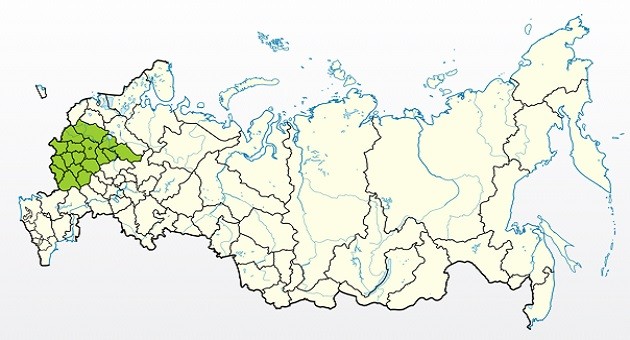
Growing regions
- Samara region.
- Bryansk region.
- Ryazan region.
- Vladimir region.
- Tula region.
- Kaluga region.
- Moscow region.
- Smolensk region.
- Ivanovo region.
- Tula region.
Origin
The Mantet variety was first mentioned in scientific literature in 1928 in the records of Canadian breeders. It was developed at the Morden Experimental Station in Manitoba by pollinating seedlings of the Russian Grushovka Moskovskaya and McIntosh varieties.
The Canadian name for the Grushovka, the Manteit's ancestor, is Tetovsky. Therefore, it is often confused with the old Russian apple variety known in North America as Titovka.
Officially, the renowned Canadian pomologist W. T. Macohen is credited with creating the new variety. There's a joke that, upon seeing the resulting fruit, he exclaimed that humanity was now fully reflected in apples ("Man, now there's a real apple!"), hence the name Mantet ("man" is a reference to the Tetovsky variety).
Content
Description of the Mantet apple variety
 The Mantet apple variety is popular worldwide. It is loved and grown everywhere because its fruits are exceptionally tasty, and the first harvest can be harvested as early as the third year after planting the seedling outdoors. This apple tree has a low frost tolerance, so it is not recommended for northern regions of the country, where winters are typically harsh. However, with proper care, it thrives and produces fruit well in temperate climates.
Apples: color, size, weight
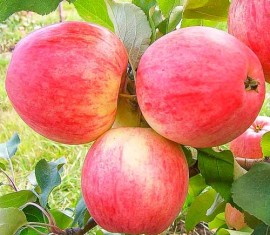
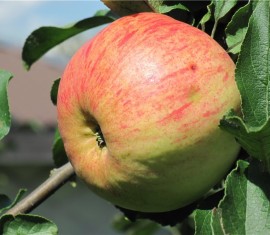
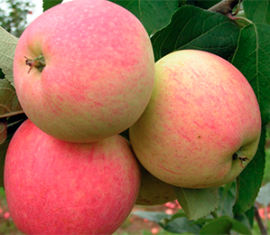
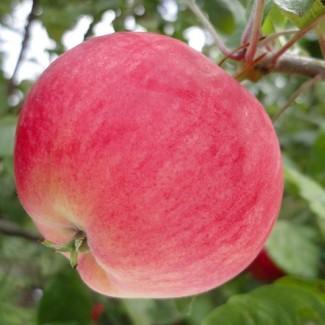
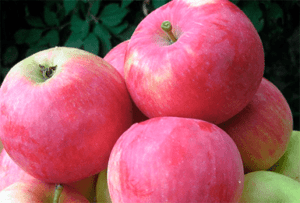 Mantet is considered an early summer variety, as the fruits ripen as early as mid-July. The apples are small to medium-sized, weighing up to 150-180 grams. They are round-oblong in shape, sometimes slightly flattened, with slight ribbing at the top. The color during the growing season is yellow or greenish-yellow. Ripe fruits usually develop a red blush with orange-white streaks and blotches. The skin is thin, delicate, and has a natural shine. The chemical composition of the apples is characterized by the following properties per 100 grams of pulp:
- P-active substances – 371 milligrams.
- Vitamin C (ascorbic acid) – 11.2 milligrams.
- Pectins (fiber) – 12.4%.
- Total sugars (fructose) – 10.4%.
- Titratable acids – 0.8%.
The Mantet apple variety has a dessert-like flavor. Its flesh is white, juicy, and sweet with a slight tartness. Its aroma is quite strong and retains its flavor throughout storage. Most professional tasters give it a score of 4.4-4.6 out of 5. The main drawback of this variety's fruit is its poor shelf life and transportability.
Apple tree Mantet: characteristics
Crown and root system
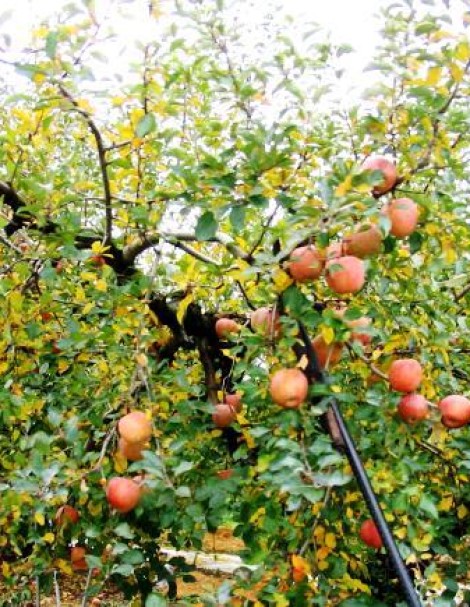
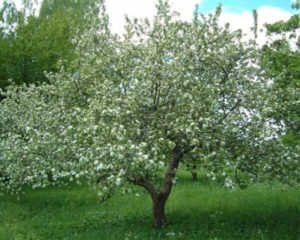 The tree is medium-sized, growing no more than 3-5 meters. To facilitate harvesting, gardeners regularly prune the trees to keep them no taller than three to four meters. Crown The Manteca tree has an oval shape with sparse, upward-facing, robust skeletal branches. The bark on young branches is usually brown, becoming more gray or brown with age. Most of the fruit grows on the rings, and the shoots have small lenticels. It reaches a height of no more than 2-3 meters.
This apple tree has large, leathery, glossy, elliptical leaves with a jagged, irregular edge. The root system of trees grown from seed is not very extensive, so adjacent trees can be planted as close as 2-3 meters apart. For grafted apple trees, this distance depends entirely on the rootstock.
Productivity and pollination
Mantet is considered a high- or medium-yielding variety.
In a good year, a mature tree can yield 70-80 kilograms of fruit. With minimal care, the yield will be significantly lower, no more than 45-70 kilograms.
Young trees begin to bear fruit as early as three years after planting, but the maximum yield of apples is not harvested until the 11th to 13th year. Active fruiting lasts for approximately 30 to 40 years, after which it steadily declines.
This variety is considered self-sterile. Therefore, if there are no other apple trees nearby, no harvest can be expected. Pollinators chosen are those that bloom around the same time as the Manteit. The distance to pollinators should not exceed 150-200 meters.
Winter hardiness and disease resistance
The Mantet isn't particularly cold-tolerant, barely surviving temperatures as low as -25°C. Trees can be burned and even die at temperatures as low as -16-19°C if not properly protected. Therefore, it's best to stay north. Urals This variety is not recommended for cultivation.
The apple tree is not particularly susceptible to diseases, however scab may appear frequently and abundantly, especially during high humidity during rainy summers and autumns. Other diseases and insect pests are also dangerous for the variety.
Rootstocks: features
This variety grows well on a wide variety of rootstocks.
| Rootstocks | Peculiarities |
| Dwarf | A tree on this rootstock will grow no more than 2-3 meters in height and can easily withstand frosts down to -22-25°C, provided it is planted and cared for properly. The apples produced are typically small, weighing no more than 70-120 grams. The maximum age for active fruiting is 25-30 years. |
| Semi-dwarf | This Mantet variety will only grow to 3-4 meters, live for 30-40 years, and begin bearing fruit in the second to fourth year after planting. Its apples are medium-sized, weighing up to 150 grams. This variety can withstand temperatures down to -20-22°C. |
| Vigorous | The tree can grow up to 5-7 meters in height. Its average lifespan is 50-60 years, with the first harvest already possible in the fourth or fifth year. Its fruits are typically larger, weighing up to 120-180 grams. It is recommended for cultivation in the Oryol region, where record yields can be achieved. |
The dwarf variety is considered the most profitable option from an industrial perspective. It's the least demanding and produces the most abundant harvests. However, another option is to plant the Mantet apple tree on a seedling rootstock, which was the preferred method in the 1940s-1980s.
Trees grow over seven meters tall, bear fruit for half a century, and are relatively unaffected by environmental factors. However, the first apples can only be harvested between the 7th and 9th years of life, and they are typically tart and small (40-80 grams). Pruning, harvesting, and treating for pests and diseases on such an apple tree presents certain challenges, as a tall ladder is essential.
Features of growing Mantet
The Mantet apple tree isn't particularly demanding, but achieving high yields will require some effort. It's especially prized for its early fruiting, so it's worth focusing your efforts on this.
 Landing
 Landing
Basic conditions
- This variety doesn't like excessively wet areas, so it shouldn't be planted in depressions, near bodies of water, or areas with high groundwater levels. Podzolic soils, chernozems, or loams are the best choices.
- Choose a sunny, draft-free location for apple trees. Ideally, they should be protected from wind by hedges, fences, building walls, or taller trees, at least during the first few years.
- Aerated, loose soil is usually chosen. If your soil isn't aerated enough, you can provide drainage by scattering nutshells at the bottom of the hole dug for the apple tree. Vermiculite or broken brick can be used, and if necessary, you can even add gravel to the tree's bedding.
- The distance between apple trees should be at least 3 meters, so that their rhizomes and crowns do not conflict in the future.
- Holes should be prepared at least two weeks before planting. Ideally, they should be 70-90 centimeters deep and 1 meter in circumference.
- Two-year-old trees with 3-5 skeletal branches are best suited for planting in open ground.
- Stake stakes are driven into the hole immediately, preferably on the north side of the trunk. They should extend at least 60-80 centimeters and can be removed no earlier than the third year after planting.
- It is not customary to cover the root collar with soil; it should protrude 6-8 centimeters above the surface.
- After the seedling is planted with its roots spread out, fill the hole with soil, but do not compact it, only lightly. Water with 30 liters of water and mulch with chopped dry grass, peat, and manure.
To ensure good rooting, it's a good idea to create a special mixture that should be added to the hole 2-3 weeks before planting. To do this, take 3 buckets of soil, mix it with 3 buckets of humus or compost, and 1-2 kilograms of wood ash. You can also add potassium sulfate and superphosphate in small quantities (up to 150 grams). Pour the mixture into the hole and add 10 liters of water.
Landing dates
Since Mantet isn't considered a winter-hardy variety, it's usually planted in the spring to allow it time to establish roots and survive. The optimal time is early to mid-April; in very cold springs, planting can be postponed until the second half of the month.
Protection from frost and rodents
The tree is quite heat-loving, so it needs to be protected from freezing with particular care. This allows it to be grown in fairly harsh conditions. For the winter, the trunks are wrapped in straw bales or spruce branches; sometimes, roofing felt or tar paper is also used, which provides additional protection against pests. If the winter forecast calls for severe frost, a 15-25 centimeter mound of soil can be built over the root system.
All these tricks will inevitably attract rodents and insect pests to young trees. Therefore, the trunks should be whitewashed with lime or treated with special solutions every autumn. It wouldn't hurt to coat them with grease or lard.
Tree care
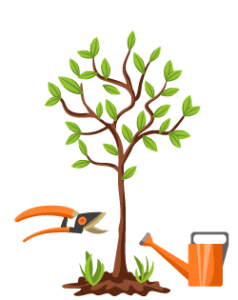 Tree care
Some people think that after planting, they can simply leave apple trees alone and wait for the harvest, then harvest them on time. However, this approach is fundamentally wrong, as any fruit tree requires constant, proper care.
Loosening the soil, watering: proper agricultural technology
The mantet prefers airy, loose, and unclogged soil, so it's best to dig it up twice a year—in spring and fall. This will also help get rid of pests that might be hibernating there.
Mature trees generally don't require much watering. However, young first-year trees should be watered at least once every two weeks during dry weather. Watering should be stopped during rainfall and then resumed. The optimal amount is 20-30 liters per seedling.
Gardeners often make a very serious mistake, which can lead to the tree's death. They water it frequently but sparingly. Under such conditions, the Mantet tree stops developing its root system deep and, without frequent rainfall, will dry out.
It is enough to water an adult tree 4-5 times per season, using no more than 60-70 liters of water.
Pruning: simple crown shaping
It is recommended to carry out all types of pruning in early spring, before the sap begins to flow in the trunk, but it can also be done in late autumn.
- Formative pruning. This is only recommended in the first year after planting. During this process, the main trunk is shortened by a third. The same procedure is followed for the main skeletal branches. Since the tree's crown is not very dense, there won't be much pruning required.
- Sanitary. Prune old, diseased, damaged, or downward-growing branches.
- Rejuvenating pruning. This type of pruning is only recommended after the plant's 20th year. Then, begin removing 2-3 older shoots.
Maintenance pruning is usually not performed, as the Mantet does not require it. It is advisable not to remove more than a third of the branches at a time, as the tree may become "sick" from the stress it has experienced.
Pollinator varieties
- Grushovka Moscow.
- White filling.
- Strefling.
- Orlinka.
- Melba.
Reproduction
- Growing from seeds.
- Layers.
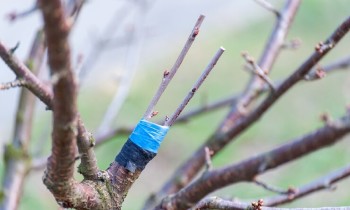
- Grafting (rootstock) by buds or cuttings.
Grafting is permitted on wild trees, apple trees of suitable varieties, rowan trees, and pear trees.
Diseases and pests
The Mantet apple tree is particularly resistant to almost all apple diseases and pests. It easily copes with any problem, except scabiesThe tree can become ill in particularly rainy years. To prevent this, the crown should be shaped to ensure good ventilation and adequate light for most of the day. As a preventative measure, it is recommended to regularly treat the trunk area with ammonia (10%) and the crown with Bordeaux mixture (2%).
Ripening and fruiting of Mantet apple trees
The beginning of fruiting
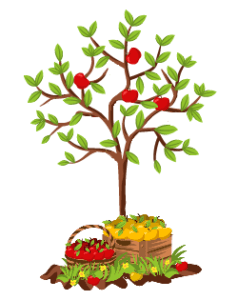 The beginning of fruiting
This variety is especially beloved by gardeners because it produces a small apple harvest in just 2-3 years, which grows each year. In just 3-4 years, the tree will reach its full production and will bear fruit at its peak for 15-30 years. After this point, its life cycle gradually slows down, and with it, the number of fruits produced.
Flowering time
This early-maturing apple tree blooms quite early. The first large white flowers, with a slight pink or reddish tint, appear as early as early May, and in hot weather, as late as late April.
Fruiting and growth
The yield of this variety is considered average to above average. Young apple trees can produce 35-40 kilograms of fruit per year immediately after fruiting begins. By the 10th to 13th year, this number increases to 70-88 kilograms. This variety continues to bear fruit actively for over 20 years, which is considered a very good indicator.
Mantet ripens by mid-July. In particularly cool years, the ripening date may shift to early or even mid-August. However, they don't all ripen at once, which many gardeners consider a drawback. Overripe fruits quickly fall off, lose their marketable appearance, don't store well, and are only suitable for processing, such as making juice. However, those who plant apple trees near their homes to enjoy fresh fruit will fully appreciate all the delights of this variety. After all, you can pick juicy, ripe apples daily for a month.
Top dressing
- Humus.
- Compost.
- Superphosphate.
- Potassium and potassium-phosphorus mixtures.
- Nitrogen fertilizers.
- Urea.
- Ammonium nitrate.
- Ammonium sulfate.
What to do if it doesn't bloom or bear fruit
- Check for pests or diseases.
- Transplant.
- Trim drooping branches.
- Apply fertilizer.
Why do apples fall?
- Overripe.
- Overwatering.
- Insufficient watering.
- Natural phenomena (wind, rain, hail).
- Pests or diseases.
Please leave your feedback on Manteta in the comments so that everyone can learn about your experience growing this variety.