Orlinka apple tree: characteristics of the variety and care
| Color | Striped |
|---|---|
| Ripening season | Summer , Early |
| Size of apples | Average |
| Taste | Sweet and sour |
| Crown type | Average tree height |
| Shelf life | Low shelf life |
| Application | For recycling , Fresh |
| Winter hardiness | Average winter hardiness |
| Fruiting age | Up to 5 years |
 History of origin and regions of growth
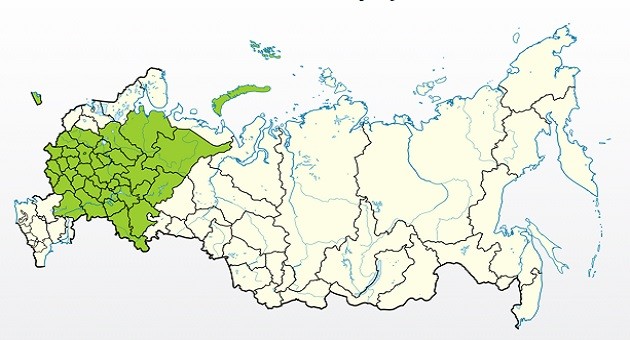
Growing regions
- Vladimir region.
- Moscow and Moscow region.
- Oryol region.
- Perm Krai.
- Kaliningrad region.
It is believed that the entire Central, Central Black Earth, Volga regions, the Urals, and even more northern areas are suitable for growing Orlinka and obtaining good harvests from it.
Origin
Work on developing a new early variety at the experimental station of the All-Russian Research Institute of Fruit Crop Breeding in Oryol began in the second half of the 1970s. By 1978, researchers N. G. Krasova, E. N. Sedov, and Z. M. Serova obtained the first specimens of an apple tree, which they named Orlinka, by cross-pollinating the Pervy Salyut and Stark Erlioste Prekos varieties.
In 1994, the variety was officially accepted for testing and distributed to farms across the region and beyond. By 2001, the variety was zoned, meaning it was recommended for cultivation in certain regions.
Content
Description of the Orlinka apple variety
 When choosing apple trees for their garden, everyone is guided by their own preferences. Orlinka is one of the new varieties that can satisfy virtually any desire and preference. It is extremely frost-hardy, regularly produces high yields of delicious and aromatic fruit, and is undemanding of growing conditions. Well adapted to harsh winters, it is recommended for cultivation in many northern regions.
Apples: color, size, weight
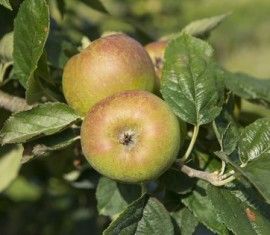
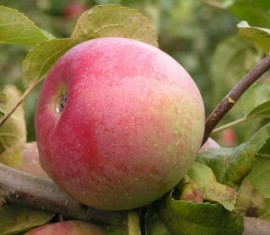
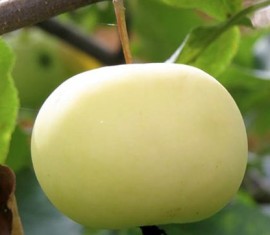
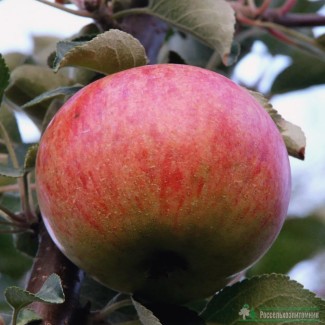
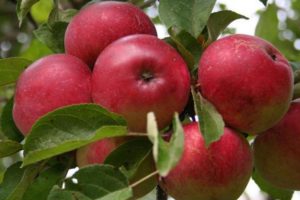 Orlinka table apples are typically medium to larger than average. The fruits typically weigh between 120 and 200 grams, but most fall between 150 and 160 grams. They are round, sometimes slightly flattened on one side, and asymmetrical. The apples are covered with a smooth, fairly dense skin that is green at the very beginning and turns greenish-yellow when ripe. The blush typically covers more than 80% of the fruit, a streaky red on a carmine background.
Subcutaneous dots are few in number, greenish in color, and clearly visible. The chemical composition is characterized by the following indicators per 100 grams of product:
- P-active substances – 312-315 milligrams.
- Ascorbic acid (vitamin C) – 6.5-6.7 milligrams.
- Total sugars (fructose) – 9.3-9.5%.
- Pectins (fiber) – 12.8-13.5%.
- Titratable acids – 0.82%.
The apple flesh is initially greenish, then lightly creamy. It is juicy, crisp, and has a distinctive sweet and sour flavor. Gardeners and fruit lovers alike note the fruit's bright and strong aroma. These apple trees are often compared to the variety Melba, but they significantly surpass it in yield. The tasting score for appearance barely reaches 4.2, but the taste is rated at 4.4 on a 5-point scale.
Orlinka apple tree: characteristics
Crown and root system
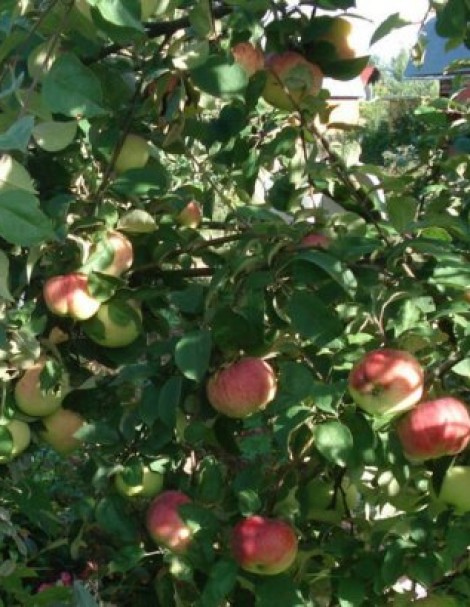
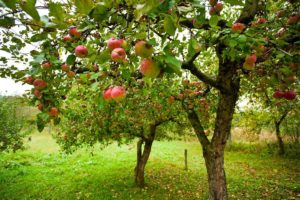 The tree is large, but medium-sized, no more than 3-4 meters in height. Pyramidal crown In maturity, the tree becomes rounded and spherical. Branches are typically compact but grow at an acute angle to the trunk. Therefore, there is a risk of frequent splitting even during heavy harvests. The bark of young shoots is often grayish, becoming rougher and cracked with age. The crown of a mature specimen typically covers an area of approximately 3 meters in diameter.
The leaves of this apple tree are rounded, dark green, with serrated edges and a pointed tip that curls downward. They are lightly to moderately pubescent on the upper surface and heavily pubescent on the lower surface. The root system is highly branched, but the presence of a central taproot depends entirely on the rootstock.
Productivity and pollination
The variety was bred precisely with the goal of ensuring maximum annual fruiting, which was successfully achieved.
For an early apple tree, yields of 30-45 kilograms are truly impressive. However, the fruit's shelf life leaves much to be desired.
The variety is considered self-fertile, meaning it doesn't require additional pollinators to produce fruit. Moreover, Orlinka is a good pollinator for many other varieties. However, to increase yields, it's traditional to plant it near apple trees that bloom at the appropriate time. It's a good idea to locate the orchard near the apiary, ensuring access to pollinators.
Winter hardiness and disease resistance
This variety isn't considered particularly frost-resistant, but it's successfully grown throughout almost all of Russia, with the exception of the northernmost regions. For example, Orlinka surpasses Melba in these characteristics, as with the right care, it can be grown quite well in Urals and even further north.
In its native Oryol region, this variety exhibits high resistance to virtually all apple diseases, especially scab. However, when relocated, this immunity gradually fades. By providing timely preventative treatment for apple trees, you can be confident that their natural resistance will help them avoid serious problems.
Subspecies and rootstocks
It's not common to graft Orlinka onto vigorous rootstocks, unless it's a native vegetative variety. It's best to choose dwarf rootstocks so the apple tree begins bearing fruit earlier, within 2-4 years, is easier to care for, and provides maximum harvesting benefits.
When choosing this apple tree variety for your garden, pay attention to the rootstock's winter hardiness. The higher this rating, the greater the chance the tree will thrive in any location and take root.
| Rootstocks | Peculiarities |
| Dwarf | Trees typically don't grow taller than 2.5-3 meters, but even that's rare. Fruits grow to a medium size (120-150 grams). The best rootstocks to use are Paradise, B9, or Malysh. |
| Semi-dwarf | There are more rootstock options to choose from: 60-164, 54-118, 60-160, 57-545. Trees begin to bear fruit in the 4th or 5th year, and the apples themselves are even slightly larger (130-170 grams). |
Neither columnar nor creeping Orlinka exists. Therefore, if you're offered something similar, it's best to be wary. They're likely talking about a completely different variety, and the results could be completely unpredictable.
Features of growing Orlinka
 Landing
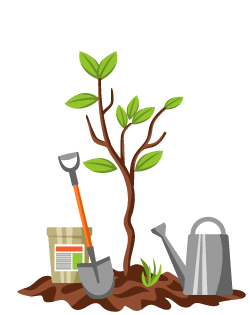 Landing
Key Features
- Orlinka prefers loose, light soils, including loam and sandy loam. Black soil can be too heavy for it, but it can be easily "thinned" with imported river sand.
- The site for planting apple trees should be bright and well-ventilated. If you need to plant them on a slope, you'll need to choose a south or southeast-facing location.
- Proximity to groundwater or open water bodies isn't the best solution. The variety's roots are very sensitive to moisture, so drainage will need to be provided in very damp areas. However, if options are limited, you can dig a deeper hole for the apple trees in advance and line the bottom with a sheet of slate to prevent the roots from reaching it. Then, add the infertile soil, and only then apply fertilizer, mixed with the soil into which the seedling is planted.
- The holes should be standard: 60 centimeters deep and up to 1 meter wide. Experts recommend preparing them in advance. For spring planting, this should be done in the fall, and for fall planting, at least 3-5 weeks before gardening. Ash, humus, ash, and mineral fertilizers are added to the holes, then filled with 2-3 buckets of water, and then left outdoors.
- Saplings should be at least 3-4 meters apart from each other, and up to 5 meters can be left between rows to prevent tree crowns from clashing in the future.
- Immediately dig in the stakes to which the young trees will be tied. They can be removed no earlier than 2-4 years after the apple trees are born.
- If the root system has dried out slightly, you can soak the apple tree in a bucket of water for 5-7 hours. Any damaged roots can be trimmed off with pruning shears.
- The root collar of the tree should protrude above the soil surface by at least 5-8 centimeters.
- There's no need to compact the soil around the tree; just tamp it down lightly and then water with 35-45 liters of water. It's a good idea to mulch the root zone with humus and chopped grass.
Experienced gardeners say it's not necessary to follow breeders' advice to the letter, adhere to every rule and proportion down to the last drop, or even consult the solar and lunar calendars. The key to planting and properly cultivating apple trees is to adhere to the basic principles: choosing the right location, suitable weather, and having healthy, suitable seedlings.
Landing dates
All early-ripening varieties are recommended to be planted in April, when the danger of night frosts has completely passed. In the fall, prepare holes for the seedlings without covering them. This will allow the trees to become well-established over the summer, preventing even severe frosts from damaging them.
If there's no other choice and you have to plant Orlinka in the fall, it's best to do so before mid-October. The first frost, even a relatively light one, should be at least 4-6 weeks away. Otherwise, even covered with spruce branches, the apple tree may become severely stressed or die.
Protection from frost and rodents
Young trees will definitely need to be protected from the cold. Line the base of the trunk with spruce or pine branches, straw bales, or hay. You can also use roofing felt, tar paper, or even nylon tights. Any damaged areas, if any, should be carefully wrapped.
Such tricks inevitably attract rodents and insects seeking to overwinter in comfort and warmth. Therefore, in the fall, it's essential to whitewash the trunks and lower skeletal branches with lime, treat them with special chemicals, and protect them from rodents by coating the bark with grease or lard.
Tree care
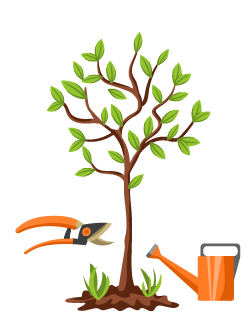 Tree care
Loosening the soil, watering: proper agricultural technology
Orlinka apple trees don't require any special growing conditions or skills to thrive in your garden. If the weather is particularly dry and there has been no natural precipitation for more than 10 days, you can begin watering the trees regularly. However, it's best to water them in small amounts (5-10 liters at a time in the root zone) in the evening at sunset or after.
Along with watering, you need to loosen the soil and don't forget to mulch it with ash, humus, and chopped grass. The tree prefers loose, aerated soil, so this is a crucial step that shouldn't be overlooked.
Pruning: simple crown shaping
To obtain trees that are easy to harvest, spray, and otherwise manipulate, the crown must be properly shaped by pruning excess branches.
- FormativeDuring the first 12 months after planting, trees are allowed to rest, and pruning begins in the spring of the following year. The tree can be given virtually any shape desired: tiered, open-tiered, spindly, or even palmette-shaped. Approximately one out of three branches is pruned, shortened by a third, leaving the central shoot intact.
- SanitaryThis type of pruning is recommended to be performed in the fall after the leaves have fallen, when the sap flow in the trunks has ceased. All damaged, dry, or diseased branches are removed, and the cut areas are sealed with garden varnish or regular water-based paint.
- SupportiveSince Orlinka's branches tend to grow at an acute angle to the trunk, pruning of the supporting structures is essential. Regular thinning is necessary, otherwise ripening fruits will pull them downward, causing them to break off. Then, they will have to be cut off.
- RejuvenatingTo rejuvenate a tree, starting at approximately 15-20 years of age, 2-3 mature shoots are removed from the tree to allow younger ones to develop.
It's crucial to understand that you shouldn't cut more than a quarter of a tree's branches in one fell swoop. This will cause severe stress, and it will take a long time to recover. Furthermore, such manipulations can even kill a young tree. Therefore, you should exercise extreme caution and carefully monitor your actions.
Pollinator varieties
- Melba.
- Grushovka Moscow.
- Folder.
Reproduction
- Layers (clones).
- Grafting by buds or cuttings.
Diseases and pests
- Cytosporosis.
- Powdery mildew.
- Scab.
- Scale insect.
- Green aphid.
- Flower beetle.
- Codling moth.
Ripening and fruiting of Orlinka apple trees
The beginning of fruiting
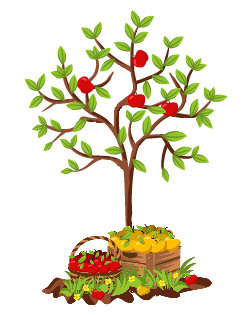 The beginning of fruiting
The first rare Orlinka apples can be expected as early as the second year, but a harvest of at least 5-10 kilograms can only be expected in the third to fifth year. From the very beginning of fruiting, they will be approximately the same size and will remain so until the end of the tree's life. Many consider this quality of the tree a particular advantage, as the apples do not become smaller over time.
Flowering time
Orlinka blooms at about the same time as another new variety Orlovim, in early or mid-May, depending on the region and weather conditions. All branches are literally covered with large white flowers. They have a very strong aroma, attracting honey-producing insects.
Fruiting and growth
This is an early-ripening apple tree, meaning its fruits are typically picked in early to mid-August. They don't all ripen at once, so it's best to harvest them in two stages. Ideally, all the apples should be picked and processed by September. This variety has a minimal shelf life—14-21 days under the right conditions (a well-ventilated cellar).
The tree itself grows significantly, up to 15-20 centimeters per year. Therefore, it's customary to closely monitor its growth and prune it on time. However, the variety typically doesn't grow more than 4-5 meters, even on a vigorous rootstock.
Top dressing
- Humus.
- Urea.
- Manure.
- Superphosphate.
- Nitrogen and potassium fertilizers.
What to do if it doesn't bloom or bear fruit
- Stop watering.
- Start watering in small doses, but regularly.
- Transplant to a drier, sunnier area.
- Check for pests or diseases.
- Thin out the branches.
Why do apples fall?
- Pests.
- Diseases.
- Overripe.
- Excessive thickening of branches.
- Over- or under-watering.
- Natural phenomena (rain, wind, hail).
Please leave your feedback about Orlinka in the comments so everyone can learn from your experience and gain some useful information.