
Apple tree Grushovka: characteristics of the variety and care
| Size of apples | Small ones , Average |
|---|---|
| Taste | Sweet and sour , Sweet |
| Crown type | Tall tree , Average tree height |
| Shelf life | Low shelf life |
| Fruiting age | Up to 5 years |
History of origin and regions of growth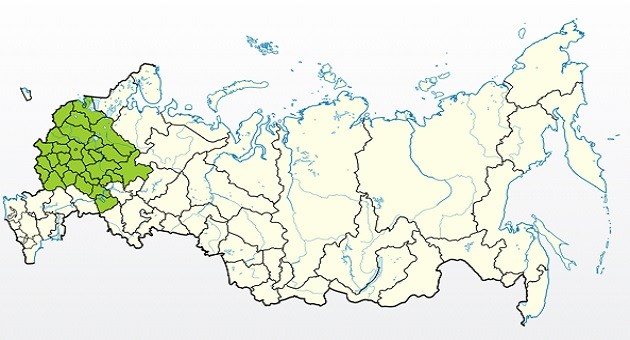
Growing regions
- Central Russia and some neighboring regions.
Origin
This variety was not artificially bred, but rather the result of natural selection. It is considered ancient, dating back more than 250 years since its first description. It was first studied by the renowned Russian scientist, naturalist, botanist, philosopher, and pomologist Andrei Timofeevich Bolotov around 1785-1795.
The Grushovka variety has several names. It's popularly known as "Skorospelka," "Moscow Grushovka," and "Rannespelka." Thanks to this tree, selective breeding was used to create the "Sibirsky Souvenir" variety, which is essentially its direct descendant.
Content
 Description of the Grushovka apple variety
 Description of the Grushovka apple variety
Apples: size, color, weight
 Apples: size, color, weight
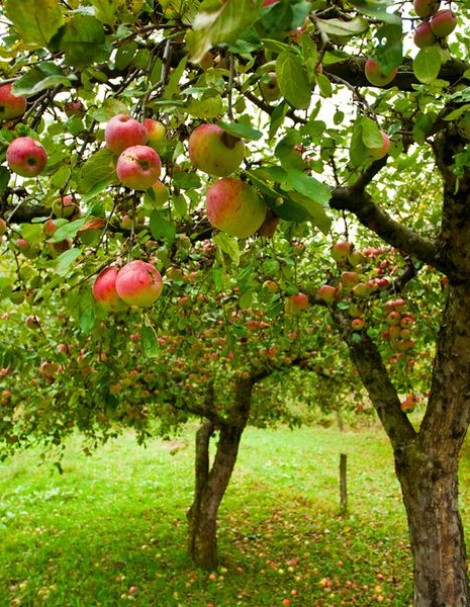
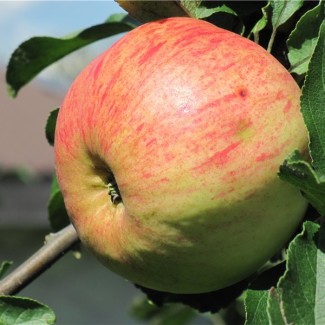
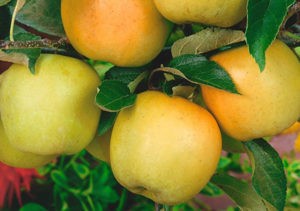
This ancient, well-known variety, which still has many fans today, is early-ripening, meaning it produces fruit in the first half of autumn or summer. The fruits are typically medium-sized or small, and in most cases have a distinct bulbous shape.
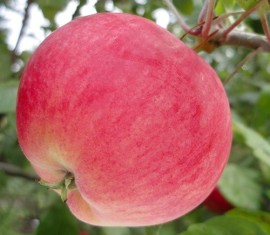
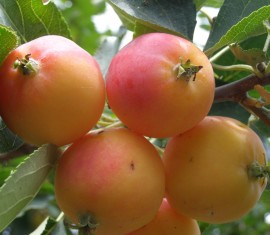
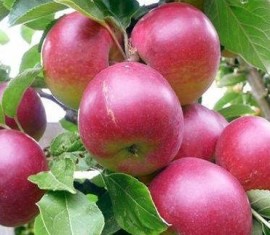
The apples are covered with a thin, green or yellowish skin that turns white as they ripen, sometimes with bright pink stripes, streaks, or blushes. The apples have numerous whitish spots underneath the skin, which are clearly visible, making the variety quite recognizable.
Many are misled by the name "Grushovka," which suggests a specific flavor. However, in fact, the fruit of this apple tree has no pear flavor.
The fruits most often have a short, thick stalk and straw-yellow flesh. The flavor can be sour, sweet and sour, or even honey-sweet, and is typically highly aromatic. It can be slightly loose beneath the skin, but is still juicy and tender. The average weight is 82-120 grams. The chemical composition per 100 grams of product is as follows:
- P-active substances - 129 milligrams.
- Vitamin C (ascorbic acid) – 9.1-9.3 milligrams.
- Total sugars (fructose) – 9.1-9.3%.
- Tetratizable acids – 0.89-0.9%.
Most tasters rate the fruits 4.3-4.6 on a 5-point scale, their taste is considered strong, harmonious, balanced and fresh.
Apple tree Grushovka: main characteristics
Crown and root system
 Crown and root system
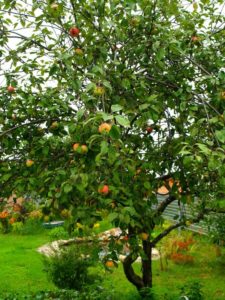
This apple tree, considered a classic, grows into a vigorous, branched tree in the wild. Given favorable growing conditions, it can easily reach a height of 6-7 meters. However, with proper pruning, gardeners typically limit the tree to 3-4 pruning steps for ease of harvesting.
At an early age crown It is cone-shaped, but over the years it becomes spherical and spreading, or, as people say, "sprawling." The tree can cover a fairly large area, up to 3-5 meters. The bark is yellowish-orange in early life and throughout its life cycle, sometimes grayish-brown or reddish in places. The rhizome is usually determined by the rootstock onto which the pear is grafted, so it can be taproot or taprootless, compact or highly branched.
Productivity and pollination
The Grushovka variety is the envy of anyone in terms of its yield.
In the most fruitful years, one tree can produce from 100 to 250 kilograms of apples.
Such record harvests can only be achieved with proper care, regular fertilizing, pruning, and pest control.
When grafted onto semi-dwarf or dwarf rootstocks, an apple tree can begin bearing fruit as early as 3-6 years after planting. However, a wild pear tree or one grafted onto a wild pear tree will not achieve this within a similar timeframe. It will require at least 5-8 years to reach fruiting age. The pear tree is considered self-sterile, so without other varieties nearby, no apples will be produced. Preference should be given to those with similar flowering times.
Winter hardiness and disease resistance
The pear tree is popular among gardeners in our country precisely because of its exceptional cold resistance. This fragile yet branchy tree can easily withstand temperatures as low as -50°C without losing its fruit. Therefore, it is cultivated even in SiberiaPlus, the short growing season increases the chances of growing a good harvest in harsh conditions.
The variety's main drawback is its extreme vulnerability to various fungal infections, particularly the notorious scab and moniliosis. Therefore, it's crucial to treat it with special fungicides promptly. Spraying should be regular, but it's not recommended for preventative purposes; it won't have any effect.
Subspecies and rootstocks
There are several main subtypes of Grushovka, which are similar to each other, but still have some differences.
| Subspecies | Description |
| Moscow | This variety was created through natural selection. It has become widespread in almost all regions due to its exceptional frost resistance. However, it is not grown commercially because the thin skin is easily damaged, causing the fruit to rot very quickly. It produces small to medium-sized fruits (45-85 grams). |
| Early | This subspecies is considered by scientists to be the most successful of all those resulting from crossbreeding. It was created by pollinating a common Grushovka with Papirovka. The variety produces much larger fruits than other varieties (112-130 grams), and the yield can easily reach up to 200 kilograms per mature tree. It is suitable for cultivation in the coldest regions, although it is more common in the European part, and has the highest resistance to scab. |
| Winter | This subspecies was created through cross-breeding with the Kronselskoye Prozrachnoe variety. The resulting fruits are larger than those of the original variety, but still fall short of the early variety (75-112 grams). |
Winter pear hasn't gained widespread popularity, despite its relatively high yield. It struggles to withstand temperatures as low as -30°C, and scab It literally "sticks" to her. The most you can still find her in is the middle zone.
Rootstocks: Key Features
The subsequent characteristics of a tree largely depend on the rootstock onto which it is grafted.
| Rootstocks | Peculiarities |
| Columnar | This rootstock is believed to make the variety more frost-resistant. However, the fruits are usually slightly sour and small. However, there is no official description of such variants. |
| Semi-dwarf | This grafting method isn't the best solution. Experiments with this method have shown that the grafting site cracks between 14 and 18 years, potentially killing the tree. Therefore, experienced gardeners avoid such trees. |
| Dwarf | This type of rootstock is even worse than the previous one for the same reasons. |
Most often, Grushovka is grafted onto winter and summer apple varieties with good winter hardiness.
Peculiarities of Growing Pear
Proper cultivation of apple tree seedlings requires gardeners to pay special attention to the characteristics of each particular variety. Many different factors must be taken into account, including the region's climate and weather conditions, and the risk of disease or pest infestation.
Landing
Basic conditions
- The optimal soil for the Grushovka apple tree variety is turf, sandy loam or loam, where it will feel good.
- The tree doesn't like excessively moist areas. Therefore, it's best to plant it not in hollows, but rather on elevated sites, away from groundwater or open water.
- Avoid planting young seedlings in the shade, otherwise you'll end up with sour, small apples. It's also important to protect them from the wind. To achieve this, place taller trees, hedges, fences, or building walls two to four meters away.
- The planting holes are made with straight walls, up to 55-60 centimeters deep and up to 1-1.2 meters wide.
- The soil should be slightly acidic, with a pH of approximately 65-67. Four days before planting, add approximately 20-25 kilograms of compost to the hole.
- It is recommended to drive pegs into the ground from the north side to support the seedlings at first.
After planting, the tree should be watered immediately, which will require approximately three large buckets of water. Afterward, all holes should be carefully mulched with compost or the same humus that was added to the holes.
Landing dates
The timing of planting pear trees depends directly on the growing region. The harsher the climate, the less likely a young tree is to take root. Therefore, in northern regions, it's best to plant apples in the spring, as this gives them a better chance of survival. The optimal time is late April or early May.
In southern regions, seedlings have time to establish themselves even if planted in the fall. Older trees, at least two years old, can also be planted then. It's best to choose suitable days from mid-September to early October, well before the first frost.
Protection from frost and rodents
This variety isn't particularly sensitive, so no cold protection is generally necessary, even for first-year trees. However, it's important to ensure that young trees don't have any bark damage that could affect frost resistance. In these areas, you can apply a "bandage" of burlap or spruce branches, after first sealing the "wounds" with pitch.
Protecting trees from hungry rodents and insects that migrate closer to human habitation during the winter requires some effort. For starters, regularly clear the garden of fallen leaves and avoid leaving rotting fruit under the trees—all of these attract pests. Treat the trunk with a repellent, such as lard or grease, and then wrap it in fine mesh, burlap, roofing felt, or tar paper.
Don't forget to whitewash your trees regularly in late autumn, after the leaves have completely fallen. This will prevent moss and lichen growth on your apple trees, and will also kill disease spores and insect larvae.
Tree care
 Tree care
To ensure that the Grushovka tree will delight you with a high yield, you will have to put in a lot of effort, providing it with the appropriate care.
Watering and loosening the soil: correct agricultural techniques
This variety dislikes not only excessively wet soil but also drought. In dry years, it produces very little fruit, and the apples grow small. Therefore, regular, deep watering is recommended, approximately once or twice a month. In late August or early September, watering is stopped completely to allow the tree time to "prepare" for winter by draining excess sap. Otherwise, it may freeze and die.
Trees may need fertilizing no earlier than the second year after planting outdoors. Initially, simply loosening the soil and watering regularly is sufficient. This is best done in the evening, after the sun has set. For one mature tree, 40-80 liters of water is sufficient, and during particularly dry periods, this amount can be doubled. Before winter, mulching with horse manure (up to a 5-centimeter layer) is recommended.
Crown formation: simple pruning
- Formative pruning. A year after the trees are planted, they need to be pruned to shape the future crown. To do this, the main trunk is shortened by 35-40 centimeters, and the branches by approximately a third. If desired, you can remove any branches that seem unnecessary. Subsequent shaping is done intuitively, based on needs.
- Sanitary pruning. This type of pruning should become regular. It involves removing damaged, dried, or diseased branches.
- Rejuvenating. Pear trees typically reach their lowest point at 50, or even 60 years. Therefore, it's a good idea to rejuvenate the crown two or three times during this period, which experienced gardeners often refer to as "crown pruning." This involves cutting all branches back to two- or three-year-old wood.
Maintenance pruning is usually not performed on the Grushovka tree, as the branches will still need to be supported and tied up if the fruit is particularly abundant. Therefore, there's no point in removing the thinner shoots, which will produce a good harvest in the future.
All pollinator trees should be located within the reach of bees at a distance of no more than 55-60 meters from each other.
Pollinator varieties
- Folder.
- Striped anise.
- Cinnamon.
- Candy.
- Bellefleur the Chinese.
- Antonovka.
- White filling.
- Chinese crab.
Reproduction
- Growing from seeds.
- Layers.
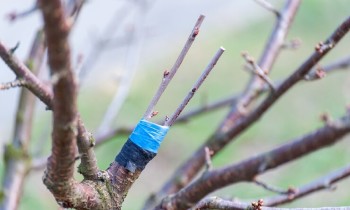
- Grafting (rootstock).
Diseases and pests
- Scab.
- Moniliosis.
- Black crayfish.
- Wood-destroying fungi, mosses, lichens.
Grafting can be carried out on other varieties of apple trees, pear, rowan, wild apple trees or clones.
Ripening and fruiting of Grushovka apple trees
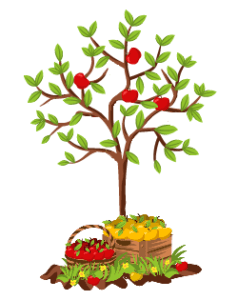
Pear trees are planted specifically for their fruit, not for ornamental purposes. Ripening times are directly affected by climate conditions, as well as the weather of a given year. Therefore, they can shift significantly earlier or later. However, cultivar characteristics also play a significant role.
The beginning of fruiting
The time it takes for seedlings to begin bearing fruit depends on the characteristics of the rootstock. Those grafted onto dwarf or semi-dwarf trees will produce a good harvest as early as 2-5 years after planting. If the Grushovka is grafted onto a wild or vigorous apple, rowan, or pear tree, it will take longer to see fragrant apples – fruiting will only begin in 6-9 years.
Flowering time
Apple trees typically bloom profusely by early May. All trees are covered in a dense carpet of lush, multi-petaled flowers. The buds are white or pale pink, gradually deepening in color.
If you want a good harvest, most of the buds should be removed during the flowering stage (85-90%). After they develop into ovaries, it's advisable to remove another half of the remaining buds.
Fruiting and growth
Trees of this variety begin bearing fruit abundantly very quickly. Already in the first year, you can get about 8-10 kilograms of apples. However, the Grushovka reaches its full potential approximately 3-6 years after the first harvest.
Fruiting is irregular and depends on many external factors. Therefore, it's impossible to say that fruit is usually harvested every year or every other year—it's a matter of luck. However, if the flowering was abundant, you'll likely enjoy a bountiful harvest.
Top dressing
- Organic.
- Mineral.
- Complex.
What to do if it doesn't bloom or bear fruit
- Feed with fertilizers.
- Protect from the wind.
- Check for diseases or pests.
- Transplant.
- Make a cut.
Why do apples fall?
- Lack of moisture.
- Pest activity.
- Diseases.
- Natural disasters.
Please leave your feedback about Grushovka in the comments; they will be helpful to other users!


Comments
I like this apple variety the most; it ripens early and tastes like a pear. If you follow all the care instructions, you'll get a good harvest. I've learned a few things I hadn't done before.
We have apple trees at our dacha, including a variety called Grushovka. It bore fruit this first year. The fruits are medium-sized and tasty, but for some reason they're not striped, just yellow. Maybe they mixed up the variety at the nursery, but otherwise, everything matches the description above.