Ermakovskoye Mountain Apple Tree: Variety Features and Care
| Color | Reds |
|---|---|
| Ripening season | Summer |
| Size of apples | Small ones |
| Taste | Sweet and sour |
| Crown type | Average tree height |
| Shelf life | Low shelf life |
| Application | For recycling , Fresh |
| Winter hardiness | High winter hardiness |
| Fruiting age | Up to 5 years |
 History of origin and regions of growth
Growing regions
- Siberian Federal District.
Origin
The renowned Russian breeder Mikhail Aleksandrovich Lisavenko, his wife, and a group of like-minded individuals (I.P. Kalinina, N.V. Ermakova, and others) labored for a long time to develop many Siberian apple trees, including this one. Research that began in the 1950s culminated in success in 1952: a new, large-fruited apple tree was developed, named Ermakovskoye Gornoye, after one of the scientists and its preferred growing zone. It was created by crossing the Altai Golubok apple tree with a variety called Phoenix.
The new variety was immediately sent to various Siberian farms for testing. By 1963, the apple tree was classified as an elite variety, entered into the State Register, and a little later zoned for the West Siberian region. Since then, it has remained popular and in demand, as winter-hardy apple trees capable of producing good harvests are not as plentiful as desired.
Content
Description of the Ermakovskoye Mountain apple tree variety
 This small tree never ceases to amaze Siberians, who are always ready for any surprise. It tolerates severe frosts quite well and is not particularly afraid of spring frosts, especially if well covered for the winter. Most importantly, it produces fragrant, tasty, and, for this region, fairly large fruits. The yield is also quite good for such a compact tree, making this variety recommended for both small homesteads and large commercial intensive gardens.
Apples: What they look like
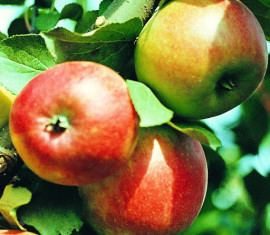
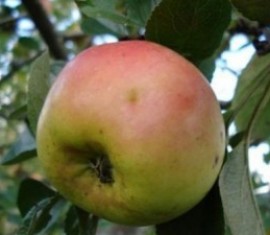
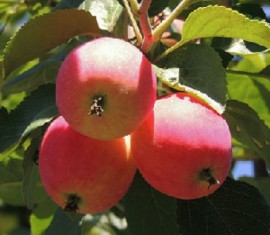
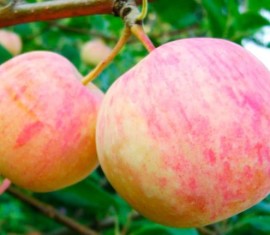
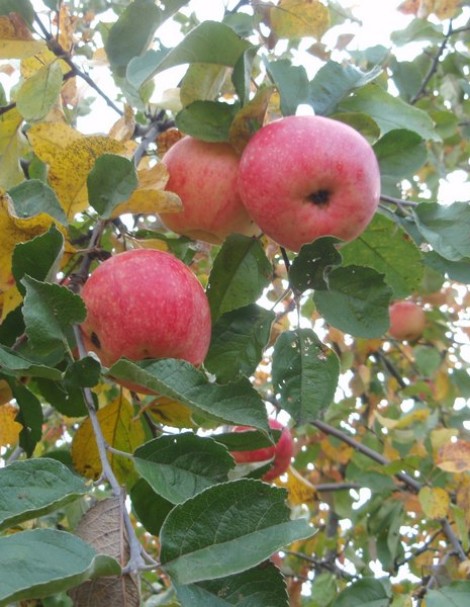
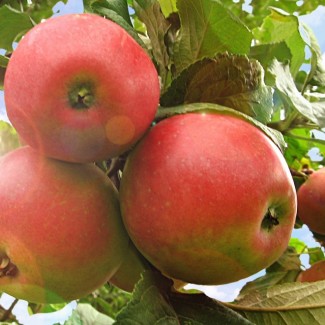
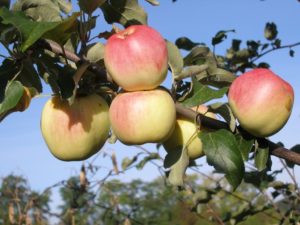 Compared to larger apple varieties, Ermakovsky apples can be considered small. Their maximum weight is no more than 60-80 grams, but for apple trees built for harsh Siberian conditions, this is quite impressive. Compared to the Altai Bagryany or Alenushka apples, these fruits are twice as large. They are round, regular in shape, uniform in size, with subtle ribbing.
The skin is dense, glossy, and smooth, and may have a slight, waxy coating. The base color is green when unripe, but becomes golden or light yellow as it ripens. The blush occupies approximately 65-85% of the surface; it is diffusely streaked, quite dense, and bright red, scarlet, or even brick-red in color. Subcutaneous dots are large, numerous, grayish-green, and clearly visible. The chemical composition is characterized by the following indicators (per 100 grams):
- P-active substances (catechins) – 127 milligrams.
- Ascorbic acid (vitamin C) – 23.9 milligrams.
- Total sugars (fructose) – 11.5%.
- Pectins (fiber) – 11.3%.
- Titratable acids – 0.6%.
The apples' flesh is white or slightly creamy, fairly firm, fine-grained, juicy, and aromatic, crisp, and prickly. They have a pleasant dessert-like, harmonious, and balanced sweet-and-sour flavor. According to professional tasters, the fruits score 4.3 points for taste and appearance on a 5-point scale.
Ermakovskoye Mountain Apple Tree: Characteristics
Crown and root system
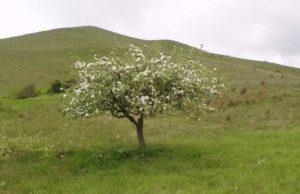 Trees of this variety can be described as medium-sized, but in fact they are naturally semi-dwarf, reaching a height of no more than 2.5-3 meters, even when left to grow freely. The crown can be slightly pyramidal when young, but with age it becomes more rounded and can be easily shaped into a ball, making it convenient for care and harvesting. The branches are curved and thick, typically extending from the main trunk at almost right angles. The apple tree bears fruit on spurs, ring shoots, and young, one-year-old shoots.
The crown on young shoots is brown or brownish-green, but with age it can turn brown, crack, and begin to fall off. The leaves are round, elongated, fairly large, pointed, with an elongated tip, and have a coarsely serrated edge. They are leathery, bright green, matte yet smooth, resembling satin, and have noticeable pubescence on the back. The root system is branched, superficial, and usually lacks a central taproot.
Productivity and pollination
For such a medium-sized variety, the tree boasts a remarkable yield, especially considering the growing conditions. A single mature tree can yield 45-50 kilograms of delicious, juicy apples. The highest recorded yield from the Ermakovsky Mountain is 70 kilograms.
This variety is considered self-sterile, meaning you won't get any harvest unless there are other apple trees nearby that bloom at the appropriate time. Ideally, they should be no more than 50-150 meters away; this is sufficient for honey-producing insects, which rely primarily on the scent of the flowers. Experienced gardeners also set up an apiary in their garden or use portable apiaries to facilitate the bees' access to their nests.
Winter hardiness and disease resistance
For a Siberian apple variety, Ermakovsky has average tolerance to low temperatures. Young trees can barely withstand temperatures below 25-27°C, so they will need careful frost protection. Mature trees are more resilient and can survive harsh Siberian winters, with their sudden thaws and prolonged cold spells, but proper winter protection will also be helpful.
This variety is moderately resistant to scab, as well as other apple fungal infections, but has no natural immunity. This means that with proper care and preventative measures, there's little risk of infection. However, in particularly wet years, apple trees are susceptible to scab, and if infected, both leaves and fruit are affected. It's also important to keep a close eye on insects, as pests readily consume not only foliage and apples but can even damage the wood.
Rootstocks and subspecies
There's no information about subspecies of the Ermakovsky Mountain apple, so it's likely that they simply don't exist. Apple trees are grown on various rootstocks: vegetative, semi-dwarf, and dwarf. In the latter case, the tree's height can fluctuate by up to two meters, which significantly simplifies care and winter protection. However, frost resistance is significantly reduced. There is no columnar variety.
Features of growing Ermakovsky mountain
 Landing
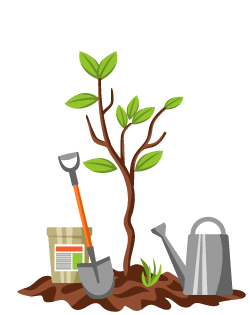 Landing
Basic conditions
- Ermakovskoe loves open spaces, as well as secluded corners, as long as they receive full sun for most of the day. Shade not only prevents the trees from producing fruit well, but can even cause them to become ill.
- The apple tree does not like damp and swampy areas, close proximity to open water bodies, hollows in which spring waters accumulate, and other dampness.
- The variety does not like sour soilTherefore, if the soil is high, it will need to be artificially leached with lime. Sandy loam and clay loam are ideal for planting. If the soil is poor, various fertilizers, which apple trees accept well, will help.
- Tree holes should be prepared in the fall, or at least 3-4 weeks before planting. To do this, dig holes 80-90 centimeters deep and the same diameter. Add a layer of removed soil mixed with any available fertilizer to the bottom. Top this with approximately 12-15 centimeters of drainage material. Regular gravel, vermiculite, nut shells, or even broken brick can be used. The entire mixture is watered with approximately 50-60 liters of water and left to stand in the open air until planting.
- It is necessary to leave at least 2.5-3 meters between trees in a row, and between rows this distance can be reduced by half a meter.
- First, inspect the seedlings' root system and, if necessary, trim off any dry, damaged, or diseased shoots with pruning shears. Then soak them in water for 4-7 hours to absorb moisture.
- Don't forget to immediately insert special stakes into the holes on the north side to secure the trees. These will prevent the trees from becoming deformed or falling over in strong winds. They can be removed no earlier than after the third or fourth harvest, when the trees will be sufficiently established.
- Place the seedlings on the drainage trench, spread the roots, and begin to cover them with soil in layers, lightly pressing each layer down with your hands. Avoid packing the soil around the apple tree too tightly, as it prefers oxygen-rich soil.
- A small mound of soil should be built around the tree's perimeter, and 30-40 liters of water should be poured into it. The surface is usually mulched with humus, peat, compost, or chopped grass.
The root collar of the seedling should always remain 4-8 centimeters above the surface. Otherwise, the tree may root above it, completely negating all the properties of the rootstock.
Landing dates
This variety is considered to thrive when planted in both spring and fall. However, experienced gardeners still recommend the former option. This way, the tree will have the opportunity to prepare for the winter cold all summer long, growing branches and roots, establishing roots, and adapting to its new environment. When purchasing seedlings with closed root system (in bags or pots that do not require disposal), they can be transplanted into open ground at any time during the active growing season.
Protection from frost and rodents
Even though the variety is fairly winter-hardy, it will need to be carefully protected from frost to prevent the tree from freezing. To do this, rake approximately 15-20 centimeters of soil around the trunk, sometimes lining it with mats of dry grass or straw. The trunks are wrapped with roofing felt, roofing felt, agrofibre, or burlap. In very harsh weather conditions, it is recommended to use a tent-like shelter, at least when the tree is young.
Greasing the trunks with melted lard or grease is effective against hungry rodents. To get rid of insects, whitewash the trunks with lime in the fall, covering a depth of approximately 1-1.2 meters. To protect trees from fungal infections, spray them with copper sulfate.
Tree care
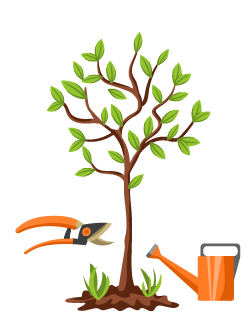 Tree care
Loosening the soil, watering: proper agricultural technology
Every apple tree requires regular tilling around the trunk, but this must be done with caution. The variety's root system is shallow, so it's important not to damage it. At the same time, remove all weeds, shoots from other plants, and root suckers to prevent them from robbing the tree of its nutrients.
The tree responds well to watering, but it shouldn't be done too frequently. If the weather is dry and hot, you can follow the ten-day rule, applying water once every ten days. However, this is only if there's no rain. If there is precipitation, count back 10 days and water the plants then. In normal weather, watering during flowering, fruit set, and fruit ripening is sufficient.
Pruning: simple crown shaping
The tree has a moderate tendency to become overgrown, so pruning shouldn't pose any particular problems. Typically, nursery seedlings already have a good shape; you'll just need to maintain it, preventing it from becoming overgrown. To do this, remove suckers (branchs growing vertically upward), as well as those growing inward toward the center of the crown. Inspection and sanitary pruning are also necessary every spring and fall, during which all old, dead, damaged, or diseased branches are removed.
Pollinator varieties
- Bellefleur the Chinese.
- Dobrynya.
- Pepinka
- For a long time.
- Alyonushka.
- Welsey.
- Altai crimson.
Reproduction
- Rooting cuttings.
- Grafting by buds or cuttings.
- Growing from seeds.
Diseases and pests
- Scab.
- Powdery mildew.
- Black crayfish.
- Fruit rot.
- Scale insect.
- Leaf roller.
- Codling moth.
Ripening and fruiting of Ermakovsky mountain
The beginning of fruiting
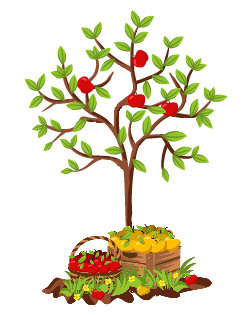 The beginning of fruiting
These summer apples are considered early ripening, as they begin bearing fruit quite early. Flowers may appear as early as the second or third year, but it's best to pluck them completely. The first 10-15 kilograms of fragrant apples are best harvested in the fourth or fifth year, when the apple tree is just beginning to gain strength.
Flowering time
The Ermakovskoe apple tree blooms in early to mid-May, but if the spring is cold and rainy, the blooming period may shift to the end of the month. The blooming period is quite long, typical of a Siberian apple tree, approximately 8-12 days. Therefore, finding pollinators for this variety will be easy. The flowers are numerous and abundant, gathered in small clusters, mostly white, but can also have pinkish hues. They have delicate petals and a powerful, vibrant fragrance that is unmistakable.
Fruiting and growth
Trees grow quite quickly, especially in the early stages before they begin to bear fruit. They reach their full height within 10-12 years and remain so until old age. They gain approximately 15-20 centimeters per year. They begin to bear fruit fully only after 6-8 years, when an average harvest of 60-70 kilograms of apples can be achieved. The active lifespan of an apple tree is approximately 35-50 years, but in commercial orchards, they are pruned after 25 years. Fruiting is initially annual, but becomes intermittent as the tree ages.
Apples are considered summer apples because they are fully ripe by the end of August and ready for picking. They transport well due to their thick skin, but their shelf life leaves much to be desired. Even under favorable conditions, they can only last for 25-30 days, after which they lose flavor, become loose, soft, and begin to rot or taste bitter. Therefore, by that time, they should already be completely processed.
Top dressing
- Superphosphate.
- Mineral complexes.
- Peat.
- Compost.
- Manure.
- Humus.
What to do if it doesn't bloom or bear fruit
- Check for pests and diseases.
- Transplant to a drier and sunnier area.
- Limit or increase watering.
- Apply fertilizer.
Why do apples fall?
- Overripe.
- Natural factors.
- Pests.
- Diseases.
Leave your feedback on the winter-hardy Ermakovskoye Gornoye variety to share your experience and knowledge with other gardeners.