Apple tree Nastenka: characteristics of the variety and care
| Color | Reds |
|---|---|
| Ripening season | Winter |
| Size of apples | Large |
| Taste | Sweet and sour |
| Crown type | Tall tree |
| Shelf life | High shelf life |
| Application | Universal variety |
| Winter hardiness | High winter hardiness |
| Fruiting age | From 5 years old |
 History of origin and regions of growth
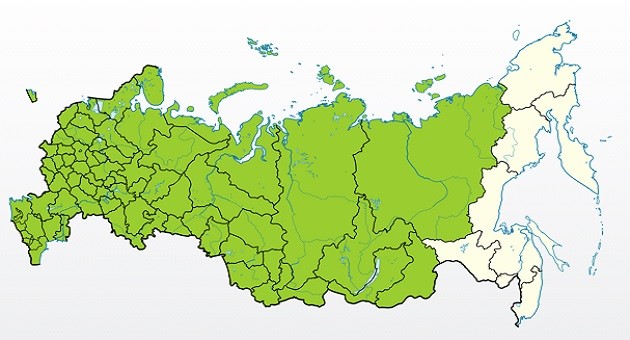
Growing regions
- European part of Russia.
- Moscow and Moscow region.
- Ural.
- North Caucasus.
- Siberia.
- Northern regions.
- Leningrad region.
- Crimea.
- Southern regions.
Origin
This variety is one of the recent developments of renowned Russian breeder Leonid Andrianovich Kotov. Nastenka was obtained from a hybrid seedling of the purple anise, pollinated with a complex mixture of pollen from the Raduga and Samotsveta varieties. The work was conducted at the Sverdlovsk Horticultural Experimental Station in Yekaterinburg, after which the new apple tree was immediately sent to nearby farms for variety testing.
Nastenka was officially accepted for variety testing in 1992. It showed excellent results, but its testing is still considered incomplete. However, it is recommended for cultivation in the Lower Volga and Ural regions, Siberia, and even the Far East. Even in more southern climates, the tree thrives, growing vigorously and producing abundant fruit.
Content
Description of the Nastenka variety
 Apple trees are being hailed as a newcomer, a boon for all residents of the harsh Ural Mountains, Siberia, and even the Far East. They boast exceptional winter hardiness, but are gradually adapting to more southern regions. It is believed that these trees will soon be cultivated throughout our country and far beyond. They have a moderately early maturity and produce very good yields of winter-ripening fruit.
The apples are large, have high consumer and commercial quality, are beautiful and delicious. Furthermore, the fruit can be stored for a long time not only in special refrigerators but also in a regular cellar. Even though apple trees periodically take breaks from bearing fruit, rest, and are easily infected with scab, they are recommended for intensive commercial orchards and small homesteads.
Apples: What do they look like?
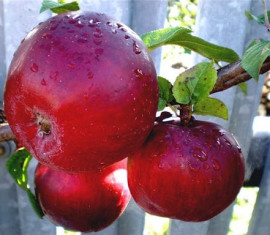
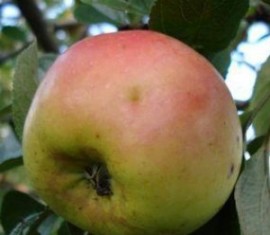
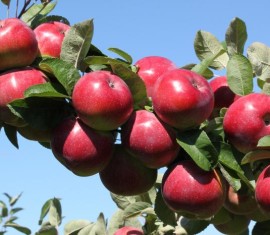
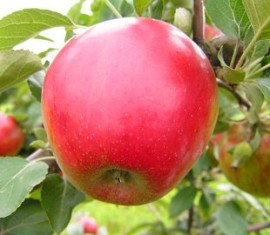
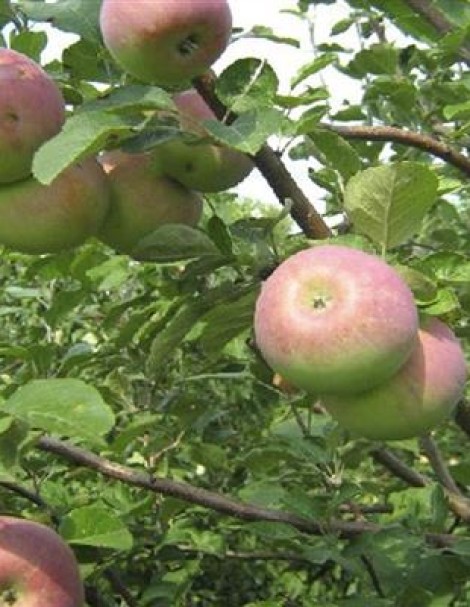
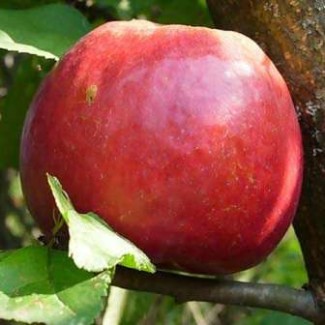
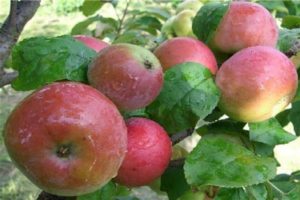 The fruits are medium-sized or larger than average. They grow to 140-190 grams, but can sometimes reach as much as 190-220 grams. They are predominantly uniform, flat-round or simply rounded in shape, and can be elongated toward the calyx, round-conical, or turnip-shaped. The fruits are symmetrical, smooth, with virtually no ribbing and no lateral seam.
The skin is dense and highly elastic. It is dry, smooth, and shiny, and may be covered with a dense, waxy, silvery coating. The base color is green, becoming yellowish as it ripens, sometimes golden and rich, almost translucent. The blush is dense, brick-red or red-orange, vaguely mottled, and may be slightly striped, covering 75-90% of the surface. Subcutaneous punctures are numerous; they are light and large, making them easily visible. Experts recommend evaluating the composition of apples based on the following parameters:
- Sugar (fructose) – 10.5-11.9%.
- Ascorbic acid (vitamin C) – 18.8 grams.
- Pectins (fiber) – 14.6%.
- P-active substances – 298 milligrams.
- Titratable acids – 1.34%.
The flesh is dense, fine-grained, and quite juicy, but only after the apples have been sitting for a while. It has a distinct greenish hue and a bright, distinctive, slightly spicy aroma. The flavor is mild, sweet and sour, considered table-quality, harmonious, and balanced, but lacking in richness. Professionals have given it a score of only 3.6 on a 5-point scale.
Apple tree Nastenka: characteristics
Crown and root system
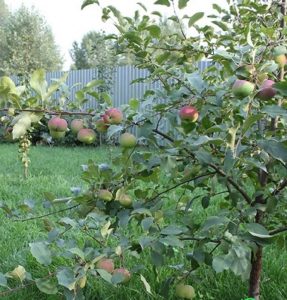 The trees are considered tall, as they easily grow to 6-7 meters in height without additional formative pruning.The crown is inversely pyramidal or oval in shape, sparse. The branches are straight, medium-thick, and long, covered with brown or brown-green bark with light pubescence. With age, the bark splits, cracks, and may begin to crumble. Fruiting occurs on both complex and simple ring-shaped branches.
The leaves are medium-sized, oval-elongated, ovate, and slightly rounded. They are leathery and dense, emerald green or dark green, matte, and short-pointed, with a rough, shagreen-like surface. The margins are serrate-crenate, sometimes slightly wavy, and the stipules are saber-shaped. The root system is robust, deeply rooted, branched, and taproot, penetrating deep into the soil, approximately twice the circumference of the crown.
Productivity and pollination
Nastenka's early fruiting and yield are considered high, but in reality, they are only average. This is further exacerbated by the fact that the apple tree regularly, not every other year, but quite frequently, takes rest breaks.
From one adult tree, thrifty owners usually get approximately 110-140 kilograms of fruit per year.
The tree cannot self-pollinate; it requires other apple trees for cross-pollination. Moreover, suitable apple trees should be planted within 45-60 meters of each other, otherwise, the effectiveness will be reduced. During bud break, it's a good idea to spray the trees with sugar syrup and bring a mobile apiary to the garden.
Winter hardiness and disease resistance
The variety's resistance to low temperatures is very good. It easily tolerates temperatures as low as -37-42°C. However, proper winter protection and preparation are essential.
During years of severe epiphytotics, when humidity is off the charts, there's a risk of widespread scab infestation. This is considered Nastenka's main drawback. Other bacterial and fungal infections can also wreak havoc on a gardener's life, so preventative spraying with fungicides, as well as insecticides, should be carried out regularly and promptly.
Rootstocks and subspecies
Nastenka itself hasn't been fully studied yet, and its properties and qualities are still being determined through variety testing, so it's too early to talk about subspecies. However, the variety can be grown on a wide variety of rootstocks; it thrives on almost any material, including pear and rowan. Vegetative rootstocks produce the tallest trees, but they are also winter-hardy; dwarf and semi-dwarf varieties can produce compact varieties or even create creeping trees.
Peculiarities of growing Nastenka
 Landing
 Landing
Basic conditions
- Apple trees prefer sunny, airy locations, but free from drafts. In the shade or exposed to strong winds, they can grow weak and unhealthy, often failing to bloom or bear fruit.
- Nastenka needs fertile and well-oxygenated soil. Suitable soils include black soil mixed with river sand, fertilized loam or sandy loam, turf, and well-drained soil.
- The groundwater level should not rise above 2-2.3 meters, otherwise the rhizome will definitely rot.
- The holes must be prepared in advance, otherwise the tree may not take root. Ideally, dig a hole 70-80 centimeters deep and 1-1.2 meters in diameter 6-9 months before planting. Add fertilizer and drainage to the bottom, fill with water, and leave to mature. However, if neither is available, 4-6 weeks will suffice.
- Leave at least 5-5.5 meters between trees in a row, and up to 6-7 meters between rows is acceptable for tall, standard rootstocks. For dwarf varieties, this distance can be reduced to 3-4 meters, but when cultivating creeping trees, keep in mind that the crown will be on the ground.
- Immediately support stakes or planks are dug into the hole; they will serve as additional support. support, and if placed on the north side, they also provide protection from the cold wind.
- Root collar always leave it above the soil horizon, otherwise the tree will put out roots higher and lose all the original properties of the rootstock.
- Place the seedling on a mound of soil or drainage media, spread the roots, cover with soil, and compact it thoroughly by hand. Create a mound of soil 8-12 centimeters high around the perimeter, and pour 45-60 liters of water inside.
Before planting or caring for your trees, you need to choose the right seedlings to ensure they thrive and begin producing fruit quickly. It's best to choose reputable farms whose trees are adapted and zoned. This means that for harsher and warmer regions, it's best to choose appropriately grown plants on the appropriate rootstock. Also, pay attention to the root system; it should be light-colored, free of spots or growths, and appear healthy..
Landing dates
Nastenka can be planted either in the spring, after the soil has warmed completely, or in the fall, after the leaves have fallen. It adapts well to any conditions, so choose a warm, dry day in late March, early April, or in September or October.
Tree care
 Tree care
Protection from frost and pests
Trees tolerate cold quite well, but proper preparation and shelter for winter should still be considered. Trunks are wrapped in burlap, the root zone is covered with straw or spruce branches, and, if necessary, the trees are covered with a tent-like covering. Creeping varieties can also be covered with straw or completely covered with soil, which is carefully removed in the spring.
The trunks should be protected from insects whiten Twice a year with lime, diluted thickly with water. To repel rodents, grease, fuel oil, old drying oil, or even rancid sunflower oil are suitable for lubricating the trunks.
Loosening the soil, watering: proper agricultural technology
The soil around the tree trunks should be dug regularly to prevent it from compacting into a solid lump. However, to simplify the task, many people begin by 8-10 years of age by mulching the area around the tree trunks with sod or sowing herbs such as mint, marjoram, or dill. This will ensure natural aeration of the soil.
Watering Trees, especially when young, will need frequent watering. Young seedlings require up to 4-6 waterings per month if the weather is hot and dry. For mature trees, this amount can be halved, but it's not advisable to completely abandon watering. Along with water, apply fertilizer and mineral supplements superficially in early spring, and manure and other organic matter deeply (by digging) in late fall.
Pruning: simple crown shaping
Nastenka is most often trained in a sparsely layered form. This should be started as early as the first year, by shortening the central conductor by a third of its length and making the lateral skeletal branches even lower, one after another, and placing them at different levels, far apart.
Regular sanitary and rejuvenating pruning is performed. All dry, diseased branches growing inward or jutting vertically should be removed. To restore fruiting in old age, two to three large branches should be pruned, allowing young ones to develop.
Pollinator varieties
- Pervouralskoe.
- Orlik.
- Persian.
- Korobovka.
- Antonovka.
- Welsey.
- Snowdrop.
- Amber.
Reproduction
- Grafting.
- Rooting.
- Layers.
- Growing from seeds.
Diseases and pests
- Powdery mildew.
- Scab.
- Green aphid.
- Fruit rot.
- Bacterial burn.
- Scale insect.
- Codling moth.
- Leaf roller.
- Hawthorn.
Ripening and fruiting of Nastenka
The beginning of fruiting
 The beginning of fruiting
Although the tree is considered an early-bearing one, it can only produce its first harvest 5-6 years after being planted in open ground. Nastenka is quite capricious and can hold buds for a long time, building up its rhizomes and foliage, for which light is essential. The more sun, the sooner you'll harvest your first 3-5 kilograms of beautiful, long-lasting apples.
Flowering time
This indicator is ambiguous, as it directly depends on the growing region, the general climate, and even the weather conditions of a particular year. However, this is a late-blooming apple tree, so it will most likely bloom in late May or even June. The process lasts 10-14 days. The flowers are beautiful, fragrant, large, with delicate, seemingly weightless pale pink or snow-white petals, gathered in inflorescences of 5-7.
Fruiting and growth
Nastenka grows quite quickly. It can reach 15-25 centimeters in height per year before reaching its peak. Yields gradually increase. Full fruiting can be expected around the 10th to 12th year, when the apples will be abundant. It's important to remember that it does take rest breaks, but not necessarily every year.
The fruits ripen in late September or early October, but in cold summers and inclement weather they can be delayed until mid- or even late October. Readiness for harvest is usually recognized by the thick waxy coating and the taste. The fruits store well, until the following spring, in a special refrigerator or cellar, making them considered a versatile fruit.
Top dressing
- Mineral complexes.
- Peat.
- Superphosphate.
- Compost.
- Manure.
- Chicken manure.
- Humus.
- Ammonium nitrate.
- Humus.
What to do if it doesn't bloom or bear fruit
- Inspect for diseases or pests.
- Organize timely regular watering.
- Fertilize.
- Transplant to a more suitable location.
Why do apples fall?
- Natural weather disturbances.
- Pest damage.
- Various diseases.
Share your own experience with the Nastenka apple variety so everyone can get to know it and get maximum yields with minimal effort.