Orlik apple tree: characteristics of the variety and care
| Color | Reds |
|---|---|
| Ripening season | Winter |
| Size of apples | Average |
| Taste | Sweet and sour |
| Crown type | Average tree height |
| Shelf life | High shelf life |
| Application | Universal variety |
| Winter hardiness | High winter hardiness |
| Fruiting age | Up to 5 years |
 History of origin and regions of growth
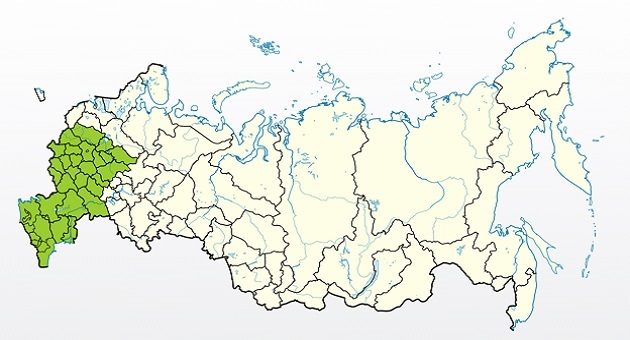
Growing regions
- Middle zone.
- North Caucasus.
- Crimea.
- Some northern regions.
Origin
The first hybridization of the Makintosh and Bessemyanka Michurinskaya varieties was conducted at the experimental station of the All-Russian Research Institute of Fruit Crop Breeding in the Oryol region back in 1958. The goal was to develop winter-ripening apple trees with fruit possessing a good dessert flavor and a powerful aroma. Ultimately, in 1968, the hybrid, which its authors (E. N. Sedov and T. A. Trofimova) named Orlik, was classified as an elite variety.
By 1970, the variety was accepted for official testing, for which it was distributed to various nearby farms. Only 16 years later was it included in the State Register of Breeding Achievements and zoned for the Central, Central Black Earth, and Northwestern regions.
Content
Description of the Orlik apple variety
 Winter apple trees, whose fruit is usually harvested just before frost, typically have a number of positive qualities that attract gardeners. The Orlik tree is small, compact, easy to care for, requires moisture, light, and soil quality, is extremely winter-hardy, and is also self-fertile.
The apples are delicious and sweet, easily transported even over long distances, and can be stored in a standard cellar. This variety is recommended for growing both in small courtyards near the home and in large, industrial-scale, intensive orchards.
Apples: What they look like
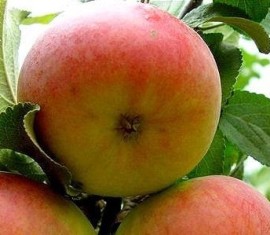
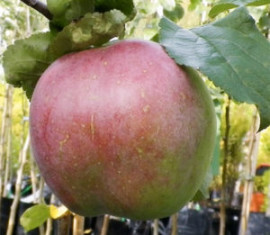
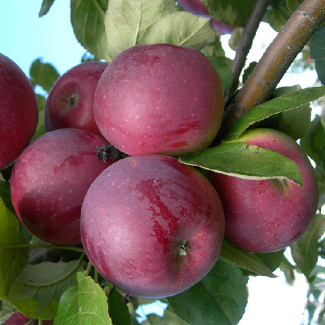
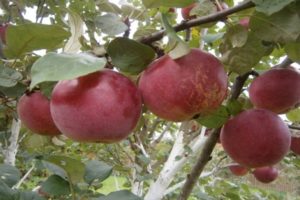 The fruits are medium-sized, although they reach a maximum weight of 130-180 grams. They are irregular and symmetrical; a single apple tree may contain some small and others larger fruits. The shape is slightly flattened along the central axis, and can be slightly conical, round, and smooth, with moderate ribbing.
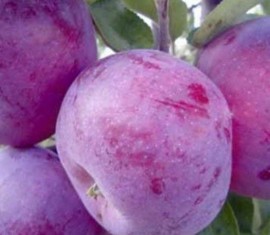
The skin is smooth, glossy, and shiny, often covered with a thick, waxy coating when ripe, which is easily rubbed off. The base color is green or light green, gradually becoming more lemon-colored as it ripens, and then whitish-yellow. The blush occupies more than 65-85% of the surface, and is vaguely striped, mottled, and bright red or carmine-red. In some cases (in sunlight), it completely covers the surface, creating a nearly uniform color. Subcutaneous dots are numerous, small, gray or grayish-green. The chemical composition is most easily assessed by the following factors:
- P-active substances (catechins) – 167 milligrams.
- Ascorbic acid (vitamin C) – 9.2 milligrams.
- Total sugars (fructose) – 11.4%.
- Pectins (fiber) – 12.5%.
- Titratable acids – 0.36%.
The flesh is dense, crisp, slightly prickly, yet tender, creamy or slightly greenish in color, fine-grained, very juicy, and aromatic. It has a characteristic sweet and sour apple flavor, considered balanced, harmonious, and dessert-like. According to professional tasters, the fruit scores 4.4 and 4.6 points out of a possible 5 for taste and appearance, respectively.
Orlik apple tree: characteristics
Crown and root system
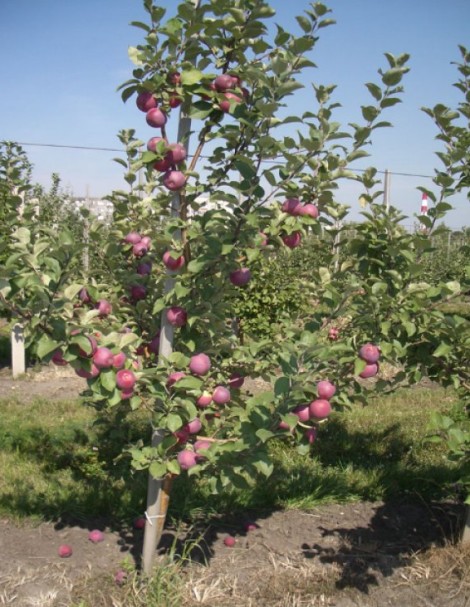
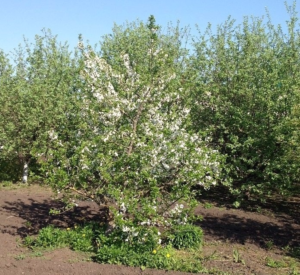 The variety is considered medium-sized because grows without formative pruning to about 4.5-5 meters, although it would be more accurate to classify the tree as a natural semi-dwarf. The crown is oval from an early age, sometimes even pyramidal, and even in maturity it remains compact, rounded, or broadly oval. Shoots extend from the main trunk primarily at a nearly right angle, directed upward, and covered with yellowish-green or yellowish-brown bark, smooth, and pubescent. Fruiting is concentrated on compound and simple rings.
The leaves of the Orlik are quite large, rounded, and slightly elongated, heart-shaped on the petiole side, short-pointed, and curved downwards. They are leathery, dense, coarsely nerved, matte, and gray-green in color due to being completely covered with dense pubescence. The edges are wavy, coarsely serrated, and serrated. The root system is generally deep, may or may not have a central taproot, branched, and quite robust.
Productivity and pollination
Orlik is considered a high-yielding and early-bearing variety, for which it is loved and respected by gardeners in our country and around the world.
One mature tree can produce approximately 95-120 kilograms of aromatic winter apples per season, which can then be stored until spring..
This variety is self-fertile, meaning that regardless of weather, climate, the presence of other apple trees nearby, and many other factors, the tree will produce ovaries and develop into apples in due time. The main thing is bees and wind—that's enough. However, some gardeners say it's better to plant different varieties in close proximity, as cross-pollination will maximize yield.
Winter hardiness and disease resistance
The variety's resistance to low temperatures is considered its main advantage. Orlik can easily withstand temperatures down to -27-32°C and even lower. However, it doesn't particularly like excess moisture or sudden fluctuations in temperature, although it can easily survive these. However, proper cold preparation is essential to prevent winter damage to the trees and a reduced summer yield.
The variety exhibits a moderate degree of resistance to various types of apple tree infections. ScabTrees can become infected with fungi, powdery mildew, and cytosporosis, and even suffer severe damage during years of severe epiphytotics. Therefore, it is necessary to promptly and regularly treat trees with fungicides, as well as insecticides, to protect them from insect pests.
Rootstocks and subspecies
There are currently no distinct subspecies of Orlik, and it's unlikely that any will be developed. However, it is grown on a wide variety of rootstocks, which somewhat alters its basic characteristics. For example, on semi-dwarf or dwarf rootstocks, the trees grow even more compact, barely reaching 2.5-3 meters in height. The fruits themselves retain all the qualities of the parent variety.
Features of growing Orlik
 Landing
 Landing
Basic conditions
- Orlik should not be planted in lowlands, near natural bodies of water (streams, lakes, ponds, rivers), shallow wells, or in floodplain meadows, as it can reach the water with its roots and rot. High groundwater levels (above 2.5-3 meters) can also have a detrimental effect on the trees.
- Ideally, choose open, well-ventilated sites with full sun for most of the day. Standards are not particularly sensitive to shade and will produce fruit even there, although the fruit may be smaller and fewer in number, albeit slightly.
- The variety thrives in any soil, from black soil (which is best initially thinned with river sand for all apple trees) to sand and loam. Even on rocky mountain slopes, Orlik thrives and produces good yields.
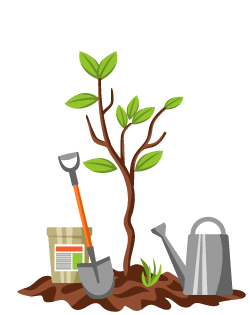
- The holes can be prepared in advance, the season before, or they can be dug immediately 1-4 weeks before planting. A hole 70-80 centimeters deep and the same diameter is sufficient. The bottom is filled with soil from the top, fertile layer, mixed with peat, humus, or any other organic fertilizer. The entire hole is covered with a 10-15 centimeter layer of drainage material (rocks, gravel, broken brick) and filled with 45-60 liters of water.
- Stakelines, which can be made of metal, wood, or plastic, are driven into the holes. The seedlings are then tied to these stakes. They should not be removed from the soil until 2-3 years after they begin bearing fruit.
- There is no need to leave much space between the trees; 4x5 meters will be quite enough for the compact crown of the Orlik.
- The tree's root collar should be left 5-9 centimeters above the surface, otherwise the tree may root higher. This will result in the rootstock losing its original qualities. If this isn't important, you can ignore this advice.
- Place the seedling upright in the hole, spread the roots, cover with soil, and compact it by hand. Create a small mound of soil around the tree, add 50-65 liters of water, and mulch the surface with any available material (humus, sawdust, chopped grass, compost).
Landing dates
Trees can be planted in early spring, around late March or early April, before the buds begin to open and the frosts have finally subsided. However, the most experienced gardeners recommend waiting until autumn (September-October), when the leaves have completely fallen. This way, the survival rate of seedlings is statistically much higher, and the trees themselves grow stronger after autumn planting and begin to produce a full harvest earlier.
Protection from frost and rodents
Trees are quite resilient, but they still need to be covered for the winter. In harsh regions, this can be achieved by covering the root area with mats of straw, grass, or rags, while in warmer climates, the trunks are wrapped in burlap or roofing felt. Dwarf and semi-dwarf varieties can easily be covered using the tent method.
To prevent insects from settling in the bark or roots, and to ensure they can successfully feast on the leaves and fruits in the spring, trees are whitewashed with lime for approximately 1-1.2 meters. To repel hamsters, hares and mice will be helped by lubricating the trunks with melted lard or solid oil, drying oil.
Tree care
 Tree care
Loosening the soil, watering: proper agricultural technology
The Orlik tree doesn't require constant care around the trunk; once a year of digging is sufficient when young. In fact, as trees mature, they can even be covered with sod to fully optimize care. However, initially, it's a good idea to remove weeds from under the trunk, loosen the soil, and cultivate it 4-6 times during the summer.
Trees can be watered early in their growth, but they can also take care of themselves. Therefore, in the first to fourth years, it's recommended to water 3-4 times per season if the weather is truly dry and very hot, but later on, you don't need to worry about it at all. It's a good idea to water when applying fertilizer and other supplements to facilitate the absorption of nutrients by the trunks.
Pruning: simple crown shaping
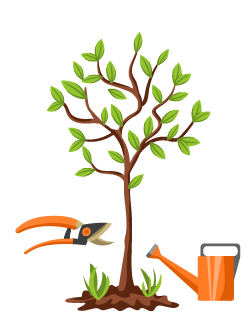
Orlik isn't prone to crown thickening, so formative pruning is performed in the second year, and then the shape is maintained and adjusted accordingly. First, a portion of the central trunk is pruned, and only 2-4 skeletal shoots are made, which should be 7-9 centimeters shorter. Subsequently, excess branches, including those protruding inward or vertically upward (suckers), are removed.
Regular inspection and sanitary pruning are essential. Dry, diseased, or damaged shoots, which could unnecessarily draw sap from the tree, must be promptly removed. These procedures are performed in the fall, when the sap in the trunks has stopped flowing, and the cuts are sealed with garden pitch.
Reproduction
- Rooting cuttings.
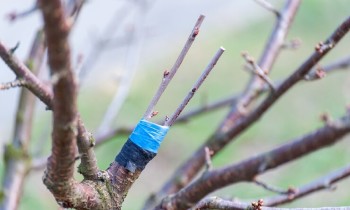
- Grafting by buds or cuttings.
- Growing from seeds.
- Clones (layering).
Diseases and pests
- Powdery mildew.
- Scab.
- Cytosporosis.
- Green aphid.
- Hawthorn.
- Codling moth.
Ripening and fruiting of Orlik
The beginning of fruiting
 The beginning of fruiting
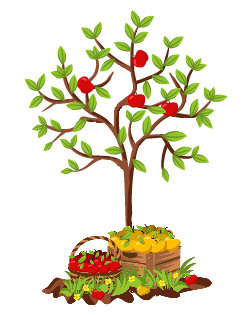
Apple trees are considered early-bearing because they begin producing substantial harvests quite early. As early as the third to fifth year, a tree can produce 5-10 kilograms of aromatic, juicy, and sweet winter apples. However, a full harvest will still take some time.
Flowering time
Orlik's buds typically open in late May or even early June. This largely depends on the weather and climate in the region. The flowers are large, with fleshy petals and fragrant, densely covering the branches, making the tree very attractive. A distinctive feature of this variety's blooming is the reddish hue of the buds, which open to a soft pink. This process lasts approximately 10-14 days.
Fruiting and growth
The tree grows quite quickly, gaining approximately 35-50 centimeters during the growing season. It's not prone to becoming overcrowded, although crown-correcting pruning is required, but this shouldn't be done more than once every 2-3 years. Orlik increases its yield very quickly, yielding 45-50 kilograms of sweet, aromatic fruit in just 5-7 years. The harvest reaches its full potential around 8-10 years after fruiting.
Fruit is typically harvested in the fall, starting around mid-September in warmer regions and closer to October in colder ones. They hold well on the branches, but if they're too ripe, they can fall off. Such fruit doesn't last long and will have to be processed immediately. However, those carefully picked from the branches can be stored until spring, and in the right conditions (in a cellar), even until the next harvest.
Top dressing
- Mineral complexes.
- Wood ash.
- Ammonium nitrate.
- Manure.
What to do if it doesn't bloom or bear fruit
- Provide moisture.
- Check for pests and diseases.
- Transplant to a sunnier location.
- Fertilize.
Why do apples fall?
- Natural factors.
- Overripe.
- Lack of magnesium, potassium, sulfur, nitrogen.
- Pests.
- Diseases.
Please leave your feedback on the Orlik variety so that other gardeners can learn about your experiences growing such trees.