
Anise Purple Apple Tree: Variety and Care Features
| Color | Reds |
|---|---|
| Ripening season | Autumn |
| Size of apples | Average |
| Taste | Sweet and sour |
| Crown type | Tall tree |
| Shelf life | High shelf life |
| Application | Universal variety |
| Winter hardiness | High winter hardiness |
| Fruiting age | From 5 years old |
 History of origin and regions of growth
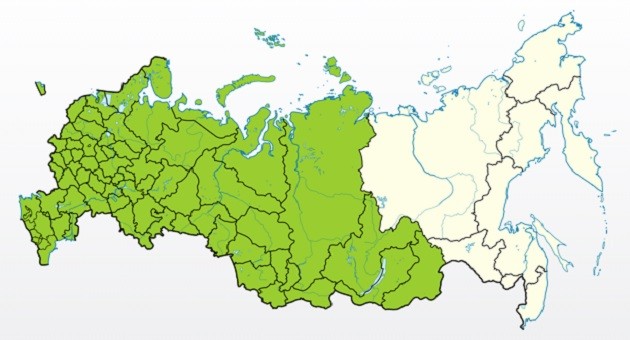
Growing regions
- Middle zone.
- Some northern regions.
- Volga region.
- Southern regions.
- Ural.
- Western and Eastern Siberia.
Origin
Anise apples are considered an ancient Russian apple variety, which forms a single large family of clones and subspecies. Scientists don't know exactly how this variety originated or was first discovered. However, in the nineteenth century, in Russia, especially in the Volga region, these apples accounted for approximately 60% of the region's total fruit diversity.
The renowned Russian-Soviet researcher V.K. Levoshin identified over 50 varieties in the Saratov region alone. The most popular and widespread are the striped, pink, and purple (scarlet) anise, which will be discussed in our article.
Content
Description of the Anise Purple apple variety
 This variety has so many positive traits that it would be difficult to list them all. Its main advantage is its incredible adaptability to growing conditions, making it popular in many regions of our country. The variety produces very high yields, producing fairly large fruits, and the tree itself has a long lifespan. The apples have a pleasant flavor, a powerful and vibrant aroma, and can be stored, eaten fresh, or used in cooking. While this variety has been somewhat supplanted by newer varieties, it remains popular in both small private farms and commercial intensive orchards.
Apples: What they look like
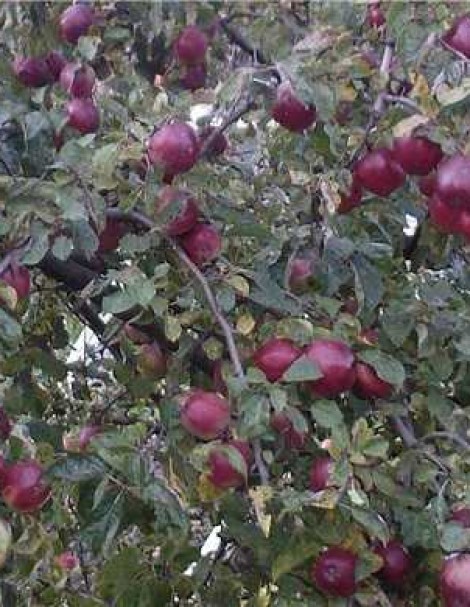
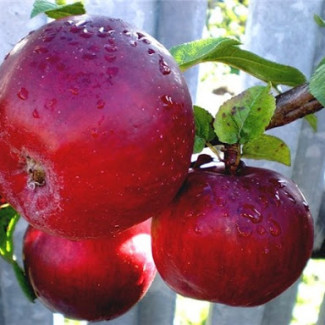
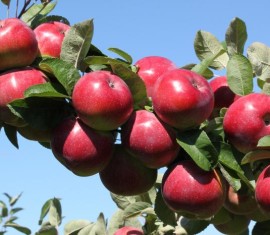
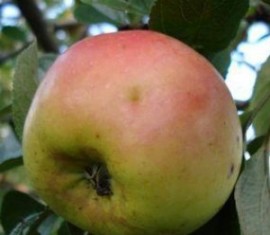
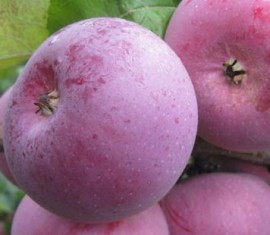
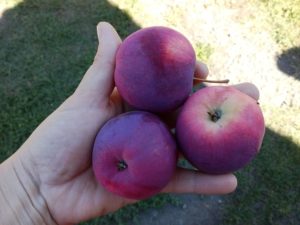 Purple anise fruits are medium-sized and, with good care and fertile soil, can easily grow to 90-120 grams, and sometimes even larger. They are round, uniform, slightly flattened, turnip-shaped, and have subtle ribbing.
The skin of unripe apples is green, becoming light green or slightly yellowish over time. There is a blush covering more than 75-80% of the surface, a bright purple hue that sometimes glistens with a beetroot-purple tint. The surface has a waxy, bluish-gray coating that is easily wiped off. The chemical composition of the fruit can be characterized by the following data (9 per 100 grams):
- P-active substances (catechins) – 116 milligrams.
- Ascorbic acid (vitamin C) – 6.1 milligrams.
- Total sugars (fructose) – 9.6%.
- Pectins (fiber) – 7.1%.
- Titratable acids – 0.65%.
The apple flesh is slightly green when unripe, turning white or slightly yellow with age. In some cases, the stem may have barely noticeable pinkish-purple veins. It is very juicy, dense, fine-grained, crisp, and prickly, with a pleasant sweet-and-sour flavor and a powerful, distinctive aroma. The fruit's tasting score is 4.5 out of 5.
Apple tree Anise purple: characteristics
Crown and root system
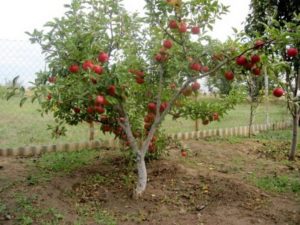 Purple anise is a vigorous tree and can easily reach 5-7 meters if left unchecked. However, most gardeners prune the tree at a height of 3-4 meters to make the job easier. The crown is oval or oval-pyramidal when young, but with age it becomes broadly oval, spherical, and even spreading. It is naturally quite sparse, so pruning shouldn't pose any significant problems. The tree typically reaches a diameter of approximately 4-5 meters; planting other trees closer is not recommended due to the potential for root-crown conflict.
The branches of the purple anise are slightly curved, but always upright. They can extend from the trunk at an acute angle, which can lead to breakage during heavy harvests. The leaves are medium-sized, elongated rather than rounded, matte, wrinkled, and slightly curved outward. The leaf edges are serrated, covered with fine serrations, with a short, heavily pubescent petiole. The root system is deep and branched, usually with a strong central taproot.
Productivity and pollination
Purple anise has an average yield, slightly inferior to some of its peers, which easily produce up to three hundred kilograms of fruit per year. It begins bearing fruit slowly, but then rapidly increases its yield, reaching its peak only after 15-20 years. The tree's active lifespan exceeds 100 years, which is another advantage of this variety.
One mature tree can produce approximately 120-150 kilograms of fragrant, beautiful apples per season, which are suitable for any purpose.
The variety is self-fertile, so no other apple trees are needed to produce fruit. However, cross-pollination with other apple trees can significantly increase yields. Therefore, experienced gardeners still interplant the trees with other trees. It's a good idea to plant an orchard directly next to an apiary or use portable apiaries during the flowering period.
Winter hardiness and disease resistance
This variety is quite winter-hardy, making it popular in a wide variety of regions across our vast country. The trees easily withstand temperatures as low as -25-27°C for extended periods. Moreover, even temperatures as low as -40°C are completely unaffected by them once they're mature, provided they're properly cared for and properly prepared for winter.
None of the Anise subspecies boasts exceptional disease resistance. Older varieties are highly susceptible to fungal infections, but only if poorly cared for. If the tree is already infected, both the foliage and the fruit will suffer. With timely pruning and spraying, the risk of infection can be reduced by 60-80%, which is a significant amount.
Rootstocks and subspecies
Essentially, purple anise is itself a subspecies of the family, so there are no subspecies. The cultivar is grown on vegetative, semi-dwarf, and dwarf rootstocks, which impart certain characteristics. For example, on second- and third-grade rootstocks, the trees grow much shorter, but winter hardiness and yield also drop sharply.
Features of growing purple anise
 Landing
 Landing
Basic conditions
- All Anise subspecies cannot grow in the shade; they require plenty of air and space, as well as sunlight, which will leave a beautiful blush on the apples. Therefore, the location should be appropriate, but free from drafts. Otherwise, the plants may become diseased and even die early in the growth process.
- Anise dislikes swampy areas, low-lying areas where rain or meltwater accumulates, and proximity to open water. Its powerful root system will inevitably reach high groundwater levels, where it will rot until it destroys the entire tree.
- Choose soils that are neither acidic nor heavy, but rich in oxygen. Sandy loam or clay loam will be just right. If only black soil is available, you can enrich it with imported river sand.
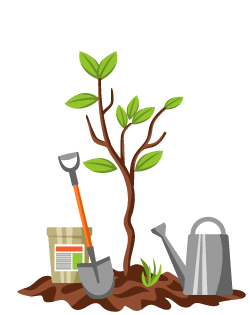
- Planting holes for purple anise are dug in advance, at least 3-4 weeks before gardening. Make the hole 80-90 centimeters deep and 1-1.2 meters in diameter. Fill the bottom with a topsoil mixed with humus, manure, superphosphate, and other fertilizers. Then add 5-10 centimeters of drainage material (gravel, vermiculite, or broken brick), add 40-50 liters of water, and leave uncovered.
- Before planting, carefully inspect the root system. If necessary, trim off any dried or damaged shoots with pruning shears. You can soak the roots in warm water for 4-6 hours to ensure they absorb moisture and root better.
- Root collar A purple anise seedling should always remain at least 7-12 centimeters above the soil surface. Otherwise, the tree may root above the soil surface, which will result in the loss of all the rootstock's properties.
- I immediately dig or drive stakes into each hole to secure the plants on the north side. They can be wooden or metal, and it's not recommended to remove them until after the third or fourth fruiting season.
- The trees are placed vertically in the hole, directly on the drainage surface, covered with soil, compacting it firmly by hand. A rim of soil is made around the perimeter to retain moisture, 40-50 liters of water are added, and the surface is mulched with compost, chopped grass, and humus.
Remember that the distance between trees must be sufficient to prevent them from clashing with each other, either through crowns or roots. This subspecies of Anise requires approximately 4-5 meters between trees in a row and at least 4.5 meters between rows.
Landing dates
Purple anise seedlings can be planted in both spring and fall. They root equally well if done correctly. In the first case, this should be done before the buds begin to open but the ground has completely thawed, which is around mid-April. In the second case, you need to wait until the leaves have completely fallen. Trees in eco-friendly pots, bags, or packages, which do not require additional disposal, can be transplanted into the open ground at any time during the growing season.
Protection from frost and rodents
Despite its enviable resistance to low temperatures, it wouldn't hurt to conduct routine winter preparation for this variety. In the harshest conditions, you can pile soil onto the roots, cover the tree with straw or dry grass mats, or wrap the trunks with roofing felt or tar paper. Young trees can be covered using a tent-like method, which becomes practically impossible as they grow. In temperate climates, no special measures are required at all, let alone in southern regions.
However, protecting against fungal infections and other diseases will require considerable attention. Regularly removing fallen leaves, and especially rotting fruit, from the root zone, spraying the tree with fungicides, fertilizing it, and never overwatering are the responsibilities of every gardener who wants to preserve their "pets."
Tree care
 Tree care
Loosening the soil, watering: proper agricultural technology
The tree's trunk is typically culverted to a depth of 1-1.5 meters once or twice a year. However, once the tree is over 8-10 years old, this is not necessary. The same applies to removing weeds, shoots from other plants, or root suckers. A mature tree can easily overwhelm any plant growing underneath it.
Don't overdo it with watering, as anise doesn't like excess moisture. However, when the plant is young, a little watering during hot and dry weather won't hurt. Just don't use more than 30-40 liters at a time and allow at least 10 days between waterings. Fertilizer can be added at this time; it's easily absorbed along with the moisture.
Pruning: simple crown shaping
If desired, Purple Anise can be shaped to suit any crown type:
- Whorled-tiered.
- Cordon.
- Palmette.
- Cup-shaped.
- Bushy.
- Broom-shaped.
- Pyramidal.
- Spherical.
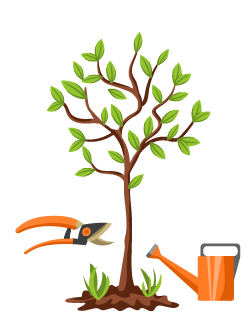
In the first year, you should immediately remove a third of the central trunk and shorten the skeletal branches accordingly, and then proceed as desired. Regularly clear the tree of dead, diseased, or damaged branches, and ensure that the entire crown receives even sunlight.
Pollinator varieties
- Borovinka.
- Bellefleur the Chinese.
- July Chernenko.
- Striped anise.
- Yandykovskoye.
Reproduction
- Clones (layering).
- Rooting cuttings.
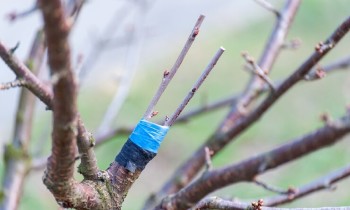
- Grafting by buds and cuttings.
Diseases and pests
- Scab.
- Moniliosis.
- Powdery mildew.
- Fruit bitterness.
- Fruit gil.
- Hawthorn.
- Leaf roller.
- Flower beetle.
- Codling moth.
Ripening and fruiting
The beginning of fruiting
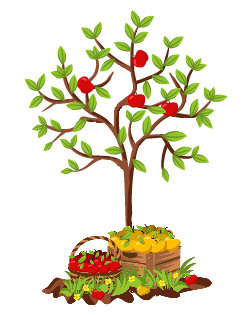 The beginning of fruiting
These trees don't start bearing fruit early, and you won't see any blossoms until about the fourth or fifth year, or maybe even later. The first harvests don't begin until the sixth or seventh year, but sometimes as late as the seventh or ninth year if growing conditions are unfavorable and the weather is poor. However, you can harvest approximately 50-60 kilograms of apples at once, which is a significant advantage.
Flowering time
Purple anise doesn't bloom until mid-May, but most often it blooms at the end of the month. It blooms for 10-14 days, so you can be sure to bring a mobile apiary for cross-pollination. The flowers are large, with fleshy, beautiful, and delicate petals of a pale pink hue. They are gathered in small inflorescences and exude a very strong, almost intoxicating, characteristic aroma.
Fruiting and growth
The tree grows relatively slowly, only able to produce approximately 15-25 centimeters per year. Before fruiting begins, it can grow 40-50 centimeters, but then the rate slows sharply. However, it reaches its maximum around the 10th to 12th year. By then, yields reach their peak. This depends largely on care, pruning, watering, and fertilizing, and gardeners have achieved yields of 150-180 kilograms of apples per tree.
Apples ripen by mid- to late September, sometimes delaying until October. This is influenced not only by the variety itself but also by the region's weather and climate.
The earlier the fruit ripens, the shorter its shelf life. October apples keep well until April, and sometimes even May, while those ripening in late August will barely survive until the end of February. They are suitable for long-distance transport and for processing into juices, preserves, and jams.
Top dressing
- Mineral complexes.
- Superphosphate.
- Compost.
- Manure.
- Ammonium nitrate.
- Humus.
What to do if it doesn't bloom or bear fruit
- Check for pests and diseases.
- Provide or stop watering.
- Transplant to a sunnier area.
Why do apples fall?
- Natural factors.
- Pests.
- Diseases.
Please leave your own reviews of the Purple Anise honeycomb so that both novice and experienced gardeners can learn something new.




Comments
I want to grow these apple trees near the Gulf of Finland, where the humidity is high and it rains frequently. Are there any special considerations for growing apple trees in these conditions?