
Anis Sverdlovsk apple tree: characteristics of the variety and care
| Color | Reds |
|---|---|
| Ripening season | Autumn |
| Size of apples | Average |
| Taste | Sweet and sour |
| Crown type | Average tree height |
| Application | Universal variety |
| Fruiting age | From 5 years old |
 History of origin and regions of growth
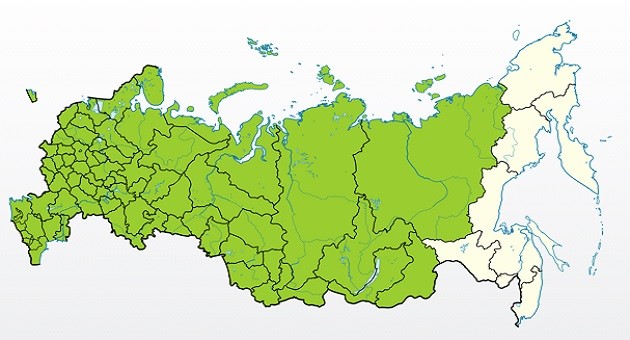
Growing regions
All regions except some areas.
Origin
Anise is considered a folk variety, but the Sverdlovsk variety was developed by Russian breeder Leonid Andrianovich Kotov around 1967-1978. The subvariety received its name due to the scientist's work at the nursery of the Sverdlovsk Experimental Horticultural Station, where it was first created. Its ancestors are considered to be the purple anise and Melba.
Content
Description of the Anis Sverdlovsk apple variety
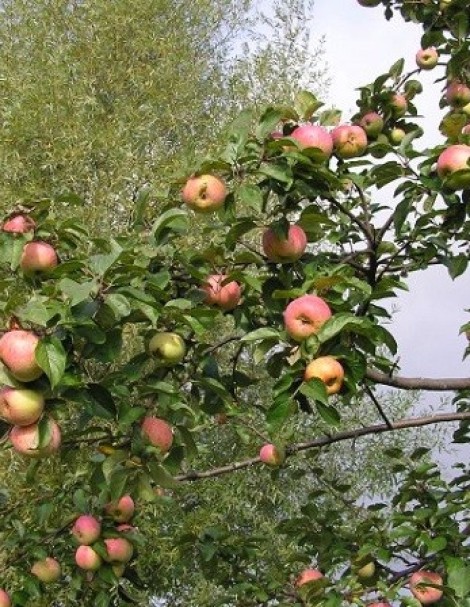
 These apples are not large, but due to their outstanding flavor, unique aroma, and low maintenance, they are widely grown commercially. The trees are winter-hardy, produce high yields, and the fruit is easy to transport and keeps well.
Apples: color, size, weight
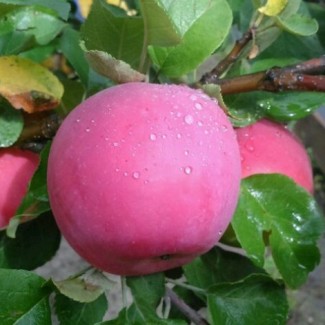
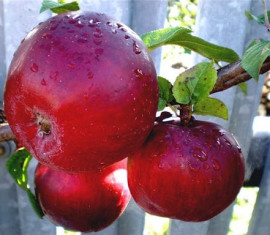
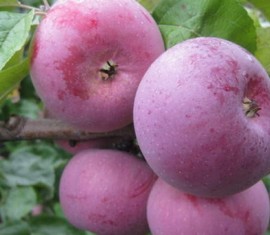
 Sverdlovsk Anise apples are typically medium to small in size (50-90 grams). They are round or oval in shape, often with pronounced ribbing. The skin is dense, shiny, and smooth, with a greenish-yellow or yellow hue. Ripe apples develop a red blush covering almost 90% of the apple's surface. They have a light waxy coating that doesn't affect the underlying colors but simply adds a sheen. They are characterized by the following chemical properties per 100 grams:
- P-active substances – from 234 to 410 milligrams.
- Ascorbic acid (vitamin C) – from 15 to 25 milligrams.
- Titratable acids – 0.83%.
- Total sugars (fructose) – 13.5%.
The fruit's flesh is finely grained, creamy or white, sometimes slightly yellowish, juicy, and medium-firm. The apples have a sweet and sour taste, are very tender, and crisp. They receive a tasting score of 4.5 out of 5.
Apple tree Anis Sverdlovsk: characteristics
Crown and root system
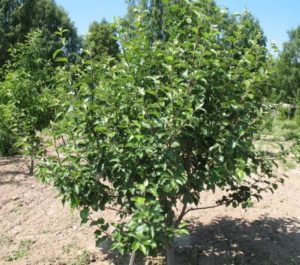 Sverdlovsk anise is considered a variety with a late autumn ripening period. The trees themselves are medium-sized, usually not exceeding 4-5 meters in height. However, with careful pruning, gardeners prefer to limit them to 2-2.5 meters. The crown is most often pyramidal or broadly oval. Branches extend from the trunk at an angle of up to 60 degrees.
The shoots grow immediately, strong, round in cross-section, with brown or dark-brown bark. Anise leaves are medium-sized, round, with a jagged, serrated edge. The rhizome is robust and highly branched; the presence of a central taproot depends on the rootstock used. Thanks to this rootstock, the apple tree is resistant to both cold and drought.
Productivity and pollination
This self-sterile variety will not produce a harvest unless there are suitable apple varieties nearby for cross-pollination. The optimal distance between them should be no more than 150-200 meters. The first fruits can be picked from the branches as early as two or three years after planting the seedling in open ground.
However, a more or less normal harvest (up to 15 kilograms) can only be obtained in the 4th or 5th year. The yield steadily increases each year.
By the 8th to 10th year, the peak of fruiting occurs, after which the apple tree will produce up to 80, and sometimes even 120 kilograms of aromatic fruits annually.
The average lifespan of the Sverdlovsk anise is approximately 30-40 years, after which fruiting gradually subsides. However, many gardeners disagree, as there are trees 70-100 years old that produce up to 50-90 kilograms of aromatic apples annually.
Winter hardiness and disease resistance
That is why the variety is in demand in almost all regions of our country, including Siberia and the Far East, which can easily tolerate temperatures down to -40-45°C. Moreover, this doesn't require any special effort. Even if it gets colder and the tree is damaged, it will recover very quickly. If you protect the trunk and root zone from frost in a timely manner, then you can safely withstand temperatures as low as -50°C.
This subspecies has no immunity to common apple diseases. It reacts sharply to scab Powdery mildew and fruit rot are common, so it's important to take all preventative measures promptly (spraying with fungicides, cleaning the root zone, applying fertilizer). Plants are heavily affected, and it's difficult to cure them later, so it's much easier to prevent the infection in the first place.
Subspecies and rootstocks
Sverdlovsk anise is mainly grown on vegetative rootstock. However, in Siberia, on Urals, as well as in Kazakhstan and the Far East, a creeping rootstock is common. Moreover, gardeners can create a variety of crowns with this rootstock: spindle-shaped flat rootstock, Minusinsk half-creeper rootstock, melon rootstock, and Krasnoyarsk double-armed rootstock.
Features of growing Sverdlovsk anise
 Landing
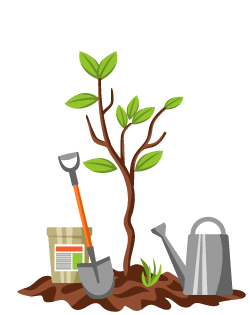 Landing
Key Features
- It's best to choose light, airy soils for planting, rich in nutrients but not overloaded with them. Anise doesn't particularly like black soil; loam or sandy loam is better. soil.
- In a sunny location, apples develop a characteristic red blush, which may become barely noticeable and pale in the shade. Apples grown in the shade develop a more sour flavor.
- It's best to prepare planting holes in advance. For spring planting, preparation should be done in the fall, and for fall planting, 3-4 weeks before gardening.
- The optimal size for the holes is 80 centimeters deep and 1 meter in diameter. Drainage material (broken brick, gravel, or nut shells) should be placed at the bottom, followed by some soil mixed with humus and manure. This is then filled with 20 liters of water.
- It's a good idea to pay attention to the condition of the seedling's root system. If it's even slightly dry, soak it in a bucket of water the day before planting.
- Immediately upon planting, dig in stakes for tying. Don't remove them until 4-5 years later.
- The root collar should be left on the surface, approximately 7-10 centimeters.
- You need to fill the rhizome with soil carefully, without compacting it too much, but only lightly tamp it down so as not to form a hard lump.
- It wouldn’t hurt to immediately water the seedling with 10-30 liters of water, depending on the weather and the initial moisture content of the soil.
- Leave at least 5-6 meters between trees of any other species and Anise trees; this is the space necessary for their normal growth.
All Anise subvarieties, including the Sverdlovsk variety, prefer spacious, sunny, wind-exposed sites. Good ventilation significantly reduces the risk of fungal diseases.
Landing dates
This variety has a high survival rate, so there's little difference between planting it in early spring (April) or in late September or early October. The key is to ensure rooting occurs in the absence of frost. This means waiting until the cold weather has completely subsided in spring, and leaving it for at least 4-5 weeks before the first frost in autumn.
Protection from frost and rodents
Sverdlovsk anise was originally bred as a frost-resistant variety, so it tolerates virtually any cold. However, it's a good idea to cover first-year trees with spruce branches, straw, or even regular tights, especially if they're grown in northern regions. Even if the tree experiences a slight frost, it will quickly recover with the arrival of summer warmth.
To repel rodents, tree trunks are coated with various compounds (such as grease or lard) in the fall. To protect against insect pests, it's best to whitewash skeletal branches and trunks with lime and treat them with suitable chemicals.
Tree care
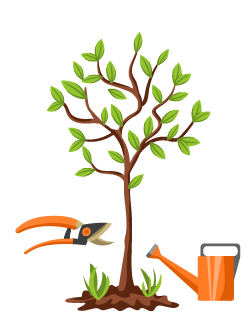 Tree care
Loosening the soil, watering: proper agricultural technology
Sverdlovsk anise doesn't require any special conditions for vigorous growth and fruiting. However, if you want to achieve record yields, it's best to water the seedling with 10 liters of water weekly during the first year after planting, provided there's no natural rainfall. If it rains, stop watering and resume when dry weather returns.
Almost all plants appreciate loosening the soil, so it's a good idea to lightly loosen it every time you water. Trees are dug up twice a year—in the fall and in the spring.
Pruning: simple crown shaping
- FormativeThis type of pruning, aimed at creating a crown of the correct size and shape, is performed starting in the first year. The central trunk can be shortened by a third, as can all remaining skeletal branches. Anything growing at an acute angle to the trunk is removed, and the cuts are sealed with tar or water-based paint.
- SanitaryThis should also be done annually to rid the tree of diseased, damaged, and dry branches.
- SupportiveAlthough anise has strong branches that can easily support even large harvests, it's a good idea to thin them regularly, leaving one in three shoots. Choose the strongest, thickest ones.
- RejuvenatingThis should begin around the 12th to 15th year, pruning 2-4 mature shoots to allow the young shoots to develop. This will significantly increase the lifespan of the apple tree.
Pollinator varieties
- Borovinka.
- Yandykovskoye.
- Bellefleur the Chinese.
- July Chernenko.
- Antonovka.
- Cinnamon Striped.
Reproduction
- Growing from seeds (rare).
- Grafting (rootstock) by buds or cuttings.
- Layers (clones).
Diseases and pests
- Scab.
- Powdery mildew.
- Fruit rot.
- White coating.
- Green aphid.
- Leaf roller.
- Hawthorn.
- Codling moth.
Ripening and fruiting of the Anis Sverdlovsk apple trees
The beginning of fruiting
 The beginning of fruiting
Young trees produce a small number of apples in the first few years, but by the third year, several fragrant fruits will be available for eating. The tree usually only begins to bear fruit well in the fourth or fifth year.
Flowering time
Depending on the growing region, the flowering period of this apple tree may vary slightly. Weather conditions in a given year also influence this. Typically, it occurs in mid- to late May.
Fruiting and growth
The ripening time of the fruit can vary significantly, not only due to the same factors described in the flowering section but also from one individual to another. On average, this period ranges from early or mid-August to the second half of October. The further north the growing region, the more winter-season fruiting occurs. In most cases, Sverdlovsk anise can be harvested beginning in mid-September. The apples are harvested in several stages, 4-7 days apart.
The tree reaches its full potential between 8 and 12 years. At this point, a single apple tree can yield up to 50-80 kilograms. It's believed that slight growth can be expected until the 30th year.
There are different opinions about preserving apples. Some say they can be stored for no more than two months without losing their flavor and original aroma, while others claim they can last until March. It all depends on the ripening time. The later the apples are picked from the vine, the longer they will last.
Top dressing
- Wood ash.
- Urea.
- Macro- and microelements.
- Complex fertilizers.
- Potassium chloride.
- Superphosphate.
What to do if it doesn't bloom or bear fruit
- Check for pests or diseases.
- Trim the crown and thin it out.
- Transplant to a more fertile area with airy soil.
- Provide watering.
Why do apples fall?
- Natural phenomena (wind, rain, hail).
- Excess or lack of moisture.
- Pests.
- Diseases.
Don't forget to leave reviews of Sverdlovsk Anis to share your experiences with gardeners across the country and beyond.






Comments
Interesting and informative. How does the Anis Sverdlovsk apple tree thrive in the soils of the Middle Volga region—Samara, Kazan?
Sverdlovsky anise is a common variety in Russia. It has thrived here in the Volga region, along with Malba. It's a commercial variety with excellent yields. The Plodovy state farm in the Volsky district has several hectares of this variety. It keeps well. We store it in cellars for the winter, covered with straw, sawdust, and even sand. It can last until spring!