Apple tree Renet Chernenko: characteristics of the variety and care
| Color | Reds |
|---|---|
| Ripening season | Autumn |
| Size of apples | Large |
| Taste | Sweet and sour |
| Crown type | Tall tree |
| Shelf life | High shelf life |
| Application | Universal variety |
| Winter hardiness | High winter hardiness |
| Fruiting age | From 5 years old |
 History of origin and regions of growth
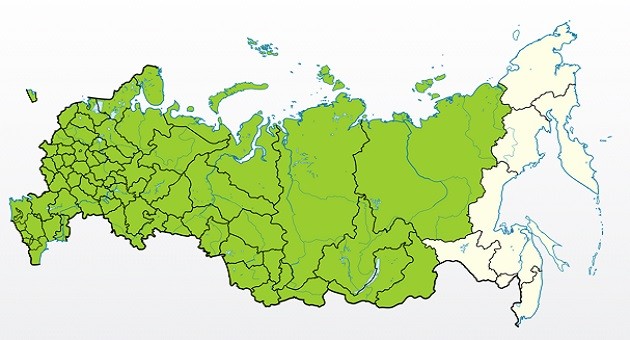
Growing regions
- Middle zone.
- Central Black Earth District.
- Siberia.
- Middle Volga region.
- Northwest.
- Ural.
Origin
This apple tree was developed by the I.V. Michurin All-Russian Research Institute of Horticulture in Minusinsk. The selection process involved seeds obtained through open pollination of the Pepin IV (Renet pepinii) variety in the early 1960s. The variety's creators were Viktor Timofeevich Konovalov, Nina Ivanovna Yaroslavtseva, and Ekaterina Antonovna Lesyuk, who worked under the supervision of the distinguished Soviet breeder Semyon Fedorovich Chernenko. It was he who gave the new variety its name.
In 1963, the first application for inclusion of the apple tree among the elite was submitted. The tree was submitted for official variety testing, which it passed with flying colors. In 1986, the Renet Chernenko variety was included in the State Register of Breeding Achievements and zoned for the following regions: Middle Volga, Central, Volga-Vyatka, Ural, Northwestern, and Central Black Earth. In fact, it can be grown throughout virtually the entire territory of our country, except for the Far North.
Content
Description of the Renet Chernenko variety
 This vigorous, exceptionally winter-hardy tree immediately attracts the attention of all gardeners. It is undemanding of soil and care, withstanding both severe winter frosts and summer heat, requiring no special soil or fertilizer. Renet Chernenko is distinguished by its regular, consistent fruiting and enviable resistance to apple fungal infections, particularly scab.
The fruits are quite large, attractive, tasty, and aromatic. A characteristic feature is their high ascorbic acid content. This variety is recommended for both home gardening and intensive commercial gardening.
Apples: What do they look like?
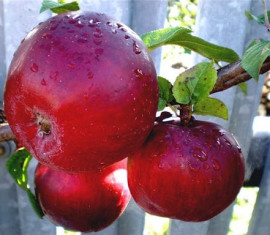
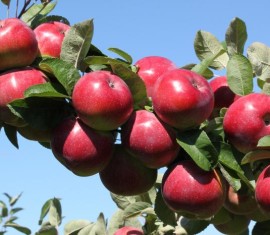
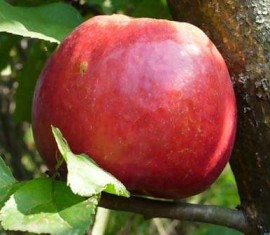
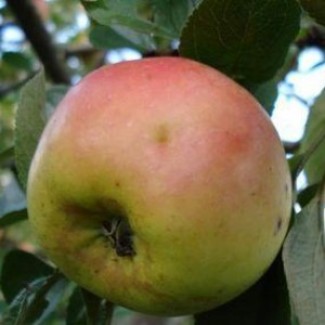
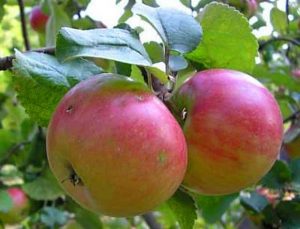 Reinette fruits are medium to larger in size, sometimes quite large. The average weight of one apple is 150-170 grams. They are round, sometimes slightly flattened, smooth, and generally uniform and symmetrical. Ribbing is almost completely invisible, but slightly noticeable near the stem.
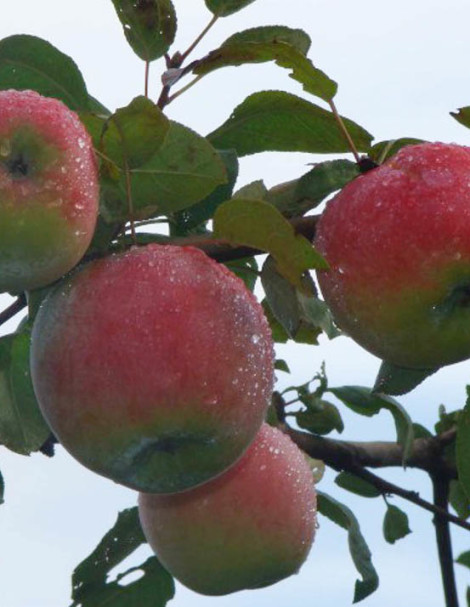
The apple skin is dense, even thick, but not too hard, and cracks easily when bitten. It's more matte than shiny, lacking a waxy or oily coating. Its base color is green or slightly greenish-yellow, sometimes rich and honey-colored. The blush is only on the sunny side, and is vaguely spotted, speckled, or streaked, bright carmine or bright red. Subcutaneous dots are medium in size and density, rusty-green in color. To assess the chemical composition, it's helpful to familiarize yourself with the following information:
- P-active substances (catechins) – 229.4 milligrams.
- Ascorbic acid (vitamin C) – 24.8 milligrams.
- Fructose (total sugars) – 11.3%.
- Pectins – 14.8%.
- Titratable acids – 0.86%.
The fruit has a fairly dense, juicy, fine-grained flesh, snow-white or slightly creamy in color. It has a sweet and sour taste and is considered a dessert fruit, harmonious, balanced, and of the highest quality. Professionals rate it 4.5-4.7 points out of a possible 5.
Apple tree Renet Chernenko: characteristics
Crown and root system
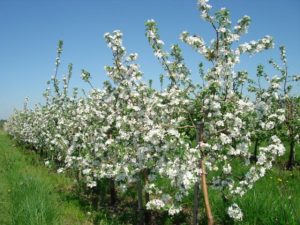 The tree is fast-growing and tall. During its life without formative pruning it can easily reach 7-9 meters., and sometimes even higher. However, most owners prefer to limit the tree's height to 5-5.5 meters, as this makes it much easier to care for and harvest. The crown is rounded or spherical, but over the years it can become increasingly spreading, sometimes weeping or drooping. Branches generally extend from the trunk at an acute angle, but some grow almost horizontally. The shoots are of medium thickness and length, covered with greenish-gray or gray-brown bark, and bear fruit in mixed colors.
The leaves are elongated, slightly oval-shaped, with serrated, serrated, crenate, and somewhat wavy edges. They are quite dense, leathery, smooth, and shiny, almost plastic-like, with moderately pointed tips. The leaf blade can fold into a boat-like shape. The root system is highly branched and penetrates deep into the soil, well adapted to the search for nutrients and moisture.
Productivity and pollination
This variety is considered medium-yielding, given its relatively large growth habit and extensive crown. Its regular, moderately abundant fruiting is considered a particular advantage.
One mature tree can produce at least 100-130 kilograms of large, fragrant apples per season..
Reinette is considered conditionally self-fertile, but don't expect a large number of fruits from self-pollination. It can yield no more than 15-25% of the potential harvest. Therefore, it's common to plant Chernenko interspersed with trees that bloom at the appropriate time.
Winter hardiness and disease resistance
Apple trees are indeed quite resistant to low temperatures, but everything depends on the region, humidity, and the duration of severe frosts during the winter. They can easily withstand temperatures of -39 to -42°C in Siberia, but not -32 to -35°C in Bashkiria. Therefore, choosing a variety for planting in your garden requires great care. However, if you prepare your garden for winter in a timely manner and cover the trunks properly, no problems should arise.
Apple trees have average resistance to scab in high-humidity conditions, but are highly resistant in dry regions. Other apple tree diseases are rare, but can affect the trees. To minimize the risk, regular spraying and preventative treatments should be carried out.
Rootstocks and subspecies
Renet Chernenko can be grown on various rootstocks. This may slightly alter the tree's characteristics, but this doesn't affect the fruit. For example, seedlings on standard rootstocks are considered the most winter-hardy, while those on dwarf and semi-dwarf rootstocks grow shorter and are less winter-hardy.
Growing Renet Chernenko
 Landing
 Landing
Basic conditions
- This variety is very sun-loving, so young trees should be planted where they will receive UV light for most of the day. If they are exposed to shade, they may experience weak growth or even die.
- It's best to choose a location where the groundwater level isn't too high. Apple trees' roots penetrate deep into the soil and can sink their shoots into the water, causing them to rot.
- There are no special soil requirements other than the general ones. The soil shouldn't be excessively salty or acidic; otherwise, apple trees will grow in sand, black soil, sandy loam, loam, rocky slopes, and other difficult-to-reach soils.
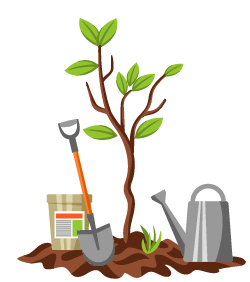
- The best option is to prepare holes for apple trees the season before planting. However, if you can't wait that long, you can dig them 3-4 weeks before planting. Dig holes 60-75 centimeters deep and up to one meter in diameter. Add fertilizer to the bottom, then crushed brick or gravel, vermiculite, and nut shells. Finally, fill the holes with 35-45 liters of water. Leave the holes uncovered.
- Before planting, the seedlings are inspected, and if there are any dry shoots, the rhizome is cut back to living wood.
- Leave at least 5 meters between trees, as they have impressive crowns. The same amount, or slightly more, can be left between rows to make harvesting easier.
- The root collar, or grafting site, must always remain above the soil surface to preserve the rootstock's qualities. If the tree roots higher, they will be completely leveled.
- Place the seedling on a drainage mat, spread the roots so they don't bend, carefully cover with soil, and compact it with your hands or feet, but not too vigorously. Water immediately with 20-25 liters of water, and mulch the area around the trunk to retain moisture.
Landing dates
The tree is easy-to-care-for and winter-hardy, so it can be planted in either spring or fall. However, in colder, northern regions, spring is preferable. Choose a dry, sunny day in late March or early April, so that there has been no precipitation the day before and the threat of frost has passed. In warm, temperate climates, planting can begin in late September or early October, as soon as the leaves have fallen.
Tree care
 Tree care
Protection from frost and pests
Standard covering measures for Reinette are sufficient. Trunks should be wrapped with roofing felt, tar paper, burlap, or old tights. Spruce branches, straw, or hay can be piled on the root area if a cold, prolonged winter with severe and prolonged frosts is expected. Only very young seedlings should be covered with a tent, as by the fifth or sixth year they reach a height of over 2.6-3.2 meters.
Trees are sprayed with various insecticides, and the bark is brushed with a stiff brush before winter. Trunks are whitewashed to a height of 1-1.4 meters with a thick lime solution in early spring and late fall, after pruning. To prevent rodents from eating the bark and young branches in winter, the trunk can be coated with grease, fuel oil, rendered animal fat, or commercially available products. These are readily available at gardening stores.
Loosening the soil, watering: proper agricultural technology
Dig the root zone twice a year, but from 2-4 years, this can be done once a year, in the fall. Weeds and root suckers are removed at the same time. After 5-7 years, this area can be covered with sod, sown with herbs and low-growing shrubs, and a lawn can be created. Trees tolerate this easily, and it will reduce the gardener's work.
Watering Young trees need watering every ten days to ensure they adapt quickly and thoroughly to their environment. However, watering should only be done when there's no precipitation. After a rain, count ten days and then water the apple trees with 10-15 liters of liquid. All watering should be stopped at the end of summer, by early September. Fertilizing should only begin between the ages of two and four; earlier, whatever was placed in the hole before planting is sufficient.
Pruning: simple crown shaping
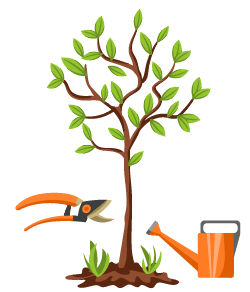
The tree has a medium density, so pruning should be done promptly and in a timely manner. A sparsely layered canopy is most often formed, with shoots spaced at different heights. The first pruning is done at planting, unless it was done at a nursery. No more than a third of the total number of branches should be pruned, otherwise the apple tree will become severely stressed. Cut wounds are usually sealed. garden pitch.
In spring and fall, it's a good idea to inspect the garden and prune away any unnecessary growth. Remove any dead, broken, diseased, or damaged shoots. At the same time, remove any branches that are crowding the tree, such as vertical branches or those growing inward.
Diseases and pests
- Powdery mildew.
- Scab.
- Moniliosis.
- Black crayfish.
- Hawthorn.
- Aphid.
- Leaf roller.
- Scale insect.
Pollinator varieties
- Antonovka.
- Pepinka.
- Saffron pepin.
- Welsey.
- Autumn striped.
- Idared.
- Sinap northern.
- Borovinka.
- Gala.
Ripening and fruiting of Renet Cherenenko
The beginning of fruiting
 The beginning of fruiting
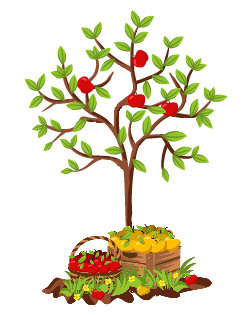
Trees of this variety are not early fruiters, so patience is required. The first flowers appear around the fifth or sixth year of life. It's best to pluck them, as they are often barren and will simply waste the tree's energy. The first harvest will only be possible in the seventh or eighth year, when you can harvest approximately 5-12 kilograms of apples.
Flowering time
Buds on the Chernenko tree can appear as early as late April or early May, but the tree blooms in the second ten days. If the winter was cold or prolonged, and the spring was rainy and sunny, flowering may not begin until late May or even early June. The tree's flowers are small but dense, densely covered with fragrant flowers. They are snow-white or slightly pinkish, saucer-shaped, with delicate, slightly wavy petals.
Fruiting and growth
The tree grows faster until it begins to bear fruit, then slows slightly. Even then, it can reach 35-45 centimeters per year, which is quite impressive. Fruiting increases as the crown grows, but it will take at least 9-12 years to reach full fruit production. Only then will the tree's weight approach 100 kilograms. However, the long wait is well worth it, as the apple tree's active lifespan exceeds 60-75 years.
Apples begin ripening quite late, no earlier than early October, or even closer to mid-October. There's no need to rush the harvest, as the fruit clings firmly to the branches and will definitely not fall before the first frost. They are stored in a cellar or a special refrigerator immediately after picking. Apples keep well until April, and sometimes even May, but are also suitable for processing and transport without problems.
Why do apples fall?
- Weather.
- Frosts.
- Pests or diseases.
What to do if it doesn't bloom or bear fruit
- Protect from the cold.
- Restrict or activate watering.
- Eliminate insects.
- Cure diseases.
Top dressing
- Manure.
- Compost.
- Humus.
- Superphosphate.
- Chicken manure.
- Mineral and nitrogenous complexes.
- Ammonium nitrate.
Leave your review of the Renet Chernenko apple tree variety so that even novice gardeners have no questions about cultivating trees.