Northern Sinap apple tree: characteristics of the variety and care
| Color | Reds |
|---|---|
| Ripening season | Winter |
| Size of apples | Average |
| Taste | Sweet |
| Crown type | Tall tree |
| Shelf life | High shelf life |
| Application | Universal variety |
| Winter hardiness | High winter hardiness |
| Fruiting age | From 5 years old |
 History of origin and regions of growth
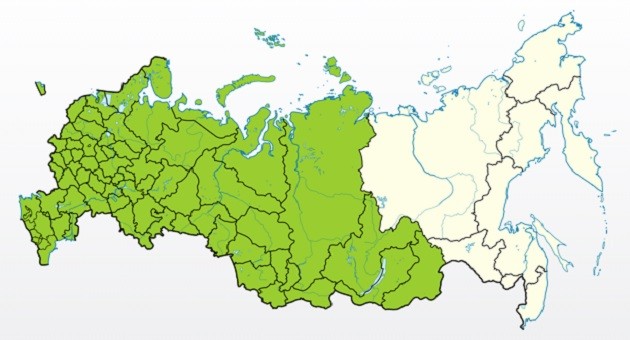
Growing regions
- Middle zone.
- Moscow region.
- Ural.
- Siberia.
- North Caucasus.
- Leningrad region.
- Crimea.
- Urals and Trans-Urals.
- Some northern regions.
- Far East.
Origin
This apple tree can be considered an old variety, as its history spans almost a century. In 1927, Sergei Ivanovich Isaev, a prominent Soviet scientist and plant breeder, along with his colleagues Maria Pavlovna Maksimova, Zoya Ivanovna Ivanova, and Vasily Korneevich Zayets, conducted experiments with open pollination of various apple trees, in particular, the Kandil-Kitayka or Kandil-Sinap. They produced a hybrid called the Northern Sinap.
The variety's name comes from a corruption of the Turkish port city of Sinop, located on the northern shore of the Black Sea. It was from there that Kandil apple trees first arrived in Crimea, where they quickly took root. However, it turned out that the tree was unable to survive in the harsh conditions of the central zone. Therefore, pomologists began searching for methods to impart greater winter hardiness, resulting in the creation of the Northern Sinop..
Immediately after this, the I.V. Michurin All-Russian Research Institute of Crops and Vegetables sent the seedling for variety testing, which lasted quite a long time. In 1947, an application was submitted for inclusion in the State Register of Breeding Achievements, but it was only approved in 1959. The variety is officially zoned for the Central Black Earth, Volga-Vyatka, Middle Volga, and East Siberian regions, but in reality, it can be grown almost anywhere in Russia, with the exception of the harshest regions and the Far North.
Content
Description of the Northern Sinap variety
 This late-winter variety quickly spread across the country, as, in addition to all its positive qualities, it also boasts enviable winter hardiness. It quickly begins bearing fruit, requires no special care, is undemanding of soil, fertilizer, and watering, and consistently produces good yields.
Northern Sinap apples have high commercial and consumer qualities. They are quite large, tasty, and aromatic immediately upon ripening, with no need for aging. They are easily transported over long distances and stored in a standard cellar until the next harvest. This variety is recommended for both individual private plots and intensive commercial plantings.
Apples: What do they look like?
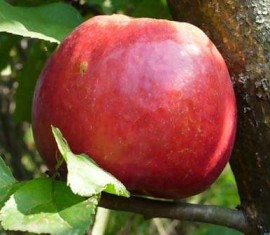
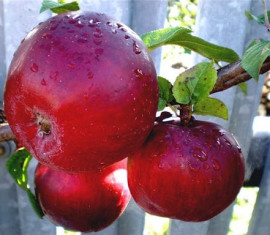
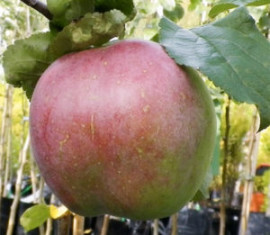
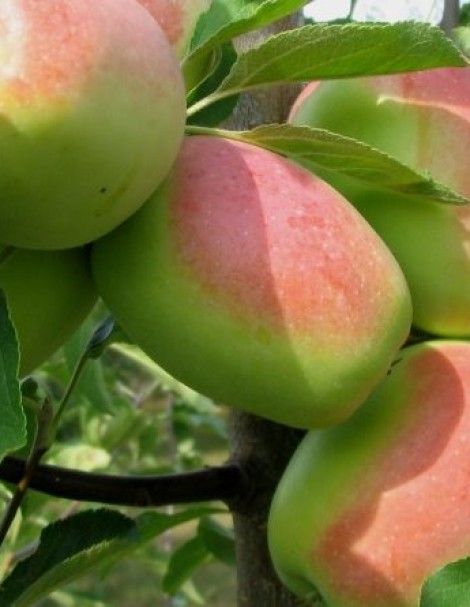
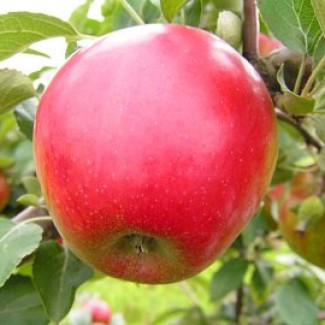
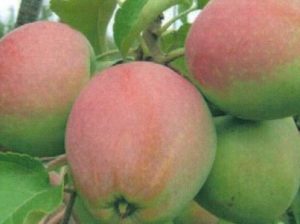 The fruits are generally considered medium-sized, growing to approximately 70-150 grams, though some specimens can reach 170. They are round or round-conical, slightly elongated, cup-shaped, cylindrical, asymmetrical, and non-uniform. The surface is smooth, slightly ribbed near the calyx, and smoothed throughout the rest of the surface, with no visible lateral seam.
The skin is dense and smooth, firm, of medium thickness, and somewhat hard. It is initially green, but as it ripens, it yellows, becoming a yellow-green, sometimes slightly golden. The blush is dense, striped, speckled, reddish-brown, or beetroot-colored, and covers no more than 45-60% of the skin. The subcutaneous dots are large, numerous, and light in color, making them easily visible on the surface. To simplify the assessment of the chemical composition, the following parameters can be examined:
- P-active substances (catechins) – 102 milligrams.
- Ascorbic acid (vitamin C) – 11.6 milligrams.
- Fructose (total sugars) – 12.1%.
- Pectins – 15.6%.
- Titratable acids – 0.42%.
The flesh is white, sometimes slightly lemony or greenish, fine-grained, juicy, crisp, and easily broken apart. It is medium-firm, refreshing, and tart. The flavor is considered harmonious and balanced, a dessert-like combination of sweet and sour, with a sweeter edge and pronounced spicy notes. The official tasting score from professionals is 4.3-4.2 out of 5 for taste and appearance, respectively.
Northern Sinap apple tree: characteristics
Crown and root system
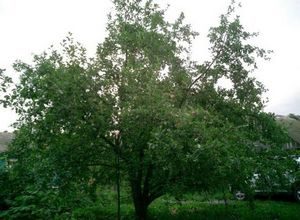 The tree is considered tall, it can reach a height of up to 7-9 meters, and sometimes even higher.The crown is pyramidal, highly pyramidal, or oval-pyramidal, with medium or low density. Shoots of medium thickness, predominantly geniculate, extend from the trunk at almost a right angle, are not prone to splitting, are lightly pubescent, and are covered with brownish-green or brown bark.
The leaves are medium to medium-large, dark green or deep emerald, leathery, smooth, and glossy. They are heavily pubescent, giving them a slightly silvery undertone. The tip is long and pointed, the shape is elongated and ovate, and the margins are serrate-crenate, serrated, and slightly upturned. The root system is highly branched, well-dug, fibrous or taproot, depending on the rootstock.
Productivity and pollination
Northern Sinap is a high-yielding variety that can provide one person with apples for a whole year.
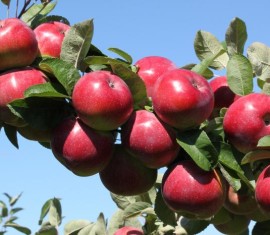
A good owner of a mature apple tree of this variety will get approximately 160-180 kilograms of very beautiful, tasty and aromatic fruits per season..
The apple tree is considered conditionally self-fertile. This means that even in the complete absence of other apple trees in the area, it will produce a harvest. However, the yield will be approximately 25-30% of the maximum possible. Therefore, experienced gardeners prefer to plant this variety interspersed with other apple trees within 45-90 meters. In the spring, beehives are brought into the orchards and the flowering trees are sprayed with sugar or honey syrup.
Winter hardiness and disease resistance
Unlike its ancestor, Severny Sinap is distinguished by its good tolerance to low temperatures, and most importantly, to sudden fluctuations and changes in temperature. This variety is only slightly inferior to Antonovka, withstanding temperatures as low as -32-35°C. Even if damaged, the trees recover very quickly and bear fruit almost unchanged.
Sinap isn't immune to any apple diseases, but its resistance is moderate. During years of severe epiphytotics, trees may be affected, but not severely. With timely preventative treatments, the risk is reduced to virtually zero.
Rootstocks and subspecies
There are a huge number of diverse Sinap varieties, each of which could easily be covered in its own article, so diverse are they. There are no columnar varieties, but dwarf creeping trees can be made from wood. Let's briefly discuss the most popular and sought-after ones among gardeners.
| Subspecies | Peculiarities |
| Kandil | A heat-loving subspecies unable to tolerate the temperatures of the central zone, it is therefore cultivated exclusively in the southern regions, the North Caucasus, and Crimea. The fruits are large, weighing 160-180 grams, and yields high. |
| Orlovsky | This subspecies ripens 2-3 weeks earlier than the Severny variety. The fruits are also large, up to 180 grams, but less sweet, with a more sour-spicy flavor. Fruiting is not cyclical. |
| Mountain | This subvariety was released to the Northwest region just 10-12 years ago. It is winter-hardy, responds well to regular fertilizing and watering, and can also grow in rocky, poor soils. It produces fruits up to 190-220 grams in weight, sweet and very juicy. The apples are even more elongated, with a raspberry or raspberry-pink blush and numerous large, dark gray spots. |
Features of growing Northern Sinap
 Landing
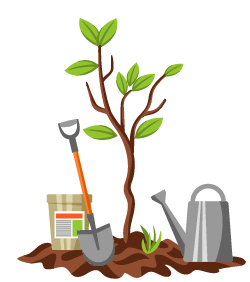 Landing
Basic conditions
- An open, sunny space is ideal for planting apple trees. In the shade, trees grow slowly, may refuse to bloom or bear fruit for many years, and their branches become thin and spindly.
- Good ventilation is highly desirable, although Sinap has no specific requirements in this regard. Its crown is not very dense, so it usually receives good ventilation. It is important to avoid growing in drafts, as this can lead to disease.
- This variety doesn't like being near groundwater. If its roots reach it, it will inevitably rot and die. For the same reason, it's not recommended to plant it near rivers and ponds, shallow wells, lakes, streams, swamps, floodplain meadows, or in lowlands.
- The holes can be prepared in advance, a season before planting, as most experienced gardeners do. They dig holes 70-90 centimeters deep and up to 1 meter in diameter. Fertilizer is added to the bottom, then drainage is applied, the holes are filled with water, and the holes are left outdoors.
- There should be a space of at least 4-4.5 meters between the holes so that the trees do not interfere with each other when they are mature.
- Rods or stakes are driven directly into the holes, to which young seedlings are tied.
- Before planting, the tree is dipped with its rhizome in warm water and kept in it for 6-10 hours.
- Place the seedling upright, hold it by the trunk, gently shake it, sprinkle it with soil, and compact it by hand. Create a mound of soil around the perimeter, add 35-40 liters of water, and then top up the surface. mulch suitable materials for moisture retention.
Landing dates
Northern sinap can be planted in the ground in spring or fall, whichever is more convenient. In southern regions, the fall planting is even better, as the tree shows its best growth in spring. In more northern regions, early spring is preferable to prevent the first frosts from damaging the delicate trees. With their root system closed, apple trees can be transplanted into the open ground at any time during the growing season.
Tree care
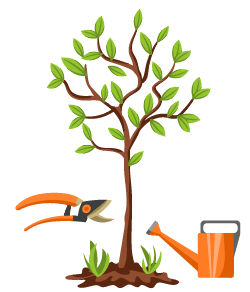 Tree care
Protection from frost and pests
All standard measures for protecting trees from frost are carried out. Straw, hay, mats of dry leaves, spruce branches, and even soil are thrown onto the root zone. The trunks are wrapped in burlap or other fabric, whichever is available. Small young saplings can be covered using a tent-like method. Trees should be uncovered as soon as nighttime temperatures drop below 0°C, otherwise the rhizomes and trunks may freeze.
Whiten It wouldn't hurt to drench the trunk with lime, diluted thickly with water, twice a year. This will help repel insects that nest in the bark crevices. To keep rodents away, wrap the trunks and young shoots with netting and coat them with grease, fuel oil, or lard.
Loosening the soil, watering: proper agricultural technology
The area around the tree trunk should be dug twice a year, in early spring and late fall, to loosen the soil. In between, you can hoe the soil, removing weeds and other plants from under the tree. It's important not to dig deeper than 7-9 centimeters, as some roots are shallow and easily damaged.
Watering Trees will require regular watering, especially when young. During the first and second years, this should be done every 12-16 days, when there's no rain. As they mature, Sinapu will benefit from 4-6 waterings per season, timed to coincide with flowering, fruit set, and ripening. Various fertilizers and fertilizers can be added at this time.
Pruning: simple crown shaping
Trees from the nursery usually come with a sparse, tiered form, which is the most optimal for this variety. However, palmette, broom, or cup-shaped forms can also be shaped. Subsequently, any such form simply requires maintenance, regularly removing any excess branches, including those growing inward and those protruding vertically.
If pruning is not carried out in a timely manner, the fruit will become smaller year after year. Eventually, the apple tree may stop bearing fruit altogether..
Don't forget to remove dry, damaged, or broken shoots. You should also remove any diseased or parasitized shoots. Their presence will negatively impact the harvest.
Pollinator varieties
- Slav.
- Chinese Kandil.
- Pepinka.
- Saffron pepin.
- Korobovka.
- Antonovka.
- Borovinka.
- Simirenko.
Reproduction
- Layers.
- Grafting cuttings.
- Clones.
- Growing from seeds.
Diseases and pests
- Cytosporosis.
- Scab.
- Rust.
- Powdery mildew.
- Pit bitterness.
- Green aphid.
- Flower beetle.
- Codling moth.
Ripening and fruiting of Northern Sinap
The beginning of fruiting
 The beginning of fruiting
Depending on the chosen rootstock, the tree may begin bearing fruit earlier or later. Dwarf and semi-dwarf varieties begin to produce their first buds in the second or third year, yielding up to 2-4 kilograms of apples. Tall varieties begin bearing fruit only in the fifth or sixth year, so they are not particularly early-bearing. However, their yield is higher than that of "half-dwarf" varieties.
Flowering time
Sinap begins producing buds as early as late April; they are large, very beautiful, and a deep red. In the first ten days or by mid-May, they open into large, bright pink, fragrant flowers. In poor weather or in cold climates, the variety may bloom later, in late May. The process lasts approximately 16-21 days, allowing bees and wind to usually ensure pollination.
Fruiting and growth
The tree grows at a moderate rate, faster in its youth before fruiting begins and slower thereafter. It grows approximately 25-35 centimeters even under the most unfavorable conditions, so it reaches its maximum size quite quickly. Fruiting increases gradually from year to year, producing increasingly larger quantities of fruit until, by the 10th to 14th year, it reaches almost two hundred kilograms. Fruiting is characterized by a periodicity, with high yields alternating with moderate or very low ones.
The fruit ripens late, only in mid-October. It's best not to pick them until they're fully ripe and delicious; the flavor will remain slightly herbaceous. They cling tightly to the branches, so it's best to pick them only after the temperature has stabilized at 0°C. The apples are easy to transport and can be stored in a cellar until the next harvest.
Top dressing
- Compost.
- Manure.
- Superphosphate.
- Chicken manure.
- Wood ash.
- Ammonium nitrate.
What to do if it doesn't bloom or bear fruit
Why do apples fall?
- Natural weather conditions (wind, rain, hurricane, hail).
- Pest damage.
- Diseases.
Share your own experience with the Severny Sinap apple variety so that any gardener can learn about it before planting and achieve maximum results.