Bryanskoye Pink Apple Tree: Variety Features and Care
| Color | Reds |
|---|---|
| Ripening season | Autumn |
| Size of apples | Large |
| Taste | Sweet and sour |
| Crown type | Average tree height |
| Shelf life | Average shelf life |
| Application | For recycling , Fresh |
| Winter hardiness | High winter hardiness |
| Fruiting age | Up to 5 years |
 History of origin and regions of growth
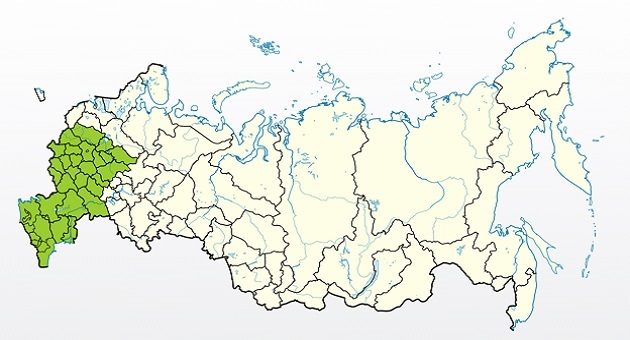
Growing regions
- Crimea.
- Middle zone.
- Leningrad region.
- North Caucasus.
- Moscow region.
Origin
Another variety of the Bryansky variety, bred by Alexander Ivanovich Astakhov at the beginning of the new century. From the parent varieties—various species were used, such as Antonovka, immune hybrid forms, Slava Pobeditelyu, and others—the apple trees inherited scab immunity, high yields, and winter hardiness.
In 2002, an application was submitted to classify the variety as an elite variety. Currently, there is no information about the Bryanskoye Rozovoye variety in the State Register, and it has no official regionalization.
Content
Description of the Bryansk Pink variety
 This highly productive, late-autumn dessert variety belongs to the Bryansk group, and therefore possesses all the qualities of its parent variety, as well as a strong immune response to scab and some other fungal apple diseases. The trees are compact, attractive, not prone to excessive crowding, and are undemanding in terms of watering, soil, humidity, and fertilizing. They thrive even in the most challenging conditions, bearing fruit regularly.
This variety produces large, beautiful fruits with a very attractive appearance. They transport well over long distances and can be stored for quite a long time in a cellar. The apples are tasty, juicy, and aromatic, suitable for processing and fresh consumption. Trees of this variety are recommended for intensive commercial plantings and small home gardens.
Apples: What do they look like?
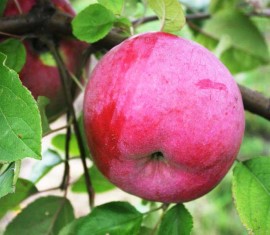
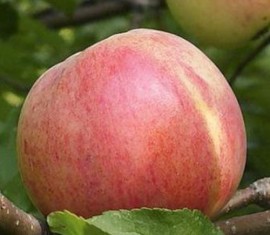
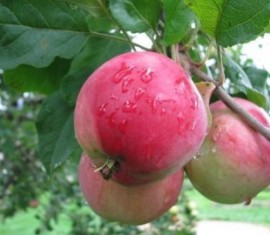
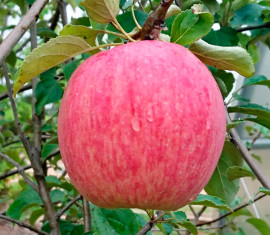
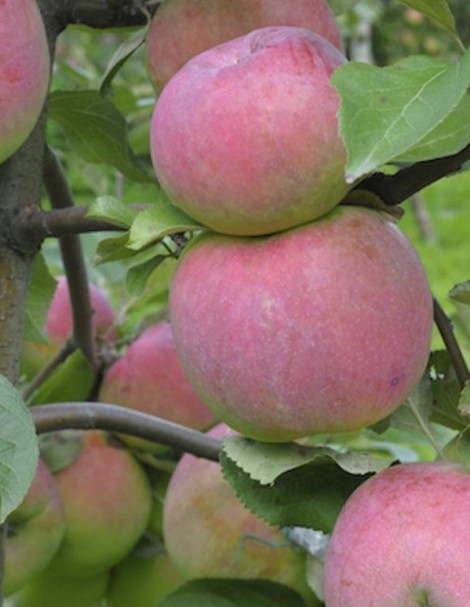
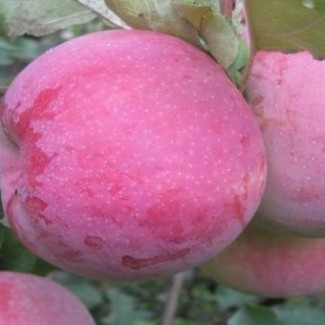
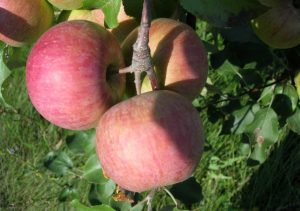 At the variety Bryansk Pink apples are large, beautiful fruits, growing to 160-220 grams in weight. Occasionally, specimens weighing up to 250-300 grams are found, but only with proper care and favorable conditions. The apples are round but slightly elongated, though not cylindrical, more like turnips. They are smooth and symmetrical, but sometimes slanted to one side, making them uniform. The ribbing is barely visible on the calyx side, smoothed out on the rest of the fruit, and the lateral seam is completely invisible.
The skin is dense, strong, and elastic, but not thick, brittle, and easily peeled. It is smooth, highly shiny, glossy, and pubescent. The base color is green or light green-yellow. However, more than 70-85% of this color is hidden under a dense, raspberry-pink or deep pink, blurry-spotted, thick blush. There is a dense, waxy, silvery-blue coating. Subcutaneous dots are light, moderately numerous, and not particularly visible. The chemical composition is easier to judge with the basic parameters:
- P-active substances (catechins) – 312 milligrams.
- Ascorbic acid (vitamin C) – 11.6 milligrams.
- Total sugars (fructose) – 9.9%.
- Pectins (fiber) – 12%.
- Titratable acids – 0.41%.
Bryanskoye Pink has a dense, split-off, prickly, fine-grained flesh. It is very juicy and has a pleasant apple aroma with a slight hint of spice. The flavor is considered dessert-like, sweet and sour, harmonious, and balanced. Professional tasters gave it a 4.7 out of 5.
Bryanskoye Pink apple tree: characteristics
Crown and root system
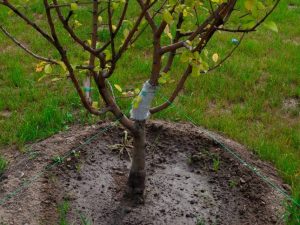 Like most varieties of this cultivar, the Pink has a beautiful, compact, rounded crown that is not prone to overgrowth. When young, it can be oval, but with age, it can become spreading, but not excessively so. Trees reach a maximum height of only 5-5.5 meters, making them considered natural semi-dwarf or medium-sized. Branches are straight, rounded in cross-section, directed upward, set at a nearly right angle to the trunk, and are not prone to splitting under stress. The bark is greenish-brown or tan-brown, lightly pubescent. Fruiting is mixed.
The leaves are almost indistinguishable from the parent variety: moderately wrinkled, dense, leathery, and glossy, with a felted pubescence on the underside. They are large, short-pointed, and oval-elongated, with tips that curl. The margins are finely serrated, crenate, serrated, and sometimes wavy. The color of the blade is rich green, dark green, but not emerald. The root system is branched, with numerous small branches extending from it. In most cases, it is fibrous, but on some rootstocks it can be taproot. It is moderately deep and not particularly well adapted to the search for water or nutrients.
Productivity and pollination
This subvariety is just as high-yielding as its "brothers." Provided it with the right location, proper care, and timely fertilizing, the harvest will surely delight you.
One mature Bryansk Pink tree typically yields approximately 180-220 kilograms of beautiful, aromatic apples per season. At standard planting density, an intensive orchard can yield approximately 300-330 centners per hectare..
The variety's self-fertility is another clear advantage. It doesn't require external pollinators for fertilization, although gardeners still recommend planting trees with overlapping flowering times nearby. This is said to significantly increase yields.
Winter hardiness and disease resistance
The apple trees have inherited all the best qualities of their parent variety, making them truly frost-resistant. They even tolerate temperatures down to -28-35°C. However, they need to be properly prepared for winter and covered. High humidity and temperature fluctuations are more difficult for the variety to handle, but with the right approach, problems shouldn't arise.
Rose has a genetic immunity to scab, so there's no need to worry about it. Other fungal, bacterial, or parasitic diseases can pose a threat to the garden's safety, so treatments and spraying should be carried out promptly and regularly.
Rootstocks and subspecies
This subspecies of the Bryanskoye variety was developed relatively recently; it doesn't have its own subvarieties and likely never will. However, it is grown on various rootstocks, which allows it to develop unique qualities not found in the parent variety. This indirectly affects fruit quality, and in most cases, has no effect at all. For example, dwarf varieties grow shorter and begin bearing fruit much earlier.
Peculiarities of growing Bryansk pink
 Landing
 Landing
Basic conditions
- This is one of the varieties that can grow in partial shade. However, proper lighting is essential, otherwise even this plant may die. Choose a location where sunlight reaches the crown for most of the day.
- The groundwater table must be carefully chosen; it should be at a depth of 1.8-2.2 meters. If the water is much deeper, the tree will constantly lack moisture, and if it's higher, the seedling will likely reach the water with its roots and rot.
- It's best to choose a well-ventilated location for the Bryansk Pink, but avoid drafts. Strong northern winds can lead to frequent diseases and even death of the trunk.
- You can prepare the holes in advance of the planting season, but it's also acceptable to do so 2-4 weeks before planting. To do this, dig a standard-sized hole (80x90x90), fill it with soil and fertilizer, a drainage layer of your choice (rocks, vermiculite, nut shells), fill with water, and leave it uncovered.
- Leave at least 3-4 meters of space between trees, and 5-6 meters between rows, to prevent crowns or roots from clashing in the future. Adequate spacing will also make it easier to tend and harvest the fruit.
- The root collar remains 5-9 centimeters above the soil surface to prevent the seedling from rooting higher. Otherwise, all the qualities of the rootstock will be lost.
- You can immediately insert trellises or stakes into the holes for tying, placing them on the north side of the apple tree trunks. This will not only provide support but also protection from cold weather.
- On the eve of planting, the seedlings are inspected, broken root shoots are cut off, and the trees are immersed in water for 5-7 hours.
- The seedling is placed vertically, held by the trunk and shaken, sprinkled with soil, compacted by hand, watered with plenty of water, and mulched with sawdust or compost.
Landing dates
Rose trees can be planted in spring and fall without any restrictions. In mid-March or late March, and sometimes even early April, trees quickly adapt to new conditions, as long as the soil has warmed up completely by then. In fall, a dry, warm day from mid-September to mid-October is best, as long as frost doesn't strike for at least 21-30 days. In fall, you should wait until the last leaves have fallen to the ground; otherwise, the tree may begin to grow and freeze in winter.
Tree care
 Tree care
Protection from frost and pests
All watering, including fertilizing and topdressing, is best completed before early September. If watered later, the trees may not adjust to the changing seasons and not stop their sap flow in time. Covering the area around the trunk is not necessary, but you can pile up dry leaves, spruce branches, straw, or hay. Wrapping the trunks with roofing felt, roofing felt, burlap, or even old tights is advisable; this will make the apple trees more comfortable in winter. Small trees can be covered like a tent.
Whitewashing the lower part of the trunk with thick lime can help keep insects away. However, this is unlikely to completely eliminate the pests, so insecticide sprays should also be considered. Rodents can be repelled by wrapping a net around the trunk, as well as by coating it with various unpleasant-smelling substances, such as grease or fuel oil.
Loosening the soil, watering: proper agricultural technology
All fruit trees prefer soft, breathable soil, so it should be dug at least once a year to a depth of a third of a spade. At the same time, remove any debris, weeds, and root suckers. You can hoe the soil around the tree 5-8 times per season as needed, for example, the day after watering. Don't forget to regularly remove any rotting leaves or fruit from under the tree.
Young Bryansk Pink trees require frequent watering, approximately every 10-12 days. Watering should be adjusted based on rainfall. The seedlings should be provided with a regimen that ensures the root ball never dries out completely. Fertilizer and other nutrients are usually added along with the water, but not until 2-3 years after planting.
Pruning: simple crown shaping
The tree is suitable for almost any crown shape, but a tiered or sparsely tiered form is still the most preferred. However, a bowl, spindle, or cordon shape can be formed, as well as any other form of pruning. Pruning begins in the first year, and then simply maintains the natural branching, preventing uneven density.
Every fall, I inspect the trees and perform a sanitation pruning. This involves removing any branches that are diseased, broken, or dried out. At the same time, I can prune off any shoots that are growing parallel and/or crossing. Don't leave any untreated areas; they need to be sealed. garden pitch or, as a last resort, with ordinary soil.
Reproduction
- Cuttings.
- Budding.
- Cloning.
- Kidney grafting.
Pollinator varieties
- Idared.
- Antonovka ordinary.
- Elstar.
- Delicious golden.
- Gala.
- Gloucester.
- Golden Vladimir.
Diseases and pests
- Bacterial burn.
- Cytosporosis.
- Powdery mildew.
- Rust.
- Apple moth.
- Scale insect.
- Glass-box.
- Hawthorn.
Ripening and fruiting of Bryansk pink
The beginning of fruiting
 The beginning of fruiting
Like all Bryansk subspecies, Rozovoe begins bearing fruit as early as 3-4 years after planting, even on tall rootstocks. On dwarf and semi-dwarf rootstocks, flowers usually bloom the year of planting. However, waiting for fruit is not recommended; it's best to pluck off this first bloom entirely. The first fruiting is not very abundant, and it will take several years for full fruiting to occur.
Flowering time
This variety blooms in the second half of May, often towards the end of the month. In colder regions or after a prolonged cold spring, the buds may not open until early June. The tree's flowers are beautiful, with five large, delicate petals, densely covering the branches, making the tree very attractive and decorative in spring. The blooming period typically lasts for more than 10-12 days, so wind and insects usually have time to destroy them.
Fruiting and growth
Bryanskoe Pink grows quickly, reaching 60-70 centimeters in height one year before fruiting begins. Therefore, it matures quite quickly. As the crown grows, so does its fruiting. By the 7th to 9th year, the yield is almost at its full potential. If the trees are frozen during the winter, fruiting may be significantly reduced, so covering the garden will require considerable time and attention.
Apples begin to ripen in mid- to late September. They cling tightly to the branches, so they can be picked even as late as mid-October. Frost is a critical issue; frozen fruits can not only fall to the ground but also completely spoil their flavor, making them completely unsuitable for storage. They can remain in the cellar until mid- to late December without any change in quality, after which they become slightly sour, crumbly, and lacking in juiciness.
Top dressing
- Eggshell.
- Humus.
- Bor.
- Manure.
- Compost.
- Superphosphate.
- Copper.
- Mineral and nitrogenous complexes.
- Ammonium nitrate.
What to do if it doesn't bloom or bear fruit
- Wrap up for the winter.
- Limit or activate watering.
- Eliminate insect infestation.
- Cure diseases.
Why do apples fall?
- Strong wind, hail, rain.
- Pests or diseases.
- Freezing.
Leave a review of the Bryanskoye Rozovoye apple tree variety so that other gardeners have no questions about cultivating it.