Winner apple tree: characteristics of the variety and care
| Color | Reds , Striped |
|---|---|
| Ripening season | Winter |
| Size of apples | Large |
| Taste | Sweet and sour |
| Crown type | Average tree height |
| Shelf life | High shelf life |
| Application | Universal variety |
| Winter hardiness | High winter hardiness |
| Fruiting age | From 5 years old |
 History of origin and regions of growth
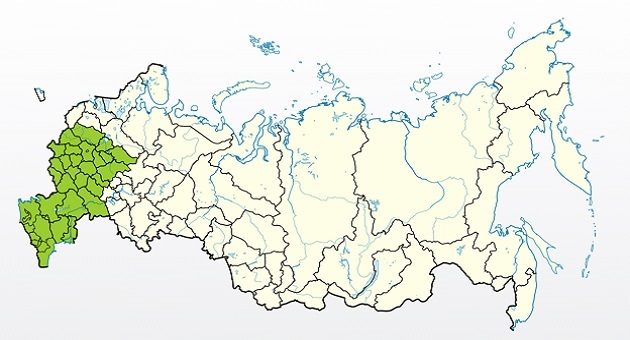
Growing regions
- Crimea.
- Lipetsk region.
- Volga-Vyatka region.
- Middle zone.
- Tver region.
- Leningrad region.
- North Caucasus.
- Bryansk region.
- Moscow region.
Origin
The variety was developed by the renowned hereditary breeder Alexander Sergeevich Isaev at the I.V. Michurin All-Russian Research Institute of Horticulture. This relatively new apple tree was created by crossing and hybridizing the Antonovka Obyknovennaya variety with the Jonathan variety.
It has not yet been officially listed in the State Register of Breeding Achievements and is not zoned. However, it is successfully grown throughout the central part of Russia. It has become particularly popular in the Lipetsk and Bryansk regions.
Content
Description of the Pobeditel variety
 This early-bearing winter variety immediately gained enduring popularity among gardeners in the central region after its market debut, thanks to the many advantages it inherited from its "parents." The trees are environmentally resistant, resistant to low temperatures and sudden temperature fluctuations, undemanding in terms of soil, care, and watering, and can grow even without formative pruning. They bear fruit regularly and produce impressive yields, despite their compact size.
The Pobeditel variety produces fruits that are quite large, attractive, and have high marketable qualities. They are tasty, aromatic, and store well in a standard cellar. This variety is recommended for both commercial and small private gardens.
Apples: What do they look like?
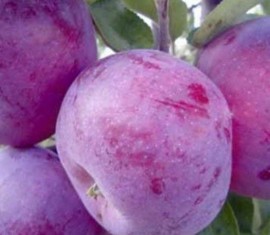
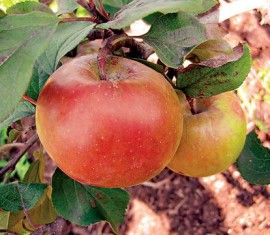
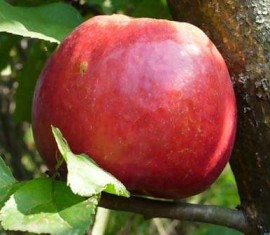
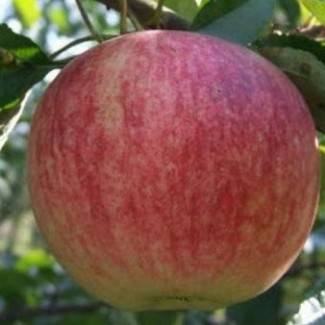
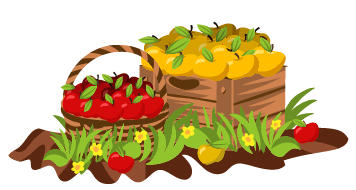
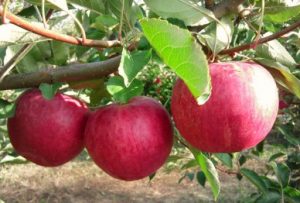 The fruits are medium-large to large in size, weighing up to 170-230 grams, sometimes even more. The shape is round, flattened along the central axis, even, and symmetrical; the apples are generally uniform in size. Ribbing is subtle, and the lateral seam is not visible.
The fruit skin is dense, shiny, highly glossy, and smooth. It is elastic, medium to thick, firm, and durable, providing good protection from mechanical damage. The primary color of the Pobeditel apple is yellow, bright yellow, or slightly greenish. At maturity, the apples become covered with a striped, speckled, or blurred, spotted blush of carmine red or bright red. Subcutaneous punctures are numerous, faintly defined, gray-green or grayish, and may be slightly rusty. The chemical composition is recommended to be assessed according to the following parameters:
- P-active substances (catechins) – 257 milligrams.
- Ascorbic acid (vitamin C) – 11.9 milligrams.
- Total sugars (fructose) – 12.1%.
- Pectins (fiber) – 14.3%.
- Titratable acids – 0.47%.
The Winner is distinguished by its dense, fine-grained flesh, which is snow-white or slightly creamy. It is juicy, intensely aromatic, crisp, prickly, and easily chipped. The flavor is generally considered dessert-like, sweet and sour, balanced, and harmonious. A professional tasting score is 4.5-4.7 points out of 5.
Winner apple tree: characteristics
 Crown and root system
 Crown and root system
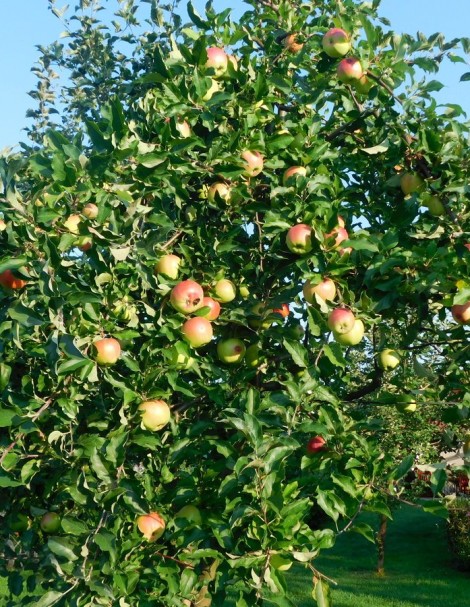
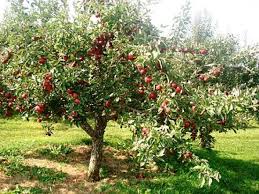
The main difference of this apple tree is its compact size. The maximum height of a tree at 12-15 years barely reaches 2.5-3 metersThe shape is neat and rounded, can be spherical or broadly oval without pruning, with a maximum diameter of up to 3 meters, and densely foliated. The shoots are medium thick, set at an obtuse angle, round in cross-section, and covered with brownish-brown or greenish-brown bark. Fruiting occurs on new growth and ring shoots.
The leaves are medium-sized or large, slightly elongated, oval-ovate, with long-pointed tips. The margins are serrated, crenate, and doubly serrated. They are wrinkled and have a matte sheen; the reverse side may have a light, felty pubescence. The leaves are green or dark green, with rough ribbing, sometimes forming a boat-like shape. The rhizome is fibrous on most rootstocks, highly branched, deep, and capable of efficiently seeking moisture in the soil.
Productivity and pollination
The fertility rates of the variety are quite high.
One mature tree can produce approximately 150-190 kilograms of beautiful, large fruits per season, provided it receives high-quality, timely care and fertilizing.
The Winner is conditionally self-fertile, meaning it will produce fruit even when there are no other apple trees nearby. However, with pollinators within 100-150 meters, the yield increases by 50-75%. Experienced gardeners recommend spraying the blooming garden with honey syrup or sugar dissolved in water to attract bees, as well as using mobile apiaries.
Winter hardiness and disease resistance
Apple trees' good tolerance to low temperatures allows them to be planted not only in the southern regions but also throughout the central part of the country, much further north and east. Frosts down to -25-27°C, even when lasting for more than a few weeks, don't harm the trees, and they suffer no serious damage. However, proper preparation and winter protection are essential.
The Pobeditel apple tree is naturally resistant to scab and other diseases. It is rarely affected, only during years of severe epiphytotics and/or when growing in an excessively damp, poorly ventilated area. The leaves are primarily affected, but the apples remain suitable for eating or processing. Timely and regular preventative treatments will minimize the risk of disease and pest infestation.
Rootstocks and subspecies
This variety has only recently appeared on the market, so it's too early to talk about its subspecies. However, Pobeditel can be grown on various rootstocks. For example, dwarf rootstocks will produce even more compact crowns, but at the cost of significantly reduced winter hardiness.
Features of growing the Winner
Landing
 Landing
Basic conditions
- Almost any site, even partially shaded, is suitable for planting apple trees. Sunlight is beneficial for the apple tree for most of the day, but this doesn't significantly affect the growth or quality of the fruit. In full shade, the Pobeditel will grow frail and spindly, and may not bloom or bear fruit.
- Groundwater levels of up to 2 meters are not taken into account, but it's best not to plant fruit trees in marshy areas or floodplain meadows. However, planting such an apple tree near a stream or river is quite feasible.
- Ventilation of the crowns must be taken into account, as the foliage is quite dense. The main thing is to avoid drafts, but otherwise, there are no restrictions.
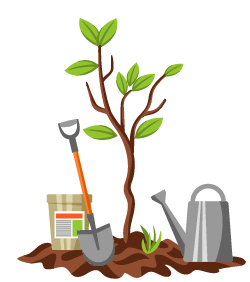
- There's no need to prepare holes for the Pobeditel planting season; digging them 3-4 weeks before planting is sufficient. To do this, dig holes measuring 80x90x70 centimeters, fill the bottom with soil and fertilizer, then add a drainage layer, and fill with water.
- To preserve the rootstock's qualities, the root collar of the seedling remains 5-9 centimeters above the surface. It's important to take into account soil subsidence so that you can add soil to the hole.
- Apple trees don't require much support, but it's still best to drive in stakes or trellises to support them. Placing them on the north side of the trunk will also provide additional protection from cold winter winds.
- Place the seedlings on a drainage mat, spreading out all the shoots so they can lie freely. The hole can be widened slightly if needed. Cover the apple tree with the top layer of soil, compacting it lightly by hand. Water with 15-25 liters of water, and apply mulch.
Landing dates
In moderate and warm climates, apple trees can be planted in both spring and fall; they thrive equally well. In the North Caucasus and Crimea, some even plant trees in late October or November, and they thrive. In harsher regions, spring planting is preferable, once the soil has warmed completely and the risk of frost has passed.
Tree care
 Tree care
Protection from frost and pests
Trees are quite winter-hardy, but they still need to be covered during the cold season, especially when young. Young saplings can be easily covered using a tent-like method in the harshest climates, and the height of mature apple trees allows for this to be done without much difficulty. The area around the trunk can be covered with hay, straw bales, or piled-up soil. In warmer areas, simply wrapping the trunk with roofing felt, tar paper, burlap, or old tights is sufficient.
Insects often migrate to cracks and crevices in tree bark for the winter, so it's worth driving them out to protect your garden. To do this, whitewash the trees with a thick lime solution to a height of approximately 80-90 centimeters. Coating the trunks with fuel oil, grease, or other strong-smelling substances will also help repel rodents.
Loosening the soil, watering: proper agricultural technology
The soil around the trunks needs to be regularly loosened to ensure air and moisture permeability. Digging is typically done no more than twice a year, but hoeing can be done more frequently, for example, the following year. glaze Day. You can sow lawn grasses in the Pobeditel area, but it's better to grow herbs like parsley or basil there, as they don't form a solid carpet but can provide natural aeration.
The Pobeditel appreciates watering, but don't overdo it. You can apply water 2-3 times a month, every 10-14 days. Natural precipitation should be taken into account, and the required time should be counted from the last rainfall. Fertilizers and fertilizers are also mixed with water, and applied along the crown, where the fine root shoots are located. This allows the apple trees to absorb them much better.
Pruning: simple crown shaping
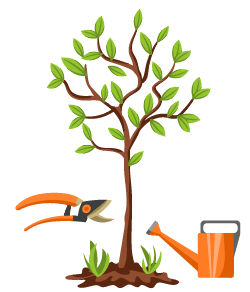
The best option for this variety is a sparse crown, or at worst, a sparsely layered one. This is usually shaped in the nursery. In the first year, the central conductor is shortened by about a third, and all branches are pruned, leaving the skeletal shoots at different heights and spaced far apart. These will determine the tree's shape. Subsequently, all unnecessary branches are pruned: those growing upward, inward, and any crossing or parallel branches.
Every fall, it's necessary to perform a sanitary pruning, cutting off all broken, diseased, or dead shoots. They provide no benefit and drain the tree's sap, so it's best to get rid of them immediately. All wounds on the tree should be carefully sealed after cleaning and pruning. garden pitch or paint over.
Pollinator varieties
- Antonovka.
- Antey.
- Alva.
- Bugler.
- Gloucester.
- Spartan.
- Connell ed.
- Liberty.
- Ligol.
- Champion.
- Melrose.
- Korobovka.
- Jonathan.
Diseases and pests
- Cytosporosis.
- Scab.
- Fruit rot.
- Powdery mildew.
- Scale insect.
- Leafhopper.
- Fruit hyacinth.
- Hawthorn.
- Green aphid.
- Leaf roller.
Ripening and fruiting of the Winner
The beginning of fruiting
 The beginning of fruiting
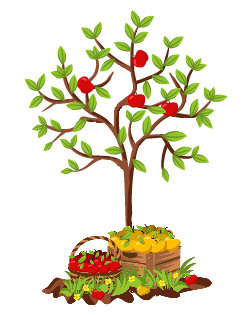
The Pobeditel variety is considered to be early-bearing, although the first harvest will take approximately 5-6 years. Flowers begin to bloom as early as the 3rd or 4th year, but they usually don't develop into ovaries. Therefore, it's best to pluck them completely at this point, allowing the trees to develop foliage and rhizomes. The first harvests are quite good, with a tree bearing up to 8-12 kilograms of fruit.
Flowering time
Buds begin to appear in mid- to late April, sometimes a little later. They don't open until late May, sometimes even early June. They densely cover the branches, making the trees decorative. The flowers are large, pale pink or snow-white, with large, fleshy petals and are fragrant. Blooming lasts 10-14 days.
Fruiting and growth
Trees can grow approximately 25-40 centimeters in height per year, so they are considered medium-sized. Due to their short stature, they reach their final shape fairly quickly, as well as increasing their productivity. From year to year, the number of fruits increases exponentially. By the sixth to ninth year, harvests reach full production, exceeding 110-120 kilograms.
Apples ripen in October or November, depending on the growing region and its weather and climate conditions. However, to avoid missing the moment, you can harvest them in late September. Technical maturity and consumer maturity do not coincide; they reach their peak flavor only after 4-6 weeks of storage. Apples are transported not only in boxes but also in bulk, in a thin layer, and stored until the following spring, even in a regular cellar. In a special refrigerator the fruits will last until the next harvest.
Top dressing
- Superphosphate.
- Humus.
- Peat.
- Calcium.
- Manure.
- Compost.
What to do if it doesn't bloom or bear fruit
- Restrict or activate watering.
- Eliminate insects.
- Cure diseases.
- Fertilize.
- Move to a sunnier location.
Why do apples fall?
- Overripe.
- Wind, rain, hail, snow.
- Pests or diseases.
Leave a review of the Pobeditel apple tree variety so that even a novice gardener can receive useful information firsthand.