Pervouralskaya apple tree: characteristics of the variety and care
| Color | Reds |
|---|---|
| Ripening season | Autumn |
| Size of apples | Large |
| Taste | Sweet and sour |
| Crown type | Average tree height |
| Shelf life | High shelf life |
| Application | Universal variety |
| Winter hardiness | High winter hardiness |
| Fruiting age | Up to 5 years |
 History of origin and regions of growth
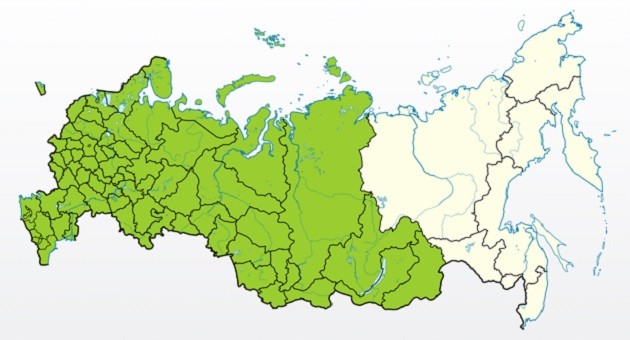
Growing regions
- Middle zone.
- Some northern regions.
- North Caucasus.
- Western Siberia.
- Ural.
- Crimea.
Origin
The Sverdlovsk Experimental Station for Fruit and Vegetable Growing began developing a frost-resistant variety for cultivation throughout virtually the entire region, but primarily in the Urals and Western Siberia, back in the mid-1990s. Leonid Andrianovich Kotov, a renowned Soviet-Russian scientist, supervised the breeding efforts. The Persianka variety, which is openly pollinated by other varieties, was used as the starting material. Immediately after the new apple tree, named Pervouralskoye, was cultivated, seedlings were sent to various farms in the Urals for field trials.
At the dawn of the new century, the first harvests were achieved, which were highly praised by experts and gardeners themselves. In 2004, the apple tree was classified as an elite variety, added to the State Register, and zoned for the Altai Republic and the Volga-Vyatka Federal District. In fact, the variety can be grown in virtually any part of our country, with the exception of the Far North and the Far East.
Content
Description of the Pervouralskaya apple variety
 The large size of this apple tree's fruits, their beautiful appearance, and unique flavor are the primary reasons that make it popular among gardeners. The trees are remarkably frost-resistant, require no special care, and can easily survive drought or heavy rains. Furthermore, the variety is resistant to five races of fungi. scabies, making it virtually immune to common apple tree diseases. It is recommended for growing in both small garden plots and large, intensive commercial orchards.
Apples: What they look like
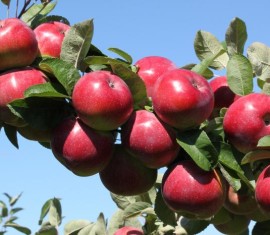
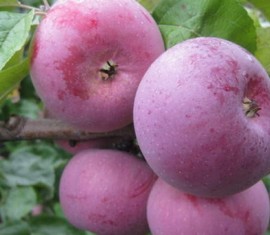
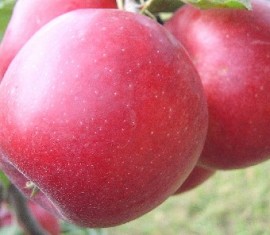
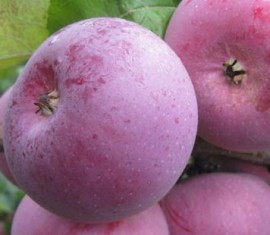
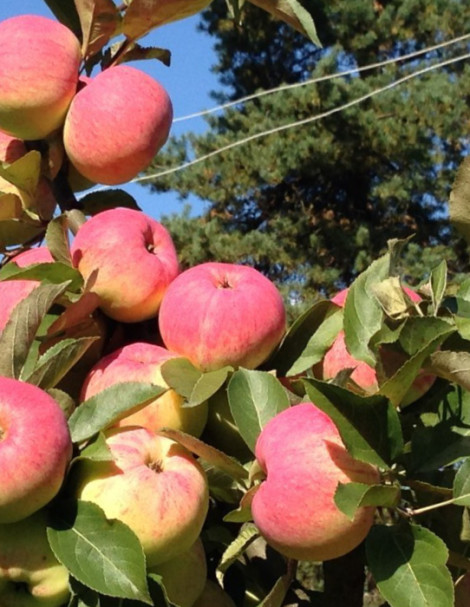
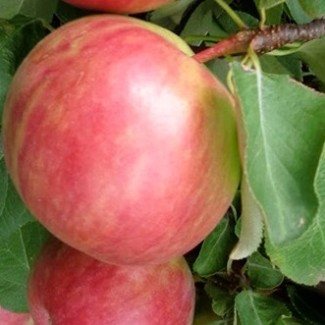
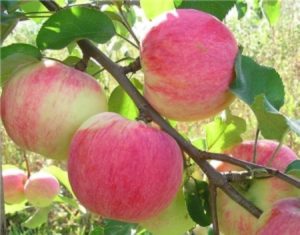 The fruits are typically large or even larger. They can easily weigh 250-300 grams, which is quite unusual for Ural varieties. They are predominantly round, uniform in size, and can be slightly flattened, with weakly developed ribbing that is barely visible.
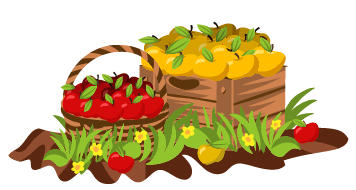
The skin of the pods is dense, fairly thick, smooth, and glossy, and may be covered with a slight oily coating. The base color is green or greenish-yellow, becoming bright yellow as they ripen. Approximately 65-70% of the surface is hidden under a blotchy, streaky blush of orange-red or even raspberry hue. Subcutaneous punctures are few in number, very subtle, and light gray or slightly greenish in color. The chemical composition can be characterized by the following indicators per 100 grams:
- P-active substances (catechins) – 412 milligrams.
- Ascorbic acid (vitamin C) – 11.4 milligrams.
- Total sugars (fructose) – 11.9%.
- Pectins (fiber) – 9.2%.
- Titratable acids – 0.48%.
The fruit's flesh is white or slightly creamy, can be yellowish, firm, prickly, crisp, fine-grained, very juicy, and aromatic. It has a pleasant sweet and sour flavor, considered harmonious, balanced, and dessert-like. A professional tasting score is 4.4 out of 5.
Pervouralskaya apple tree: characteristics
Crown and root system
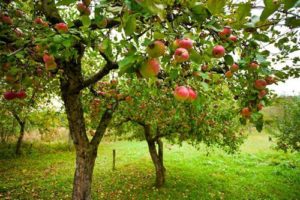 The tree is considered medium-sized, but more closely fits the definition of a natural semi-dwarf. Its height depends primarily on the weather and climate conditions in which it grows. In favorable conditions, plants without pruning stretch to about 3.5-4 meters, and in harsher conditions they can grow no more than 2-2.5 metersThe crown is predominantly oval or broadly oval, but may become spreading and slightly weeping over the years. It is moderately dense, with dense foliage. The shoots are fairly dense, extending from the trunk at a nearly right angle, and are covered with brown or greenish-brown bark.
The leaves are ovate to oval in shape with a short, pointed tip. They are leathery, green or dark green, dense, and glossy, with pubescent undersides. The margins are finely serrated, crenate, slightly wavy, and may be raised, with coarse ribbing. The root system is medium-deep, branched, and active, seeking moisture.
Productivity and pollination
You can see the first buds on the Pervouralskaya tree around two or three years after planting in open ground. However, it's best to pluck them immediately at this point, allowing the tree to develop a root system and green foliage. Moreover, the yield increases gradually. A small harvest of apples will be possible in the fourth or fifth year, and only a mature tree will yield at least 85-120 kilograms of fruit.
The variety is considered conditionally sterile, meaning that some of the harvest (approximately 12-20% of the maximum) can be harvested without cross-pollination with other varieties. However, to achieve a larger yield, Pervouralskoe should be interplanted with other varieties that have suitable flowering times. Experienced gardeners recommend establishing a garden near the apiary or using a mobile apiary.
Winter hardiness and disease resistance
The crop can confidently be called low-temperature-resistant. It can even withstand temperatures as low as -37-40°C, especially with proper winterization. Just as it tolerates drought, apple trees are also resilient to prolonged cold spells and sudden temperature fluctuations. However, they don't like drafts and strong winds, and can even freeze in winter if the site isn't chosen correctly.
The variety is genetically immune to all types of apple scab, the most common fungal infection affecting apples. Therefore, there's no need to worry about it. However, some other diseases can affect it, but not very aggressively. Pests readily damage not only the fruit, leaves, and bark, but also the wood itself, so trees need to be treated promptly.
Rootstocks and subspecies
This variety is considered new, so it doesn't yet have subspecies with all their original characteristics. However, it is grown on a wide variety of rootstocks, the most popular of which is standard. Pervouralskaya can also be grafted onto semi-dwarf, dwarf, and even wildings. In this case, almost all characteristics will be virtually identical to the original.
Features of growing Pervouralskaya
 Landing
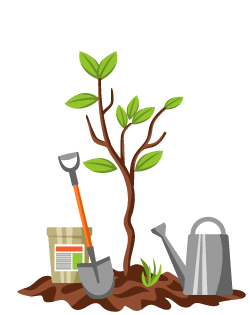 Landing
Key Features
- You'll need to choose your planting site very carefully. Apples thrive in open spaces and good light, otherwise you won't get large, abundant fruits. It's also a good idea to ensure there are no drafts in the growing area, as young trees can become diseased and even die.
- Apple trees don't like being near groundwater; it should be at least 2 meters deep. Avoid planting them near lakes, rivers, or ponds, or even wells.
- There are no special soil requirements, but apple trees yield significantly better results in fertile soil than in poor soil. Therefore, even if you plant them in sandy loam or clay loam, it's best to fertilize them promptly and thoroughly.
- Before planting, be sure to inspect all roots and trim off any dry, diseased, or damaged ones. You can soak the roots in warm water for 5-7 hours to hydrate the tree.
- The holes can be prepared in advance using the standard method, or they can be dug just 2-3 weeks before planting. Ideally, the holes should be 60-70 centimeters deep and up to 1 meter in diameter to allow the root system ample space. Topsoil mixed with manure or other organic fertilizer is added to the bottom, followed by drainage and water, and then left outdoors.
- Stakes are driven into the holes immediately for tying. They can be either metal or wooden. They can be removed no earlier than 2-3 years after the start of fruiting.
- The optimal distance between trees in a row, and between the rows themselves, is 2.5-3 meters; this is enough to ensure that mature trees do not conflict with their crowns or rhizomes.
- The seedling is placed vertically in the hole so that root collar It should protrude about 5-9 centimeters above the surface. This will prevent it from rooting above this level and will not negate all the properties of the rootstock.
- Cover the root system with soil and compact it by hand, but not too hard. Create a small ridge of soil around the perimeter of the hole, add approximately 35-40 liters of water, and mulch the surface with any suitable material (compost, manure, chopped grass).
Landing dates
Pervouralskoe is planted not only in the fall, 2-3 weeks before the first frost, but also in the spring. This can be done in March or early April, when the risk of recurrent frosts is no longer high. Trees with closed root system, that is, in bags or pots that do not require additional disposal, it is permissible to transfer them to open ground at any time during the growing season.
Protection from frost and rodents
The tree's winter hardiness is quite high, but that doesn't mean it doesn't require sheltering during the cold season. In the mild climate of Crimea or southern regions, this may not be a concern, but in Moscow region, Leningrad region, on Urals or in Siberia Carelessness can lead to the death of tree trunks. The root zone is protected with a 10-15 cm layer of soil or straw mats, and the trunks are wrapped with burlap, agrofibre, or roofing felt. In some cases, trees can be covered with a tent.
To prevent insects from settling in the root zone or bark cracks over the winter, trees should be whitewashed with lime twice a year. To protect against rodent pests that love to feast on the delicate bark in winter, you can coat the trees with lard, gardening products, or grease.
Tree care
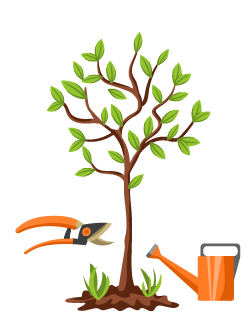 Tree care
Loosening the soil, watering: proper agricultural technology
You need to loosen the soil around the tree regularly, because it likes to soil The soil should be saturated with oxygen. Hoeing is acceptable at least once a week, while also removing weeds, but once every 3-4 weeks is ideal. Digging once or twice a year is sufficient. This must be done carefully and cautiously to avoid damaging the roots near the surface.
Trees of this variety are excellent at finding their own moisture. However, it wouldn't hurt to give them a boost three or four times a season, applying approximately 45-50 liters of water per mature tree, divided into two sessions (morning and evening). You can also feed and fertilize the trunks with the water, as water helps various nutrients be better absorbed and assimilated.
Pruning: simple crown shaping
The first pruning of the tree should begin immediately after planting, even if you purchased a pre-formed sapling from a nursery. The central trunk is shortened by about a third, and the skeletal side branches are spaced far apart, 5-7 centimeters shorter, in tiers.
It's also important to remember to conduct a thorough crown inspection and sanitary pruning annually. This involves removing all damaged, dead, or diseased branches. Around 12-15 years of age, you can perform rejuvenation treatments by removing 2-3 mature shoots, thus allowing the new shoots to develop.
Reproduction
- Clones (layering).
- Rooting of buds or cuttings.
- Grafting.
- Growing from seeds.
Diseases and pests
- Fruit bitterness.
- Hawthorn.
- Leaf roller.
- Codling moth.
Ripening and fruiting of Pervouralskaya
The beginning of fruiting
 The beginning of fruiting
These apple trees are considered early-bearing, as the first flowers appear early. They should be picked before they develop. The first harvest should be reaped only in the fourth or fifth year after planting. At this point, you'll be able to harvest at least 5-15 kilograms of large, beautiful, and fragrant fruit.
Flowering time
May bloom is a characteristic of the vast majority of apple trees, and this variety is no exception. The timing will depend directly on the growing region. For example, in the southern regions, it begins in early May, while in the Urals it doesn't begin until mid-May or even late May. The process lasts approximately 10-14 days, during which time the bees must do their work. It blooms with beautiful, large, snow-white or light green flowers, gathered in clusters, exuding a bright and powerful fragrance.
Fruiting and growth
The apple tree grows quickly, reaching its full height in just a couple of years. It can reach approximately 25-40 centimeters in a year. At the same time, its fertility increases gradually but quite vigorously. By the age of 7-9, you can harvest the maximum yield of delicious, unusual apples.
Harvesting begins around the second half of September or even early October. However, it's worth hurrying. It's best to pick the fruit early, as it will lose significant nutritional value if left to sit too long, although it rarely falls to the ground. It keeps for a very long time, especially in suitable conditions, until spring, or even until the next harvest, making it a versatile variety.
Top dressing
- Superphosphate.
- Mineral complexes.
- Compost.
- Manure.
What to do if it doesn't bloom or bear fruit
- Check for pests and diseases.
- Transplant.
- Limit watering.
Why do apples fall?
- Overripe.
- Natural factors.
- Pests.
- Diseases.
Leave your feedback on the winter-hardy Pervouralskaya variety to share your experience and knowledge with others.