Apple tree "Zelenka" juicy: characteristics of the variety and care
| Color | Greens |
|---|---|
| Ripening season | Autumn |
| Size of apples | Average |
| Taste | Sweet and sour |
| Crown type | Average tree height |
| Shelf life | Low shelf life |
| Application | For recycling , Fresh |
| Winter hardiness | High winter hardiness |
| Fruiting age | Up to 5 years |
 History of origin and regions of growth
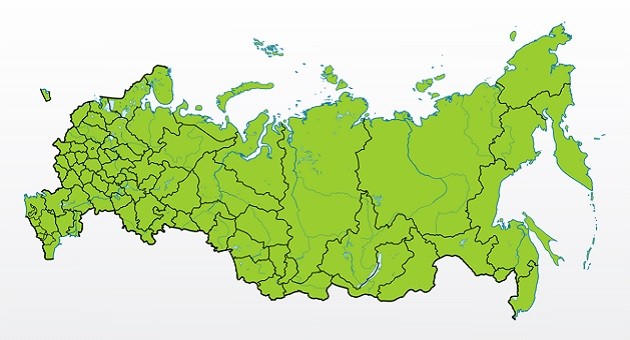
Growing regions
- Leningrad region.
- Siberia.
- Far East.
- Middle zone.
- Moscow region.
- Northern regions.
- Ural.
Origin
The Zelenka Juicy apple tree was invented by renowned breeder Grigory Ivanovich Semenov, head of the Primorsky Fruit and Berry Experimental Station of the Primorsky Research Institute of Agriculture. It was developed specifically for use in the Primorsky Krai. It was based on the Kitayka Nalivnaya variety, pollinated by Raneta and other winter-hardy varieties.
Content
Description of the variety Zelenka juicy
 Primorye gardeners highly value this variety due to its truly outstanding environmental adaptability. The trees are undemanding in terms of growing conditions, soil, humidity, and temperature, and require no special care beyond standard measures.
The trees produce a high yield, and the fruits themselves are attractive and tasty, suitable for both fresh consumption and processing. Despite their short shelf life and rapid shedding, the apples are recommended for cultivation in private farms and in intensive commercial orchards, and are aimed at producing juices, jams, and compotes.
Apples: What do they look like?
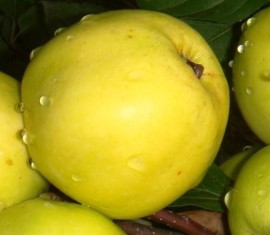
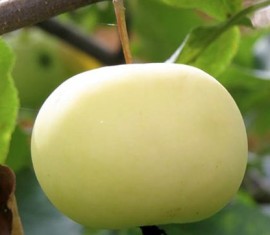
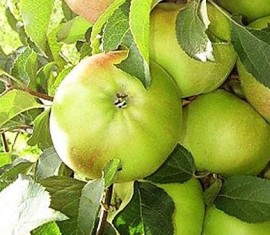
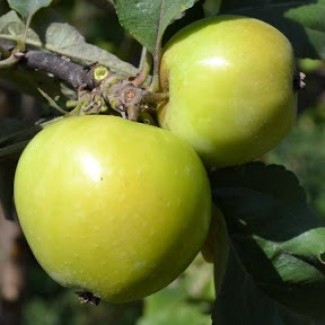
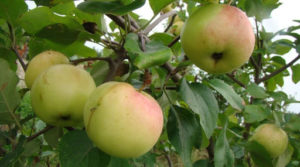 The fruits are usually medium-sized, which is good for northern apple trees, as they primarily produce small, fairly tart fruits. They are round, spherical, generally symmetrical, but can be slightly elongated, and can reach a maximum weight of 135-150 grams in favorable years and with proper, timely care. The surface is smooth; the ribbing is virtually invisible, but the side seam is often clearly visible.
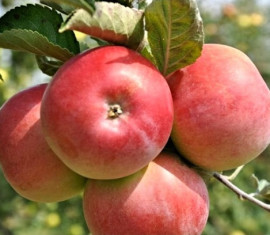
The skin is dense, considered firm and elastic, and protects the apples well from mechanical damage. It is green or deep green, hence the variety's name, and can have a fairly thick waxy coating. As it ripens, it becomes more yellowish. The blush is usually absent, but may appear on the sunnier side as blurred, translucent, slightly orange, pink, crimson, or red spots.
There are numerous subcutaneous dots, they are light in color and only moderately visible on a green apple. The chemical composition is best assessed by the following factors:
- P-active substances – 367 milligrams.
- Ascorbic acid (vitamin C) – 4 grams.
- Sugar (fructose) – 12.3%.
- Titratable acids – 0.92%.
- Pectins (fiber) – 14.6%.
The flesh is firm but not hard, prickly, crisp, tender, and very juicy with a rich aroma. It has a white or greenish hue and can be slightly creamy, but more often, when ripe, it takes on a slightly lemony hue. The flavor is more tart with a sweet aftertaste. It is considered a dessert-like, harmonious fruit, and has been rated 4.4 out of 5 by professional tasters.
Apple tree "Zelenka juicy": characteristics
Crown and root system
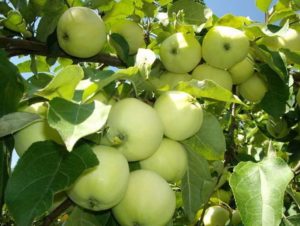 The tree is considered tall, although the maximum it can reach is no more than 4-5.5 meters, and even then, in favorable conditions, without pruning. Most owners prefer to prune the trees, limiting their height to 3.6-4 meters for ease of fruit picking and maintenance. The crown is most often oval or elongated, but over the years it becomes broadly oval, sometimes spreading and even weeping. The branches are medium-thin, long, straight, grow at right angles, covered with brownish, greenish-brown, or brownish bark, lightly pubescent in some areas.
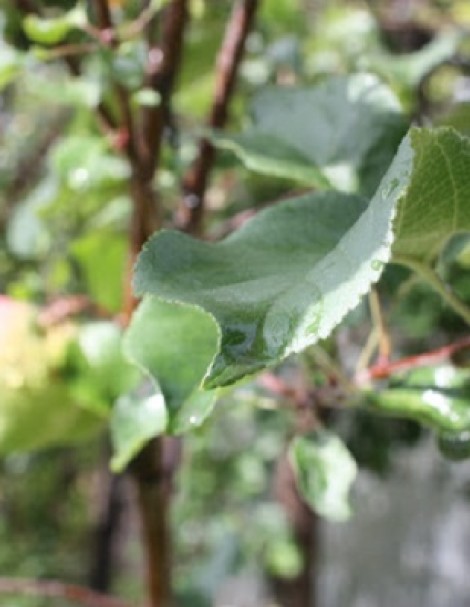
The leaves are large, heavily wrinkled, leathery, dense, smooth, and glossy. They are green, emerald, or dark green. The blade is elongated, with a long, pointed tip. The edges are serrated, jagged, serrated, and can be wavy. The root system is most often taproot, but depends on the rootstock on which the tree is grown. It is branched, deep, and well adapted to seeking water deep in the soil.
Productivity and pollination
For northern apple trees, Zelenka Juicy shows truly outstanding results.
With proper care, a single mature tree can produce 45-55 kilograms of tasty and aromatic fruit in the 6th to 8th year. By the 9th to 10th year, yields typically reach their maximum, reaching over 55-70 kilograms, which experts consider high.In favorable years, thrifty farmers harvest even more than eighty kilograms of apples.
A special advantage of the apple tree is its conditional self-fertility, which is quite high in percentage terms. If there are no nearby apple trees with suitable flowering times for cross-pollination, you can obtain about half of the maximum yield. However, it's best to place additional pollinators within 50-90 meters, bring beehives to the plantings during flowering, and spray the trees with sugar syrup.
Winter hardiness and disease resistance
This variety is extremely adaptable and, although intended for cultivation in Primorye, thrives in any region where the weather isn't excessively dry or hot. However, the trees struggle with drought and heat, requiring frequent watering, shelter, and other measures. Low temperatures down to -40-45°C aren't particularly harmful, especially if they are properly prepared for winter and properly sheltered.
The apple variety is resistant to fungal infections and rarely gets sick with any kind of fungus. scabies, powdery mildew, and moniliosis. Bacterial bark cancer is also rare in Zelenka, but preventative measures are still necessary, otherwise it's easy to lose trees during years of severe epiphytotics. Insects can damage leaves, bark, and wood, so insecticide treatments should be carried out regularly.
Rootstocks and subspecies
There are currently no subspecies of Zelenka, and there likely won't be any. However, trees can be grown on various rootstocks, imparting some of the characteristics of the parent plants. For example, on dwarf or semi-dwarf rootstocks, the standard trees will be compact, no taller than 2-3 meters, and will bear larger fruit. On vegetative rootstocks, the trees will stretch upwards but are much more winter-hardy.
Features of growing Zelenka juicy
 Landing
 Landing
Basic conditions
- Only a sunny location, exposed to sunlight for most of the day, is suitable for planting this variety. In the shade, the trees may grow and even bloom, but they will not produce a normal quantity of fruit, and the quality of the fruit will be poor—they will likely be small and sour.
- Good crown ventilation is important for Zelenka, but it's important to ensure that drafts don't disturb the trees. Otherwise, they may become diseased and die.
- Groundwater levels play a significant role, as trees can easily penetrate many meters into the soil. Once they reach water, they will inevitably begin to rot, and the process will be unstoppable. Therefore, if the water table is high, it's best to dig a barrier, such as a sheet of slate or several layers of roofing felt, at a depth of 2-2.5 meters, directing the tree's roots laterally.
- Holes are prepared a season before planting; only in emergency cases can they be dug 4-6 weeks in advance. It's best to bury the seedlings at a 45° angle and cover them with hay and spruce branches, then plant them the following season.
- They dig holes 70-85 centimeters deep and up to 1 meter in diameter, fill the bottom with soil and fertilizer, put stones, broken brick or vermiculite, gravel on top, water them with 45-60 liters of water, and leave them in the open air.
- There should be at least 3.3-4.5 meters of space between rows to allow the trees to feel comfortable. The same amount of space can be left between trees in a row, or slightly more.
- Place the seedling on a drainage mat, straighten the roots by hand, cutting off any dried or diseased roots, cover with soil, and compact. Water the top with 35-45 liters of water. Mulching is optional.
Landing dates
The optimal time for planting Zelenka is spring, specifically late March or early April. The main criterion is soil warming. However, it's also important to keep an eye on weather forecasts, as recurrent frosts can seriously damage the trees. In some cases, fall planting is acceptable, but the first frost should be at least 25-30 days away.
Tree care
 Tree care
Protection from frost and pests
Before the onset of cold weather, around August, you need to gradually reduce watering and reduce it to zero by early September. This will allow the trees to stop the flow of sap in their trunks on their own. Trees can be covered using a tent-like method, especially when young and still short. The trunks are wrapped in burlap, and the root zone is covered with straw or spruce branches.
To keep rodents away, a thick layer of melted lard, grease, or fuel oil is applied to the trunks. hares, neither hamsters nor mice will gnaw young shoots and bark. Whiten Trees need to be limed in early spring and autumn to repel insects that are eager to settle in cracks and chips in the bark, especially in older trees.
Loosening the soil, watering: proper agricultural technology
You should dig the soil around the trunk at least once a year, but you can do it twice—in spring and fall. This will provide additional oxygen to the root system and also remove weeds, root suckers, and other plant shoots. You can hoe the soil more frequently, approximately 3-6 times per season, if needed. After 6-9 years, some gardeners cover the root area with sod or sow herbs there to help maintain natural aeration.
Trees require watering only in the driest years. This shouldn't be a problem; just 3-4 applications per season are sufficient, timed to coincide with flowering, fruit set, and fruit ripening. The rest of the year, Zelenka is self-sufficient.
Pruning: simple crown shaping
Apple trees usually arrive from the nursery already trained in a sparse tiered fashion. This is the best option for them, with branches spaced at different heights and widely spaced. This prevents the crown from becoming overly dense in the future. You'll simply need to maintain its shape by removing shoots that protrude inward and upward. spinning tops.
Sanitary pruning, which involves removing all dead, diseased, or damaged branches, is done in early spring or fall. It's important that by this time, the sap flow in the trunks has completely stopped. Rejuvenation can be performed starting around 14-16 years, by cutting off 1-2 mature shoots and allowing the new shoots to develop.
Pollinator varieties
- Amur red.
- Antonovka.
- Avant-garde.
- Augustovskoye Far Eastern.
- Ribbed.
- Ruble.
- Ranets.
- Amur filling.
Reproduction
- Rooting.
- Kidney grafting.
- Growing from seeds.
- Cuttings.
Diseases and pests
- Scab.
- Bacterial burn.
- Powdery mildew.
- Green aphid.
- Codling moth.
- Leaf roller.
- Hawthorn.
Ripening and fruiting of the succulent green
The beginning of fruiting
 The beginning of fruiting
This variety is early-bearing, so you won't have to wait decades for the first apples to appear on the branches. In just three to five years, you'll be able to harvest approximately 5-10 kilograms of delicious and aromatic fruit. This will definitely be enough to give you a taste of what these fruits are all about.
Flowering time
The apple tree typically blooms mid-season. Around mid-May, it begins to open its buds, and by the end of the month, the ovaries have fully formed. The flowers are beautiful, medium-sized, with very delicate petals, saucer-shaped, and very fragrant. The blooming process can last approximately 12-16 days, but it all depends on the weather. The colder and more inclement the spring, the longer the Zelenka will bloom.
Fruiting and growth
This variety can be safely considered fast-growing, as it easily produces 35-50 centimeters of shoots in a single season. However, this is only until fruiting begins; after that, growth slows slightly, but not significantly. Fruit production increases gradually, and after just 3-4 years, yields increase significantly, reaching their peak by 12-15 years.
A characteristic feature of this apple tree is the uneven ripening of the fruit on the branches. This often leads to difficulties harvesting, as the ripening variance can be as much as 2-3 weeks. Overripe fruit easily falls to the ground, becoming completely unsuitable for storage and requiring immediate processing. Typically, harvesting should be planned for September, spread out over the entire month, and the fruit's ripeness should be determined by eye. Apples have a short shelf life, no more than 4-6 weeks, during which time they must be fully processed into juices, preserves, compotes, and jams.
Top dressing
- Peat.
- Compost.
- Ammonium nitrate.
- Humus.
- Chicken manure.
- Superphosphate.
- Manure.
- Mineral complexes.
What to do if it doesn't bloom or bear fruit
- Check for pests or diseases.
- Transplant into the sun.
- Water.
- Fertilize.
Why do apples fall?
- Wind, hail, hurricane, rain.
- Overripe.
- Pest damage.
- Diseases.
Please leave your feedback on the Zelenka Juicy variety, as many gardeners would like to grow similar ones in their gardens.