Stark apple tree: characteristics of the variety and care
| Color | Reds |
|---|---|
| Ripening season | Winter |
| Size of apples | Average |
| Taste | Sweet and sour |
| Crown type | Tall tree |
| Shelf life | High shelf life |
| Application | Universal variety |
| Winter hardiness | Average winter hardiness |
| Fruiting age | Up to 5 years |
 History of origin and regions of growth
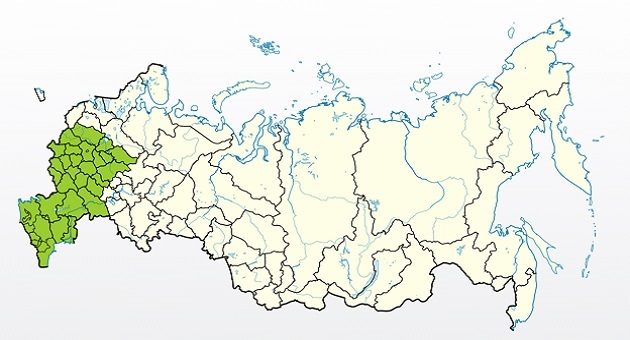
Growing regions
- Crimea.
- North Caucasus.
- Middle zone.
- Moscow region.
- Some northern areas.
Origin
The origin of this variety is unknown. This ancient American apple tree arrived in our country around the 1930s and 1940s. It is being actively supplanted by newer, more advanced varieties. It is not officially listed in the State Register of Breeding Achievements and has no zoning. It is present in very limited numbers in private gardens.
Description of the Stark variety
 Ancient American apple trees are a rarity in our country's horticultural fields. However, Stark has earned a worthy place among its "relatives" thanks to its unique, positive qualities. These trees are undemanding in terms of soil and care, and are quite resilient to the harsh domestic climate. They regularly produce substantial harvests without needing to rest.
The fruits have high consumer qualities, are beautiful, tasty, and have a pleasant and strong aroma. They are easily transported even over the longest distances and can be stored in refrigerator or cellar. Stark is recommended for individual cultivation.
Apples: What do they look like?
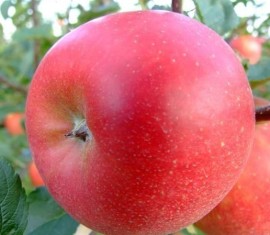
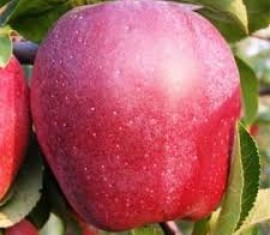
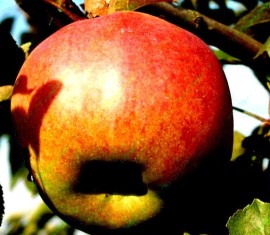
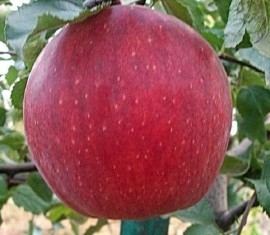
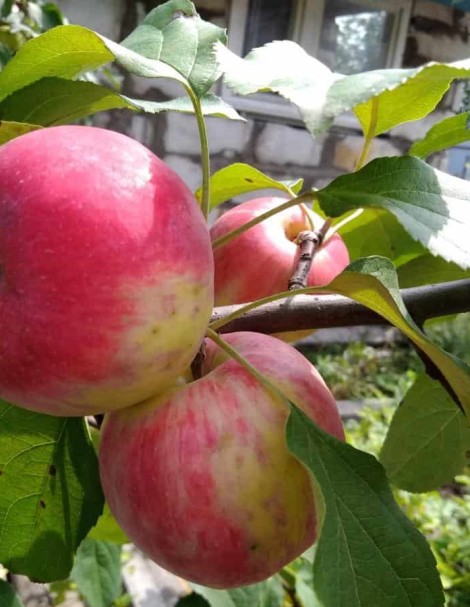
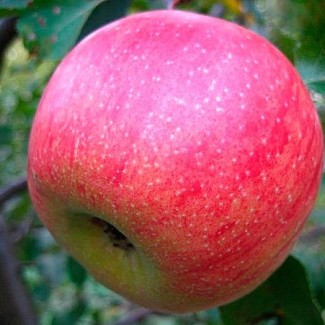
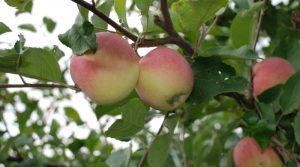 The fruits are medium to large in size. Under favorable climate and weather conditions, with good care and timely pruning, they can reach 120-170 grams, sometimes even more. They are round, smooth, sometimes slightly flattened or conical, and generally uniform and symmetrical, though they can be slanted to one side (in the shade). Ribbing is barely visible, only slightly visible near the calyx.
The skin is elastic, thick, strong, and fairly firm, capable of protecting against severe mechanical damage. It is green or (during ripening) greenish-yellow, even golden, or lemon-colored. The blush is brick-brown, diffuse, and translucent, occupying approximately 45-60% of the surface on the sunny side. Subcutaneous punctures are few in number; they are greenish-white, large, and clearly visible. Experts evaluate the chemical composition based on the following data:
- P-active substances (catechins) – 423 milligrams.
- Ascorbic acid (vitamin C) – 7.9 milligrams.
- Fructose (total sugars) – 12.1%.
- Pectins – 14.3%.
- Titratable acids – 0.87%.
The flesh is a distinct pale green or greenish color, due to the numerous light green veins along the skin, extending all the way to the seed pod. It is dense, juicy, pleasantly refreshing, tart when picked and sweet and sour after 3-4 weeks of storage. Considered a dessert fruit, harmonious and balanced, it receives a tasting score of 4.5-4.6 for both flavor and appearance.
Stark apple tree: characteristics
Crown and root system
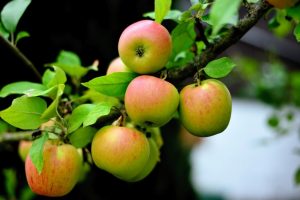 The tree is very vigorous, easily reaching 8-10 meters, making maintenance and fruit harvesting significantly challenging. Therefore, it is traditionally pruned to a height of 5-6 meters. The crown is rounded, becoming broadly rounded over the years, drooping, and spreading. The shoots are long, straight, and thick, round in cross-section, extending from the trunk at right angles, and covered with reddish-brown or cherry-colored bark with a light pubescence. Stark produces mixed fruiting, producing twigs, rings, and spears.
The leaves are unusually shaped, tapering toward the base and rounded toward the tip, curling downward. They are matte, leathery, and dense, dark green or emerald green. The leaf edges are finely serrated and serrate. The root system is deeply rooted, well-branched, and has numerous tiny offshoots, fibrous or taproot, depending on the chosen rootstock.
Productivity and pollination
This variety is high-yielding and vigorous. Under suitable conditions, it can even rival the notorious Antonovka.
In favorable years, with high-quality, timely care, the tree can produce approximately 140-160 kilograms of storable, beautiful and tasty fruits per year..
Stark is considered conditionally self-fertile, meaning it doesn't require pollinators to produce fruit, but with them, the yield increases significantly. Without suitable nearby apple trees, you'll only get 15-25% of your potential yield.
Winter hardiness and disease resistance
The apple tree is resistant to low temperatures. It tolerates the climate of central Russia well. withstands the harsh weather conditions of the Moscow region and the Leningrad Region. Temperatures down to -32-35°C are almost unaffected by this plant if properly protected, as long as they don't last more than 2-3 weeks at a time. To prevent young shoots from freezing, it's important to properly prepare the trunks for winter.
The variety has a moderate resistance to scab. In years of high humidity, trees can be affected without appropriate preventative measures. The foliage and fruit become infected, making them unfit for consumption. Timely spraying with fungicides and insecticides is recommended to minimize these risks.
Rootstocks and subspecies
Stark can be grown on a variety of rootstocks, imparting unique characteristics to the variety. The most popular on the market are seedlings on dwarf and semi-dwarf rootstocks, which make the trees much more compact. However, their winter hardiness is significantly reduced, but the fruit becomes larger and the tree begins bearing fruit earlier.
Features of growing Stark
 Landing
 Landing
Basic conditions
- It's best to choose a location where the tree's crown receives direct sunlight all day long. Without enough ultraviolet light, the tree may grow poorly, become lopsided, and refuse to bloom or produce fruit.
- Apple trees don't tolerate acidic or salty soil, as this leads to their early death. Otherwise, there are no special soil requirements. Rocky slopes, loam and sand, podzolic or black soil—all are ideal.
- It's best to keep groundwater levels no closer than 2.5-2.3 meters to the surface. The deep root system will inevitably "find" it and begin to rot.
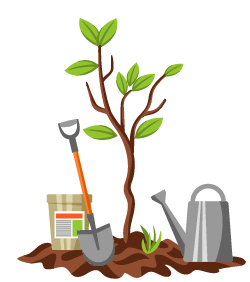
- It's best to prepare the holes for Stark a season before planting, so they have time to mature. Dig holes 75-90 centimeters deep and 1-1.2 meters in diameter, add fertilizer to the bottom, cover with a thin layer of soil or drainage material, and add 30-50 liters of water.
- There should be ample space between trees, up to 5-6 meters, as well as between rows. If the distance is too small, mature, tall apple trees will interfere with each other, significantly reducing yield.
- Stakes are inserted (driven or dug into) the holes to tie the apple trees to them while they are young. They should not be removed until they are three or four years old. Placing them north of the tree trunk will provide additional protection from cold, draughty winds.
- The grafting site is usually left above the surface to prevent the tree from rooting higher. Otherwise, the properties and qualities of the rootstock are compromised.
- The soil in the hole or drainage is raked into a pile, the apple tree is placed on it, covered with soil, compacted with feet, and watered with 45-60 liters of water. In arid regions, it is customary to mulch surface for additional moisture retention.
Landing dates
Stark can be transplanted into open ground in either spring or fall. In warmer regions, this is not important, but in harsher climates or with changeable, unreliable weather, the former option is better. The main thing is that the soil is well warmed and frosts are not expected for the next 3-4 weeks.
Tree care
 Tree care
Protection from frost and pests
Young trees are easier to manage; they can be covered from rootstock to crown using a tent-like method, and then no frost will harm them. However, as the tree grows, residents of more northern regions will have to work hard to protect their gardens. Straw, hay, or spruce branches are thrown over the roots, and the trunks are wrapped in burlap, agrofibre, spunbond, tarpaulin, or roofing felt. It's also advisable to stop watering before September to allow the tree time to stop its sap flow.
Tree trunks are whitewashed twice a year, in spring and fall. This helps repel insects that nest in bark crevices and around the rhizomes. It's a good idea to clean the whitewashed area with a stiff brush beforehand, removing any loose bark and debris. Coating the trees with lard or fuel oil helps repel rodents; they dislike the pungent, unpleasant odors.
Loosening the soil, watering: proper agricultural technology
Young trees need to be dug at least once a year, preferably twice. This not only helps stir up the soil, allowing oxygen to reach the roots, but also removes weeds, root suckers, and other plants. In between, lightly hoe the soil. For mature plants, this type of care is unnecessary, so most advanced gardeners lay sod around the roots or seed them with lawn grass.
Watering Young seedlings are recommended to be watered once a week or twice a month, depending on weather conditions. Over the years, the frequency of watering can be reduced, and with normal natural rainfall, watering can be completely avoided. The tree can take care of this on its own. Fertilizers and fertilizers are added with water; 3-5 waterings per season are sufficient.
Pruning: simple crown shaping
It can be difficult for an inexperienced gardener to figure out how to properly trim trees from the ground up, ensuring they don't suffer damage while also limiting their growth and shaping their form. Therefore, it's best to purchase trees with a pre-formed crown from a nursery. Oval, pyramidal, or sparsely layered shapes are best suited for Stark.
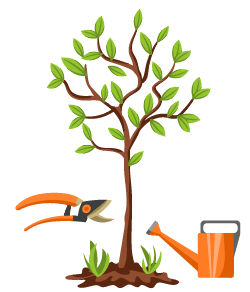
Trees should be regularly cleared of dead, broken, diseased, and pest-infested shoots in the fall and spring. Branches protruding into the crown and growing vertically upward should also be removed. These will interfere with the tree's normal growth, which will inevitably impact the harvest.
Pollinator varieties
- Melba.
- Idared
- Antonovka.
- Korobovka.
- Welsey.
- Stark Crimson.
- Quinti.
Reproduction
- Layers.
- Grafting cuttings.
- Clones.
- Growing from seeds.
Diseases and pests
- Scab.
- Cytosporosis.
- Powdery mildew.
- Pit bitterness.
- Fleas.
- Green aphid.
- Flower beetle.
- Scale insect.
- Codling moth.
- Hawthorn.
Ripening and fruiting of Stark
The beginning of fruiting
 The beginning of fruiting
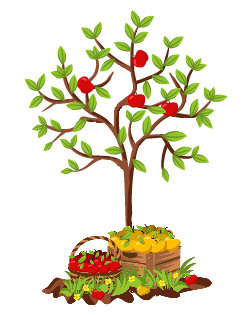
This variety is considered to be an enviably early-bearing variety, comparable to tall, late-autumn apple trees. It produces its first harvest as early as 4-5 years after planting in the orchard. Flowers may appear earlier, but it's best to pick them beforehand to allow the tree to develop a crown and rhizome. The first few years' harvest will be limited to just a few dozen fruits, but this will soon change.
Flowering time
Like most apple trees of similar maturity, Stark apple blossoms around early to mid-May, but in poor weather or relatively cool climates, it can linger until the end of the month. Its flowers are large, with very delicate, fleshy petals of a soft pink or snow-white color. They are very fragrant, making them easy for bees to spot even from afar.
Fruiting and growth
The tree grows very quickly, as mentioned, and in the first few years can reach up to a meter in height. The variety also increases productivity rapidly. Before you know it, fruiting will be at full capacity by the 9th to 11th year. In mature years, some farmers regulate flowering, removing 15-35% of the fruit to increase fruit size.
Apples begin to ripen in late September, if the previous winter and spring are warmer. If it was cold and there was frequent rain in the summer, it's best to start picking them in October, right up until mid-month. They don't fall to the ground immediately and can last until the first frost. However, fruit picked too late doesn't keep as well. Stark apples have a good shelf life, right up until the next harvest. In a regular cellar, they will easily last until April or May.
Top dressing
- Ammonium nitrate.
- Compost.
- Humus.
- Manure.
- Minerals.
- Superphosphate.
What to do if it doesn't bloom or bear fruit
- Check for the presence of pests or diseases.
- Activate watering.
- Feed.
- Transplant.
Why do apples fall?
- Natural weather conditions (wind, rain, hurricane, hail, frost).
- Pests.
- Diseases.
Share your own experience with the Stark apple variety so that any gardener can learn about it before planting and achieve maximum results.