Gloucester Apple Tree: Variety and Care Features
| Color | Reds |
|---|---|
| Ripening season | Winter |
| Size of apples | Large |
| Taste | Sweet and sour |
| Crown type | Tall tree |
| Shelf life | High shelf life |
| Application | Fresh , For recycling , Storage |
| Winter hardiness | Average winter hardiness |
| Fruiting age | Up to 5 years |
 History of origin and regions of growth
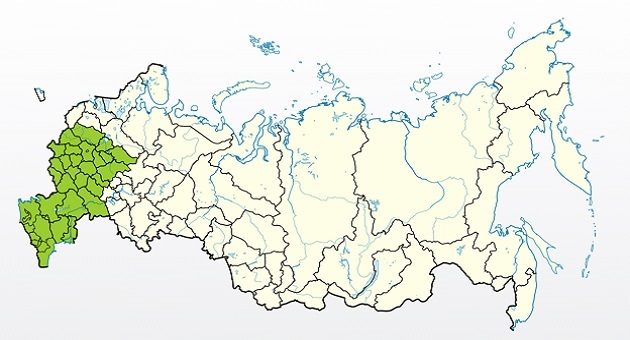
Growing regions
- Southern regions.
- Middle lane (with a big stretch).
- North Caucasus.
Origin
Apple tree breeding is a long and complex process. Work on this variety, currently one of the most popular in Europe, began in the mid-twentieth century. In 1951, at an experimental station in Germany, a hybrid named Gloster was created by crossing the Delicious Richard and Glockenapfel varieties.
The Nova Yablonaya inherited virtually all the positive qualities of its "ancestors," but the negative aspects of these varieties were extremely weakly expressed. The variety was immediately sent to various farms for experimental testing, where it performed exceptionally well. In 1969, it caused a real sensation at an agricultural exhibition. Gloster arrived in the Soviet Union only in 1989, and immediately gained a following thanks to its unusual, pleasant flavor and ease of cultivation.
Content
Description of the Gloucester apple variety
 Every gardener wants trees that annually bear delicious and healthy fruit that's easy to preserve or process. Add to this a rich vitamin content, easy and affordable tree care, high yields, and resistance to fungal infections, and you can confidently choose Gloster. It's recommended for growing in small home gardens as well as for commercial intensive orchards.
Apples: What they look like
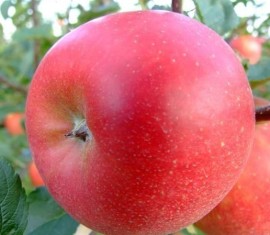
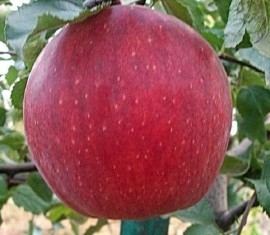
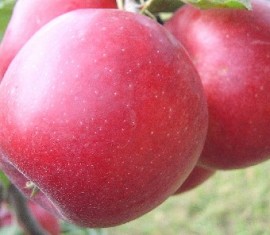
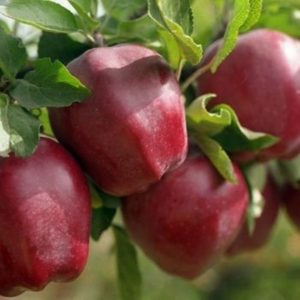 Gloucester apples are typically large and round, but can be lopsided and have pronounced ribbing. They average 160-190 grams, but can be heavier. Record-breaking specimens can reach 250-300 grams, but that's a tall order. The apples are slightly conical in shape, with a slightly elongated tip.
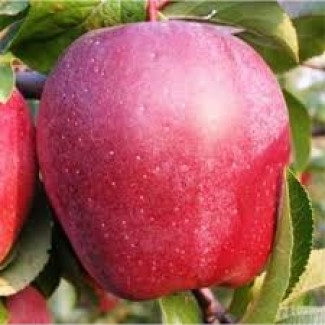
The skin is dense, thick, and glossy. It's usually green when unripe, but turns yellowish as it ripens. However, the actual skin color isn't visible, as it's almost completely (90-95%) covered with a bright red or crimson blush. The surface has a waxy coating, giving the apples a bluish tint. Subcutaneous punctures are numerous, light gray, large, and clearly visible. The chemical composition can be characterized by the following indicators per 100 grams of product:
- P-active substances (catechins) – 268 milligrams.
- Ascorbic acid (vitamin C) – 10.6 milligrams.
- Total sugars (fructose) – 13.4%.
- Pectins (fiber) – 11.6%.
- Titratable acids – 0.87%.
The fruit's flesh initially has a slight greenish tint, but as it ripens, it becomes a yellowish-cream. It is quite dense but not hard, crisp, very juicy, and tender. The apples have a sweet and sour, harmonious, dessert-like flavor, characteristic of apples, and a rich, intense aroma. They are considered very aromatic and "correct." The fruit receives a tasting score of 4.7-4.9 out of 5 possible points for appearance and taste, respectively.
Gloucester apple tree: characteristics
Crown and root system
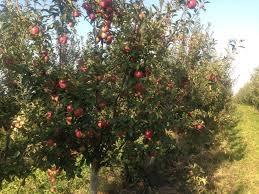 This is a tall tree, which is considered to be its only drawback. Without timely formative pruning, it can easily reach 8-9 meters, which will significantly complicate maintenance, and even more so, harvesting. Crown When young, the bark is rounded, becoming pyramidal or broadly pyramidal with age. It is moderately dense, meaning it has a small number of shoots, which mostly branch off from the trunk at an acute angle. The bark is smooth, glossy, green-brown with a reddish tint; over time, it may crack and become rough, becoming coarse.
The leaves are medium-sized, rounded, elongated, and dark green. They are leathery, dense, and covered with numerous wrinkles, with a more matte finish and may be slightly pubescent on the underside. The margins are slightly serrated, and the tips lack an elongated, pointed tip. The tree's root system is often highly branched but superficial, adapted more to the search for water than to establishing a strong root system.
Productivity and pollination
Gloucester is considered an early-bearing and high-yielding tree, and it would be surprising if such a large tree bore little fruit. Yields increase gradually as the trunk grows. By the fifth year, a decent yield of 35-40 kilograms can be achieved, but this is far from the limit.
On average, one adult tree produces 70-95 kilograms of aromatic and very tasty apples.
The variety's pollination rate is quite high, ranging from approximately 20% to 80%. Therefore, these apple trees don't require other varieties to produce fruit. However, in reality, this method yields no more than 40-60% of the ovaries that develop into apples. Therefore, it's common to plant Gloucester in rotation with other apple varieties to significantly increase fruit production.
Winter hardiness and disease resistance
By German standards, this tree's frost resistance is high, but in reality, it's considered average or even below average. Trees can barely tolerate temperatures as low as -20-22°C without losing fruit. However, experienced gardeners report that with proper preparation before the cold season and adequate shelter, they can grow even at temperatures as low as -28-30°C for at least a month. Nevertheless, this variety is recommended for cultivation in southern regions, the Caucasus, Crimea, and some temperate zones.
Gloucester has a genetic immunity to powdery mildew. Scab Apple trees are also extremely rarely affected by fungal diseases, as are other fungal infections. However, their bark is very sensitive to ultraviolet light. Therefore, it is recommended to whitewash the trunks with lime not only in the fall but also in the spring, before the leaves have opened, protecting the delicate trunk from the sun.
Rootstocks and subspecies
Gloucester has become the "parent" of many new varieties, but technically these are entirely new apple trees. However, it can be grown on various rootstocks, acquiring their original qualities and properties.
| Rootstocks | Peculiarities |
| Dwarf | The most common type of rootstock used for this type is M9. Apple trees grown on this type of rootstock grow to a maximum height of 2.5 meters, begin bearing fruit very early, and continue to bear fruit regularly until old age. While the lifespan of such a tree is reduced to 15-25 years, its compact size more than justifies the cost. All the fruit's nutritional qualities are preserved, and the tree's frost resistance is slightly reduced. |
| Columnar semi-dwarf | This is the preferred Gloucester variety for large commercial orchards, as its very compact tree takes up little space yet produces nearly the same amount of fruit. There are no difficulties in caring for and harvesting this apple tree, but the tree will live no more than 15 years, after which it will need to be replaced. |
Features of growing Gloucester
 Landing
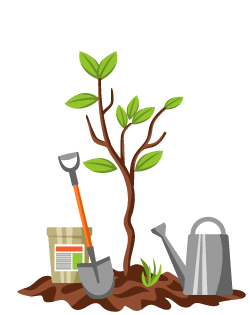 Landing
Basic conditions
- Trees of this variety prefer sunny, well-ventilated locations, but free from drafts. This factor must be taken into account when choosing a planting site; otherwise, the seedlings may become diseased and even die.
- Soil It should be slightly acidic, fertile and airy; dense, clogged soils are unacceptable for Gloucester.
- If the roots of the seedlings are damaged or have been damaged during transportation, it is best to trim them with garden pruning shears and place them in a bucket of water to soak them up.
- The holes are dug in advance, preferably in the fall. To do this, dig a hole 70-80 centimeters deep and 1 meter in diameter. The topsoil is mixed with fertilizer, poured back into the hole, filled with water, and left outdoors.
- To prevent mature trees from conflicting with each other, the distance between them should be at least five meters.
- To support the seedlings, stakes are installed immediately in the hole. They should not be removed for 3-4 years.
- A 15-centimeter drainage layer (broken brick, vermiculite, gravel, nut shells) is poured onto the bottom, and the seedling is placed vertically on top, having first straightened the roots.
- Carefully sprinkle the roots with soil, shaking the tree by the trunk to remove air bubbles, water, add a little soil if necessary, mulch with chopped grass, humus or compost.
For planting, it's best to choose strong, two-year-old seedlings from nurseries, where you can obtain all the official documentation. These trees take root best, begin bearing fruit quickly, and demonstrate good annual growth.
Landing dates
Gloucester is an easy-to-plant tree, so it can be planted in both spring and fall. The key is to choose the right time for planting. In spring, this can be mid-April, when the risk of frost has passed and the buds have not yet begun to open.
In autumn, things are a bit more complicated. You can begin planting around late September or early October, once the leaves have finished falling. However, it's important to remember that there should be at least 4-5 weeks left before the cold weather sets in, allowing the tree time to establish roots.
Protection from frost and rodents
In southern regions with a mild climate, trees don't need any winter preparation; they're quite capable of surviving mild cold without losing fruit or suffering significant stress. However, if winters are harsher, you'll need to take care of your own plantings. The trunks are wrapped with roofing felt, tar paper, straw bales, hay, nylon tights, or agrofibre, depending on your preference. If possible, pile snowdrifts onto the root zone. The tent method is only suitable for Gloucester when it's young, as it's unlikely to be able to wrap a seven-meter-tall tree.
To prevent insects from settling in the roots over the winter, which then damage the bark, wood, and fruit, whitewash the trunks with lime in the fall. This is a very effective and, most importantly, safe method. To repel hungry rodents, it's best to use grease or lard applied to the trunks, but commercially available products available at gardening stores can also be used.
Tree care
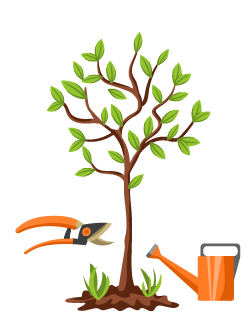 Tree care
Loosening the soil, watering: proper agricultural technology
This variety thrives in ample moisture, so avoid allowing the soil to dry out. It should be watered twice or three times a month during the first year, with at least 20-30 liters of water per tree. In subsequent years, watering can be reduced to once or twice a month, and only if there is no natural rainfall. Fertilizers are often added along with the water, which is very convenient.
To prevent freezing of the root system, which is located very close to the soil surface, watering should be stopped completely by the end of September or the beginning of October. On average, at least four weeks should pass before frost, allowing the tree time to completely stop the flow of sap in the trunk.
Regularly weed the area around the trunk, loosen the soil, and mulch it. This not only helps protect the tree from insects and nourish it, but also helps conserve moisture. Root suckers must be ruthlessly removed, just like shoots from other trees or shrubs.
Pruning: simple crown shaping
This variety isn't prone to becoming overly dense, so pruning is unlikely to be a hassle. The nursery's seedlings come with their skeletal branches already established, so simply ensure they don't grow too large.
However, immediately after planting, the central trunk is shortened by one-third to allow lateral shoots to develop. The tree should be pruned annually, removing all dry, diseased, or damaged shoots. For rejuvenation, starting in the 20th year, remove two to three mature branches, making way for new and young ones.
Reproduction
- Clones (layering).
- Grafting by cuttings or buds.
- Rooting cuttings.
- Growing from seeds (rarely).
Diseases and pests
- Black crayfish.
- Fruit rot.
- Cytosporosis.
- Green aphid.
- Leaf roller.
- Scale insect.
Ripening and fruiting of the Gloucester apple tree
The beginning of fruiting
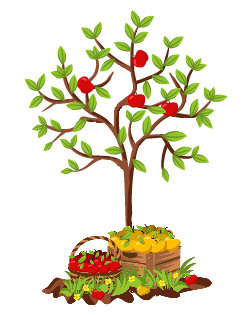 The beginning of fruiting
The first flowers on a tree, especially one grown on dwarf or semi-dwarf rootstocks, may appear as early as the second year after planting in open ground. However, it's not advisable to allow them to develop into apples. It's best to pluck the blossoms immediately, allowing the apple tree to develop the necessary branches first. Gloucester apples are considered to begin bearing fruit in the fourth or fifth year, when the tree can produce approximately 15-25 kilograms of apples.
Flowering time
This variety blooms mid-late, from mid- to late May, and the blooming process lasts a long time. It produces large, fragrant, white flowers, sometimes tinged with pink, gathered in clusters of four to five, which delight the eye for a week to 10 days.
Fruiting and growth
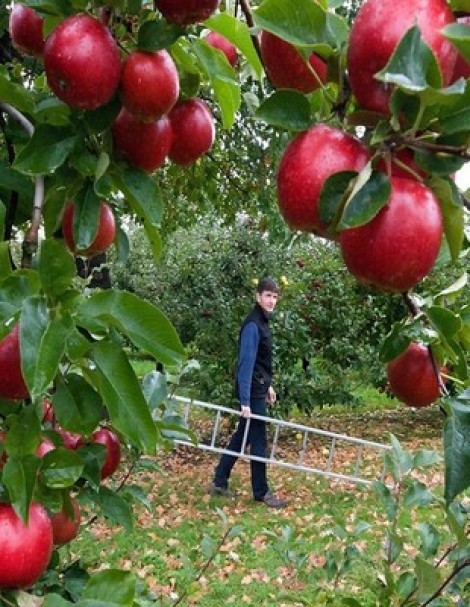
The apple tree grows fruit very well, producing more and more delicious and aromatic fruits year after year, which look just like a picture. By the age of ten, you can already harvest a full crop of up to 80-90 kilograms. Moreover, the tree's growth is quite rapid, as by this age it has already almost reached its required height.
The apples ripen by the end of September, when they can be picked and stored. However, consumer maturity occurs somewhat later, about a month to a month and a half later. When overripe, the fruits do not fall from the branches, which is considered a special advantage of the Gloucester variety, but leaving them for too long is also not recommended. The fruit can be stored in the refrigerator until February or March, and in a well-ventilated cellar until May.
Top dressing
- Compost.
- Peat.
- Humus.
- Urea.
- Manure.
- Bird droppings.
- Mineral complexes.
- Superphosphate.
What to do if it doesn't bloom or bear fruit
- Check for pests and diseases.
- Transplant.
- Feed.
- Watering should be done.
Why do apples fall?
- Natural factors.
- Pests.
- Diseases.
Leave your own reviews of the Gloucester variety to share your experience and knowledge with other gardeners.