Zhigulevskoye apple tree: characteristics of the variety and care
| Color | Reds |
|---|---|
| Ripening season | Autumn |
| Size of apples | Average |
| Taste | Sweet and sour |
| Crown type | Average tree height |
| Shelf life | High shelf life |
| Application | Universal variety |
| Winter hardiness | Average winter hardiness |
| Fruiting age | Up to 5 years |
 History of origin and regions of growth
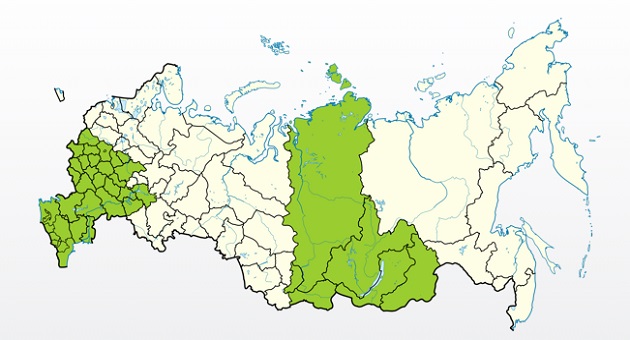
Growing regions
- Central and Central Black Earth Region.
- North Caucasus.
- Middle Volga and Lower Volga region.
- Eastern Siberia (creeping subspecies).
Origin
In 1931, renowned Russian scientist Sergei Pavlovich Kudrin, a pomologist and plant breeder, began conducting experiments crossing different apple varieties at an experimental station in Samara. The goal was to produce a high-yielding apple tree with tasty fruit and excellent shelf life. By 1936, a hybrid named Zhigulevskoye was created by crossing the American Wagner variety and the domestic Borovinka apple tree.
By the early 1940s, the apple trees were sent to various farms for testing, but the war interrupted this. Only after the war ended was the variety first classified as elite, and then added to the State Register (1965), zoned for the aforementioned regions. The variety has won numerous awards, including a gold medal at an international exhibition.
Content
Description of the Zhigulevskoye apple variety
 High-yielding autumn apple varieties are of particular interest to almost all Russian gardeners, especially since they possess considerable resistance to low temperatures. Zhigulevskoye is one such variety, and its apples have an unusually rich flavor that remains so almost until the next harvest. It is recommended for growing in both intensive commercial orchards and small home gardens.
Apples: What they look like
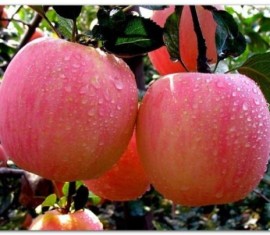
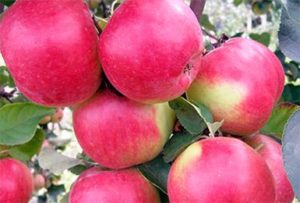 The fruits are predominantly large and even larger, but can often be uneven in size: some weigh 110-140 grams, while others weigh 200-250 grams. Some rare specimens, with proper care, can even reach 350 grams, but only if special supports are provided for the branches.
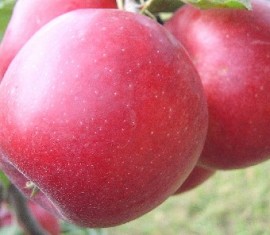
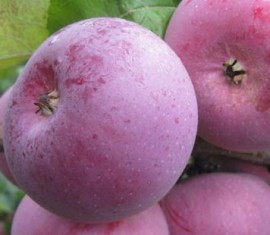
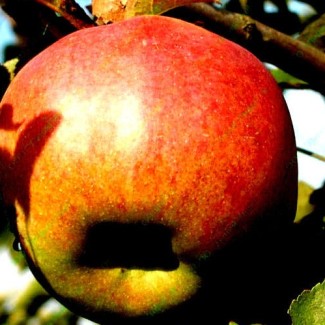
The apples are round, sometimes slightly or even strongly flattened, with distinct ribbing. The surface may be bumpy and even have small "warts" (protrusions with rusty spots). This is not a disease, but a characteristic of the variety, so there's no need to worry about them.
Although Zhigulevskoye apples may not seem particularly juicy, they are 87-90% water, making them a special choice for dietary nutrition.
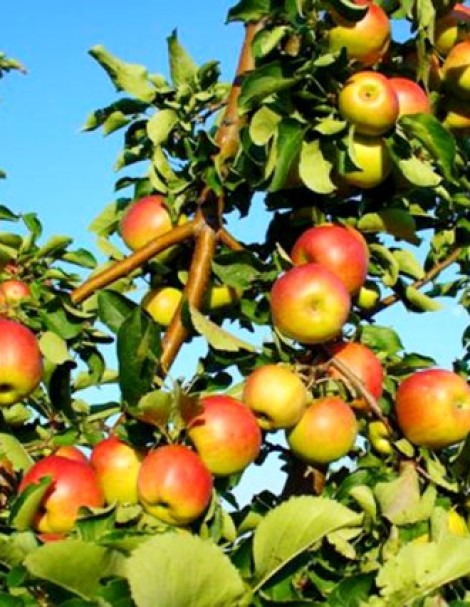
Apple skin is dense, yet thin and delicate, glossy, and covered with a shiny, oily coating. When young, it is green or light green, turning yellow as it ripens. The blush covers approximately 60-85% of the fruit; it is blurred and streaky, and can be brick-red or red. The chemical composition is most easily characterized by the following indicators (per 100 grams):
- P-active substances (catechins) – 121 milligrams.
- Ascorbic acid (vitamin C) – 19.2 milligrams.
- Total sugars (fructose) – 10.5%.
- Pectins (fiber) – 14%.
- Titratable acids – 0.69%.
The apple flesh is coarse-grained, tender, and easily peeled, with a light creamy or yellowish hue. It's not very juicy, with a sweet-and-sour flavor and a slight astringent aftertaste. This doesn't detract from the overall impression; in fact, it adds a special piquant flavor. These apples are considered to have a dessert-like, balanced, and harmonious taste, earning a tasting score of 4.6 out of 5 possible points.
Zhigulevskoye apple tree: characteristics
Crown and root system
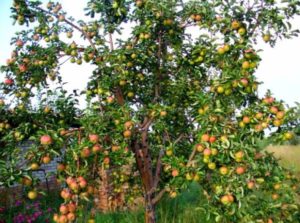 These trees are considered to be extremely fast growing and medium sized (semi-dwarf). Without pruning, they can reach a height of 3.5-4 meters in just a few years. However, most gardeners limit them to 3 meters, which significantly simplifies routine maintenance and makes it possible to mechanize harvesting if necessary.
The tree's crown can be broadly pyramidal or broadly oval, but in most cases it is spherical, very sparse, with clearly visible skeletal branches. The shoots are long and can be straight or geniculate. The bark is green-brown or brown, and with age it can become rough, crack, and crumble.
The leaves are quite large, oval, and elongated, with a deep green color. They are dense, leathery, slightly glossy, and covered with numerous veins. They have slightly serrated edges, often curling underneath. The root system is deep and superficial, and may or may not have a central taproot, depending on the rootstock used. It is branched and has many small branches that seek out and absorb moisture from the soil.
Productivity and pollination
For a semi-dwarf tree, the yield is very high.
In one season, at least 200-250 kilograms of aromatic, tasty fruits can be collected from an adult specimen.
If you provide your apple trees with good care, choose the right planting location, carefully protect them from frost during the winter, and protect them from diseases and pests, you can achieve the same results as Antonovka, the clear leader in this field.
The variety is self-sterile, meaning if there are no suitable apple trees within direct reach (150-200 meters), you won't get any harvest. The plants will bloom, but they won't produce fruit without cross-pollination. It's recommended to consider this from the outset and alternate planting Zhigulevskoye with other varieties that bloom at a suitable time. It's also crucial to ensure pollinating insects have access to the apple trees, which is often achieved by placing the orchard near an apiary or using mobile apiaries. This significantly increases the yield.
Winter hardiness and disease resistance
Many acknowledge the lack of winter hardiness of apple trees, considering this their main drawback. However, this is a complex matter, not just a matter of low-temperature tolerance. A tree can tolerate temperatures of -28-30°C for a month or two without harm, and sometimes much lower. However, it will likely not tolerate sudden changes in temperature, alternating thaws with severe frosts.
Zhigulevskoye is relatively resistant to scab, powdery mildew, and other fungal infections. This means they will undoubtedly affect the trees, making them difficult to treat. However, with timely preventative measures, you won't need to worry about them. The same applies to pests. Therefore, regular treatment with fungicides and insecticides is essential to the health and longevity of your garden.
Rootstocks and subspecies
The variety can be grown on a wide variety of rootstocks, and the result will be slightly different, but the main qualities of the parent material will be preserved.
| Rootstocks | Peculiarities |
| Dwarf | With this rootstock, the average yield and almost all other tree properties are preserved, but the tree barely reaches 2 meters in height. At the same time, winter hardiness and average lifespan are reduced, but early fruiting is increased. By the third or fourth year, a quite respectable harvest of 40-50 kilograms of fruit can be harvested. |
| Creeping | In this method, trees are grafted onto creeping rootstocks, which doesn't negate the need to properly shape the crown. Without this, the tree can grow several meters tall, completely negating all your efforts. Proper pruning involves completely removing the central trunk down to the first buds and shaping the scaffold branches into creeping branches. |
| Columnar | Contrary to the claims of some unscrupulous sellers, the columnar Zhigulevsky variety does not exist. Therefore, if you are offered this particular type of seedling, it is most likely a scam. |
Features of growing Zhigulevskoe
 Landing
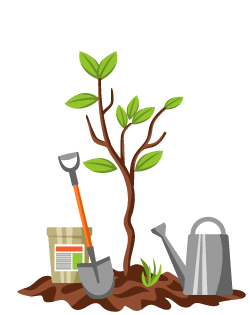 Landing
Basic conditions
- South-facing slopes with deep groundwater are considered ideal for planting any apple tree. Zhigulevskoye is no exception; it thrives on plenty of light and can find water even at great depths.
- Such trees should not be planted near open water or in swampy lowlands. This will cause the tree's roots to rot and die.
- It is also better to eliminate drafts if possible, since the wood itself is not very dense, and drafts can be detrimental to it.
- Almost any soil is suitable for apple trees, including loam, sandy loam, or black soil. The main requirements are airiness and slightly acidic conditions. If the soil is excessively acidic, it will need to be reduced with lime. Black soil that is too rich and heavy can be thinned with imported river sand.
- The holes should be prepared in advance, preferably in the fall, but if the time has already passed, 3-4 weeks in advance will do. To do this, dig holes 80-90 centimeters deep and 1 meter in diameter, remove the soil, mix it with fertilizer, pour it back in, and fill with water. All this is left outdoors to dissolve.
- A drainage layer of at least 10-15 centimeters must be placed at the bottom of the hole. Broken brick, gravel, or nut shells can be used for this; vermiculite will also work.
- Stakes are immediately dug into the holes to support the young trees. Removing them during the first few years is not recommended.
- Place the seedling on top so that the root collar is at least 10-15 centimeters above the surface. Otherwise, the tree may root higher, completely negating all the properties of the rootstock.
- Cover the rhizome with soil, gently shaking the seedling by the trunk to remove air pockets. Compact the soil, water with 20-40 liters of water, and mulch with humus, compost, chopped grass, or manure.
Before planting seedlings in open ground, inspect the rhizome. Inspect it, remove any dry or damaged roots, and trim them with pruning shears. If the roots have dried out during transportation, soak the tree in a bucket of water for 5-8 hours before planting. This will allow it to absorb moisture and strengthen it to better adapt to the new conditions.
Landing dates
Zhigulevskoye apple trees are suitable for both fall and spring planting. However, since these apple trees are quite delicate and do not tolerate extreme temperature fluctuations, it's best to plant them in early April so they have time to fully acclimate to the new conditions over the summer. Container-rooted trees (in pots or bags) can be planted at any time during the growing season.
Protection from frost and rodents
The tree is very delicate, so frost protection is unnecessary only in truly mild climates. In all other cases, it's best to cover the root zone with spruce branches, straw or hay mats, or wrap the trunks with roofing felt, burlap, agrofibre, or nylon tights. If necessary, the Zhigulevskoye can be covered with a ball-shaped covering; the tree's low height allows for this.
To prevent these ploys from becoming a new home for insects hibernating at the roots, the trunks should be whitewashed with lime in the fall. Rodents, hungry during the cold season, may also come to feast on the young, tender bark of apple trees. You can repel them by coating the trunks with grease or lard.
Tree care
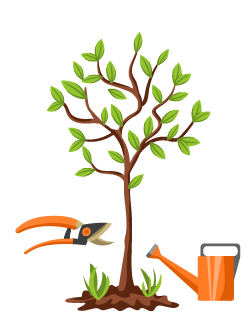 Tree care
Loosening the soil, watering: proper agricultural technology
Regular soil loosening won't hurt any tree. Therefore, the area around the tree trunk should be hoeed regularly. At the same time, you can remove weeds, grass, and shoots from other trees or shrubs, which rob the variety of nutrients. You can dig around the trees once or twice a year, but this is not necessary.
Zhigulevskoe only needs watering when the weather is very hot and dry. If it rains regularly, at least once every two weeks, then there's no need to add water to the soil; the roots will find it on their own. The maximum number of waterings during the growing season is 2-4.
Pruning: simple crown shaping
The tree doesn't tend to overgrow, so it's enough to maintain the shape the seedling was given at the nursery. In the first year, the central basal branch is shortened by a third, and the scaffold branches are made slightly shorter, according to the tiers. Subsequently, sanitary and thinning pruning once a year will be sufficient to maintain the crown's shape.
Pollinator varieties
- Antonovka.
- Spartan.
- Anise.
- Champion.
- Idared.
- Honey Crisp.
- Florina.
- Snowy Calville.
Reproduction
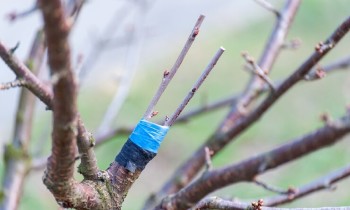
- Grafting by cuttings or buds.
- Rooting cuttings.
- Growing from seeds.
Diseases and pests
- Scab.
- Powdery mildew.
- Black crayfish.
- Fruit rot.
- Cytosporosis.
- Green aphid.
- Leaf roller.
- Scale insect.
Ripening and fruiting
The beginning of fruiting
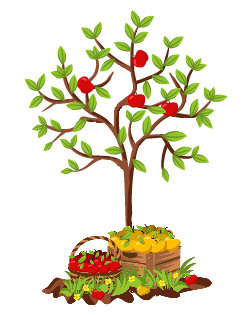 The beginning of fruiting
The seedling will only begin to bloom in the second or third year after planting, and only then if the rootstock is dwarfing. At this time, it's best to remove all flower buds, allowing the tree to develop branches and roots for proper fruiting in the future. The first harvest of 5-15 kilograms of fruit can be harvested in the fourth or fifth year after planting in open ground.
Flowering time
Like all apple trees, the Zhigulevskoye apple tree blooms in May, but the exact timing will depend on the rootstock, climate, and weather conditions. Therefore, it's best to determine this through experimentation. Subsequent apple trees will bloom at approximately the same time. However, blooming most often occurs in the second or third ten days of the month. The flowers are very large, saucer-shaped, fleshy, and fragrant, predominantly white or slightly pink.
Fruiting and growth
The tree grows very quickly, reaching 0.5-0.8 meters or more in height per year. Therefore, it begins bearing fruit almost completely when it's fully formed. As early as 7-9 years after planting, you can harvest a full crop of at least 180-200 kilograms of aromatic, delicious fruit.
They don't ripen all at once, but rather in stages, from late August to early September. This refers not to consumer maturity, but to technical ripeness. This means that the apples can be safely left on the branches until October; nothing will happen to them, they won't fall to the ground or spoil. However, it's recommended to pick them earlier and immediately store them in the cellar. They will fully develop their flavor and aroma only 15-30 days after being picked from the tree. They can be stored in the cellar for about three months without losing quality, after which it's best to process them.
Top dressing
- Compost.
- Peat.
- Humus.
- Urea.
- Manure.
- Mineral complexes.
What to do if it doesn't bloom or bear fruit
- Check for pests and diseases.
- Feed.
- Transplant to a sunny area.
- Eliminate the draft.
Why do apples fall?
- Natural factors.
- Excessive humidity.
- Pests.
- Diseases.
Leave your own reviews of the Zhigulevskoye variety to share your experience with other gardeners.