Jonagold Apple Tree: Variety and Care Features
| Color | Reds |
|---|---|
| Ripening season | Autumn |
| Size of apples | Large |
| Taste | Sweet and sour |
| Crown type | Tall tree |
| Shelf life | High shelf life |
| Application | Universal variety |
| Winter hardiness | Average winter hardiness |
| Fruiting age | Up to 5 years |
 History of origin and regions of growth
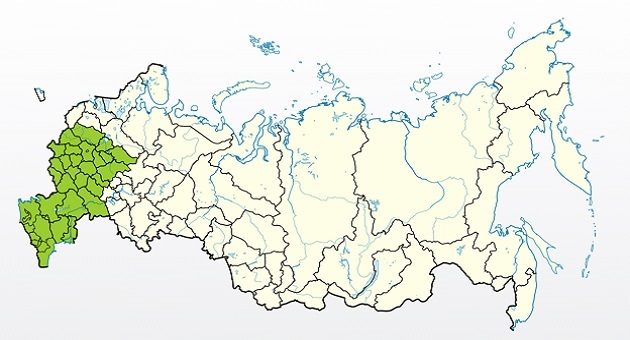
Growing regions
- Middle zone.
- South of Russia.
- North Caucasus.
Origin
One of the most famous American-bred apple trees appeared in New York State around the late 1930s. The official date of its development is 1943, and the location is a breeding station called Geneva.
The breeders didn't have to think too hard about the name. The parent varieties of this apple tree were the well-known Jonathan and Delicious Golden. This is where the unusual and memorable name Jonagold originated.
Around 1959-1960, apple trees of this variety were first brought to Europe, and ten years later, domestic specialists took an interest in them, deciding to make them more frost-resistant. By 1980, they were already growing in abundance in the orchards of the Ukrainian steppe and forest-steppe. A few years later, the apple tree had spread throughout virtually the entire central part of Russia, the northern Caucasus, and the southern regions of Russia.
Content
Description of the Jonagold apple variety
 It's rare to find an apple orchard anywhere in the world without at least one apple tree of this variety. It's beloved by almost everyone for its exceptional ease of care and reasonable resistance to cold and disease. Its fruits are delicious, juicy, and pleasant to the touch; they transport well, and most importantly, they have a long shelf life. This variety is recommended for both small home gardens and large, intensive commercial orchards.
Apples: What they look like
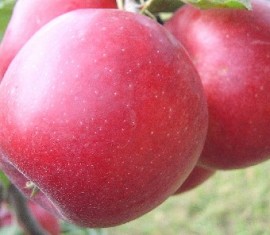
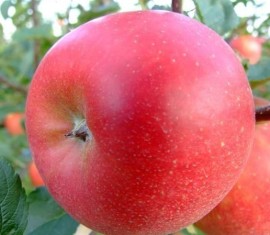
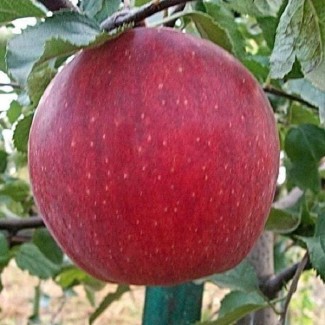
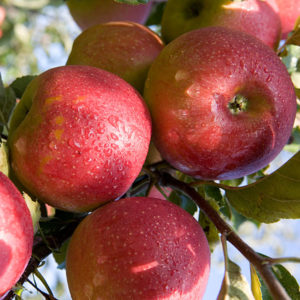 The fruits are usually quite large, at least above average. They can weigh up to 180-230 grams, and in some cases even over a quarter of a kilogram. They are round, but can also be slightly elongated, oblong, uniform, with barely visible ribbing.
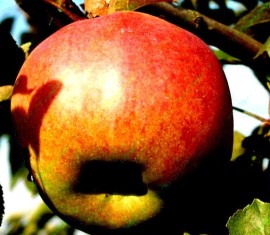
The skin is medium-thick and firm, smooth, glossy, and may have a fairly thick waxy coating. It is quite elastic, which contributes to its excellent transport properties. It is green in color, turning greenish-yellow over time. The blush occupies no more than 80% of the surface; it is reddish-brown or orange-red, with a blurred, streaky appearance. The chemical composition is characterized by the following indicators per 100 grams of product:
- P-active substances (catechins) – 147 milligrams.
- Ascorbic acid (vitamin C) – 6.4 milligrams.
- Total sugars (fructose) – 11.2%.
- Pectins (fiber) – 5.6%.
- Titratable acids – 0.48%.
The fruit's flesh is initially greenish, but gradually becomes lighter, white, creamy, or slightly yellowish. It is dense, fine-grained, very juicy, and tart, with a balanced and harmonious dessert-like flavor. It has a distinctive tartness, a slightly astringent aftertaste that adds variety to the overall impression. Professional tasters rate it between 4.6 and 4.8 points on a 5-point scale.
Jonagold apple tree: characteristics
Crown and root system
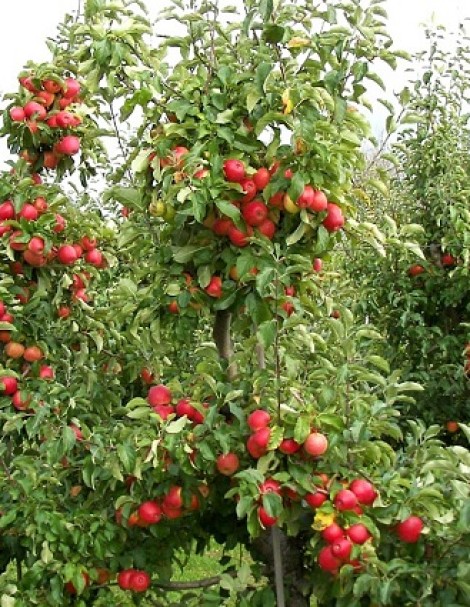
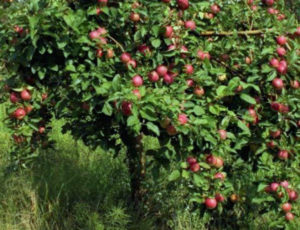 Trees of this variety are very tall. They can easily grow taller than 6-7 meters without pruning.Jonagold doesn't quite reach the mighty Horned Pine or Aphrodite, but a mature standard's crown can easily cover approximately 4-6 meters in diameter. When young, it has a pyramidal, oval, or spherical shape, but with age it becomes more dome-shaped, and sometimes even spreading and extensive.
The shoots are long and straight, mostly extending from the trunk at right angles, preventing them from breaking off even with substantial harvests. The tree bears fruit on ring shoots, yearling growth, and fruiting twigs. The bark is greenish-brown or slightly steel-gray, slightly pubescent. The leaves are large, leathery, and rounded, with finely serrated edges and an elongated, pointed tip. The root system is extremely robust, deeply rooted, and branched, sometimes covering an area up to 5-6 meters in diameter, allowing the tree to remain firmly planted even during hurricane-force winds.
Productivity and pollination
These apple trees are truly precocious, bearing their first fruits by the third or fourth year. However, don't get too excited, as by the eighth or ninth year, you'll only be able to harvest 10-20 kilograms of fragrant fruit.
Jonagold apples can only reach their peak yield when they're 17-20 years old. At this point, a single mature tree can yield 75-115 kilograms of apples. The maximum recorded yield is 180 kilograms, given good care and favorable climate conditions. Weather doesn't significantly affect the tree's yield, so a rainy summer isn't a concern.
The variety is considered triploid. That is, it is completely sterile to itself, but that's not all: pollination requires two or more pollinators, so Jonagold is interplanted with several other varieties.
Winter hardiness and disease resistance
The trees have only limited tolerance to low temperatures. Frosts below -18-20°C that last more than a week are fatal. The variety also dislikes sudden changes from severe frost to thaws with above-zero temperatures.
In the 1980s, in the Ukrainian Polesie, the thermometer suddenly dropped below -32°C. Despite being covered for the winter, the trees suffered critical damage: not only the young shoots and bark, but also the wood, froze. They were unable to recover within two to three years, so they had to be cut down and replaced.
Apple trees, like most other trees, are susceptible to various fungal apple infections. They are quickly and heavily affected by powdery mildew, scab and other "charms", so it is necessary to strictly monitor all care measures, including treatment with fungicides.
Rootstocks and subspecies
Standards are grown on different rootstocks, which can give them slightly different characteristics.
The Jonagold variety has over a hundred clones, making it virtually unparalleled among apple trees. For ease of classification, scientists have divided them into five main subgroups based on the color of their blush.
| Subspecies | Description |
| Morrison | This is the most popular subvariety of Jonagold in the world. Other names for this subvariety are equally well known: Highlander, Jonagold, and Jonagold Morrens Supra. It is believed that it was not artificially bred, but rather arose as a result of accidental pollination in Belgium in the mid-1980s. It produces large apples, weighing 165-230 grams, that ripen in early October and can be stored until the next harvest. It is considered one of the top ten apple varieties in the world, with a tasting score of 4.8-4.9 out of 5. |
| Dwarf and semi-dwarf | Jonagold trees grown on MM-106 and M-9 rootstocks are short, reaching only 2.5-3 meters. They begin bearing fruit early, produce good fruit, tolerate lower temperatures, and are resistant to disease, moisture, and dampness. However, the trees' active lifespan is reduced to a maximum of 20-35 years. After this point, they will need to be uprooted and replaced with new trees. |
| King | This subvariety is even shorter in height, but its main feature is a uniform, beautiful red-orange blush covering approximately 95-98% of the fruit. The standard varieties are highly resistant to scab, powdery mildew, moniliosis, and other infections, and tolerate temperatures down to -20°C. |
Features of growing Jonagold
 Landing
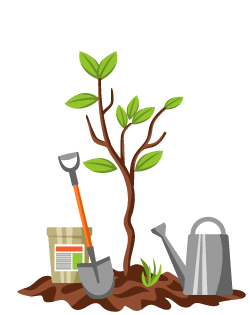 Landing
Key Features
- Like almost all apple trees, this variety prefers open spaces with plenty of sun for most of the day. Therefore, it's important to choose a suitable planting location. However, care must be taken to ensure there are no drafts, which will damage the seedlings.
- Proximity to groundwater is deadly for Jonagold. Its extensive root system will inevitably reach the water and cause rot. Avoid planting it near swamps, open water bodies, or areas where meltwater accumulates in the spring.
- Tree holes are dug in advance, at least 2-4 weeks before planting. The diameter should be approximately 80-90 centimeters and the same depth. Fill the bottom with fertile soil mixed with humus or compost, then add drainage (gravel, vermiculite), and top with water. Leave the hole uncovered.
- Before planting, inspect the root system of the seedlings and remove any dried or damaged shoots with pruning shears. It's a good idea to soak the trees in warm water for 5-8 hours to allow them to absorb moisture and ensure better establishment.
- A stake is immediately driven or dug into the hole to support the tree. It can be removed no earlier than two to four years after fruiting.
- The root collar of a Jonagold should be at least 8-10 centimeters above the soil surface. Otherwise, the tree may root higher, losing all the original qualities of the rootstock.
- The rootstock should be placed vertically, filled with soil layer by layer, and compacted by hand, but not compacted to the consistency of asphalt. Once completed, a small earthen bank is built around the perimeter of the hole, 30-40 liters of water is poured inside, and the surface is mulched with compost.
Disembarkation time
This variety can be planted in either spring (late April - early May) or fall. Experienced gardeners consider the latter option more appropriate. This allows the trees to establish themselves better, giving them time to develop foliage and strengthen their root system. The optimal time is after the leaves have fallen, but no less than 2-3 weeks before the first frost.
Protection from frost and rodents
Jonagold is a rather delicate variety, so you'll need to make every effort to protect it from the harsh weather conditions of our country. Standard trees grow without problems only in Crimea and the North Caucasus, but even there, extreme conditions can occur. In other regions, it's essential to cover the root zone with mats of dry grass or straw, wrap the trunks in burlap, agrofibre, roofing felt, or roofing felt. Sometimes, even old women's nylon tights will do the trick. Young one- and two-year-old plants can be covered with a tent, but this won't work with larger plants due to their height.
Such shelters often attract rodents, who can build nests there, where they can also feast on the young bark. To repel them, you can use store-bought solutions, or simply coat the lower part of the trunk with lard or grease. Whitewashing with lime in the spring and fall is also effective against insects.
Tree care
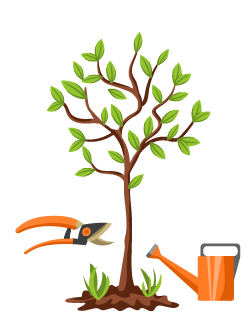 Tree care
Loosening the soil, watering: proper agricultural technology
Regularly, at least twice a year, you should dig up the area around the tree trunk, removing shoots from other plants, weeds, and root suckers. It's also a good idea to water the trees regularly, even though they are drought-resistant. A good rule to follow is the 10-day rule, meaning that you should only apply water when there has been no precipitation for a decade. In winter, it's a good idea to mulch the area around the tree trunk with chopped grass, manure, or compost.
Pruning: simple crown shaping
Jonagold's branches grow quite densely at first, so selecting the right skeletal branches for virtually any shape is easy. However, they also don't tend to become dense, so pruning won't be a problem later. Recommended shapes for this variety include palmette, sparsely tiered, spindly, wall and cordon, and espalier.
Don't forget about sanitary and rejuvenating pruning. In the former case, you need to remove damaged, broken, diseased, and dead branches, while in the latter case, you need to remove old branches that you'd like to replace down to one- or two-year-old wood.
Pollinator varieties
Reproduction
- Clones (offshoots).
- Rooting cuttings.
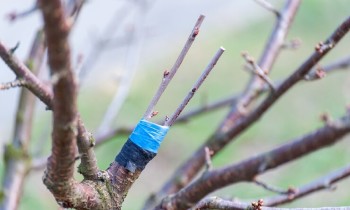
- Grafting.
- Growing from seeds.
Diseases and pests
- Powdery mildew.
- Scab.
- Moniliosis.
- Fruit rot.
- Hawthorn.
- Leaf roller.
- Codling moth.
Ripening and fruiting of Jonagold
The beginning of fruiting
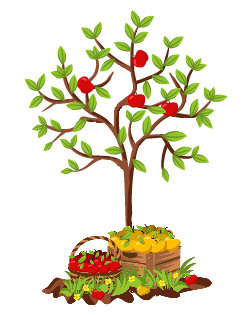 The beginning of fruiting
The first flowers on this variety's apple trees can be found even in their first year in the nursery. However, letting them develop unproductively is best; it's best to pluck the buds immediately and wait 3-4 years, when you'll be able to harvest around 5-10 kilograms of fragrant and juicy fruit. Moreover, the apple tree will slowly increase its yield each year, producing ever-increasing quantities of apples.
Flowering time
Like most apple trees, Jonagold begins blooming in the second ten days of May. This blooming period is short, lasting approximately 10-14 days, allowing ample time for pollination to occur. The variety's flowers are large, with fleshy petals, snow-white with a slight pink tint. During bloom, the trees emit a powerful fragrance, attracting pollinators even from long distances.
Fruiting and growth
The growth of green mass occurs slowly but surely. A tree can grow approximately 25-40 centimeters per year, especially if it's grown on a vegetative rootstock. Fruit production also increases steadily. Each year, the apples will become more and more numerous, until by the 15th to 20th year, you'll reach a maximum of a hundred-plus kilograms.
The fruit is usually harvested after reaching technical maturity. This can be determined by the yellowish base color of the fruit's skin, which changes from green to yellow. This usually occurs in late September or early October. Consumer maturity does not occur until 1-3 months later, when the sugar in the apples caramelizes. Under favorable conditions (appropriate cellar temperature and humidity), Jonagold can be stored until the next harvest without losing its original flavor. The fruit transports very well, and its skin protects it from mechanical or other damage.
Top dressing
- Superphosphate.
- Mineral complexes.
- Peat.
- Compost.
- Manure.
- Humus.
What to do if it doesn't bloom or bear fruit
- Check for pests and diseases.
- Transplant.
- Limit watering.
Why do apples fall?
- Natural factors.
- Pests.
- Diseases.
- Excess or lack of moisture.
Leave your feedback on the winter-hardy Jonagold variety to share your experience and knowledge with others.