Teleimon apple tree: characteristics of the variety and care
| Color | Greens |
|---|---|
| Ripening season | Autumn |
| Size of apples | Large |
| Taste | Sweet and sour |
| Crown type | Columnar tree |
| Shelf life | Average shelf life |
| Application | For recycling , Fresh |
| Winter hardiness | Average winter hardiness |
| Fruiting age | Up to 5 years |
 History of origin and regions of growth
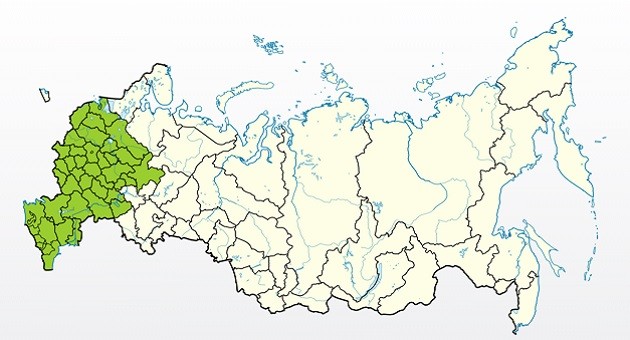
Growing regions
- Crimea.
- Caucasus.
- Some northern regions.
- Moscow region and Moscow.
- Saint Petersburg and Leningrad region.
- Middle zone.
Origin
There aren't many apple trees in Russia that originate from foggy Britain, but Telamon is right there. It was bred relatively recently, in the twenty-first century, using the varieties Gin and Trident as the source material. Initially, this new, compact columnar variety was widespread only in Britain and Scandinavia, Sweden and the Netherlands, Finland, and northern France. However, over the years, it has spread much further, including to the vast expanses of our country.
Content
Description of the Teleimon variety
 This columnar apple tree is distinguished by its truly compact size and neat, beautiful crown. It looks very decorative, especially during flowering, and can become the crowning glory of any garden or plot. However, this is not all its advantages: it is undemanding, tolerant of frost and drought, and capable of producing exceptional harvests.
Its apples are large, beautiful, juicy, and flavorful; they are easy to store and transport, even over long distances. The Teleimon variety is recommended for cultivation in warmer regions, but can also grow in temperate and more northern latitudes.
Apples: What do they look like?
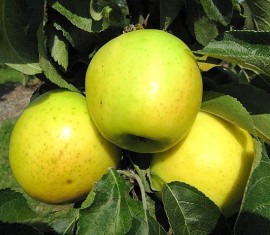
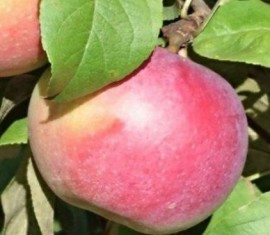
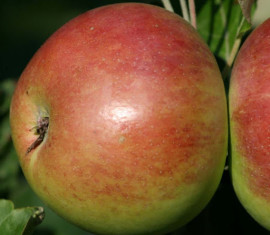
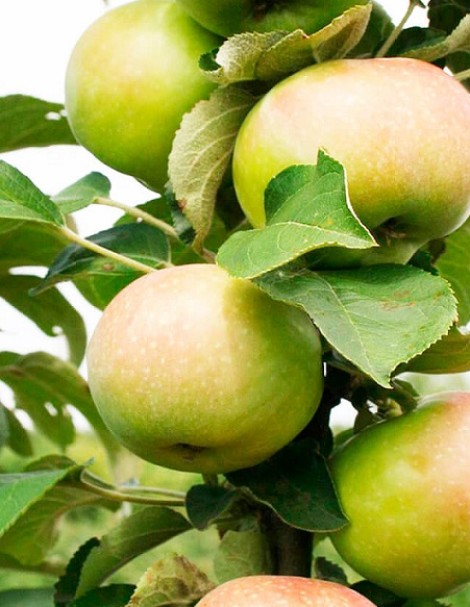
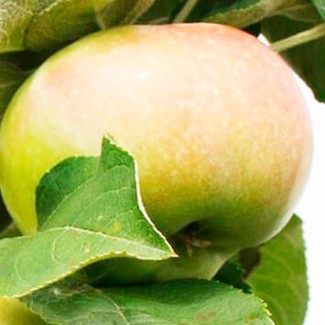
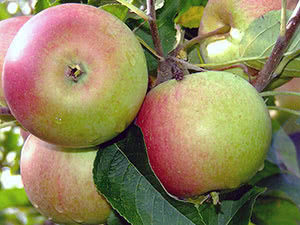 Teleimon fruits are large or medium-sized, depending on the region's climate, weather conditions, care, and the right growing location. They typically weigh 160-190 grams, but can reach 200-230 grams. The apples are round or slightly round-conical, occasionally turnip-shaped, flattened along the central axis. They are smooth, lacking a lateral seam, and the ribbing is smooth and slightly visible only on the calyx side.
The skin is thin, yet moist and elastic, reliably protecting the tender flesh from mechanical damage. It cracks easily when bitten and has a green or light green hue, which acquires a slight yellowish tint as it ripens. At the point of commercial maturity, the surface is 85-99% covered with a carmine-red blush, but more often pinkish or raspberry. It is smooth and may have a slight waxy, oily coating. Subcutaneous punctures are numerous, but all are small and therefore not very noticeable. Professionals recommend assessing the chemical composition by examining the following data:
- Pectins (fiber) – 14.9%.
- P-active substances – 326 milligrams.
- Sugar (fructose) – 10.3%.
- Titratable acids – 0.48%.
- Ascorbic acid (vitamin C) – 11.2 grams.
The flesh is medium-dense yet coarse-grained and very juicy. It has a pleasant, distinctive, slightly lemonade-like aroma and a sweet and sour, dessert-like flavor, recognized by experts as harmonious and balanced. Teleimon's tasting score is 4.6 and 4.7 points for appearance and flavor.
Teleimon apple tree: characteristics
Crown and root system
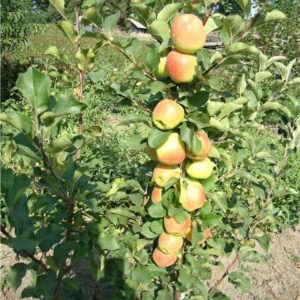 The tree is classified as columnar, that is, growing as a single trunk in the absence of lateral shoots as such. The maximum height of an apple tree without pruning is no more than 2.4-2.6 metersHowever, most experienced gardeners prune them and maintain them at a height of 1.9-2 meters. The foliage is dense, and the bark is green or brownish-green, pubescent in some areas.
The leaves are medium-sized, oval-shaped, leathery, very dense, mostly flattened, and green or deep green. The tips are short and pointed, the margins are serrate-crenate, and can be heavily serrated. The dorsal surface is pubescent. The root system is extensive, mostly fibrous, but on some rootstocks it can also be taprooted, shallow, and superficial. It has a moderate ability to seek water in the soil.
Productivity and pollination
This variety is extremely productive for its modest size. Among ordinary columnar apple trees, this one truly stands out.
A mature Teleimon tree can yield approximately 25-40 kilograms of aromatic and delicious apples per season. Growing conditions, proper and timely care, climate, and weather largely influence the yield..
This tree is self-sterile, so there should always be other apple trees within 45-90 meters that are just right for budding. Experienced practitioners also recommend spraying the trees with sugar syrup and bringing mobile apiaries to the garden.
Winter hardiness and disease resistance
This variety is generally considered winter-hardy, but its characteristics are more suited to the definition of moderately hardy. Plants must be properly prepared for cold weather and adequately covered for the winter. Frosts of -22-25°C will then be unaffected, but at lower temperatures, trees can suffer severe damage, sometimes fatal. Minor frost damage to apple trees recovers quickly, but fruiting is negatively impacted for only a year or two.
The variety lacks genetic immunity, but it is highly resistant to scab, cytosporosis, and powdery mildew, as well as other fungal and bacterial infections. If preventative measures are taken promptly, the trunk area is kept clean, and excessive moisture is avoided, diseases will rarely appear, only during years of severe epiphytotics. Insects can damage trees, so insecticide treatments should be a regular part of tree care.
Rootstocks and subspecies
Teleimon is grown on a wide variety of rootstocks, imparting slightly different qualities to the variety. However, the most popular and frequently used are Mark, 62-396, and MM106. These are dwarf and semi-dwarf varieties that create even more compact crowns.
Features of growing Teleimon
 Landing
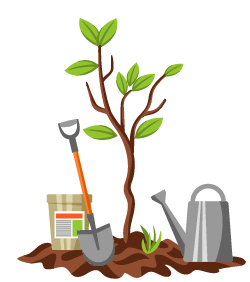 Landing
Basic conditions
- The main factor that can positively influence the growth of this apple tree and subsequent abundant fruiting is good lighting. It can grow and even bear fruit in the shade, but larger harvests are only expected in this case.
- The groundwater level at the site of planting Teleimon should be at a depth of approximately 1.7-2 meters, so that it does not reach it with its roots and begin to rot.
- Good ventilation is also important for this variety. The crown must be well-ventilated to prevent fungus and other problems.
- Experienced gardeners typically prepare holes in the fall or spring, 5-8 months before planting. However, this variety can be planted in holes dug 2-3 weeks in advance.
- Holes are dug 60-70 centimeters deep and up to 1 meter in diameter. A portion of the topsoil, mixed with ammonium nitrate, minerals, horse humus, or other fertilizers, is placed at the bottom. This is then filled with gravel (broken brick, nut shells, or vermiculite), and then filled with 35-40 liters of water. The holes are left to mature outdoors.
- Root collarIf you want to preserve the qualities and properties of the rootstock, you need to leave it at a height of 5-10 centimeters above the soil horizon.
- It wouldn't hurt to immediately drive planks or stakes into the holes to tie up the trees. They will serve support, as well as additional protection in cold weather if placed on the north side.
- The seedlings are placed vertically, the rhizomes are spread out on a pile of collected drainage material, covered with soil and compacted, and watered with 15-20 liters of water. A 5-6 centimeter earthen embankment is poured around the perimeter, the surface mulch compost, leftover chopped grass, manure, sawdust.
Landing dates
In our climate, spring planting is preferable for Teleimon. If you plant the tree in late March or early April, before the buds begin to open, it will have the entire summer to adapt and acclimate to the environment. In southern regions, where temperatures are generally warm, you can plant trees in the fall, and those with a closed root system can be planted at any time during the growing season.
Tree care
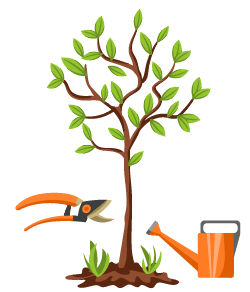 Tree care
Protection from frost and pests
Although this variety is considered winter-hardy, it needs to be protected from frost properly and in a timely manner. Furthermore, proper preparation of the tree for winter is essential. To achieve this, watering is reduced as early as August and completely eliminated by September. The trunks are wrapped in any fabric, including burlap, roofing felt, old tights, agrofibre, and tarpaulin. Straw mats or bundles are thrown over the root zone, and in harsh regions, you can even pile up 15-20 centimeters of soil, which will need to be removed in the spring. The compact crowns allow for the trees to be covered using the tent method.
Whitewash Liming trunks with lime in spring and fall will help repel harmful insects from bark cracks. To repel rodents that come to feed on young shoots near human dwellings in winter, it's a good idea to coat the lower part of the trunk with lard, grease, or fuel oil.
Loosening the soil, watering: proper agricultural technology
Hoe the apple tree soil throughout the growing season, as needed. For example, it's best to do this the day after applying water to prevent the soil from compacting and forming a crust. Dig carefully and gently, as most roots are shallow and close to the surface; twice a year is more than enough. At the same time, remove root suckers, weeds, and shoots from various shrubs and trees. To simplify care, you can sow herbs such as marjoram, parsley, cilantro, dill, mint, and others under the tree in the second to fourth year.
Watering Trees won't be harmed if watered in a timely manner and in moderation. Ideally, drip irrigation should be provided if possible. Otherwise, watering can be done once every 10-12 days when young or once every 14-16 days when mature. If the weather is extremely hot and dry, you can increase the frequency to once or twice a week.
Pruning: simple crown shaping
Pruning Teleimon is fairly easy, as it generally doesn't produce side shoots. However, if branches have begun to grow, they can be easily removed immediately before they become woody. The cuts are sealed with garden pitch or simply soil. Dry, diseased, and dying fruiting shoots should also be regularly removed. If a terminal bud freezes, the trunk is cut back to a living bud and a new top is grown.
Pollinator varieties
- Antonovka.
- Bellefleur the Chinese.
- Arbat.
- Welsey.
- White filling.
- Lobo.
- Bogatyr.
- Brotherchud.
- Sokolovskoye.
Reproduction
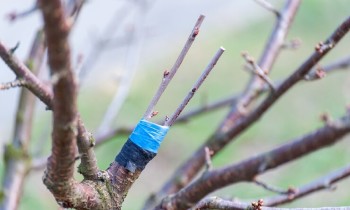
- Grafting.
- Rooting.
- Growing from seeds.
- Layers.
Diseases and pests
- Powdery mildew.
- Scab.
- Cytosporosis.
- Green aphid.
- Scale insect.
- Codling moth.
Ripening and fruiting of Teleimon
The beginning of fruiting
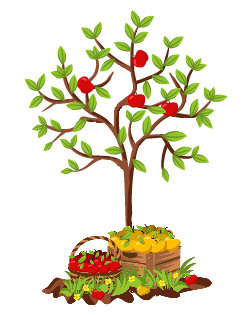 The beginning of fruiting
This columnar tree may bloom for the first time around the first or second year of life, but it's best to remove all buds at that point. The first fruiting is best timed for the third or fourth year, when you'll be able to produce at least 5-8 kilograms of fragrant and delicious apples.
Flowering time
This variety blooms mid-season, like most autumn varieties. By mid-May, it begins to open buds, which will delight the eye for another 12-15 days, and sometimes even longer. The tree's flowers are large, saucer-shaped, with very delicate, slightly pinkish petals and a powerful fragrance.
Fruiting and growth
The apple tree grows very quickly, gaining at least 45-50 centimeters in just one season. Therefore, it can reach its full height in just a few years. Teleimon also quickly increases its fruit production. By the fifth or sixth year, the tree will have yielded over ten kilograms, and by the seventh or eighth year, under favorable conditions, it can reach 35-40 kilograms.
The fruits ripen by the end of September only in the southern regions. In harsher climates, such as the central part of the Moscow region or the Leningrad region, they reach consumer and technical maturity only in early or mid-October. You can determine when to pick the fruit by taste and eye. Apples have an average shelf life; they can easily be stored until February, and in a special refrigerator, even until spring.
Top dressing
- Ammonium nitrate.
- Mineral complexes.
- Chicken manure.
- Peat.
- Superphosphate.
- Compost.
- Manure.
- Humus.
- Humus.
What to do if it doesn't bloom or bear fruit
- Inspect for diseases or pests.
- Organize timely regular watering.
- Fertilize.
- Transplant to a more suitable location.
Why do apples fall?
- Natural weather disturbances.
- Pest damage.
- Various diseases.
Please share your own experience with the Teleimon apple variety so that everyone can learn about it and avoid potential mistakes when growing their own garden.