Malukha apple tree: characteristics of the variety and care
| Color | Greens |
|---|---|
| Ripening season | Autumn |
| Size of apples | Large |
| Taste | Sweet and sour |
| Crown type | Columnar tree |
| Shelf life | Average shelf life |
| Application | Fresh , For recycling |
| Winter hardiness | High winter hardiness |
| Fruiting age | Up to 5 years |
 History of origin and regions of growth
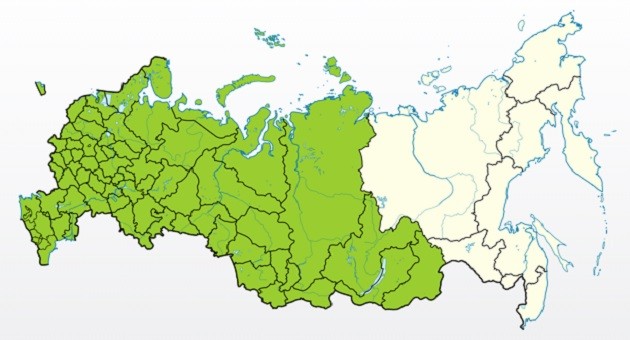
Growing regions
- North Caucasus.
- Crimea.
- Northern regions (partially).
- Moscow region.
- Middle zone.
- Leningrad region.
- Ural.
- Siberia.
Origin
For many years, renowned Soviet and Russian breeder Viktor Valer'yanovich Kichina led the development of columnar apple trees at the All-Russian Selection and Technological Institute of Horticulture and Nursery. He released many new apple trees, including the 2008 trial of a new variety with the curious name "Malyukha." Co-authors included L. F. Tulinova and N. G. Morozova.
It was developed based on the same well-known columnar cultivar KV-103, as well as the winter-hardy Brusnichnoe variety. The variety successfully passed trials and, in 2015, was officially included in the State Register of Breeding Achievements and zoned for eight regions of the Central Federal District. In reality, Malukha's growing area is much wider and it is widely cultivated in more southern and northern regions, and sometimes even in the Urals.
Content
Description of the Malyukha apple variety
 These compact, low-growing, columnar trees are a real find for those looking to create a garden in a limited space. Malukha bears fruit abundantly every year and, when planted at a standard density, can delight with a truly impressive fruit set. It's undemanding, requires no special care, and tolerates a variety of soils and uneven watering patterns.
The trees are very decorative and will enhance any garden, especially during flowering. The fruits are tasty, beautiful, and never fall from the branches when overripe, making the gardener's job much easier. Malukha is recommended primarily for small homesteads and backyards, but even in commercial cultivation, it produces good apple harvests.
Apples: What they look like
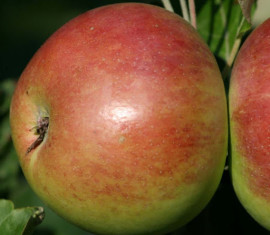
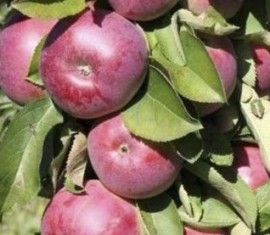
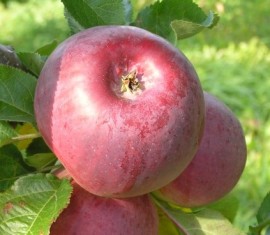
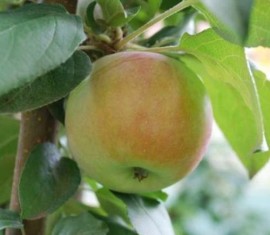
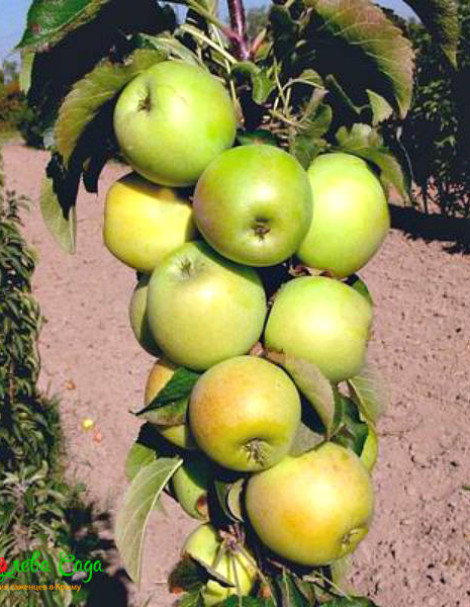
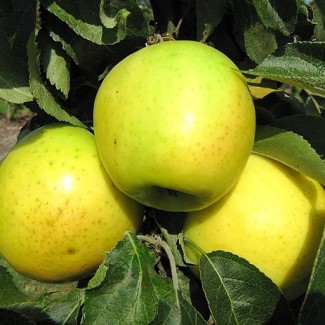
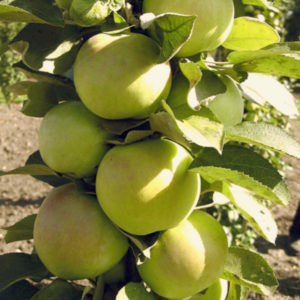 The fruits are very attractive, typically medium to large in size. They weigh 175-230 grams, but with proper care and favorable weather, they can grow even larger. They are round or round-conical in shape, reminiscent of a turnip. The ribbing on the outer part of the fruit near the calyx is moderately pronounced, smoothed, and unnoticeable on other parts.
The fruit skin is smooth, shiny, glossy, thin, yet strong and elastic, providing excellent protection from mechanical damage. It is greenish-yellow or slightly golden in color and may be covered with a grayish waxy coating when ripe. According to the State Register, the skin is completely blush-free, but in reality, light orange-pink spots may appear on the sunny side. Subcutaneous spots are few in number, light in color, and virtually invisible to the naked eye. The chemical composition can be assessed by analyzing the following data:
- P-active substances – 287 milligrams.
- Ascorbic acid (vitamin C) – 14.6 grams.
- Sugar (fructose) – 10.9%.
- Titratable acids – 0.38%.
- Pectins (fiber) – 16.3%.
The flesh is firm, pleasantly textured, fine-grained, crisp, slightly prickly, and very juicy. It has a light creamy or greenish hue and a pleasant, though not overpowering, aroma. Experts rate the flavor as dessert-like, sweet and sour, harmonious, and balanced. Malukha received a tasting score of 4.7 out of 5.
Apple tree Malyukha: characteristics
Crown and root system
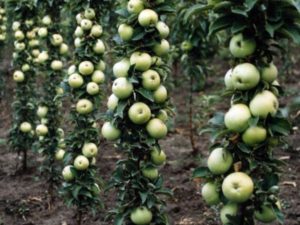 Even among small columnar apple trees, this natural semi-dwarf looks inconspicuous and small. It extends to a maximum of 1.7-2 meters., if not pruned completely. The tree has a strong, fairly thick trunk with short internodes. Most often, a single trunk is formed, but two or three thick, faceted branches growing at a very acute angle can also be created. They are covered with brownish-green or greenish-brown bark. The crown usually reaches no more than 0.5-0.7 meters in diameter, but more often it barely reaches 0.3-0.35 meters.
The leaves are medium-sized, oval, rather broad, obovate, and distinctly emerald or dark green. They are dense, leathery, delicately ribbed, and often glossy and shiny. The tip is short-lobed, and the margins are crenate-serrate, slightly wavy, and serrated; the underside may be lightly pubescent. The root system is extensive, medium-depth, fibrous, and adapted to water-seeking.
Productivity and pollination
Malukha is considered a high-yielding variety among columnar varieties.
At standard planting density, a well-maintained orchard can yield at least 100-120 tons of delicious and beautiful fruit per hectare in a good year. A tree typically yields approximately 14-18 kilograms in a single season, but some gardeners report as much as 18-20..
The variety is conditionally self-fertile, meaning it will produce apples even when no other tree is nearby. However, the apple tree won't reach its full potential this way, yielding no more than 15-35% of its maximum. Therefore, trees with suitable flowering times should be planted within 55-90 meters to ensure cross-pollination. It's a good idea to bring mobile apiaries to the garden during this period, and spray the trees with syrup made from water or sugar.
Winter hardiness and disease resistance
Many believe that growing columnar apple trees in regions with harsh climates is completely impossible. However, Malyukha disproves this notion and can withstand temperatures as low as -39-42°C. It will require a great deal of effort to prepare and protect the trunks, but the results are sure to be rewarding.
Plants have a natural resistance to various diseases, but risks should be avoided. During years of particularly severe epiphytotics, foliage damage can reach 2 points, which is significant. However, the fruit usually remains suitable for food and processing. Trees are afraid of insects, which can seriously damage the bark, leaves, shoots, and even the wood. Therefore, regular preventative treatments with insecticides and fungicides against fungi are necessary.
Rootstocks and subspecies
The variety itself was recently developed, and not enough time has passed for its subvarieties to emerge. However, Malukha can be grown on various rootstocks, yielding slightly different results. For example, on dwarf and semi-dwarf rootstocks, the trees grow stunted, no taller than one and a half meters, while on seed rootstocks, they grow up to two meters. Rootstocks have no significant impact on yield or fruit quality.
Features of growing Malukha
 Landing
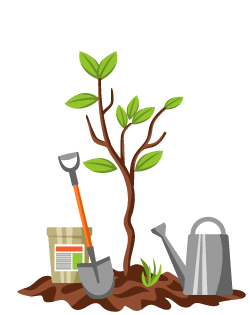 Landing
Basic conditions
- A sunny, open location is the primary requirement for this variety's planting site. It must be exposed to warm rays for most of the day, otherwise the tree will be thin and weak, and the fruit will be small and sour.
- It's important to choose a location with good ventilation; overly dense thickets can lead to air stagnation, which ultimately leads to disease. Therefore, the crowns should be well-ventilated, but not drafty, as this will quickly destroy your garden.
- Proximity to groundwater isn't particularly important as long as it's no higher than 2-2.4 meters from the surface. If the water level rises higher, apple trees should be planted on raised beds or special "baffles" should be created by digging a sheet of slate or a layer of roofing felt to a depth of 2 meters. Apple trees are generally not planted near rivers or lakes, as well as other natural or artificial bodies of water, and Malukha is no exception.
- Gardeners often recommend preparing holes the previous season, but most columns don't require this. It's enough to dig holes 2-3 weeks before planting, 60-70 centimeters deep and the same in diameter. Add soil and fertilizer to the bottom, then cover the entire hole with drainage material or regular soil from the top layer, and add 25-40 liters of water. There's no need to cover the holes intended for planting.
- Leave a space of 2-2.5 meters between rows for ease of maintenance and harvesting, but this distance can be reduced if the column is intended to be formed into a single trunk. In any case, 0.5-0.7 meters between trees is sufficient.
- Stakes or planks are driven into the holes to support the young trees. Ideally, they should be positioned on the north side of the trunk.
- Root collar I always leave it above the soil surface, otherwise the tree can put down roots higher, thereby leveling out all the properties of the rootstock.
- Place the seedling on a drainage trench, gather it into a pile, and spread the roots. Cover the soil layer by layer, gently compacting it with your hands, being careful not to leave air pockets but not overly compacting the soil. Pour 25-40 liters of water into the root zone, and mulch the surface with available mulch.
Landing dates
Malukha can be planted in either spring (late March or early April) or fall (late September or early October). In spring, wait until the soil has warmed completely in the sun and the risk of frost has passed. In fall, wait until all the leaves have fallen to the ground, but frost is still 3-5 weeks away. It's best to plant in the evening rather than on a cool morning or hot afternoon.
Tree care
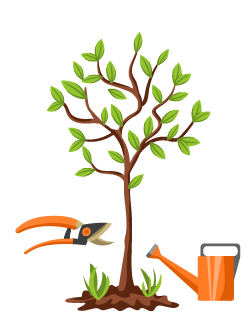 Tree care
Protection from frost and pests
Malukha is known for its resistance to low temperatures, but this doesn't mean it can simply be left to freeze in a gusty wind at -30°C or below. First of all, watering should be completely avoided, starting in mid-September, and if the region is cold and winters arrive early, then from the very beginning of the month. The trunks are wrapped in tights, burlap, old rags, or agrofibre, and the area around the trunk is piled with spruce branches, bundles, or mats of hay or straw. However, it's best to cover the trees with a tent-like covering, using tarpaulin or film, creating mini-greenhouses for each trunk.
To repel mice, hamsters, and other rodents that love tender young bark and thin twigs, coat the trunk of each apple tree with fragrant lard, or simply with grease or drying oil. Whitewashing the tree twice a year, in the fall and spring, with regular lime to a height of 1-1.1 meters, is effective against insects.
Loosening the soil, watering: proper agricultural technology
Soil aeration is ensured by digging twice a year: in early spring before bud break and in late fall after the leaves have fallen. However, during the summer, you can hoe the soil as needed. It's best to do this the day after applying moisture to prevent the soil from compacting into a tight ball.
Water Malukha generously, but not excessively. The optimal solution is the ten-day rule. This means watering is required once every ten days, but only if there's no rain. If there is natural precipitation, then you'll need to count the time from there.
Pruning: simple crown shaping
This variety isn't known for its abundant crown growth. It has difficulty building up foliage, so gardeners typically have no problem shaping it. A single trunk can be created, but the yield will be somewhat lower, although the tree will take up less space and allow for higher planting density. Therefore, it's best to create 2-3 branches, and in the fall, remove the ones that have been bearing less fruit. The following year, leave the old ones in place and allow the new ones to develop, then select a more robust one.
If the top bud freezes in winter, it will need to be cut back in early spring to allow a new bud to develop. Sanitary pruning involves removing dead, dry twigs, shoots, and broken branches. This variety has a short fruiting season, so rejuvenation is not necessary.
Pollinator varieties
- Gin.
- Vazhak.
- Senator.
- Chinese red and gold.
- Currency.
- Ostankino.
- Barguzin.
- Chervonets.
Reproduction
- Rooting.
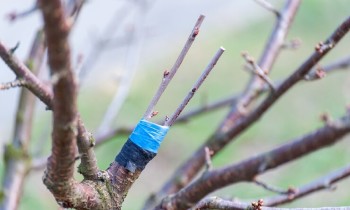
- Kidney grafting.
- Growing from seeds.
- Cuttings.
Diseases and pests
- Scab.
- Black crayfish.
- Bacterial burn.
- Powdery mildew.
- Green aphid.
- Codling moth.
- Leaf roller.
- Hawthorn.
Ripening and fruiting of Malukha
The beginning of fruiting
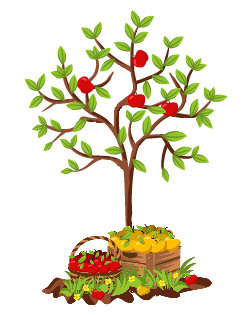 The beginning of fruiting
The tree usually begins to bloom for the first time in the nursery during its first year of active life. However, it's best to pluck these buds completely and allow them to develop later, allowing the tree to build up mass and rhizomes. By the second or third year, you can harvest approximately 3-5 kilograms of beautiful, shelf-stable fruit. While these results are unlikely to be impressive at first, it's worth a try.
Flowering time
Malukha blooms mid-season, meaning around mid-May. All the buds open simultaneously, densely covering the branches, giving the tree a particularly decorative appearance. The flowers are large, with fleshy petals, cup-shaped, and can be slightly ruffled, pure white or with a slight pink tint. The blooming process typically lasts 10-16 days, depending on the region and its weather and climate.
Fruiting and growth
The tree doesn't grow very quickly, gaining only 15-20 centimeters per year, but given its small overall height, it quickly reaches its peak. It also increases its yield. By the fourth to sixth year, you can harvest up to 10-14 kilograms or more of apples, and by the fifth to seventh year, fruiting reaches its peak. It remains this way for approximately 15-18 years, after which the lower rings die off, yield gradually declines, and eventually the entire tree dies and is replaced by another.
It is important to carry out regulation during the flowering period, picking off approximately 35-45% of the flowers, this will allow you to get larger fruits..
Apples ripen in mid- to late September. In some cases, they can be delayed until early October if the weather is rainy, there's little sun, and it's cold. They hold up well on the rings, but it's still important to harvest the fruit promptly, otherwise the flavor can deteriorate from overripening, making them unsuitable for storage. They transport well; their skins protect the fruit well. It's best to store them in a cellar or refrigerator until late January or early February.
Top dressing
- Peat.
- Compost.
- Ammonium nitrate.
- Humus.
- Superphosphate.
- Manure.
- Mineral complexes.
What to do if it doesn't bloom or bear fruit
- Check for pests or diseases.
- Transplant into the sun.
- Water.
- Fertilize.
Why do apples fall?
- Wind, hail, hurricane, rain.
- Pest damage.
- Diseases.

Please leave your feedback on the Malyukha variety, as many gardeners would like to grow similar varieties in their gardens.