Valuta apple tree: characteristics of the variety and care
| Color | Reds |
|---|---|
| Ripening season | Autumn |
| Size of apples | Large |
| Taste | Sweet and sour |
| Crown type | Columnar tree |
| Shelf life | High shelf life |
| Application | Fresh , For recycling , Storage |
| Winter hardiness | Average winter hardiness |
| Fruiting age | Up to 5 years |
 History of origin and regions of growth
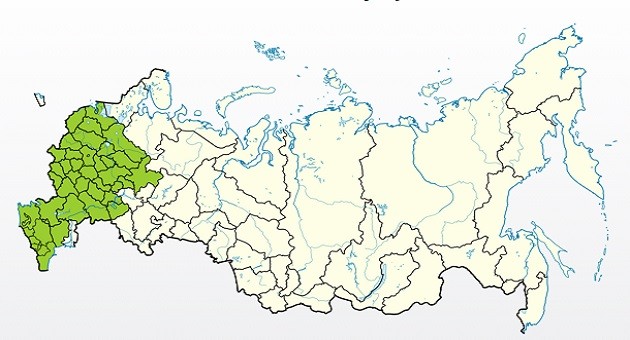
Growing regions
- Middle zone.
- North Caucasus.
- Some northern regions.
Origin
Professor Viktor Kichina began breeding compact columnar apple trees back in 1972. Over several decades, he developed approximately 20 new varieties with resistance to apple scab at the Vf gene, including the Valyuta variety. In 1986, it was developed at the All-Russian Institute of Horticulture Selection and Technology in Moscow by hybridizing the American rootstock OR38T17 and the columnar elite KB6.
Since the variety was released into the central and southern regions of Russia, not a single case of Valyuta being affected by scab has been recorded, which fully demonstrates its genetic resistance.
In 1992, the variety was already selected from numerous experimental variants, and in 1994, it was sent for testing to various farms. It was tested for 10 years, after which it was classified as an elite variety and entered into the State Register in 2004.
Content
Description of the Valyuta apple variety
 These apple trees have absorbed all the best qualities of their ancestors, making them very attractive to gardeners of all skill levels. The trees are undemanding in growing conditions, very compact, and produce good harvests every year. The apples also exhibit enviable shelf life, flavor, and marketability, as they can even remain in the sun for more than two weeks on a store shelf. This variety is recommended for both small home gardens and intensive commercial orchards.
Apples: What they look like
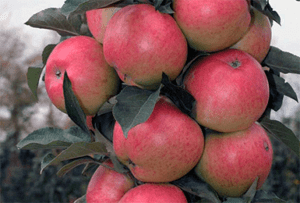 Valyuta fruits are generally medium to large, and vary in size; some weigh 100-140 grams, while others weigh 200-250 grams. Ribbing is subtle, and the fruits are round and even-sided.
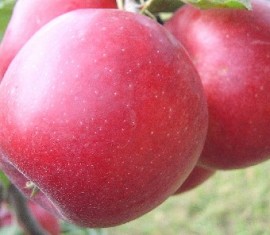
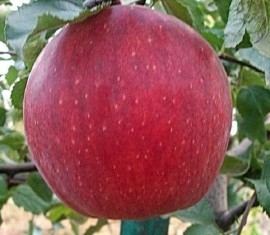
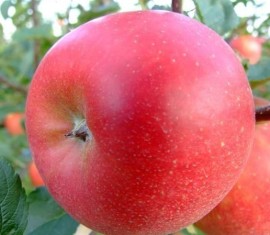
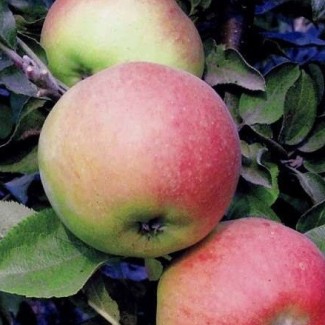
The skin is thin but firm, slightly glossy, dense, smooth, and green when unripe, gradually turning yellow-green and covered with a beautiful, fuzzy red-orange blush. Subcutaneous punctures are few in number, light-colored, and small, almost invisible against the striped coloration. The chemical composition can be characterized by the following indicators per 100 grams:
- P-active substances (catechins) – 209 milligrams.
- Ascorbic acid (vitamin C) – 8.1 milligrams.
- Total sugars (fructose) – 14.7%.
- Pectins (fiber) – 16.43%.
- Titratable acids – 0.47%.
The fruit's flesh is medium-firm and snow-white. It's crisp, crisp, tender, and easily splits when bitten. It's fine-grained and juicy. The flavor is rated as dessert-like, harmonious, balanced, and sweet with a slight apple tartness in the aftertaste. The tasting score is 4.2 out of 5.
Valuta apple tree: characteristics
Crown and root system
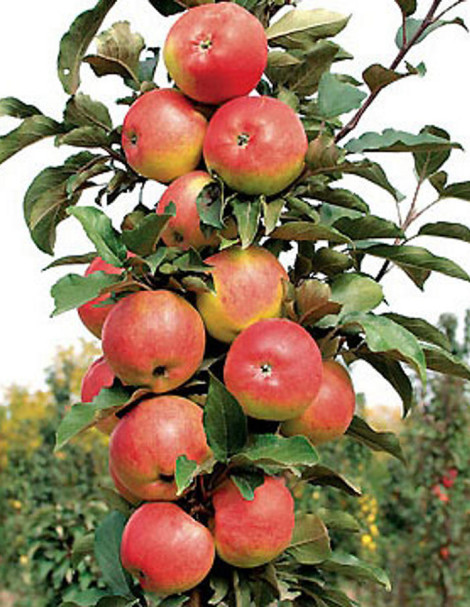
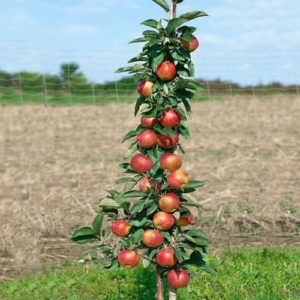 The apple tree is columnar, meaning it grows from a single trunk without producing lateral scaffold branches. The tree's typical height barely reaches 2-2.5 meters, making it a naturally occurring semi-dwarf. The crown diameter does not exceed 20-30 centimeters. Therefore, for apple trees in the garden, a diameter of no more than half a meter is sufficient. The bark on the shoots is smooth, glossy, green-brown, and may become slightly rougher over time.
Apple tree leaves are large, dark green, glossy, leathery, oval, and slightly elongated. They have a pointed tip and a slightly serrated edge. The foliage is usually quite dense, densely covering the trunk. The root system is extensive, shallow, and well adapted for seeking water.
Productivity and pollination
Columnar apple trees are not known for their high yields, as the trees are very small.
A single mature tree can yield a maximum of 8-11 kilograms of sweet fruit with proper care. In most cases, the yield is limited to 5-7 kilograms.
However, this is fully compensated by the overall productivity of the plantings, since up to 100-150 tons of fruit can be harvested per hectare.
The variety is considered conditionally self-fertile. This means that several apples can be produced from each tree even if there are no other apple trees in the area. However, to increase yield, experienced gardeners recommend planting Valyuta in rotation with trees of similar ripening times (winter and late autumn varieties).
Winter hardiness and disease resistance
The trees exhibit quite an enviable tolerance to low temperatures, especially for columnar trees. They easily withstand temperatures as low as -30-35°C, even with strong winds and high humidity, making them suitable for growing in the harsh temperate climates of the central part of Russia. Many say that with proper winter protection and care, Valyuta can be successfully grown even in Urals.
As mentioned earlier, apple trees are genetically immune to scab. They are also resistant to other fungal infections. They are very rarely affected by fruit rot and cytosporosis. powdery mildew It also doesn't affect it. However, preventative fungicide treatments and regular insecticide spraying should not be abandoned.
Subspecies and rootstocks
The variety is grown on vegetative rootstock, but growing on dwarf trees is also acceptable. However, the trees then grow very small, making it difficult to harvest any significant fruit. Therefore, they are often planted for ornamental purposes.
Features of growing Valuta
 Landing
 Landing
Basic conditions
- Choose sunny or slightly shaded locations for planting. In dense shade, apple trees grow even shorter, produce little fruit, or stop blooming altogether.
- Choose a site where the groundwater level isn't too high. Also, avoid planting near open water, as this can cause the trees to rot.
- Apple trees prefer airy, nutrient-rich soils that are slightly acidic. They grow well in sandy loam, loam, and even black soil, but it's recommended to dilute the soil with river sand. Acidic soils are mitigated with regular lime.
- Planting holes are prepared in the fall. To do this, remove the top fertile soil layer and mix it with fertilizer. Then, dig holes 50-60 centimeters deep and 70-80 centimeters in diameter, fill them with the prepared mixture, add 20-30 liters of water, and leave them outdoors.
- When planting, first add 10-15 centimeters of drainage material. Gravel, nut shells, vermiculite, or broken brick are all suitable. Some recommend using polystyrene foam, but this isn't the best solution. Low-quality foam can release toxins that are then absorbed by the apples.
- Stake stakes are inserted into the holes immediately, preferably on the north side. Removing them during the first few years is not recommended.
- The root collar should be left 6-8 centimeters above the soil surface to prevent the tree from rooting above the rootstock. This will completely negate its properties and significantly slow the growth and development of the apple tree.
- Place the seedling vertically on the drainage trench and cover it with soil, gently shaking it to remove air pockets. Water the trees with 20-30 liters of water, and mulch the surface with compost or chopped grass.
Landing dates
Saplings of Currency with closed root system (They can be planted in special bags or pots at any time during the growing season. In all other cases, trees should be planted in the spring, choosing strong two- or three-year-old trees. It's best to purchase them from nurseries that have documentation. This will give them a better chance of rooting and adapting to the environment.
Protection from frost and rodents
Despite the variety's resistance to low temperatures, it's important to protect it from frost, especially if your region experiences harsh winters. The root zone should be lined with spruce branches, hay, or straw. The trunks can be wrapped in roofing felt, nylon tights, or roofing felt.
To prevent damage from rodents, who love to nibble on the delicate bark, you can coat it with lard, grease, or any suitable commercially available product. These can be purchased at gardening stores.
Tree care
 Tree care
Loosening the soil, watering: proper agricultural technology
The soil around the tree trunks should be loosened regularly. Twice a year, dig under the trees, but try not to dig too deeply to avoid damaging the roots. Hoeing can be done the day after watering.
If the weather is dry, water the trees at least once a week, or even better, twice a week. Watering shouldn't be too heavy; 10-20 liters twice a week (morning and evening) is sufficient. It's best to stop watering the soil completely at the end of September to allow the trees time to prepare for winter.
Pruning: simple crown shaping
Many people think that columnar apple trees don't need pruning, but this is a misconception. They regularly produce one or two side shoots, which require careful management to maintain their shape. Pruning should begin in the second or third year after planting. Prune all shoots and thin branches completely, leaving the two most horizontal ones.
By next year, they'll have grown, and it'll be clear which one has the most buds. After that, leave that one, and cut the other one off. A year later, repeat the process, leaving the most fruitful branches. Damaged and dry shoots should be removed ruthlessly, and the cut areas should be sealed with garden varnish or water-based paint.
Pollinator varieties
- Orlovim.
- Antaeus.
- Spartan.
- Gloucester.
- Connel red.
- Ligol.
- Aidred.
Reproduction
- Clones (layering).
- Grafting by cuttings or buds.
- Growing from seeds (rare).
Diseases and pests
- Pit bitterness.
- Cytosporosis.
- Leaf roller.
- Scale insect.
- Flower beetle.
Ripening and fruiting of the Valuta apple tree
The beginning of fruiting
 The beginning of fruiting
Valuta is a very early-bearing variety, even compared to other columnar apple trees. By the second year, beautiful flowers bloom and apples ripen. However, it's recommended to pluck the buds, and again in the third year. By the third year, you can already get 2-3 kilograms of sweet apples. This period is considered the beginning of fruiting.
Flowering time
All winter and late autumn apple trees bloom at roughly the same time. Depending on the weather and region, they can open in mid- or late May. Their flowers are large, clustered in clusters of several, fragrant, saucer-shaped, and pure white or slightly pink.
Fruiting and growth
The apple tree gradually gains momentum, producing more and more apples each year. The green mass gain is quite significant, up to 10-15 centimeters during the growing season. A mature tree produces up to 10-11 kilograms annually, without a break.
They ripen in late September or early October and don't require immediate picking, as they cling tightly to the branches. However, be prepared for the tree's lifespan to be only 15-20 years at most, after which all the trees will need to be replaced; they will no longer bear fruit. Under suitable conditions, apples easily retain their quality until the next harvest.
Top dressing
- Ammonium nitrate.
- Manure.
- Urea.
- Humus.
- Compost.
- Bird droppings.
- Ammonium sulfate.
- Mineral complexes.
- Superphosphate.
What to do if it doesn't bloom or bear fruit
- Check for pests.
- Apply fertilizer.
- Transplant.
- Provide watering.
Why do apples fall?
- Pests.
- Lack of moisture.
- Natural phenomena.
Please leave your own reviews of Valuta in the comments so that any gardener can learn about your experience.