White Rose Apple Tree: Variety and Care Features
| Color | Whites , Reds , Yellow , Greens |
|---|---|
| Ripening season | Ornamental tree |
| Size of apples | Small ones |
| Taste | Sweet and sour |
| Crown type | Tall tree |
| Shelf life | Low shelf life |
| Application | Fresh |
| Winter hardiness | Low winter hardiness |
| Fruiting age | Up to 5 years |
 History of origin and regions of growth
The white rose is considered to be native to East Asia, specifically India and Malaysia, from where it spread throughout tropical regions worldwide. It has been cultivated as a garden plant since ancient times in Ceylon (Sri Lanka) and Indochina. It is also found on some Pacific islands.
Originally, it was used raw in various national dishes, as well as in folk medicine. The tree's bark, branches, and leaves, as well as the fruits to a lesser extent, are rich in tannin, a substance similar to the more common energy drink caffeine. Similar substances can be found in black and green tea. It can be cultivated in greenhouses anywhere in Russia.
There are many different names for the White Rose (Syzygium jambos): rose apple, wax apple, water apple, Java apple, pomarosa, jamboza, chompu, Malabar plum, syzyguim, jumbo, yambo, tampoi.
Content
Description of the White Rose apple tree variety
 The modern gardener's garden is regularly replenished with new varieties and species, especially with the significant simplification of international travel for our compatriots. One unusual plant that has recently appeared in home gardens is the White Rose apple (Syzygium jambos), a truly unusual plant, also known as the Java apple. It is planted more for ornamental purposes than for harvesting, but the fruits are quite edible and tasty, so it certainly doesn't hurt to understand how to grow it.
Apples: color, size, weight
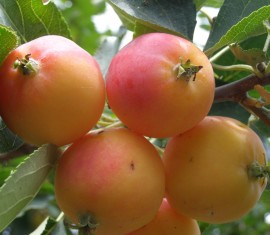
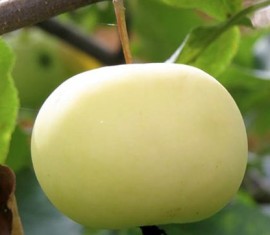
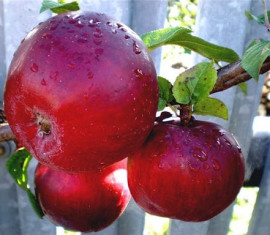
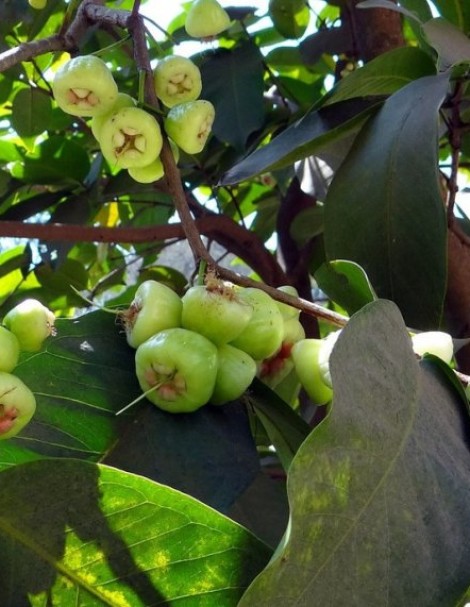
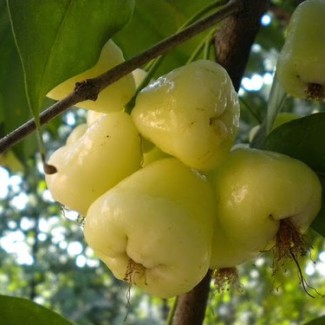
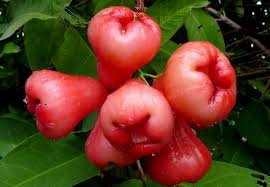 The fruits of the White Rose bear little resemblance to apples, as the plant itself belongs to the Myrtaceae family. They are shrubs or small trees, usually evergreen, that are extremely rich in aromatic essential oils. The fruits are typically round, oval, oblong, or pear-shaped. They are small, barely reaching 4-6 centimeters. The skin is quite thick, shiny when ripe, and can have a greenish, white, pink, crimson, or even bright red hue.
These apples have a distinctive feature that can help you choose. The lighter the skin color, the sweeter the fruit. That is, pink and green apples contain much more sugar (fructose) than raspberry or red ones.
The fruit may not contain a seed pod, but a single large seed. They are filled with sweet, crisp, yet tender and very juicy flesh, white or slightly cream-colored. The aroma of the fruit is reminiscent of roses, hence the analogy from which the plant gets its name. Due to their thick skin, apples can be easily transported even over long distances, but their shelf life leaves much to be desired. Therefore, they are usually processed directly into juices, jams, preserves, marmalades, and compotes.
White Rose apple tree: characteristics
Crown and root system
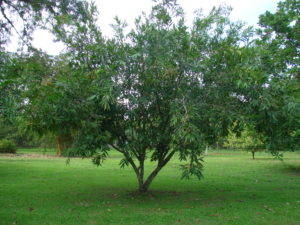 This plant is evergreen and, in favorable conditions, can easily grow to 15-17 meters in height. However, in Russia, 4-5 meter tall specimens are most common.The White Rose grows very quickly, but only in height during the first 3-5 years. Lateral skeletal branches begin to emerge. The trunk averages 35-40 centimeters in diameter. The bark is dark pink, smooth on very young shoots, but over time it becomes uneven, peeling off in chunks and becoming cracked.
The lower branches, growing at a right angle to the trunk, are usually located quite low to the ground. The leaves are quite large, approximately 30 by 15 centimeters, fleshy, smooth, and shiny, with a slight bluish tint at the petiole. The tree's rhizome is robust, branched, and designed for efficient moisture absorption.
Productivity and pollination
You can't count on a large harvest even from a mature tree.
The maximum yield of aromatic fruits that can be harvested per year is about 15-35 kilograms, provided that the plant receives high-quality care and has suitable weather conditions.
The variety is pollinated in a standard manner—its bright, unique aroma attracts a huge number of pollinating insects to the garden. White roses are considered excellent honey plants, producing high-quality and nutritious honey.
Winter hardiness and disease resistance
This is a tropical plant, so frost resistance is completely out of the question. Under normal temperate climates, it will inevitably die in open ground, and even in southern regions, it's best grown in conservatories or greenhouses. At temperatures below 5°C, the tree dies, ceasing growth and development. If kept under these conditions for long enough, it will likely die.
Myrtle is not susceptible to any apple diseases, so protect it from powdery mildew or scabiesNot necessarily. However, the Java apple has its own "sore spots": rust Myrtle and guava. These are exotic fungal infections, but they can also pose a threat to native garden plants. The trees are not damaged by the pests we are accustomed to.
Growing regions
In the second half of the eighteenth century, British sailors brought the apple tree to the island of Java, where it thrived. The tree then spread to Bermuda, the Bahamas, and the Antilles, from where it spread to Central and South America (Mexico and Peru). Around the mid-nineteenth century, the apple tree was also cultivated in South Africa and adjacent regions (Réunion, Madagascar, Zanzibar), as well as Australia.
Today, Java apples are grown on virtually every continent, but not on an industrial scale. They are absent only from Antarctica, where there are simply no specialized greenhouses to create suitable conditions.
Peculiarities of Growing White Roses
This is a tropical, heat-loving plant, so growing it outdoors is only possible in southern regions. Fortunately, it grows well in pots indoors, although good harvests are not expected.
 Landing
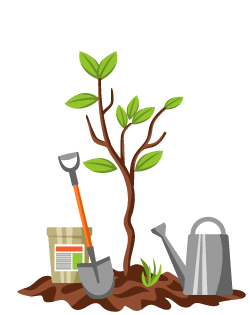 Landing
Basic conditions
- Sufficient sunlight or artificial light is essential for healthy apple growth. Lighting should be provided for at least 6-8 hours per day, otherwise the tree will never bloom.
- Soil The soil for planting should be loose, airy, but nutritious. Therefore, peat and sod mixtures are well suited.
- Monitor the soil acidity; it shouldn't exceed 6.8-7 pH. It makes it too acidic. manure during fertilization, therefore lime is also added along with it to neutralize the negative effects.
- The plant prefers moist areas, close to groundwater, and open water. Therefore, a low spot near a river or lake would be ideal, but care should be taken to ensure the soil is loose.
- Java apples don't tolerate drafts, but they do prefer good ventilation. Therefore, care must be taken to ensure these conditions are met.
- In open ground, you'll need to be careful to ensure the native flora doesn't outcompete the "newcomer," as it's better adapted to the conditions. Weeds and shoots from other trees and shrubs must be carefully removed.
- It's best to plant the trees in special large containers. This will allow you to take them outside in the spring and bring them back indoors in the winter.
- When planting, the seedling (at least 20 centimeters) must be acclimatized, "accustomed" to the new conditions. To do this, take the pots outside for 15-20 minutes, then for half an hour, an hour, and so on.
Landing dates
This heat-loving plant is best planted in the spring, when the chances of rooting are much greater. However, when planting in greenhouses, conservatories, or simply in pots, this doesn't make much of a difference. Cultivation can also be undertaken in the fall, after most plants have completed their growing season.
Tree care
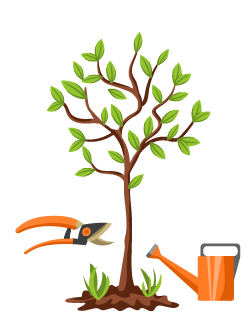 Tree care
Loosening the soil, watering: proper agricultural technology
This is a moisture-loving and very freedom-loving variety, so it needs to be provided watering Once every five to six days. Longer breaks should never be allowed, as this will stress the tree, despite its drought tolerance. It's best not to plant other fruit trees within a 2-4 meter radius.
You can use the soil moisture as a guide when loosening it regularly. If the soil is dry to a depth of 2-3 centimeters, it's time to grab the watering can.
Water straight from the tap for glaze Malabar plums should not be used because they contain many unusual dissolved chemicals, the most dangerous of which is chlorine. Therefore, it's best to use purified or rainwater, or at least let tap water settle for two days. It's best not to use very cold water, but 16-20°C is sufficient.
Pruning: simple crown shaping
Most often, pruning for this species is a formative procedure, allowing the crown to be shaped to the gardener's desires. This can only be done after the active growing season, that is, after flowering and fruiting have ceased. Some have tried pruning the Pomorosa in the spring, before flowering, but as a result, it simply sheds its leaves, fails to bloom, and produces no fruit. It's very difficult to predict when the growing season begins; only an experienced botanist knowledgeable about tropical plants can handle this task.
To avoid damaging the tree, limiting pruning of the main stem should not exceed a quarter of its total height. Up to one-third of lateral growth can be removed. Sanitary pruning involves removing all dead, diseased, or damaged branches.
Reproduction
- Bone.
- A seedling from a nursery.
- Layers.
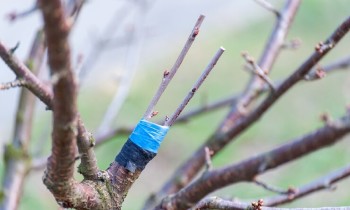
- Grafting by cuttings onto vegetative rootstock.
Diseases and pests
- Myrtle rust.
Ripening and fruiting of White Rose apple trees
The beginning of fruiting
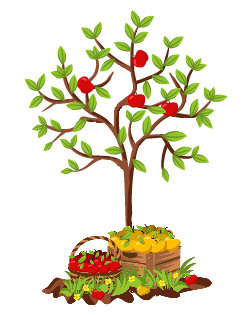 The beginning of fruiting
The first flowering and fruiting occurs no earlier than 3-4 years after planting the plant in a permanent container or soil in a winter garden or greenhouse.
Flowering time
Depending on growing conditions, lighting, and ambient temperature, flowering times can vary from region to region. The tree produces beautiful large white, yellowish, or slightly greenish flowers with four fleshy petals and numerous long stamens.
Flowering lasts for approximately one month. After 50-60 days, the tree is ready to harvest its delicious and very aromatic fruits.
Fruiting and growth
When grown in pots, the yield per tree typically doesn't exceed 120-200 fruits, although this is still very good for indoor use. The best results in our country were achieved when planted outdoors for the summer in Crimea. There, trees produced 450-600 apples at a time.
The tree grows very well, 25-50 centimeters per year. Therefore, you'll need to monitor this growth very carefully and prune it in a timely manner.
Top dressing
- Nitrogen, phosphorus and potassium fertilizers.
- Organic.
What to do if it doesn't bloom or bear fruit
- Provide high-quality lighting for at least 8 hours a day.
- Eliminate drafts.
- Feed.
- Fluff up the soil.
- Check for fungal diseases.
- Ensure proper watering.
Share your thoughts on the White Rose in the comments, as first-hand information about this exotic plant is scarce. This way, you can help others get their hands on these delicious and highly nutritious fruits, which provide a powerful dose of vitamins.