
Ranetka apple tree: characteristics of the variety and care
| Color | Reds , Yellow , Greens , Whites |
|---|---|
| Ripening season | Autumn |
| Size of apples | Small ones |
| Taste | Sour , Sweet and sour |
| Crown type | Tall tree |
| Shelf life | Low shelf life |
| Application | For recycling |
| Winter hardiness | High winter hardiness |
| Fruiting age | Up to 5 years |
 History of origin and regions of growth
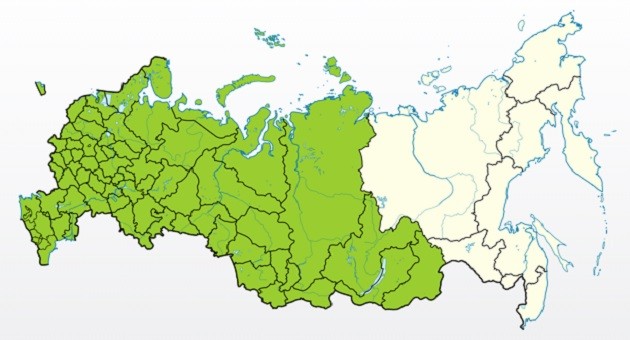
Growing regions
- Irkutsk region.
- Tuva.
- Khakassia.
- Krasnoyarsk Krai.
- Transbaikal Territory.
- Altai.
- Novosibirsk region.
- Tyumen Oblast (including the Khanty-Mansi and Yamalo-Nenets Autonomous Okrugs).
- Omsk region.
- Tomsk region.
- Kemerovo region.
Origin
The exact origin of this variety is unknown, as it's simply impossible to trace all its twists and turns. There is definite evidence that it was brought to the city of Minusinsk (Siberia) by the renowned Russian "pioneer of Russian gardening," Mikhail Gavrilovich Nikiforov, sometime in the early 1890s. He was the one who devised the method of covering low-growing dwarf ...
The frost-resistant tree immediately spread throughout the Far East and Siberia. Moreover, local breeders often used it as a source material for developing new subvarieties.
Moreover, the crape myrtillus became the primary rootstock for growing all apple trees in this harsh region and is still used today to develop frost-resistant scaffolds. The variety was on trial for a long time and was only added to the State Register and zoned in 1947. It is easily cultivated in any region of our country.
Content
Description of the Ranetka apple tree variety
 Large farms prefer not to grow this variety on an industrial scale, and these apples are rare in stores. However, every gardener, even those who aren't, knows what a Ranetka is or has at least once tasted this tart, yet so aromatic and healthy apple. The tree bears fruit abundantly, is extremely resistant to low temperatures, and, most importantly, produces a harvest in a short period of time. This is precisely why it is so popular in the northern part of our country.
Apples: color, size and weight
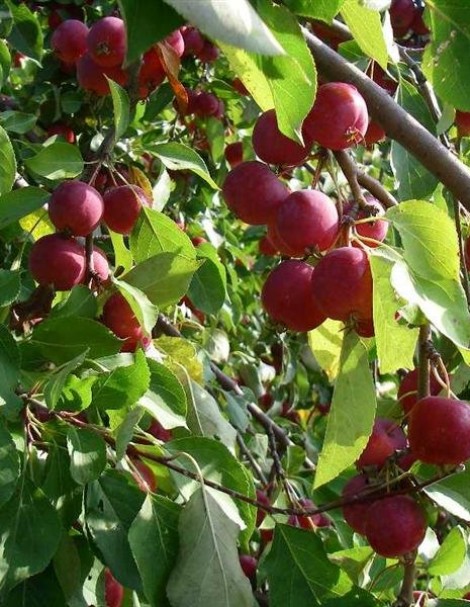
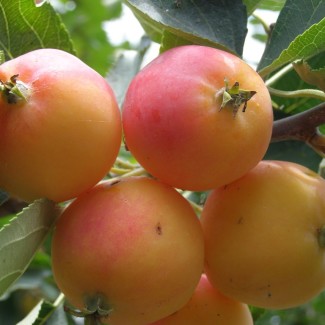
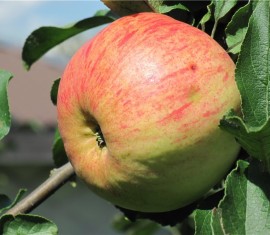
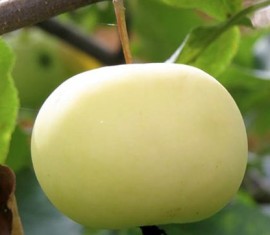
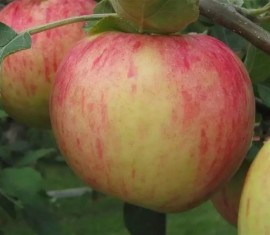
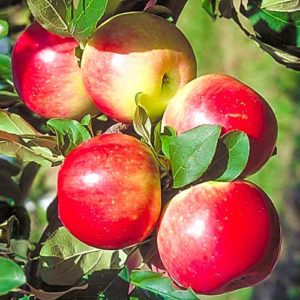 Ranetki (Ranetki) are predominantly small to very small apples, barely weighing 10-15 grams. They are most often round, oval, or slightly flattened on thin, long stalks. This isn't actually a single variety, but a collective name for several hybrids, so the fruit's appearance can vary considerably. However, they are predominantly red, raspberry, or carmine, but can also be yellow with a red blush. The skin is dense, even somewhat hard, and thick. The chemical composition can be characterized by the following indicators per 100 grams:
- P-active compounds (catechins) – 886 milligrams.
- Tannins – 554 milligrams.
- Vitamin C (ascorbic acid) – 28 milligrams.
- Total sugars (fructose) – 12.8%.
- Pectins (fiber) – 7.7%.
- Titratable acids – 2.5%.
Ranetki apples are so rich in pectin, which can remove radionuclides, heavy metals, and other hazardous chemical compounds, that they are recommended for consumption in areas affected by accidents or hazardous industries. The amount of biologically active substances in these apples is tens of times higher than that found in other varieties.
The flesh of the fruit is predominantly white, with a slight pink or yellow tint, and may have marbled red stripes. It is generally tart, tart, and sometimes slightly sweet, yet juicy and crisp. According to a tasting panel, the apples only score 4 out of 5 for appearance, and even less so for taste—3.3 out of 5. While these apples are, as they say, "an acquired taste," they make delicious preserves, compotes, and jams.
Ranetka apple tree: characteristics
Crown and root system
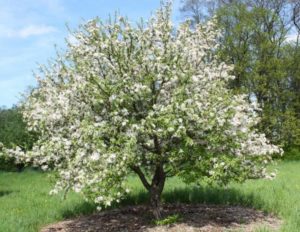 Ranetki trees are very vigorous and can easily reach 7-8 meters in height, which significantly complicates care and harvesting. That's why gardeners are willing to limit their growth by pruning. Crown They are typically oval or broadly oval in shape, but can become spreading in maturity. Sometimes they cover an area up to 5-6 meters in diameter. The crown on the branches is usually brown or reddish-brown, smooth, and pubescent.
The leaves of the Ranetki apple tree are quite large, oval, with a wider base and a tapering tip. They are dark green or brightly colored, smooth, leathery, and quite dense. The root system of the apple tree is quite extensive and well-developed, and the vegetative rootstock has a central taproot.
Productivity and pollination
Apples of various Ranetki varieties typically ripen as early as late August, making this variety recommended for growing in northern regions with short summers. However, sometimes the ripening period extends until mid-September.
Yield also directly depends on the specific subvariety. Some trees may produce only 10-15 kilograms of aromatic apples, while others yield 80-100.
The variety is considered partially self-fertile. This means you'll get an apple harvest even if there are no other apple trees nearby with matching flowering times for cross-pollination. However, if there are other trees, the yield increases by 50-75%, which is quite significant. It's also a good idea to plant the apple trees near an apiary, although the powerful aroma of blooming apple trees attracts pollinating insects even from afar.
Winter hardiness and disease resistance
Thanks to its origins in Siberian varieties, Ranetka has high tolerance to low temperatures. The common wild apple, its direct ancestor, can withstand temperatures as low as -47°C without losing its fruit, just like its numerous descendants. Moreover, the length of the winter period usually doesn't affect yield, as is the case with hybrid apple varieties.
It is not recommended to treat Ranetki apples with any chemicals during the formation and ripening period. These chemicals can not only remain on the apples' surface but also penetrate deep into their flesh. In this case, they will be unfit for consumption.
The tree has no special immunity to common fungal infections. Like other species, the crape myrtillus is susceptible to powdery mildew and scab. However, timely preventative measures have a significant impact, and the trees rarely become ill. For example, in the summer, it's a good idea to treat the trees with Bordeaux mixture, and seal cracks and damaged bark with garden pitch and copper sulfate.
Subspecies and rootstocks
These apple trees are grown on a wide variety of rootstocks, crossed with the most unexpected varieties, but most often with Chinese varieties. The Ranetka variety, grown on a dwarf rootstock, has the shortest lifespan, but produces the most fruit. On espalier rootstocks, this variety can be grown and bear fruit quite well even in the Far North, while vegetative rootstocks require more moderate climates.
| Subspecies | Description |
| Red columnar | This subvariety, which has been bearing fruit for several years since being planted in open ground, was developed by Blagoveshchensk breeders. Its apples are ribbed, very small, and grow in clusters, with bright red skin and creamy flesh. |
| Golden columnar | Another variant of the columnar apple tree, where the plant has virtually no lateral scaffold branches or very few. It was developed by the renowned breeder Michurin by crossing the Zolotaya Kitayka and White fillingFruiting begins in the 3rd or 4th year. The small apples (up to 8-10 grams) have bright yellow skin and snow-white, juicy flesh. The flavor reveals distinctive honey notes. |
| Siberian berry | This variety produces fruits in a variety of shades, from pale pink to bright orange and carmine red, but burgundy ones are also found. This subvariety can be identified by its clusters of tiny fruits, more reminiscent of rowan berries. These apples weigh barely 5 grams and have a tart and sour taste. |
| Bulk Ural | This variety produces larger apples, weighing up to 15-30 grams. It's a hybrid of the Red Ranetka and the Papirovka, so the fruits are mostly yellow with a red or pink blush. Fruiting usually begins as early as the second year, and the apples themselves can be stored for up to 2-3 months without any special preparation. The flavor is sweet and sour, which is unusual for this variety. |
| Wild Siberian | Despite its name, this is a selective variety developed at the Novosibirsk Pomological Station. It's a compact and highly frost-hardy tree, capable of withstanding even the harshest growing conditions. The juicy, sweet-and-tart fruits ripen by early August, but don't have a long shelf life, requiring almost immediate processing (within 2-5 days). Fruiting is very abundant, with the trees practically covered in fruit. |
| Honey | A vigorous hybrid, best suited for cultivation in the Central and Central Black Earth regions. It produces fairly large apples, comparable to the Ranetka variety, weighing up to 35-40 grams, with a sweet, honey-like flavor. The fruits ripen by the end of August and then quickly fall from the branches, so it's important to keep a close eye on them to ensure they're ready for harvest. |
| Ermolaeva | This subvariety is named after the breeder who developed it in the Krasnoyarsk Territory. The tree is medium-sized, reaching only 4-5 meters, and bears yellow fruit with a large, streaky red blush and a sweet and sour taste. A single plant can yield approximately 15 kilograms of apples, even after three years of planting. |
Features of growing Ranet
 Landing
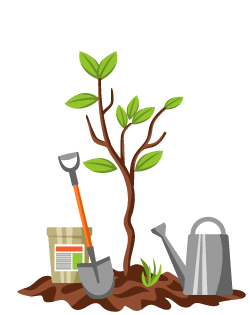 Landing
Key Features
- The crab apples grow well in both sunny and shaded areas, especially since in most cases (excluding dwarf and creeping rootstocks) the trees themselves will soon outgrow all other species.
- It is not advisable for the tree to be in a draft – this is the only rule that cannot be broken.
- Soil The soil should be fertile and of any acidity, but lower rather than higher. Apple trees thrive in black soil, fertilized loam, and even sand.
- Dig holes up to 70 centimeters deep and the same diameter. These can be prepared 2-3 weeks in advance, or even as early as the fall. Add soil mixed with fertilizer to the bottom, fill with water, and let sit.
- Before planting, the seedlings are dipped into a "swamp" made of soil and water, but first all damaged, rotten or dried roots are cut off with pruning shears.
- Stakes are immediately dug into the holes for tying, which can be removed after 2-4 years.
- Place the seedling on a drainage layer (gravel, vermiculite, broken brick), cover with soil, and water lightly to remove any air bubbles. Continue alternating layers until the soil reaches the surface.
- The root collar of the tree must protrude above the soil surface by at least 5-7 centimeters, otherwise all the properties of the rootstock will be completely leveled out.
- Trees should be spaced according to the chosen subvariety. So, if the intended tree is 3 meters tall, leave the next tree at the same height.
- It wouldn't hurt to mulch the soil on top using chopped straw, grass or humus.
Landing dates
Wild apples are so resilient and easy to care for that it makes no difference whether you plant them outdoors in spring or fall. The key is to plant them in spring before bud break, and in fall after the leaves have completely fallen and the sap has begun to flow, but at least a month before the onset of frost.
Protection from frost and rodents
Despite their high resilience, it's a good idea to protect first-year seedlings from freezing temperatures to ensure their survival. To do this, wrap the trunks with straw bales, spruce branches, foam rubber, or nylon tights.
To protect them from hungry rodents that move closer to human dwellings in winter, you can coat the trunks with lard, grease, or special chemical compounds. Insects can be repelled by whitewashing them with lime in the fall and by treating them with insecticides.
Tree care
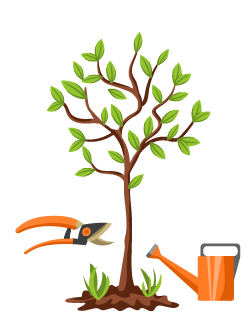 Tree care
Loosening the soil, watering: proper agricultural technology
The crape myrtle prefers the soil around its root zone to be "black fallow," meaning it's dug up. Moreover, the older the apple tree, the wider its root zone. For two- or three-year-old trees, 1.5 meters is sufficient, but a mature tree requires 3-5 meters. Directly near the trunk, the soil should be loosened to a depth of 10-12 centimeters, but beyond a meter, you can dig to a depth of 20-25 centimeters.
Trees don't require special watering, but supplemental moisture shouldn't be avoided, especially during dry periods. With Ranetki, it's a good idea to follow the so-called 10-day rule. This rule states that if there's been no precipitation for ten days, you should begin watering the apple trees, but if rain falls during the following period, you can stop watering and start counting down exactly 10 days again.
Pruning: simple crown shaping
Most Ranetka subspecies, if left unchecked, can grow up to 7-8 meters tall, significantly complicating their care and harvesting. Furthermore, shaping can only be done in early spring, before the sap begins to flow. Therefore, you'll have to work hard, trimming back a third of the trunk and any adjacent skeletal branches you decide to leave.
All branches that extend deep into the crown, are excessively dense, dry, or show signs of disease or damage should be regularly removed. The cut areas should be treated with water-based paint or garden varnish. To rejuvenate 20- to 30-year-old apple trees, remove 2-3 mature shoots, leaving "water sprouts"—well-developed, fatty branches.
Pollinators
- Chinese.
- Celeste.
- Anniversary.
- Melba.
- Silver Hoof.
- Candy.
Reproduction
- Layers (clones).
- Growing from seeds.
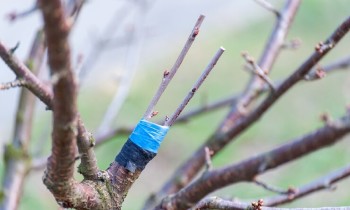
- Grafting by cuttings and buds.
Diseases and pests
- Scab.
- Powdery mildew.
- Fruit rot.
- Cytosporosis.
- Leaf roller.
- Green Aphid.
- Codling moth.
Ripening and fruiting of the Ranetka apple tree
The beginning of fruiting
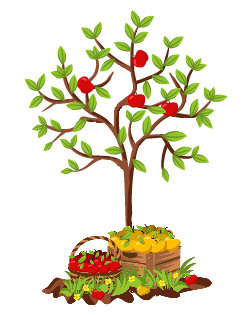 The beginning of fruiting
When you'll harvest your first Raneta apple depends directly on the variety you planted. However, most of them begin to delight you with fragrant, beautiful, and delicious apples as early as 2-3 years after planting. Don't expect a bountiful harvest in the second year, but 1-3 kilograms is quite possible.
Flowering time
This factor depends on the growing region, climate, and weather conditions. However, the earliest time for Ranetki to bloom is mid-May. The flowers are usually very abundant, densely arranged on the branches, growing in clusters. They can range in color from snow-white to deep pink-red, and exude a very strong fragrance at this time. Because of this characteristic, the variety is often planted not for apple harvesting, but for ornamental purposes. The flowering period of this variety is approximately 10-12 days.
Fruiting and growth
Ranetki grow quite quickly, so the maximum harvest can be expected by the 7th or 8th year, when their growth spurt ends. Most subspecies can be harvested as early as August, but some may take until September. It's important not to miss this moment, otherwise the apples will simply fall off. They can't be stored, so it's best to process them all immediately.
Top dressing
- Compost.
- Manure.
- Peat.
- Mineral mixtures and complexes.
What to do if it doesn't bloom or bear fruit
- Transplant.
- Thin out the crown.
- Check for pests and diseases.
- Water or stop watering.
Why do apples fall?
- Overripe.
- Weather phenomena.
- Pests or diseases.
- Excessive humidity.
Please share your thoughts on Ranetki, as every gardener would be delighted to grow such a beautiful tree on their property, bearing healthy and delicious fruit.

Comments
This article is helpful. I tried Ranet as a child. Since then, I've rarely seen this variety; for some reason, gardeners don't like to grow it. Having learned how to properly grow and care for an apple tree, I plan to plant one. The fruit is small but delicious. Thank you.