How to treat damaged and cracked apple tree bark
The bark protects the tree from external factors, and any damage to its integrity negatively impacts flowering and fruit yield. Damage to the branches not only facilitates the penetration of various infections and pests into the wood but also indicates the development of a serious disease. Such a problem requires immediate identification of its cause and initiation of treatment.
Content
Diagnosis of diseases depending on the nature of damage to parts of the apple tree
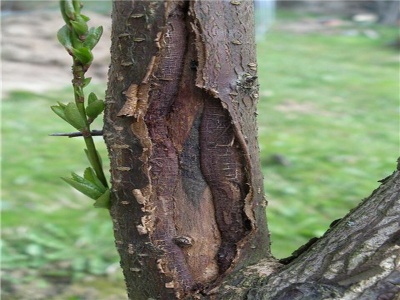 To choose the right treatment method, it's necessary to identify the exact cause of the problem. Cortical damage can be of two types, depending on its origin:
- mechanical;
- infectious.
Each case requires different treatment methods.
Non-infectious wounds
This type of damage occurs as a result of mechanical impact on the bark caused by one factor or another, for example:
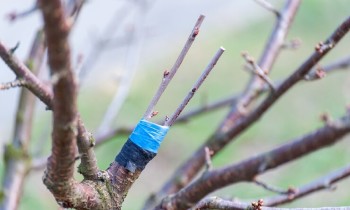
- traces of carelessly performed grafting or pruning;
- sunburn;
- frost cracks;
- damage caused by drought, excessive moisture, strong winds;
- pest bites (rodents and insects);
- bird bites.
Wounds resulting from improper gardening are detected and treated immediately, so fruit crops tolerate them relatively well. The same can be said for damage caused by broken branches.
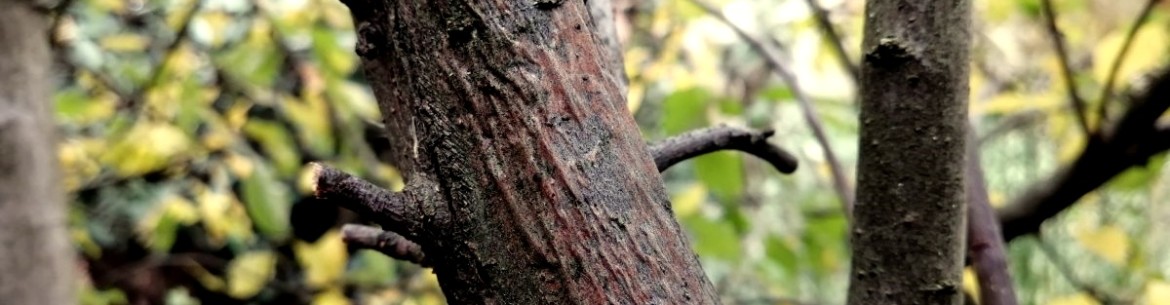
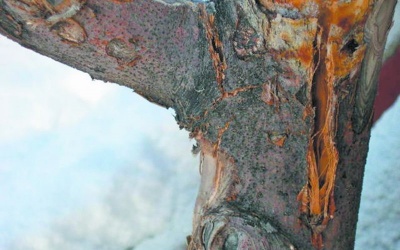 Large flaking pieces of bark and pink wood are the result of strong sunlight or temperature fluctuations. This problem can be avoided by whitewashing in the fall using slaked lime, water-based paint, etc.
Deep cracks in the trunk and the undiscolored wood underneath are the result of exposure to low temperatures. Fixing the problem requires no human intervention, as the tree heals the wounds on its own.
Torn and frayed bark at the base of the trunk indicates that the apple tree has been attacked by rodents. Mice only damage the top layer of bark, while hares leave deep marks.
Through-holes are usually created by woodworms. Under such damage, cavities form in the bark, which over time develop into hollows.
In mature trees, bark renewal is often observed naturally in the form of cracking and peeling; in this case, treatment is not required.
Restoration of bark after mechanical damage
Broken branches are cut to the base, and damaged areas are carefully coated. garden pitchSome gardeners use this product to treat small cracks, even though the tree will heal on its own.
If a large branch breaks or the trunk splits, use Bugorkov's balm or a drying oil-based paint for treatment. An ointment made from several ingredients is effective as an additional lubricant:
- "Immunocytophyte";
- wood ash;
- "Kornevin";
- BF glue;
- "Fundazol".
Obtain the healing putty as follows:
- mix wood ash, Fundazol and Kornevin;
- crush the Immunocytrovit tablet and add to the ingredients;
- Add BF-6 glue to the total mass and mix thoroughly.
When properly prepared, the mixture should have the consistency of thick sour cream.
When treating wounds with this ointment, be sure to include a small area of healthy bark.
In cases of significant damage, especially caused by pests, the bark is stripped. Afterwards, the tree is treated with a copper-containing disinfectant, such as a 1% copper sulfate solution. To stimulate healing, the tree wounds are sealed with a mixture of mullein and clay in a 1:1 ratio. Alternatively, pure clay, softened beforehand, can be used. Mature trees are whitewashed.
It is unacceptable to use kerosene, tar and other petroleum-based products to treat wounds of any origin.
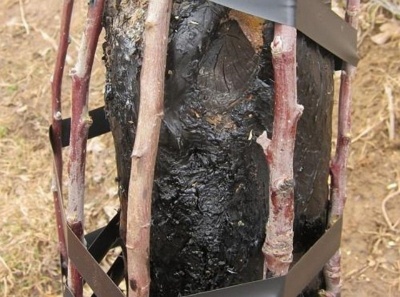 Apple trees can be protected from rodents using special cap-shaped structures. These are typically made from coniferous branches, reeds, or corn. These improvised structures are tightly wrapped around the trunk and lower branches. When spring arrives, the cover is removed.
If rodents do manage to damage the bark, the tree is treated in the same way as other non-infectious wounds. A serious problem, where the bark is eaten away in a ring, can be resolved by bridge grafting. This technique involves creating bridges of grafted cuttings across the damaged section of the trunk. These bridges will then facilitate sap flow.
Infectious diseases
Infection-related illnesses are generally serious and require immediate action to treat and restore the bark. These problems are typically caused by bacteria or fungusLack of treatment leads to the rapid death of the affected tree and the spread of infection throughout the garden.
Cytosporosis
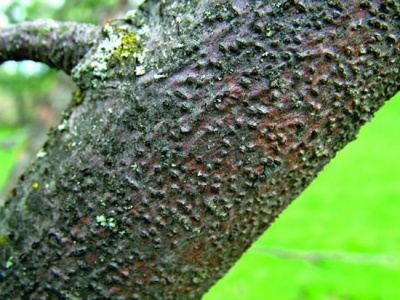 The source of this disease is the Cytospora fungus. Its spores enter the tree through various wounds in the bark. The infection spreads quite quickly, resulting in the death of the apple tree within a single season. Bark infected by Cytospora dries out and cracks, simultaneously becoming covered with numerous black bumps. In addition to the bark, the fungus also attacks the wood.
Leaves and ovaries on the infected branch dry out, curl, and die. As the disease progresses, deep wounds form and the cambium begins to disintegrate, turning red or crimson. In this case, the entire affected area must be immediately removed and burned outside the garden.
European crayfish
The disease is caused by the fungus Nectria galligena, whose spores overwinter in the bark and become active with the onset of spring. The infection spreads quickly throughout the orchard, penetrating the bark at the slightest damage. The fungus most often colonizes trunks and scaffold branches. The disease progresses slowly in infected trees, making it possible to save the apple tree.
At the site of fungal penetration, distinctive dark-brown dents appear. In the spring, these dents are surrounded by numerous spores in the form of red bumps. The bark then dies and separates from the trunk, leading to the formation of hollows with swellings along the edges. In the open form of the canker, the tree is damaged right down to the core. The closed form is accompanied by the formation of growths and tumors on the branches and trunks, concealing the wound.
Bacterial cancer
The causative agents of this disease are gram-negative rods, which most often appear in the garden along with new seedlings that have not undergone high-quality treatment.
Bacterial canker is very difficult to cure; the disease can completely destroy a tree in a short period of time by destroying the vascular tissue system.
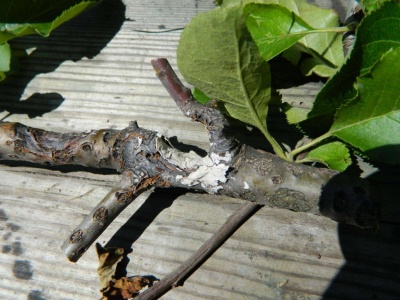 The problem that has arisen manifests itself as follows:
- dying off of leaf buds in spring, which affects part of the adjacent bark;
- blackening of leaves;
- wilting of flowers (without falling off);
- gradual drying out of young shoots, their acquisition of a brown tint;
- covering the bark with multi-colored spots, which over time transform into blisters;
- formation of crusts and ulcers on the bark.
Black crayfish
The source of this disease is a fungus of the genus Botryosphaeria, common in temperate climates. The fungus feeds on dead and living tissue and has the ability to spread rapidly, eventually infecting the entire garden.
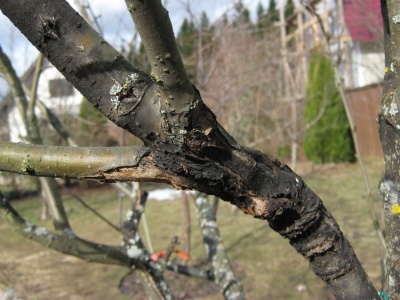 Defeat black crayfish looks like this:
- the appearance of cracks in the bark, surrounded by small dark dots;
- the growth and deepening of wounds, their acquisition of a purple color at first, and then black;
- effect burn on the branches;
- darkening, drying and curling of leaves;
- the formation of black rings around skeletal branches and trunks, causing trees to lose vitality.
Lack of proper treatment leads to the death of the orchard within 1–2 seasons.
Polypore mushroom
There are approximately 20 known varieties of this mushroom, the most commonly encountered by gardeners: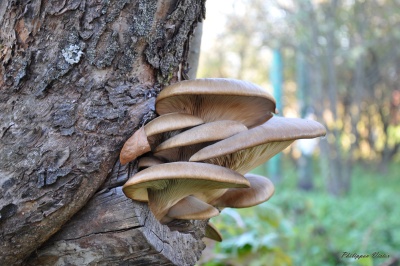
- real;
- flat;
- scaly;
- yellow;
- false;
- smoky;
- multi-colored.
Tinder fungi grow on the branches and trunks of trees and, depending on the species, have different shapes and colors. Parasitizing on apple trees, mushrooms They destroy the structure of the wood, leading first to rot and then to the death of the trees. Any tinder fungi detected are immediately cut off and destroyed.
Fungus located on the trunk or at the roots of an apple tree indicates that the tree is severely damaged and cannot be treated.
To prevent the polypores from spreading throughout the garden, their caps are cut off, taking some of the wood with them. The cut areas are treated with disinfectants and then coated with garden pitch. This procedure is continued until August, the period when the spores mature and spread.
Fight against infectious diseases
Typically, treatment for infectious diseases follows the same pattern, with additional procedures added depending on the type of pathogen.
The general treatment algorithm is as follows:
- thorough cleaning of wounds;
- trimming of affected areas, capturing healthy tissue by approximately 2–3 cm;
- disinfection with one of the antiseptics: potassium permanganate, iron or copper sulfate;
- treatment with fungicides (in cases of fungal diseases);
- applying oil paint, clay or garden pitch to the wound;
- spraying the entire affected tree with fungicidal preparations (HOM, Bordeaux mixture, ABIGA-peak, etc.).
At the end of all work, it is necessary to burn any waste generated during the process and treat any gardening tools used with disinfectants.
Severely affected trees are cut down and uprooted to prevent the entire garden from becoming infected.
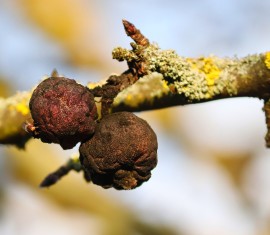
Mosses and lichens
These unique organisms are a symbiosis of algae and mushrooms, cannot be classified as either a pest or a disease, since the surface of the bark is used by them only as a platform for placement.
Mosses and lichens They do not penetrate the bark or wood and cause no damage. Their damage consists of creating favorable conditions for pathogens and pests to colonize. Therefore, upon detection, these organisms are removed by stripping the bark with a suitable tool. Afterwards, the treated areas are disinfected with ferrous sulfate (3%). The appropriate time for this procedure is autumn, when the trees are slowly entering dormancy.
Getting rid of pests
In addition to diseases, the bark of trees and the wood underneath are damaged by many pests.
From apple bark beetle larvae
The larvae of this insect feed on wood and bark, boring numerous tunnels into the bark. Their presence is usually indicated by peeling bark. Ignoring the problem leads to the death of the tree. The following pest control products are effective:
- "Arrivo";
- Confidor-Extra;
- "Pirinex";
- "Bitoxibacillin";
- "Calypso".
From the wood-boring weevil
The tunnels created by this insect weaken trees, and branches with infected wood inside break off even in light winds. The following products can be used to kill the woodworm:
- "BI-58";
- "Pirinex";
- "Dursban".
Preventive procedures
To prevent problems associated with bark damage, several measures are recommended:
- regular inspection of trees;
- timely and competent execution of all agricultural manipulations;
- choosing the right landing site;
- using only healthy planting material;
- growing varieties suitable for the climatic conditions of a particular region.
Prevention is always better than cure. Therefore, apple orchard care deserves special attention. Only by following all growing rules and recommendations can you avoid problems and reap a bountiful, high-quality harvest every year.