Milky Shine on Apple Trees: Treatment and Prevention
A beautiful and healthy apple orchard delights its owners with its appearance. There's nothing more beautiful than the emerald green of the leaves and the vibrant colors of the ripening harvest. But sometimes, the crowns, just beginning to blossom in the spring, take on a whitish hue, beginning to lighten before your eyes. The leaves stop growing, thin out, and dry out. This is the first sign of a milky sheen infection.
Content
General description of the disease
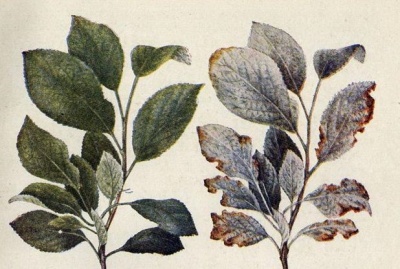 This fungal disease typically first attacks the foliage and then spreads to the tree's bark. Affected foliage becomes covered with a light, ivory-colored coating. This coloration indicates a serious apple tree problem. Only stone fruit trees are susceptible to infection. Wild trees are unaffected by the milky sheen.
This disease is widespread across vast areas. Shine occurs on apple trees:
- southern regions of the Russian Federation;
- in Crimea;
- in the North Caucasus;
- in Ukraine.
The disease can actively progress for three years. During this time, air pockets form annually under the leaf skin, causing the characteristic discoloration.
Causes of apple tree infection
There are two forms of this dangerous disease. Gardeners distinguish between non-parasitic milky shine, caused by unfavorable environmental conditions, and parasitic milky shine, which is usually caused by fungus S. purpureum (Pers) Fr.
Non-parasitic milky luster
Signs of infection are immediately noticeable – they appear as a silvery coating on all apple tree leaves. The disease is most often detected in the middle of the summer season: late July to early AugustThe causes of the development of the lesion are: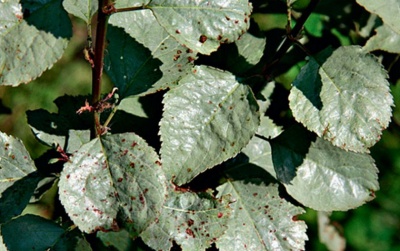
- freezing of trees in winter;
- sharp changes in temperature during the day;
- nutritional deficiency;
- lack of moisture;
- lack of drainage in the soil;
- strong lighting.
The leaves on the southern side of the crown are the first to be affected, and then the bloom spreads throughout the tree. A characteristic metallic sheen appears along the edges of the leaf blades, eventually affecting the entire available surface. The inner leaf mass and wood are usually unaffected: there is absolutely no necrosis, peeling, or flaking. The disease spreads focally, affecting very large areas. Timely measures can help avoid serious consequences.
False milky shine can be cured by following all agricultural practices and creating favorable conditions for the apple tree.
Parasitic milky shine
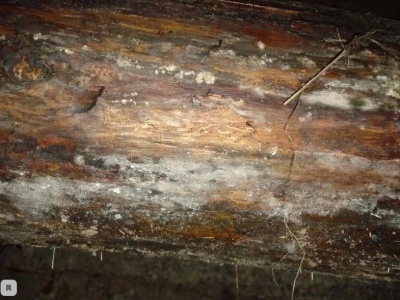 The parasitic form of milky shine is caused by a fungus that secretes toxic substances into the tree's tissue. In this case, the infection becomes apparent in early spring, when silvery spots appear on newly emerging leaves.
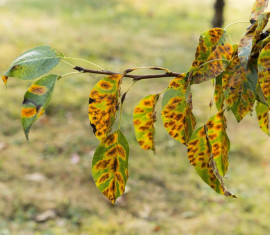
By mid-summer, the green leaves turn brown, curl, and dry out. Often, a distinctive peeling of the skin can be seen on them, appearing as small blisters. This causes damage to the wood: cut Brown spots of varying intensity are detected.
The detection of such signs signals that it is time to take urgent measures.
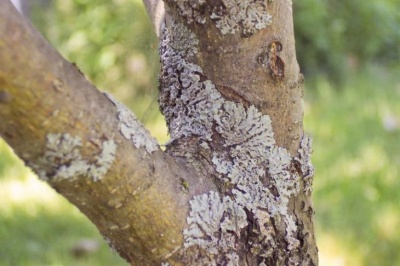
Otherwise, the percentage of infected trees in the orchard will steadily increase. In the initial stages of the disease, apple trees fight it off on their own, but later the milky sheen spreads to the skeletal branches and young shoots. The bark begins to peel, gummosis begins, and numerous fungal infections form in the affected areas. These fungi spread throughout the tree, growing into bark cracks, forming mycelium.
Next, the fungal bodies begin to layer, which in turn leads to the characteristic transformation of the disease, which takes on the appearance of roofing tiles. The pathogen begins to penetrate the wood fibers, poisoning the tree with toxins from the root system to the crown.
Within 3 years, the fungus takes over the plant completely, the apple tree dries up and dies.
Symptoms of the disease
 The initial stage of milky sheen development is called smoldering. It often develops in a latent form, making it difficult to recognize the developing danger. Beginning gardeners underestimate the insidiousness of the disease and begin taking action only after the pathogen has already infected most of the trees in the garden.
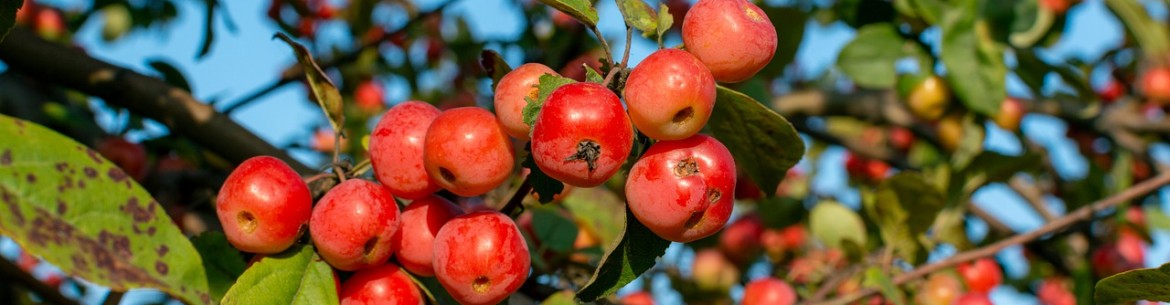
The first obvious sign of the fungus is a change in foliage color. It takes on a whitish hue with a slight metallic sheen. Branches affected by the fungus gradually dry out completely. Consequently, the fruit on them fails to ripen and falls prematurely.
Principles of treatment of milky shine
The key to combating this insidious disease is timely diagnosis. Next, identify the type of infection. For false milky sheen, providing the apple trees with proper care and comfortable living conditions is sufficient:
- timely application of potassium-phosphorus fertilizers;
- debugging the irrigation schedule;
- regular loosening of the soil.
A good result can be achieved in spring mulching soil.
If the disease is caused by a fungal infection, treatment should be more drastic. In the early stages, it is necessary to:
- cut out and burn affected areas of wood and crown;
- remove the bark with mycelium caps;
- cut young shoots to the healthy part;
- clean the surfaces;
- rinse the sections with a pre-prepared 4% solution copper sulfate.
All broken branches should be removed and exposed areas disinfected. To do this, use:
- garden var;
- water-based paint;
- oil paint;
- plasticine.
All garden tools must be sharpened and disinfected.
If the disease has affected the entire tree, any control methods will be futile. In this case, the plant should be completely removed from the garden plot. Even the root system should not be left behind. Otherwise, the disease will spread to neighboring trees.
If an apple tree suddenly turns silvery, it's a sign of false milky sheen. It can appear on the tree after severe cold weather. The disease is characterized not only by rapid spread but also by sudden disappearance after a couple of years, provided the fruit trees are properly cared for.
Preventive measures
There are simply no specific chemical treatments designed to combat milky shine. The most reliable way to prevent the problem from developing is through effective prevention.
To successfully protect your apple orchard from milky shine, follow these recommendations:
- Protect your fruit trees from winter frosts. Mulch the soil around your apple trees and insulate the trunks to avoid the damaging effects of frost.
- Do not plant an apple orchard on wet soils or in lowlands subject to annual flooding or inundation during the rainy season.
- Feed the trees with a potassium-phosphorus nutrient complex.
- Remember to water during the growing season and stop completely at the end of it.
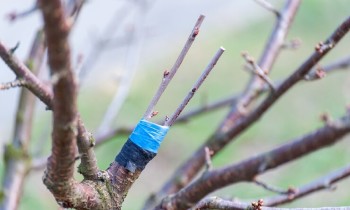
- Remove damaged branches. Always disinfect cuts and seal them with oil paint or garden pitch.
- In spring and autumn, spray trees with a solution of ferrous sulfate.
- When planting a garden, select seedlings that are adapted to the climate conditions.
- After the leaves have fallen, be sure to whitewash the tree trunks with slaked lime. This will help solve a number of problems.
- Before frost, give your apple trees a nutritious top dressing with wood ash.
- Spray trees regularly with onion infusion.
Milky shine of apple trees is an insidious and dangerous disease. Only by following proper agricultural practices and timely prevention can you prevent the fungus from appearing in your garden and save your fruit trees from dying.