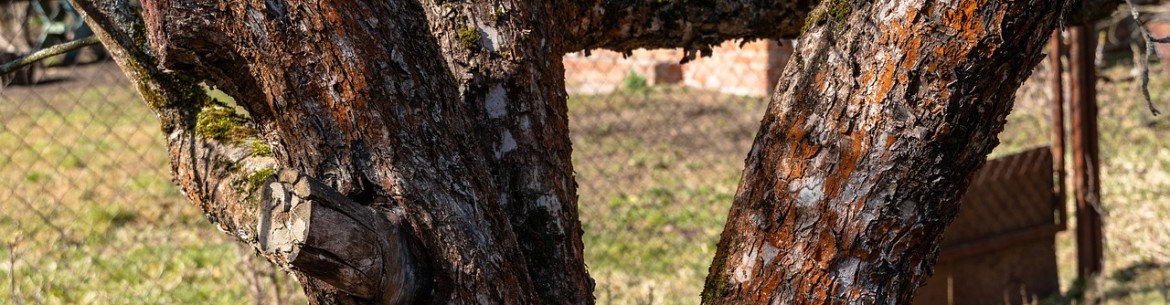
How to treat an apple tree trunk: identifying the causes and choosing treatment methods
Have you recently acquired a plot of mature apple trees, but are still struggling to get a harvest? You've been fertilizing, watering them strictly according to schedule, and treating them, but still no apples? There could be a number of possible causes, but most often the problem lies in the health of the trunk. Carefully inspect it; you might see signs of disease or pests. Once you've identified the problem, begin treatment immediately.
Content
Traces of frost cracks and sunburn
Sometimes dead parts of the bark on the trunk appear due to frostbite or sunburn:
 Direct sunlight typically hits tree bark most intensely in April and May. Burned areas will appear lighter, and layers of the trunk will peel off. This problem can be prevented by applying whitewash in a timely manner.
- Frostbite is characterized by deep cracks in the bark. The trunk's color remains unchanged. Most mature apple trees are capable of healing frostbite wounds on their own (this occurs when the sap begins to flow, as the sap secreted can heal plant tissue), so additional treatment is necessary. garden pitch No, it's not worth it. Disinfection should be carried out after the tree has filled all the cracks with healing sap. You can simply sand down the uneven areas of the trunk and coat everything with Ranet.
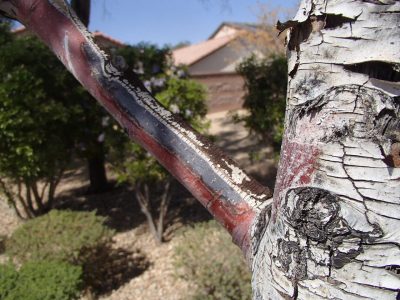 Direct sunlight typically hits tree bark most intensely in April and May. Burned areas will appear lighter, and layers of the trunk will peel off. This problem can be prevented by applying whitewash in a timely manner.
You can protect your tree from frostbite during a harsh winter by wrapping the trunk and skeletal branches with thick fabric. Burlap, denim, or heavy cotton will all work. Secure the wrappings securely. This won't completely protect the apple tree from severe frost, but it will help soften the tree's exposure to temperature fluctuations.
Apple tree trunk diseases and their treatment methods
There are several common diseases that can affect the trunk of an apple tree.
Symptoms of Cytosporosis
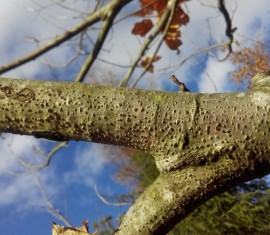
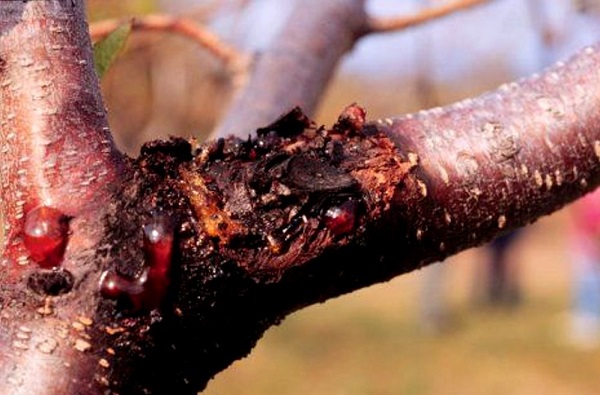
 This disease appears as brownish-red ulcerated growths covering the bark. At the very beginning of the disease, these lesions appear as only a slight darkening. As the disease progresses, the trunk surface becomes deformed and branches break off as they dry out.
Cytosporosis It develops very quickly and can kill an apple tree in just 1–2 full seasons.
Causes of cytosporosis:
- planting an apple tree in poor soil and its weakening due to this;
- improper watering or fertilizing of apple trees;
- mechanical damage to plant tissues.
The sooner you begin addressing the problem, the better. Apple tree trunk treatment:
- Using stripping, it is necessary to remove infected parts from the trunk, as well as damaged shoots.
- On larger and less mobile apple tree trunks, you need to cut off damaged areas of the bark using a knife (make the cut leaving up to 1 cm of healthy area).
- Treat the trunk with a solution copper sulfate and cover everything with a mixture of purified clay and mullein. It's best to wrap this compress around the shoot with a cloth and moisten it with a heteroauxin solution throughout the season (but you can also use plain clean water).
- It is also necessary to prevent the spread of the disease. For this, use the drug "Hom" copper sulfate and a tank mixture with trichoderma.
Defeat by Antonov's fire
This fungal disease is often called black canker. It typically affects trees weakened by heavy fruiting, as well as apple trees grown in poor soil. Stronger, healthier plants can also develop black canker, but it will take longer to develop on them (approximately two years).
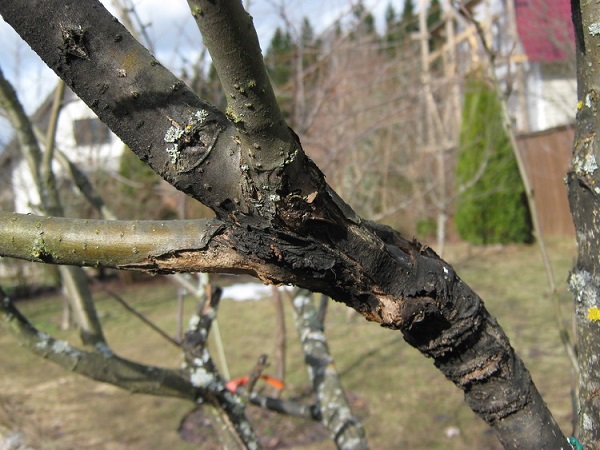 Black canker is characterized by the appearance of brown spots on the trunk bark, which gradually transform into depressions covered with a black coating. You can clearly see the boundary between healthy areas of bark and those damaged by Antonov's fire.
Any light touch to the damaged bark causes it to peel and expose the trunk.
Wood damaged by the disease becomes looser and crumblier. The disease can completely destroy an orchard within 3-4 years.
How to treat an apple tree trunk:
- The easiest way to remove a diseased tree is to uproot it. This should be done in calm weather. Burn the tree away from your garden plot to prevent the spread of the disease to healthy plants.
- If the disease has only affected non-vital nodes or small areas of the trunk, then cleaning the infected area and subsequent treatment of the wound may be sufficient.
- Clean cuts should be treated with a copper sulfate solution and a compress of mullein and clay applied. You can also seal small areas of the trunk after treatment with oil paint.
Black canker can affect not only the apple tree's bark, but also its leaf blades and apples. So, as soon as the flowering phase ends, spray everything thoroughly with Bordeaux mixture.
Symptoms of common cancer
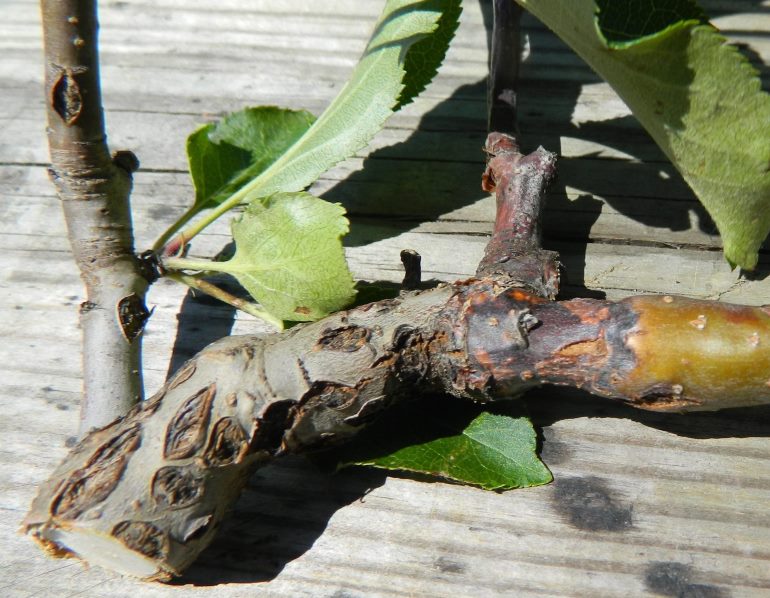
This disease differs from black canker by the presence of growths and nodules surrounded by noticeable dark red bumps. Common canker progresses much more slowly than its black counterpart, so your chances of saving your apple tree are much better.
Apple canker can affect both young and mature apple trees. Control should be done using the same methods as black canker. All cut and uprooted plant material should be burned away from the garden and healthy plantings.
All garden tools that have come into contact with infected plants must be thoroughly treated with an antiseptic after use.
Preventative treatment should be carried out several times per season (this applies to both common and black canker). During this time, carefully inspect the affected areas. If trunk treatment is not as effective as hoped, it is better to destroy one tree than to treat the entire garden.
Lichen infestation
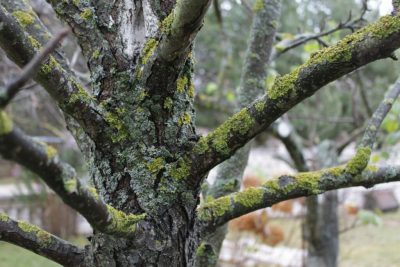 Quite often, even experienced gardeners can get confused lichensLichens that settle on the apple tree trunk, as well as fungal diseases, are common. Lichens are most often silvery-green or grayish-black in color. While they aren't harmful to the fruit tree, they can be a favorite wintering ground for various insects, including some harmful to apple trees. Therefore, it's best to remove lichens as early as possible.
We delete lichen from the trunk of an apple tree:
- The easiest way to remove lichen from the bark is with a scraper. It's best not to use a wire brush for this process, as it can damage the bark tissue.
- If you can't remove all the lichen immediately, you can treat the ingrown areas with a soapy solution and leave it for 20 minutes. After the allotted time, try scraping off the remaining residue again; it should work.
Removing plaque from the barrel
Sometimes a thin greenish coating may appear on the apple tree trunk. This coating is formed by the aforementioned lichens and single-celled algae. This coating can develop due to dense canopy growth and lack of proper air circulation.
This type of plaque won't harm the tree itself, but if it accumulates in excess, it can harbor insect pests in the axils of the shoots (they will actively reproduce under its cover). Therefore, it's best to scrape off the plaque with a spatula or scraper.
Mechanical damage
Sequence of actions for minor damage:
- Cut away dead areas of bark.
- Spray the plant with a solution of copper sulfate (3% concentration will be sufficient).
- Lubricate the areas cut garden pitch or make a compress from a solution of mullein and clay.
- Cover everything with a cloth to keep the compress on the trunk.
- Keep the winding moist for a month (for example, by spraying it with clean water).
What to do if there is very little bark left
If there's little bark left on the trunk, a bridge graft should be performed. This can be done in early spring, while sap flow in the plant tissue is still inactive. All other damage can be treated at any time of year, when the weather is warm (above zero).
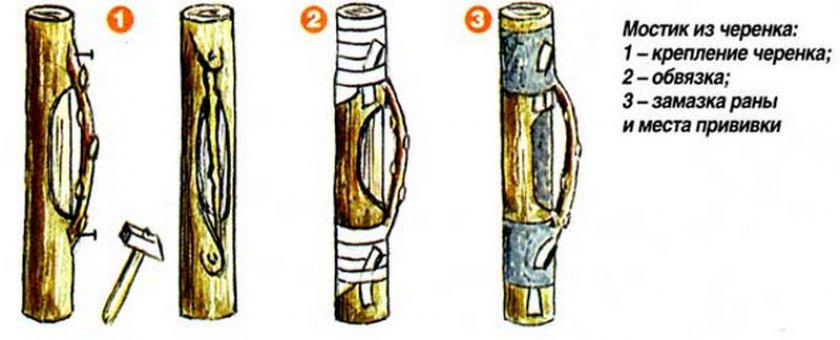
Grafting technique:
- Let's imagine you've discovered an apple tree in your garden whose bark has been severely damaged. The first thing you need to do is prevent it from drying out.
- Apply putty or oil paint to the damaged area (if there is severe frost outside).
- Wrap the trunk in burlap and leave until spring.
- Shortly before the buds swell, cut the cuttings for grafting.
- As soon as sap flow is activated in the plant tissues, begin grafting bridges (keep an interval of 3 cm).
- Place the scion carefully, making sure to remove the buds, so that the cambium matches.
- If not all cuttings take root, the procedure can be repeated next season to improve the tree's nutrition.
Cutting off growths
Growths on the trunk of an apple tree can appear for the following reasons:
- presence of apple aphids;
- damage by fungal diseases.
These two causes are usually interconnected, as nodular growths appear in aphid breeding sites, and fungal spores penetrate the cracks. In this case, the tree is seriously threatened and may even die.
Remove growths as soon as you notice them. This can be done with a scraper or a sharp knife treated with an antiseptic. Treat all cut areas with a protective agent. Additionally, spray the apple tree with Iskra or Biotlin.
Why did the apple tree trunk turn black?
 The main reasons for blackening of an apple tree trunk:
- sunburn;
- presence of sooty mold;
- damage by black or common cancer;
- growth on poor soils.
Prevention of trunk blackening:
- Apply fertilizers on time.
- Do not allow the apple tree crown to become too dense.
- Perform regular sanitary and rejuvenating pruning. Apply garden pitch to cut areas.
- Conduct preventive inspection of all parts of the tree as often as possible.
How to treat a blackened apple tree trunk:
- First of all, determine what specific disease has affected the plant.
- Remove all damaged parts of the plant (fruits, leaves, shoots, sections of bark) and burn them away from healthy plantings.
- It is also better to remove the soil in the near-trunk area and hide it under digging in some remote place (at least 10 cm).
- The damaged areas need to be cleaned with a sharp knife (don’t forget to leave a 2–3 cm margin).
- Disinfect all tools after work (it is best to burn them).
- Treat cuts with a standard gardening mixture to prevent re-infestation.
Is it possible to save an apple tree if the trunk has been severely damaged?
In theory, yes. To do this, you need to clean up all the damage and then cover it with oil paint or purified clay.
Under no circumstances should you use tar or tar-based products: this can cause burns and damage to the tree.
More serious lesions should be treated with garden pitch, and larger ones hollow fill with a cement-sand mixture to prevent air and moisture from getting inside.
Treatment of cracks
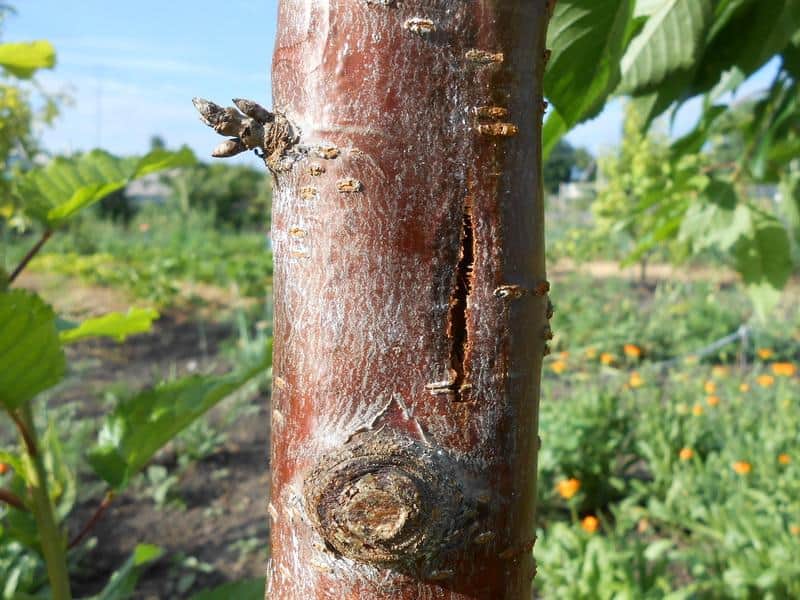
Even large cracks in the trunk can be healed as follows:
- First, carefully trim away the edge of the bark that is adjacent to the crack.
- Wipe the upper half of the damaged trunk with a solution of copper sulfate (do not spray, just wipe!).
- Make a compress of clay and mullein on the damaged area (you can use garden var).
- For faster healing, cover the compress with plastic wrap. However, after a month, remember to replace the compress with a fresh one and cover it with a mat to prevent overheating.
Conclusion
The condition of the apple tree trunk can indicate health The plant as a whole. Any negative changes in this part of the tree should be immediately addressed by the gardener. Fortunately, there aren't many diseases that can affect apple tree trunks, and most can be cured if problems are detected early.