What to do if the bark is peeling off an apple tree: causes and treatment for a bare trunk
Blistering and peeling bark not only make an apple tree less attractive but also pose a significant threat. Such symptoms indicate a disease or pest infestation. To address the problem, first determine its cause and then choose the most effective treatment.
Content
- Causes of bark peeling
- Differences between sunburn and frostbite damage
- Treatment of peeling bark on a tree trunk
- Peeling of bark at the base of large branches
- Eliminating the problem of bark peeling in young trees
- Treatment of old apple trees
- Treatment of sunburn and frostbite
- Actions to take when the bark comes off at the neck of a tree
- Advice from experienced gardeners for emergency situations
Causes of bark peeling
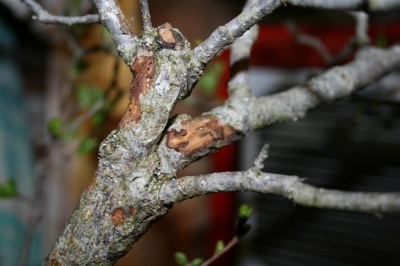 Minor peeling does not cause any complications: healthy trees with good immunity heal on their own. Rapid and extensive bark loss requires an investigation. Most often, it is associated with improper care, the development of a disease, or unfavorable climatic conditions.
The method of treating apple trees is determined by the factor that provokes detachment.
The most common cause is sunburn and frost cracks caused by sudden temperature changes in early spring. Bark peeling can also be caused by damage from pests feeding on the bark. This problem is often caused by tree disease. Fungal spores typically prefer warm places, such as under the bark.
In young trees
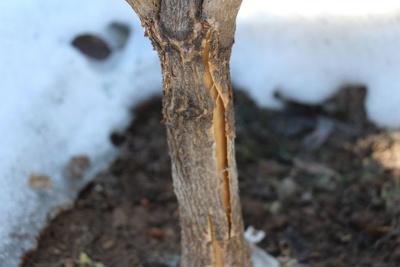 Bark peeling in young apple trees can occur for the same reasons as in mature specimens. Furthermore, young trees suffer the most from hungry rodents in winter: mice and hares prefer to feast on young bark. Severely bitten wood peels off in large chunks.
To prevent this, it is recommended to insulate young trunks with the most durable material possible, which rodents will not be able to bite through.
Presence of mold under the bark
Any damage facilitates the penetration of fungal mycelium and mold into the wood. These organisms rapidly grow, causing delamination. As a result, the apple tree loses its ability to resist infection and becomes susceptible to numerous diseases.
With the arrival of spring
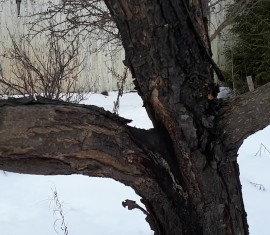
After winter, apple trees experience minor bark peeling, which is considered completely normal. The bark peels, becoming shaggy and jagged. The tree usually heals minor lesions on its own.
Differences between sunburn and frostbite damage
The difference between the two types of damage is due to the nature of their origin:
- Frost cracks. Only old wood suffers from the negative effects of low temperatures, while the shade of young bark remains unchanged. Thawed cambium and phloem tissues typically take on a rusty-brown color.
- Burns. The upper layer of young bark is damaged. burns, changes its color, becoming red-purple. Suffering from burns The cambium turns dark brown and looks dry.
Treatment of peeling bark on a tree trunk
In this case, all damaged areas are cleaned, and swollen fragments are also treated. During the procedure, small areas of living tissue are removed. The wounds are then disinfected with special agents, and after they dry, they are covered with dressings. garden pitch, creating protection against the penetration of all kinds of pests and infections.
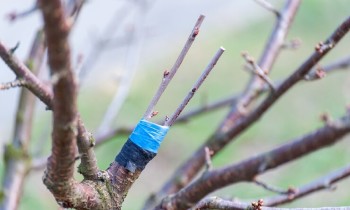
Trunks damaged over 50% of their total area require a bridge graft made from young shoots.
Peeling of bark at the base of large branches
Longitudinal cracks in the bark at the base of large branches are usually caused by low temperatures or sunlight reflecting off snow. This can be prevented by whitewashing the tree during winter preparation and in early spring before bud swell. The lime solution is applied to the trunk, lightly covering the forks formed by the main branches.
A random distribution of wounds on the trunk indicates an infestation of woodworms or other pests. In this case, the damage is cleaned and treated with an insecticide or dichlorvos, followed by a layer of garden pitch. Larger damaged areas are treated with a mixture of lard, resin, and paraffin and covered with a piece of burlap.
If there is mold and rot, the damage is treated with a 2% solution of copper sulfate.
It is unacceptable to treat wounds with products prepared with petroleum.
Eliminating the problem of bark peeling in young trees
Wounds on young apple trees caused by peeling bark require immediate treatment. In this situation, the first step is to completely remove the dead bark that is damaging the tree. Then, cover the wood with a layer of garden pitch.
The process of treating a large wound involves several manipulations:
- rinsing with a saturated solution of potassium permanganate;
- drying;
- application of a cloth soaked in one of the preparations: "Cytovit" or "Zircon";
- Applying a sealant to the wound after 24 hours to seal stove joints.
To treat minor injuries, use a special mass prepared as follows:
- melt the fat to a liquid consistency;
- mixed with wax in a 1:1 ratio.
If multiple small delaminations occur, they are first sanded down, the exposed wood is covered with clay, and wrapped with a bandage. Alternatively, liquid fat can be used as a lubricant. The bandage surface is painted white to prevent excessive heating. In spring, the bandage is removed, and the clay solution is reapplied to the wound.
Treatment of old apple trees
Old apple trees are particularly sensitive to any damage, so peeling bark requires drastic measures:
- First, all damaged areas are cleaned: using a brush, painful growths and other defects are carefully removed.
- The affected area is treated with a 1% ferrous sulfate solution, and after the bark has dried, with garden pitch. For minor peeling, a ferrous sulfate solution can be used, as it effectively eliminates fungal spores and small pests that nest in the bark folds. In this case, choose a dry but cloudy day for the procedure.
- Seal all cracks and exposed wood with a grease varnish. Apply a clay and manure mixture to large areas of exposed wood to create protection against the damaging effects of infrared rays and harmful insects. Store-bought garden varnish can be used as an alternative to clay.
Treatment of sunburn and frostbite
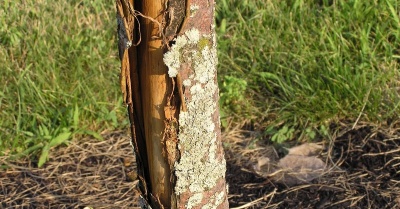 In winter, bark damage occurs due to sudden temperature changes and excessive sun exposure. Preventing peeling can be achieved by treating the bark with a mixture made from a traditional recipe of three components: lime, manure, and clay, in a 1:1:3 ratio.
If a section of bark has already been damaged by frost, a special clay mixture with the consistency of thick sour cream is applied to its surface in a thin layer. This mixture can be made as follows:
- Combine 200 g of oily clay with 100 g of finishing putty and stir until the desired consistency is achieved;
- To increase shelf life, add humus or manure (1/3 of the total volume).
With the arrival of spring, in addition to burns, dangerous transverse wounds appear on the trunk under the skeletal branches on the south and southwest sides of the tree. Treatment consists of removing the dead layer and then treating it with a mixture of wax and lard (1:1). In cases of severe bark peeling, the trunk surface is scraped down to undamaged tissue and coated with a healing mixture. To prepare it, 70% nigrol, 13% rosin, and 17% wax are mixed (in percentages of the total mass). The resulting mixture is melted in a double boiler. The recipe allows for the wax to be replaced with lard or paraffin.
After completing all treatment procedures, you need to monitor the condition of the apple tree: if fruiting stops and branches die off, it should be removed from the site.
Actions to take when the bark comes off at the neck of a tree
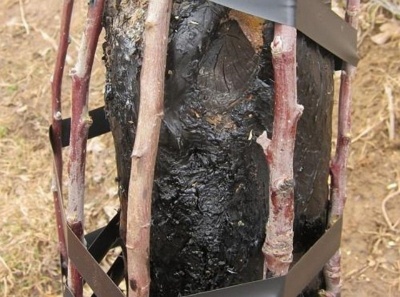 If the damaged area on the trunk does not exceed half the diameter of the apple tree, it is entirely possible to restore the tree through treatment. To re-grow the bark, the wound is covered with a material soaked in a concentrated ash solution. With the cambium necrotic, the healing process takes approximately five years; only after this time can the edges of the wound tissue close.
If the wound area is more than half the trunk's diameter, the damaged area is covered with special paper—kraft or baking paper—and secured with natural fiber rope. A plastic film is placed over the bandage. For the winter, the wound is covered with roofing felt. Treatment is complete when the wound begins to heal; otherwise, a bridge graft will be required.
If there is a large wound on the trunk, the tree is cut down to the living stump, and then its shoots are grafted into the cleft.
Advice from experienced gardeners for emergency situations
When bark peels, signs often indicate the development of serious diseases. In these cases, treating the apple tree requires a special approach.
Blackening
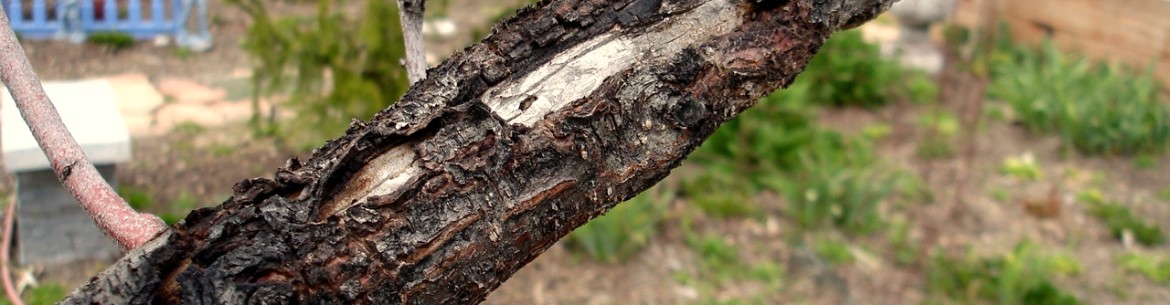
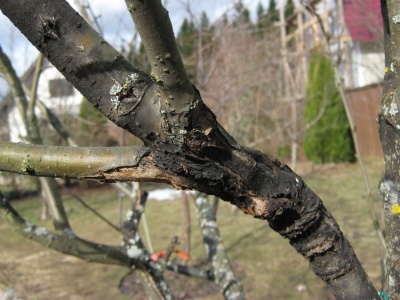 The effect of charred bark and wood indicates apple tree disease black crayfishThe causative agent of the disease is fungus Neonectria galligena, its spores most often infect young shoots. Damaged fragments are characterized by the formation of necrosis and swellings. In addition, mushroom It invades tissue and inside the wood, forming a reddish-brown mycelium. In central Russia, black canker usually infects fruit crops in the fall.
If peeling and blackening of the bark is observed throughout the apple tree, while the wounds look sunken, and the branches are charred by fire, then there is no point in trying to restore the tree. Black crayfish In advanced stages, the disease is untreatable. In this situation, the only option is to try to save the young shoots by regrafting them, but the desired result cannot be guaranteed.
Rotting
To eliminate this problem, you'll need to clean the rotted area down to healthy wood and cambium. Afterward, the wound should be thoroughly treated with a fungicide solution, and after the treated area has dried, apply garden pitch. An effective alternative is garden pitch will become semi-synthetic or natural drying oil.
Presence of lichen
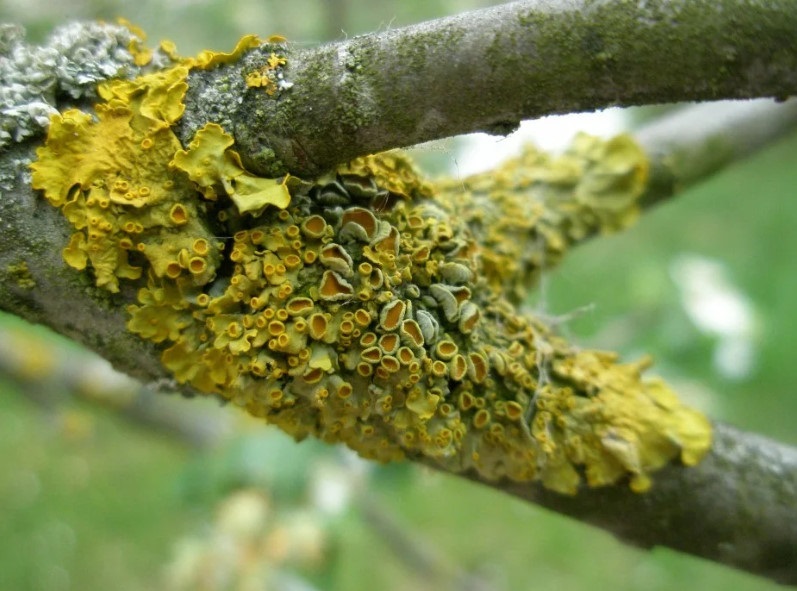 By myself lichen It doesn't cause any harm to the tree, but harmful microorganisms and insects like to settle under it. Get rid of lichen You can do this by cleaning it, removing the dead bark underneath and treating the area with a fungicide.
Bark beetle invasion
Bark eaten by the pest is treated with a solution containing "Aversectin C" or "Karbofos." In addition, all plant debris is removed from the garden and burned.
Getting wet
The wet bark is stripped back to healthy wood. To prevent damage to the cambium, the damaged edges are treated with hydrogen peroxide, then dried and coated with red lead prepared using real drying oil.
A small but dangerous defeat
If the root system, trunk, and other parts of the tree are still alive, but the risk of their death is high, the tree can be saved by a "bridge" graft, constructed from young, healthy shoots taken from the same apple tree. The graft site must be below the wound; before the procedure, it is cleaned and coated with drying oil.
Proper apple tree care will help prevent all potential problems. This fruit tree requires adequate winter insulation to protect it from frost, sun, and rodents. Additionally, the tree requires autumn and spring whitewashing, as well as preventative treatment with fungicides and insecticides.
Tree bark peeling can occur for a number of reasons. To determine the underlying cause, it's necessary to carefully analyze all factors. This approach will allow you to choose an effective treatment.