Carpet apple tree: characteristics of the variety and care
| Color | Reds |
|---|---|
| Ripening season | Autumn |
| Size of apples | Large |
| Taste | Sweet and sour |
| Crown type | Dwarf |
| Shelf life | Low shelf life |
| Application | For recycling , Fresh |
| Winter hardiness | High winter hardiness |
| Fruiting age | Up to 5 years |
 History of origin and regions of growth
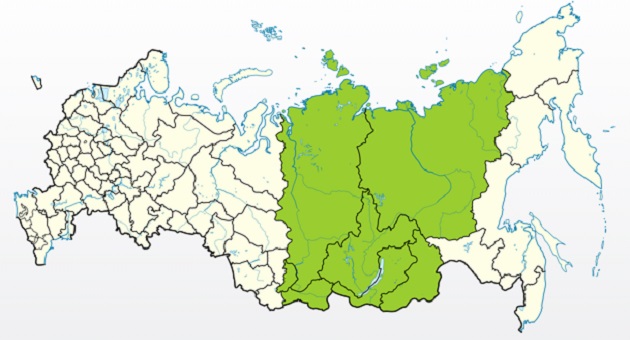
Growing regions
- Far East.
- Siberia.
- Ural.
Origin
The variety was developed at the Chelyabinsk Fruit and Vegetable Breeding Station, now known as the Ural Federal Agrarian Research Center of the Ural Branch of the Russian Academy of Sciences, in the mid-1990s. The Eliza Ratke (Vydubetskaya Weeping) apple tree was used as the basis for the selection. The cultivar's creators are credited with being Mikhail Aleksandrovich and Nina Fedorovna Mazunin, as well as Vladimir Ilyich Putyatin.
The first application for admission to official testing was received in 1993, after which the apple tree was sent for field testing. Kovrovoe was included in the State Register of Breeding Achievements in 2001. It is officially zoned for the Ural region.
Description of the Carpet variety
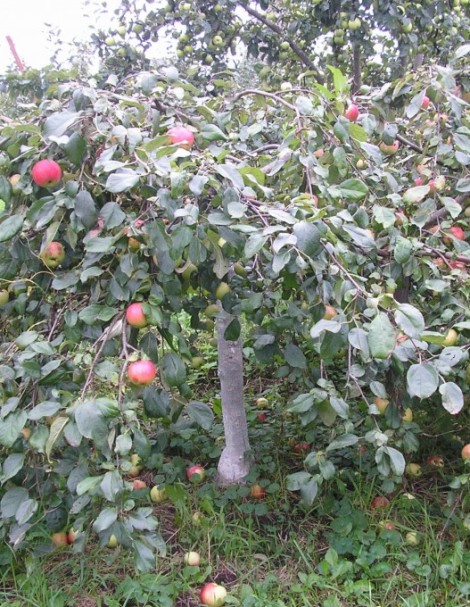
 A natural dwarf with an unusual compact crown and good yield, this tree attracts many gardeners. It boasts high winter hardiness, is easy to care for, and is undemanding of soil conditions. It grows well even in areas with high levels of air pollution and soil contamination, and tolerates high humidity and prolonged dry periods.
The tree produces beautiful, large fruits that ripen beautifully and possess high marketable qualities. They have a distinctive spicy flavor and, despite their poor shelf life, are consistently in demand. This apple tree is recommended not only for small garden plots but also for commercial, intensive orchards.
Apples: What do they look like?
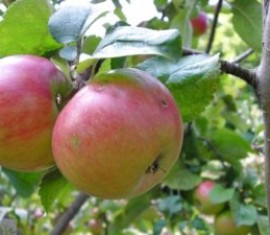
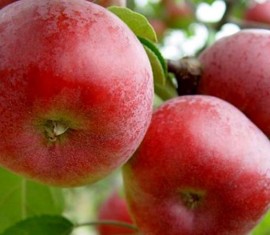
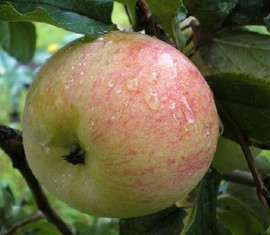
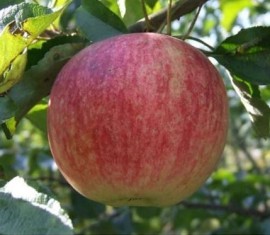
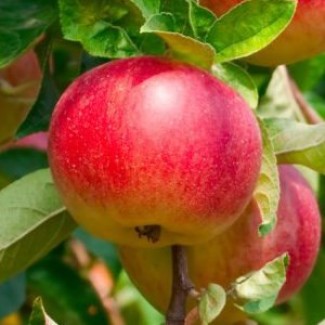
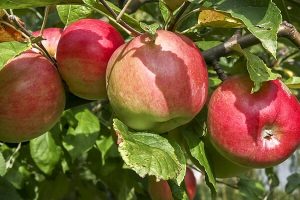 Kovrovy fruits are large or larger. They easily weigh 170-220 grams, and sometimes even 220-270. Their shape is round or round-flattened, flattened, and smooth. The ribbing is clearly visible near the calyx and is not very smooth throughout the rest of the apple.
The skin is dense but not hard, thin, elastic, smooth, glossy, and highly shiny. When ripe, it becomes covered with a light, colorless, oily coating. Its base color is greenish-yellow or simply yellow, sometimes golden. The blush is red, bright red, or dark red, dense, mottled, and may be slightly speckled, occupying 55-75% of the surface. Subcutaneous spots are light, numerous, and moderately visible on the skin. It is advisable to evaluate the chemical composition by examining the following parameters:
- P-active substances (catechins) – 108 milligrams.
- Ascorbic acid (vitamin C) – 14.8 milligrams.
- Fructose (total sugars) – 12.1%.
- Pectins – 16.2%.
- Titratable acids – 0.6%.
The Kovrovoe variety has coarse-grained, fairly dense flesh, crisp, and easily breaks off when bitten. It has a pleasant sweet-and-sour, slightly spicy flavor, a creamy or greenish-cream hue, and is juicy. The official tasting score is 4.6 out of 5 for both appearance and flavor.
Carpet apple tree: characteristics
Crown and root system
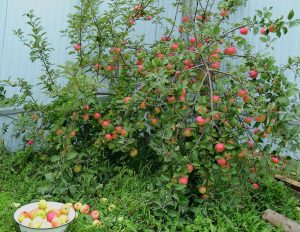 The tree is rightly considered a natural dwarf. Without formative pruning, its maximum height barely reaches 1.4-1.8 meters; very rarely, apple trees reach 1.8-2 meters. The crown is flattened and horizontal, drooping, and weeping. The branches extend from the main trunk at right angles; they are long, curved, directed primarily downwards, and covered with smooth, brownish bark. Fruiting occurs on rhomboids, spears, and fruiting twigs.
The leaves are quite large, up to 7-10 centimeters long, leathery, dense, highly shiny, and glossy, with a light, felt-like pubescence on the underside. They are elongated, long-pointed, with finely serrated, serrated, and serrated edges, dark green or even a deep emerald hue. The rhizome is deeply buried, fibrous, and branched. It is well adapted to foraging for nutrients and moisture in the soil. On some rootstocks, it may have a central taproot.
Productivity and pollination
Despite its very compact size, the tree can be safely considered early-bearing and high-yielding.
With proper care and favorable weather, thrifty growers can harvest at least 110-130 kilograms of large, beautiful, and delicious fruit from a single mature Kovrovy tree. Under normal conditions, 100-110 kilograms can be harvested annually without interruption..
This apple tree is not self-fertile; it can pollinate itself, but only poorly. If there are no nearby trees blooming at the appropriate time, the yield will not exceed 10-15% of the potential maximum. The Kovrovoe apple tree is a good pollinator for other varieties, so it is customary to plant the standard trees alternately, interspersed.
Winter hardiness and disease resistance
This tree's resistance to low temperatures is astonishing. In tests, it easily survived periods when the thermometer registered -39 to -41°C for extended periods. The Kovrovaya tree didn't even suffer any serious damage. Its trunks can also withstand high humidity and dry periods. However, proper winter preparation and cold weather protection should be carefully considered, to avoid waiting several years for the trees to recover.
The apple tree's resistance to fungal and other infections is average. Scab Apple trees rarely get sick; most of the damage is to the foliage, and the apples remain suitable for eating and processing. Parasitic threats to the tree are also not particularly serious, especially when all preventative treatments and sprays are carried out promptly.
Rootstocks and subspecies
Trees on standard rootstocks grow somewhat taller than those on non-dwarf and semi-dwarf varieties, reaching 2-2.3 meters in height. On dwarf rootstocks, they reach a maximum height of 1-1.5 meters, but may be slightly less winter-hardy. Columnar Carpet rootstocks do not exist, but creeping varieties can easily be trained from them.
Features of growing Carpet
 Landing
 Landing
Basic conditions
- It's best to choose a sunny location for planting this variety. The apple tree can grow in the shade, but yield will be significantly reduced, and the fruits will become smaller.
- Ventilation is important, but it's best to plant in a draft-free location. If seasonal humidity, such as in spring or fall, is added to this, it can lead to disease. mushrooms.
- The groundwater level where apple trees are planted should not exceed 2-2.2 meters. If no other option is available, you can bury a sheet of slate or a layer of roofing felt at a depth of 1-8-2 meters to direct the rhizomes in different directions. This will prevent the apple tree from reaching the water and causing rot.
- The Kovrovoe apple tree tolerates any soil, especially if fertilized and supplemented regularly. Due to its low maintenance, this will need to be done infrequently. It will only fail to thrive in overly acidic and salty soils.
- Planting holes for apple trees should be prepared 3-7 months in advance to ensure they have time to mature. However, even if you miss the opportunity, don't worry—even 3-5 weeks can be enough. Dig holes 60-75 centimeters deep, and fill the bottom with topsoil mixed with fertilizer. Cover the entire hole with a 10-15 centimeter drainage layer (vermiculite, polystyrene foam, rocks, or broken brick), and fill with water (20-45 liters).
- Stake trees should be dug or driven into the holes immediately to secure them to the ground, preventing the wind from uprooting them. If placed on the north side of the tree's trunk, they will not only provide support but also provide additional protection during the winter cold.
- The root collar must always remain above the soil surface, otherwise the properties of the rootstock will be lost.
- Place the seedling on a drainage trench, spread the roots to prevent them from bending, and cover with soil. Water it with 15-25 liters of water and apply mulch on top to further retain moisture in the soil for longer.
Landing dates
You can transplant seedlings into open ground in spring and fall. Choose a dry, clear day in mid-March or towards the end of the month; in cooler climates, choose early April, when the risk of frost has passed.
Trees planted 3-4 weeks before the first frost in the fall, around September-October, after the leaves have fallen, take root well. Trees purchased with a closed root system, in pots, bags, or special containers, can be planted at any time, with their own root ball, and they take root equally well.
Tree care
 Tree care
Protection from frost and pests
Despite the apple tree's exceptional resistance to low temperatures, it is essential to properly prepare it for winter and cover it before the cold weather sets in. Watering should cease in late August, and the last application should be no later than mid-September, along with the final autumn feeding, if needed. Apple tree trunks are wrapped with agrofibre, spongebond, old tights, burlap, or roofing felt. Spruce branches, straw, or hay can be placed on the roots.
Cleaning the trunk in the fall after leaf fall with a stiff brush, followed by whitewashing with lime, is effective against insects. Repeat the process in the spring before bud break. Rodents can be repelled with various pungent-smelling substances, such as fuel oil and grease. Apply a generous layer of these to the lower part of the trunk.
Loosening the soil, watering: proper agricultural technology
You can hoe the soil around apple trees throughout the growing season, but don't dig too deep to avoid damaging the surface roots. Digging is only necessary once or twice a year, in spring and fall. At that time, you should remove all weeds, root suckers, and shoots from other plants.
Watering Kovrovoe isn't necessary often, but young seedlings may need it, especially if the summer is hot. Therefore, they need watering 4-8 times per season. Mature trees, however, only need 3-4 times, and if rainfall is regular, you can skip watering altogether. Regular application of fertilizer diluted with water is sufficient. The day after watering, be sure to agitate the soil, otherwise it will compact to a granite-like consistency, cutting off oxygen from the rhizomes.
Pruning: simple crown shaping
The most suitable shape for any apple tree is a sparsely tiered form, where the shoots are spaced far apart and at different heights. This prevents the crown from becoming overly dense later on and greatly simplifies pruning. Other shapes that can be formed from the Carpet apple tree include broom-shaped, pyramidal, oval, and broadly oval. Even a creeping tree is easily made from it.
In the fall and spring, inspect the crown and prune it for health. All broken, diseased, and dead shoots are removed. At the same time, you can prune any shoots that stick up vertically or grow inward. These shoots typically don't produce apples; they simply suck the tree's sap unnecessarily. All cut wounds should be sealed with garden pitch or at least with peat.
Diseases and pests
- Powdery mildew.
- Scab.
- Moniliosis.
- Black crayfish.
- Hawthorn.
- Aphid.
- Leaf roller.
Pollinator varieties
- Down to earth.
- Antonovka.
- Sokolovskoye.
- Gala.
- Snowdrop.
- Titovka.
Ripening and fruiting of Carpet
The beginning of fruiting
 The beginning of fruiting
Trees are quite precocious, beginning to bear fruit as early as 3-4 years after planting in open ground. Flowers may bloom earlier, but it's best to pluck them immediately; they're likely barren and will only waste the tree's energy. Don't expect much from the first harvest, as you'll only be able to harvest 1-3 kilograms of tasty, large fruit.
Flowering time
Buds appear on the tree as early as April, almost alongside the young, delicate, light-green leaves. They begin to bloom in mid-May, not all at once, but starting from the lower branches. The tree seems to "light up" from the bottom up, like a Christmas tree. This gradual blooming prolongs the blooming period, allowing it to reach more pollinators. The flowers themselves are large, pink, intensely fragrant, saucer-shaped, and cover the branches in a dense covering.
Fruiting and growth
Kovrovoe grows relatively quickly, reaching 45-50 centimeters per year, sometimes even more. It quickly reaches its maximum height, beginning to produce good yields as early as 7-8 years after planting. While it won't reach its peak yield by then, it will certainly provide one person with a pleasant winter preserve.
The fruits begin to ripen as early as September, sometimes as late as October. The exact dates depend on the region, climate, and weather conditions in a given year. They remain firmly attached to the branches for 2-4 weeks even after they're fully ripe, allowing plenty of time for picking. They transport well, but can't be stored for more than 45-60 days. After that, their texture becomes loose, cottony, and lacking in juiciness, and their taste is sour, bitter, and unpleasant.
Why do apples fall?
- Weather phenomena.
- Early frosts.
- Pests or diseases.
- Overripe.
What to do if it doesn't bloom or bear fruit
- Protect from drafts.
- Limit or activate watering.
- Eliminate pests.
- To stop diseases.
Top dressing
- Manure.
- Compost.
- Humus.
- Superphosphate.
- Chicken manure.
- Mineral and nitrogenous complexes.
- Ammonium nitrate.
Share your own experience with the Kovrovoe apple tree variety, so even novice gardeners have no questions about cultivating these trees.