Autumn Striped Apple Tree: Variety Features and Care
| Color | Striped , Reds |
|---|---|
| Ripening season | Autumn |
| Size of apples | Large |
| Taste | Sweet and sour |
| Crown type | Tall tree |
| Shelf life | Average shelf life |
| Application | Fresh , For recycling |
| Winter hardiness | High winter hardiness |
| Fruiting age | From 5 years old |
 History of origin and regions of growth
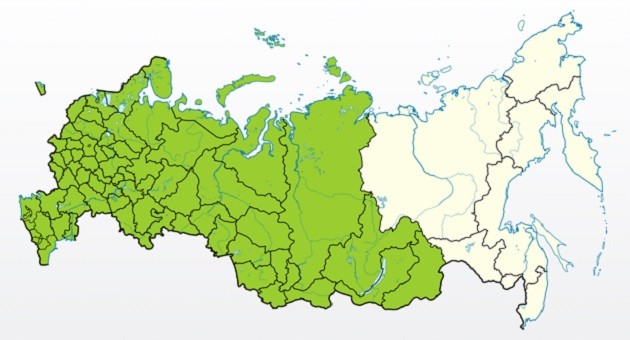
Growing regions
- Middle zone.
- North Caucasus.
- Crimea.
- Some northern regions.
- Ural.
- Western Siberia.
Origin
The history of this apple tree spans many centuries. Even in ancient German manuscripts from the 18th and 19th centuries, there are numerous references to a variety called Livonian or Grafenstein. This is the very same Autumn Striped or Autumn Striped that each of us knows and loves.
There are many different popular names for this apple tree: Atamanskoe, Obrez, Starostino, Obrezkovoe.
Scientists believe the variety was created through spontaneous pollination in the Baltic region. Gradually, the promising tree spread further east, eventually arriving in our country. In 1947, the variety was added to the State Register and officially zoned for the Central, Northwestern, Northern, Central Black Earth, Volga-Vyatka, and Middle Volga regions.
Content
Description of the Autumn Striped apple tree variety
 This variety has been popular among gardeners for many years, but is rarely used in large, intensive commercial orchards. These apple trees are hardy, withstanding even the harsh Russian winter, are tolerant of soil and moisture, and are relatively resistant to diseases and pests. They are long-lived, producing abundant harvests of delicious, aromatic fruit for many years.
However, they begin fruiting quite late, and produce apples irregularly, with resting breaks. Regular watering is recommended. Furthermore, the Autumn Striped variety grows very large and takes up a lot of space, regardless of formative pruning. It is recommended for growing in small private gardens.
Apples: What they look like
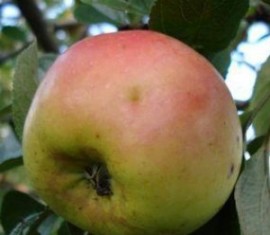
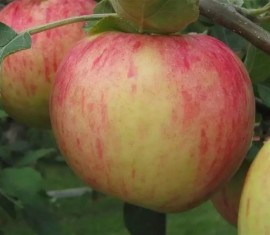
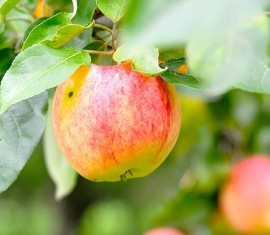
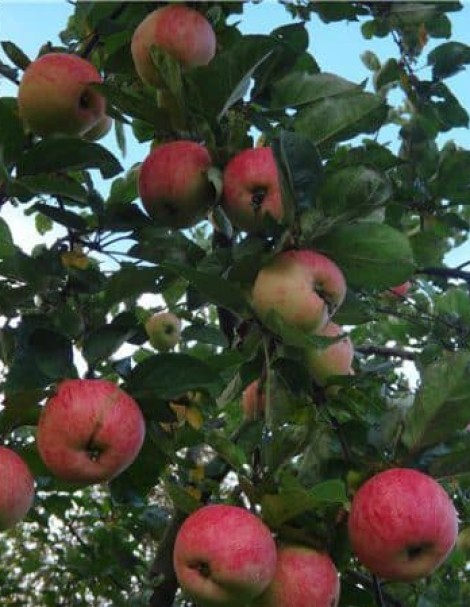
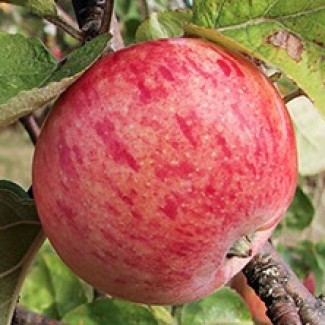
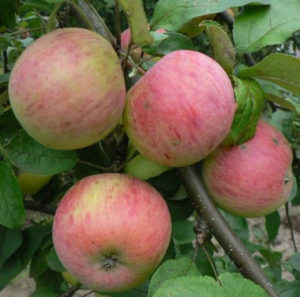 The fruits are mostly large or larger than large. They grow to 220-260 grams in weight, but sometimes even 280-300 grams are found. They are often asymmetrical and uneven, round, conical, or turnip-shaped. The ribbing is usually well-defined and visible, especially on the outside of the apple.
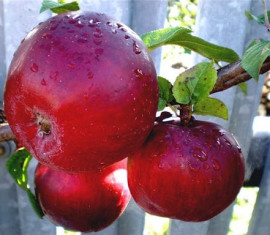
The skin is smooth, dense, glossy, and shiny, and can be covered with a fairly intense waxy coating during ripening. It is green or greenish-yellow in color, becoming completely yellow at maturity. The blush is mottled and striped, with gradations of color from bright red to reddish-brick and orange, occupying approximately 75-90% of the surface. Subcutaneous dots are light-colored, greenish or gray; they are small and clearly visible on the surface. To assess the chemical composition, it is easiest to clarify just a few of the content indicators per 100 grams:
- P-active substances (catechins) – 284 milligrams.
- Ascorbic acid (vitamin C) – 8.2 milligrams.
- Total sugars (fructose) – 10.2%.
- Pectins (fiber) – 11.9%.
- Titratable acids – 0.57%.
The apple flesh is predominantly white, but can be slightly creamy or even lemon-colored. Fine red veins can be found just under the skin, giving it a slightly pink tint. It's firm but somewhat crumbly, coarse-grained, and juicy. Experts consider the flavor balanced, savory, and harmonious. According to tasting reviews, Autumn Striped earns 4.8 out of 5 points.
Autumn Striped Apple Tree: Characteristics
Crown and root system
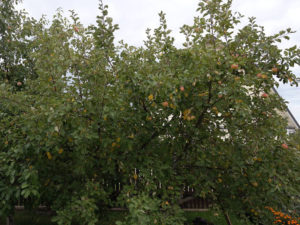 This tree is very tall and can easily reach a height of 9-11 meters.Even with proper formative pruning, limiting it to 5-6 meters is quite difficult, although possible. The crown is broom-shaped when young, becoming cauldron-shaped with age. The upward-facing branches droop increasingly, taking on a spreading, drooping, weeping form. Fruiting is concentrated on the fruiting twigs and rings. The branches are thick, medium-length, can be straight or geniculate, and covered with brown or fulvous-brown bark.
The leaves are dense, leathery, matte, and rounded, with a coarsely serrated, non-wavy margin. They are arranged very closely on the branches. They are folded like a boat and have a distinct pubescence of dark green or emerald hue. The leaf tip is long and pointed, twisted into a spiral. The root system is extremely robust, branched, and deeply rooted, extending for many meters around.
Productivity and pollination
Single buds may begin to bloom on the branches of the Autumn Striped apple tree in the fourth or fifth year, but most of them wither before they have time to develop into apples; it's best to pick them off immediately. The apple tree only begins to bear fruit properly in the seventh to ninth year, making owners of larger orchards reluctant to choose this variety. However, over time, the trees delight with prolonged, abundant fruiting, so it's worth the wait.
In a single season, a mature tree can yield approximately 95-110 kilograms of aromatic apples by the age of 12-15. By the age of 20-25, the variety begins to yield over 250-280 kilograms. In the mid-1920s, an official record was set in the Oryol region: 430 kilograms of fruit were harvested from a single trunk of the Autumn Striped apple..
The variety is not self-fertile; it is effectively sterile for itself, although it can serve as a good pollinator for others. Therefore, it is common to plant Osennee interspersed with other apple trees. The distance between trees should not exceed 50-100 meters, otherwise it will be of no use. Spraying flowering trees with honey or sugar diluted with water is a good idea to attract bees.
Winter hardiness and disease resistance
The variety's frost resistance makes it attractive to residents of northern, rather harsh regions. Trees can easily survive winters when temperatures drop to -37-40°C. Young trees may freeze, but recover very quickly, while older trees are unaffected and continue to bear fruit normally even after severe frosts. All this suggests that Autumn is suitable for growing in regions such as Ural or Siberia.
The variety lacks genetic immunity to infectious fungal diseases, but it exhibits a high degree of resistance. Very rarely, only in very wet, cold years, can trees be affected by powdery mildew. scab, but they don't get sick very actively and then recover fairly quickly. Therefore, preventative measures should be taken regularly, including treatment with fungicides and insecticides against insect attacks.
Rootstocks and subspecies
This variety has many different subspecies, which are best discussed separately due to their unique qualities and properties. However, it's worth noting that it can be grown on dwarf rootstocks, allowing for the first harvest to be achieved as early as 3-5 years after planting outdoors. These varieties have a more compact crown, resulting in significantly shorter trees, simplifying care, winter shelter, and autumn harvesting. However, frost resistance is significantly reduced, and the root system typically becomes shallow.
Features of growing Autumn striped
 Landing
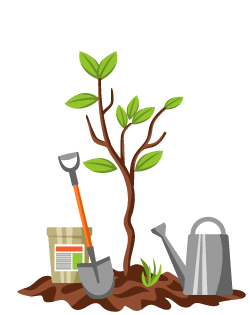 Landing
Basic conditions
- To plant this variety, choose a large, spacious site with good sun exposure and ventilation. When the tree grows, it will reach at least 5-6 meters in diameter and shade any plants beneath it.
- It's best to keep the groundwater level low, no more than 2.5-3 meters. Otherwise, trees' powerful root systems will reach the water and cause rot.
- You can prepare holes for apple trees in advance, about a season before planting, but if this opportunity has already been missed, 1-3 weeks will suffice. To do this, dig holes 5-6 meters apart, fill the bottom with fertile soil mixed with fertilizer, add a drainage layer, and water with 25-45 liters of water.
- Immediately dig stakes made of wood, metal, or plastic into the holes to support the young seedlings. These stakes should not be removed until the first or second fruiting season.
- The apple tree's root collar should remain at least 8-12 centimeters above the ground during planting. Otherwise, the tree may root higher, completely losing all the qualities of the rootstock.
- Place the seedling in a hole with drainage, spreading the roots so they can lie freely. Fill the hole with soil, compacting it lightly to eliminate air pockets. Water with 30-45 liters of water, and mulch the surface with any suitable material.
Planting dates
The Autumn Striped variety can be planted either in early spring or in the fall, after the leaves have fallen. The latter method has the best survival rate. It's best to choose a warm, sunny day in late September or early October for planting.
Protection from frost and rodents
Mature trees of this variety generally don't require any protection from low temperatures. However, young seedlings can and should be protected to prevent them from dying. To do this, rake soil onto the root zone, lay grass or straw mats, wrap the trunks in burlap, and even use a tent-like covering (for dwarf varieties).
To repel hungry rodents, use solid oil, drying oil, rendered animal fat, and other pungent-smelling substances, sometimes industrially produced. Tree trunks are whitewashed with lime in early spring and late fall to help get rid of insects hiding in cracks or chipped bark.
Tree care
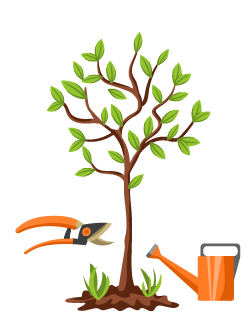 Tree care
Loosening the soil, watering: proper agricultural technology
Fruit crops appreciate frequent and well-aerated soil, and apple trees are no exception. Therefore, it's necessary to till the area around the trunk twice a year, and also hoe the soil throughout the growing season, approximately 1-2 times a month. At the same time, you can remove weeds, root suckers, and shoots from other plants or shrubs that rob the tree of nutrients and minerals.
It's important to provide this variety with timely and regular watering, as it tolerates drought very poorly. Therefore, it's best to follow the 10-day rule. This means: if natural precipitation hasn't fallen for a period of ten days, it's time to water. If rain falls during this period, then the 10-day rule should be followed from that date.
Pruning: simple crown shaping
Experienced gardeners say the Autumn Striped variety has no "extra" branches. This means it requires minimal pruning. Only shoots growing inward and those protruding vertically are removed. Otherwise, shaping is sufficient, which is done at the nursery during the first year of growth. There, the central conductor is shortened by a third and only a few skeletal branches are left widely spaced.
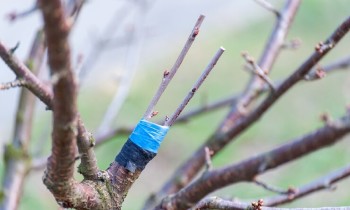
However, sanitary pruning should always be done on time, in early spring and late fall. All damaged, dry, or diseased shoots are removed. The cut areas should be sealed with garden pitch, water-based paint, drying oil, or even a simple mixture of water and soil (marsh).
Pollinator varieties
Reproduction
- Rooting cuttings.
- Grafting by buds or cuttings.
- Growing from seeds.
- Clones (offshoots).
Diseases and pests
- Cytosporosis.
- Scab.
- Powdery mildew.
- Black crayfish.
- Pit bitterness.
- Green aphid.
- Hawthorn.
- Codling moth.
Ripening and fruiting of Autumn striped
The beginning of fruiting
 The beginning of fruiting
Only with consistent, competent, and very intensive care can this apple tree produce its first fruits approximately 5-6 years after planting. Weather and climate must also be favorable, so such coincidences are rare. Generally, the first significant harvest of 5-15 kilograms of fruit can be expected no earlier than the 7-10th year of growth. Dwarf subspecies begin to bear fruit around the 4-5th year, but otherwise their yields are inferior to the parent variety.
Flowering time
On average, the Autumn Striped begins blooming around May 15th-20th, but more precise timing can only be determined experimentally. This can vary considerably depending on the growing region, weather, ambient temperature, and other factors. By the end of May, most trees have finished blooming. Their flowers are large, fragrant, and densely covered with branches. They can be pure white, slightly pinkish, or greenish.
Fruiting and growth
The tree grows quite slowly, reaching approximately 15-25 centimeters per year. This explains the long wait for fruiting. Growth before fruiting can be much more intense, after which it slows down and becomes almost unnoticeable. The number of pods also increases gradually, and a full harvest will take 20-25 years to achieve, but this will be more than compensated for by longevity and abundant harvests in the future.
The fruit must be picked strictly according to schedule, as soon as it's ripe. If picked too early, the apples won't have the same rich, vibrant flavor and aroma. If you miss the harvesting window and wait until mid-September, the shelf life may be significantly reduced. The optimal time is from early to mid-September. If everything is done promptly and correctly, and the fruit is stored in suitable conditions, it will definitely last until January without any loss of marketability or taste.
Top dressing
- Mineral complexes.
- Humus.
- Chicken manure.
- Ammonium nitrate.
- Superphosphate.
- Manure.
- Compost.
What to do if it doesn't bloom or bear fruit
- Provide watering.
- Check for pests and diseases.
- Transplant to a sunnier location.
- Fertilize.
Why do apples fall?
- Natural factors.
- Pests.
- Diseases.
Please leave your feedback on the Autumn Striped variety so that other gardeners can learn about your experiences growing these trees.